




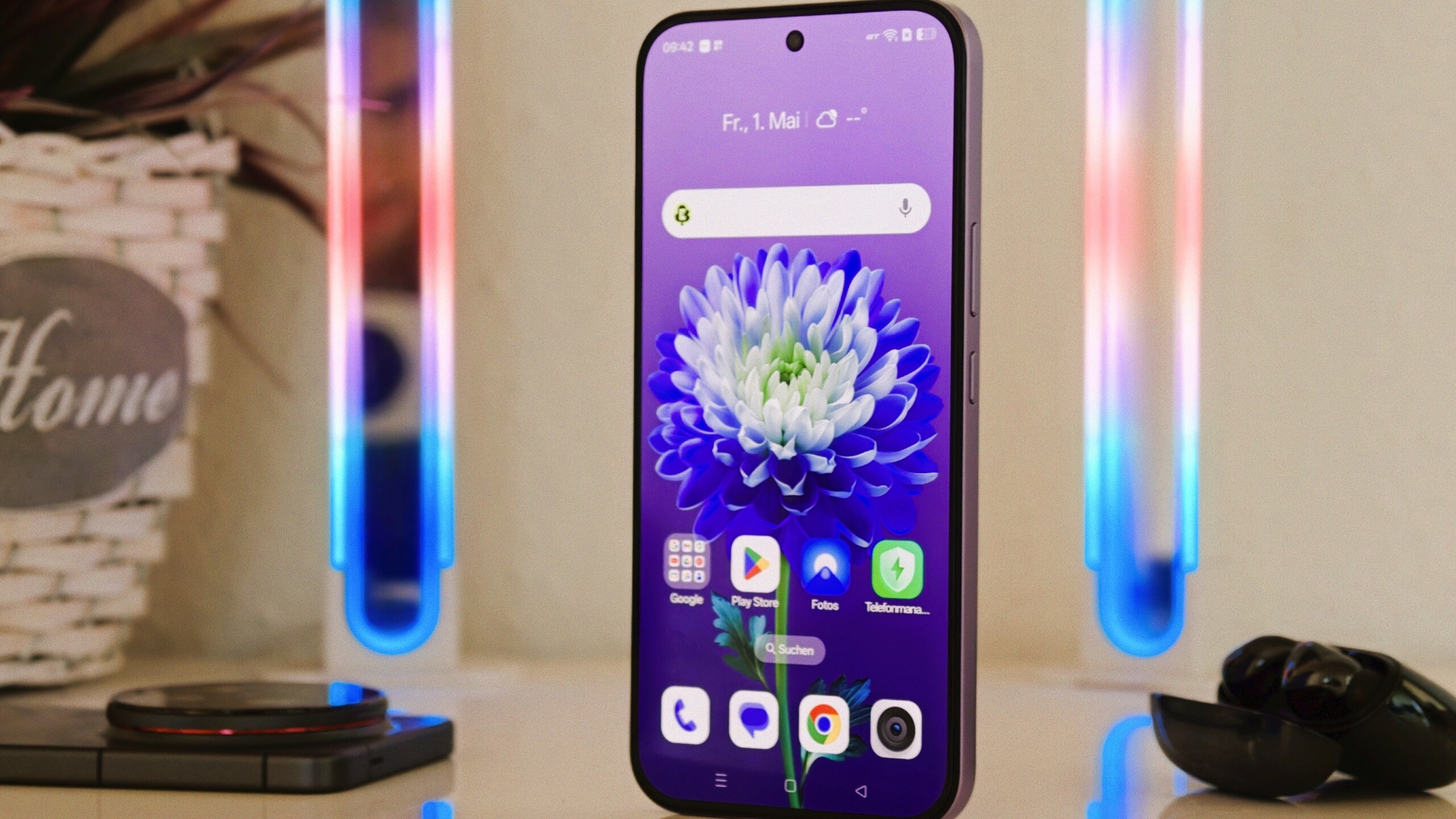
Conclusion on the realme 16 Pro
The realme 16 Pro is an attractive-looking smartphone in the affordable mid-range, which should be of interest to lovers of large OLED screens and long battery life, as well as selfie fans. The long-term update support also speaks in favor of the realme phone.
However, it cannot really live up to the advertised attributes. We don't even come close to the enormous brightness of 6,500 nits; in fact, the OLED panel is even weaker in our everyday measurements. The particularly voluminous speaker system is also not one of the best of its kind.
The same applies to the built-in MediaTek SoC, which is not particularly powerful for the price range. A Poco X8 Pro has much more to offer here.
The image quality of the realme 16 Pro with the main camera is quite appealing, but we do not see it as a highlight in the mid-range - potential buyers should not be fooled by the high number of megapixels.
Pros
Cons
Price and availability of the realme 16 Pro
The basic configuration of the realme 16 Pro with 8 GB LPDDR4X RAM and 256 GB UFS 3.1 memory starts at an RRP of around 380 euros, including at Amazon.de.

- $559.00realme 16 Pro Dual-SIM 256GB ROM + 8GB RAM (GSM Only | No CDMA) Factory Unlocked 5G Smartphone (Pebble Grey) - International Versiona
- $559.00realme 16 Pro Dual-SIM 256GB ROM + 8GB RAM (GSM Only | No CDMA) Factory Unlocked 5G Smartphone (Orchid Purple) - International Version
- $175.00realme C100 5G Smartphone 4+256GB Green
Table of Contents
- Conclusion on the realme 16 Pro
- Specifications of the realme 16 Pro
- Housing and features - Waterproof Android cell phone with IP68
- Communication and operation - Inexpensive smartphone without WiFi 7
- Software and sustainability - Affordable cell phone with long updates
- Cameras - mid-range phone with 200 MPix
- Display - Affordable Android phone with OLED screen
- Performance, emissions and battery life - Android-Phone with a large battery capacity battery
- Notebookcheck overall rating
- Possible alternatives in comparison
Specifications of the realme 16 Pro
Housing and features - Waterproof Android cell phone with IP68

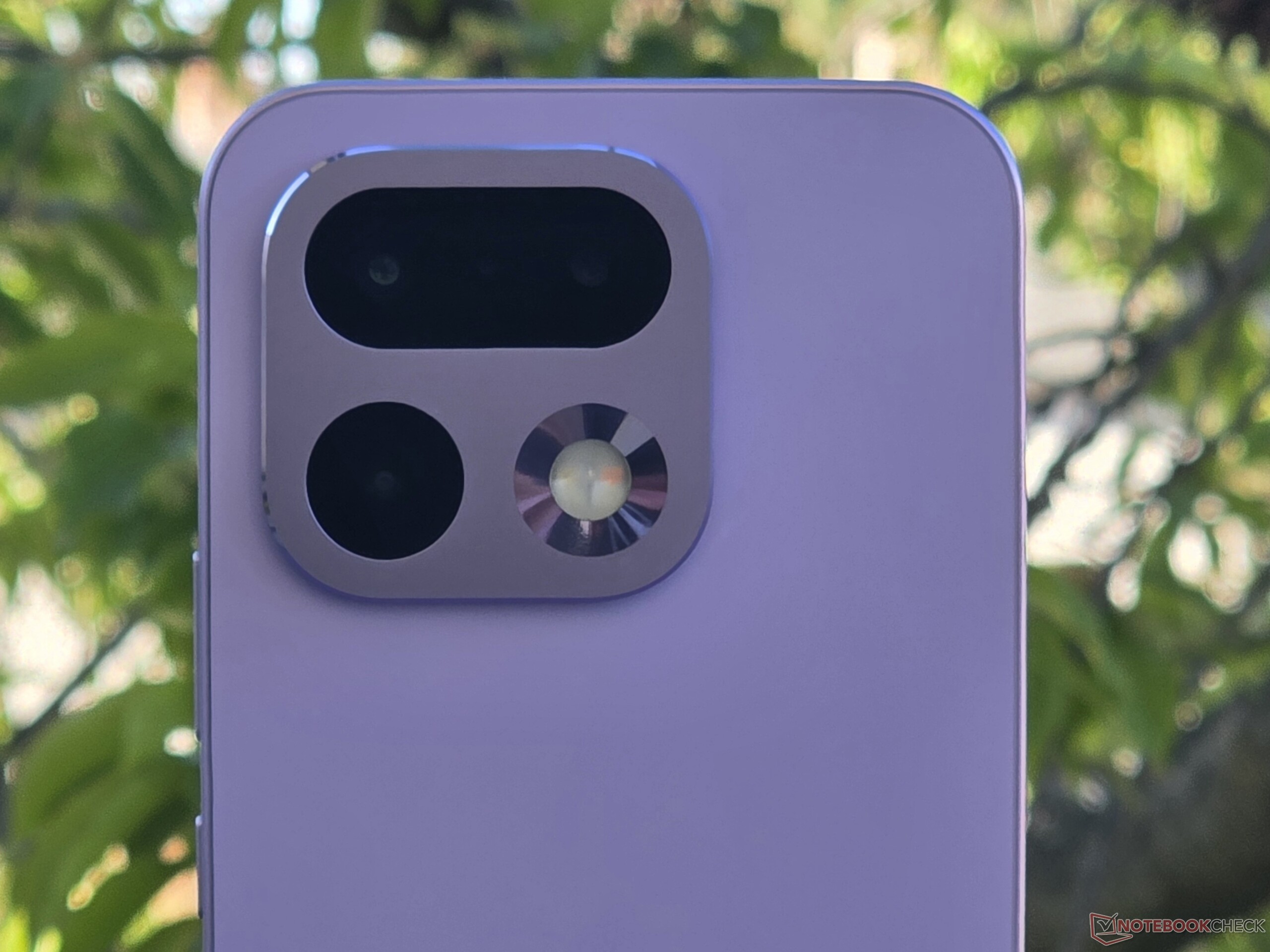
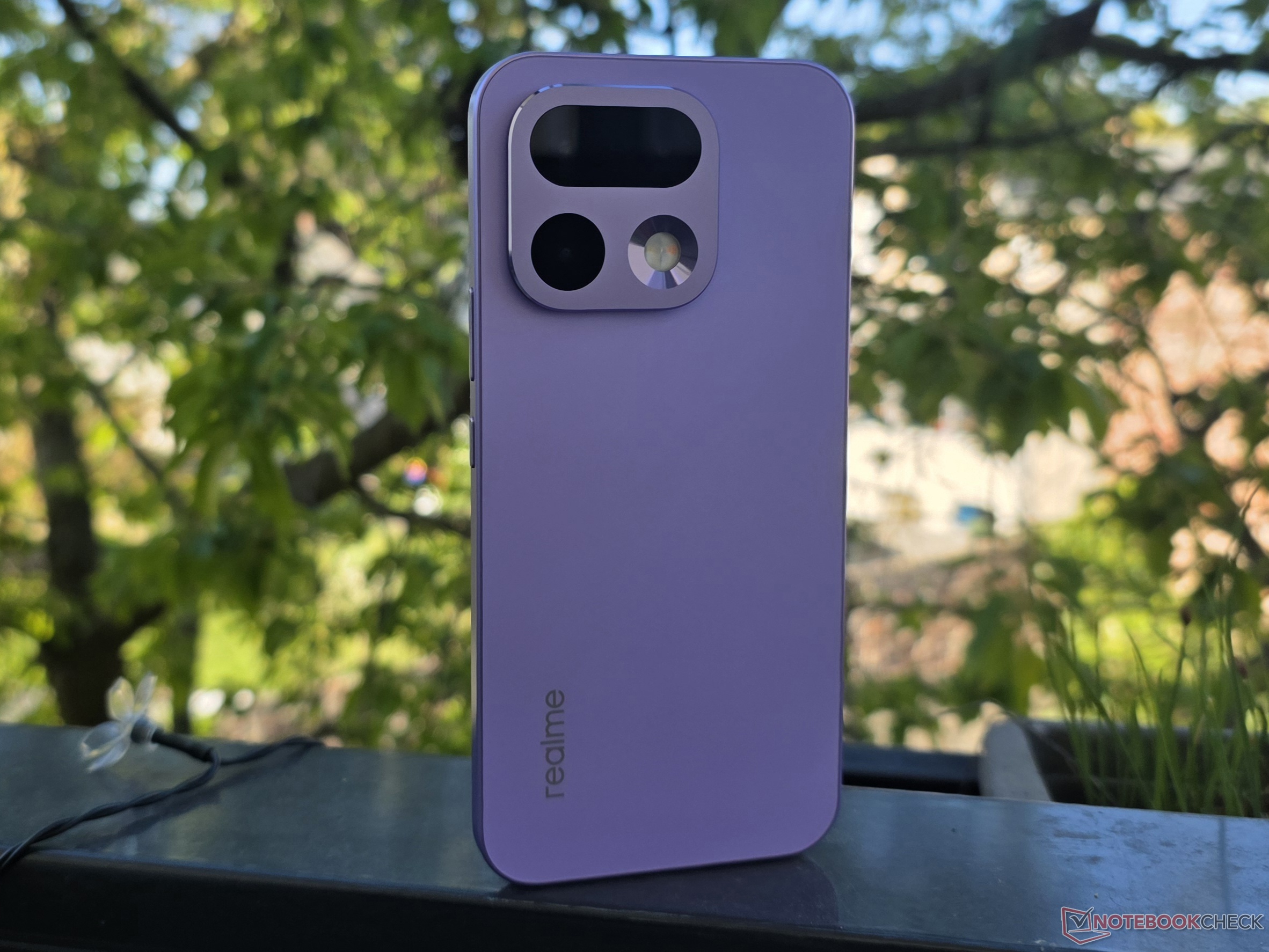
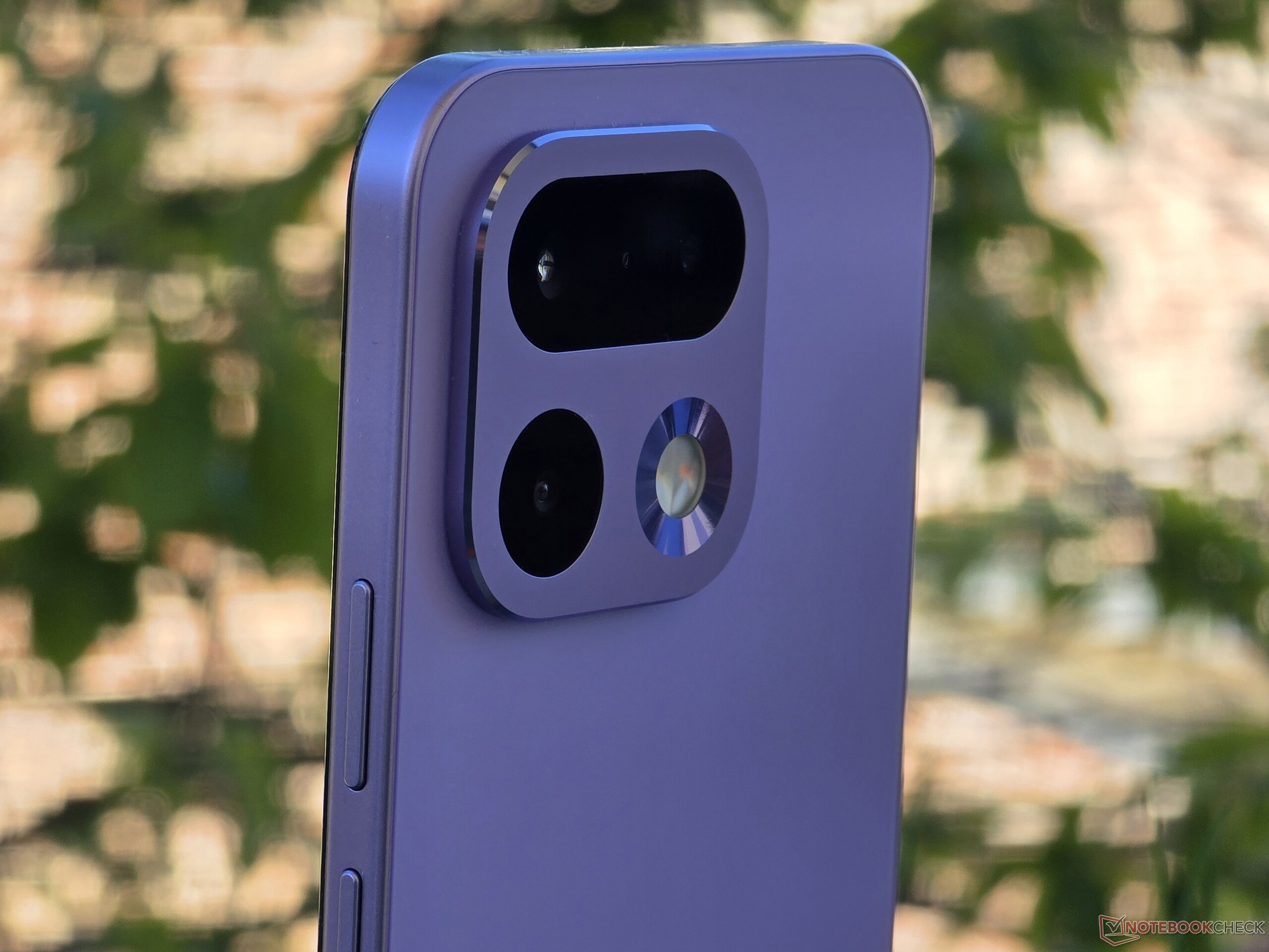
The realme 16 Pro has a good finish and fingerprints are barely visible thanks to the matte surface. The frame and the back are only made of plastic, which means that there are noticeable compromises in terms of haptics. However, the choice of material helps to keep the mid-range smartphone pleasantly light for its size.
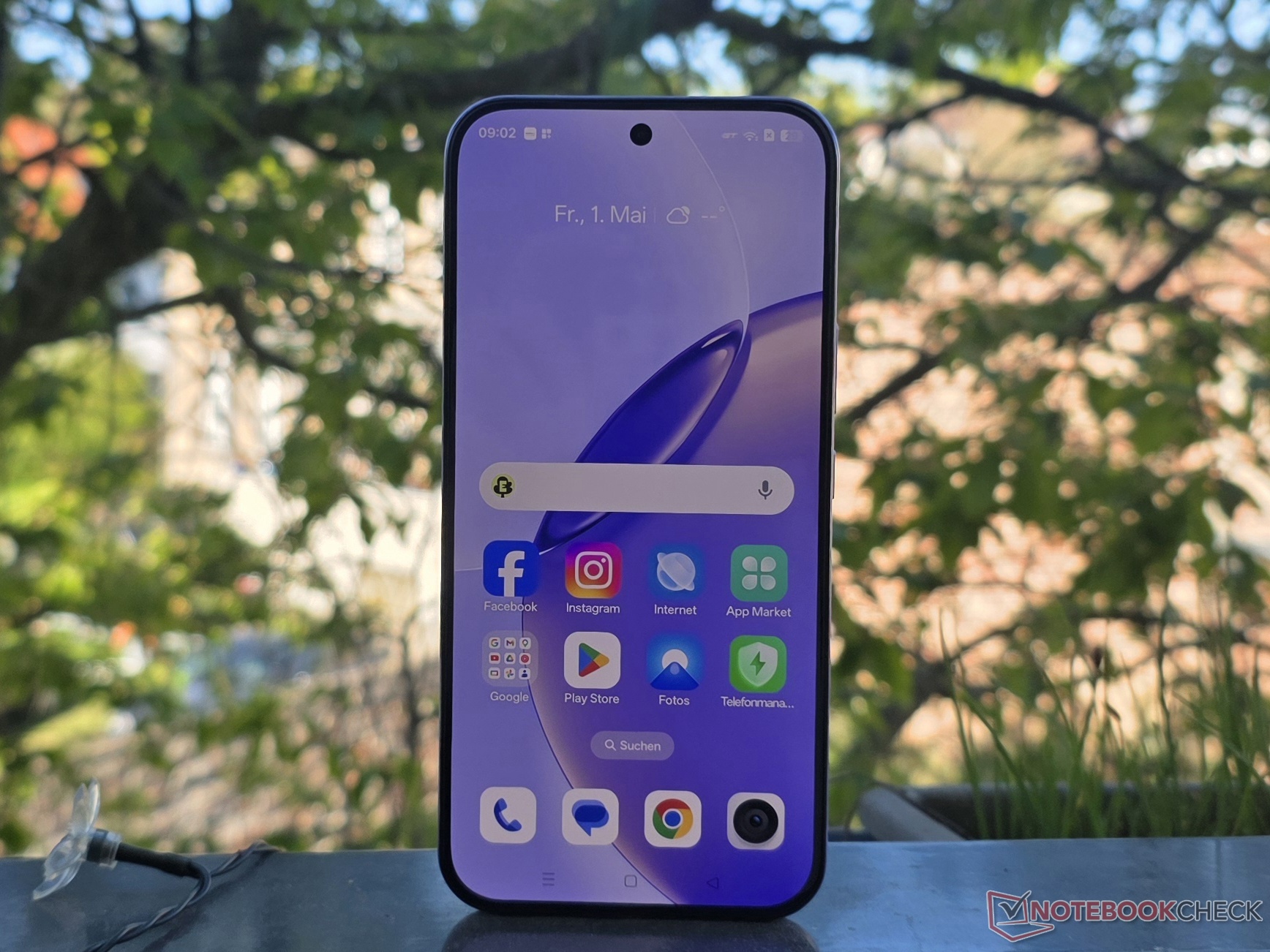
The casing is IP68/IP69-certified and therefore particularly well protected against water and dust. The front has a modern appearance thanks to the decent display surface ratio of over 89%.
As is usual in this price range, the USB-C port only has a 2.0 specification, which means that wired image output is not possible. Despite the current high memory prices, the realme 16 Pro is generously equipped with RAM and offers sufficient reserves for apps and more demanding games with up to 12 GB of RAM.
Communication and operation - Inexpensive smartphone without WiFi 7
The realme mid-range only comes with Wi-Fi 6 without access to the fast 6 GHz band, which means our measurements are anything but fast. In everyday use, however, the measured values of around 350 to 400 MBit/s should be sufficient for most users.
In addition to two nano-SIM cards, the realme 16 Pro can also be used with an eSIM. The frequency coverage is good for the price range in all mobile phone standards. However, the mid-range cell phone only has a single-band satellite connection for positioning.
There is also good and bad when it comes to operation. While the optical fingerprint sensor works very well and quickly in everyday use, the realme 16 Pro does not exude a sense of value when it comes to the vibration motor. The vibrations generated seem imprecise and not very powerful.
| Networking | |
| Realme 16 Pro | |
| iperf3 transmit RT-BE96U WiFi7 | |
| iperf3 receive RT-BE96U WiFi7 | |
| Xiaomi Poco X8 Pro | |
| iperf3 transmit AXE11000 | |
| iperf3 receive AXE11000 | |
| Samsung Galaxy A36 5G | |
| iperf3 transmit AXE11000 | |
| iperf3 receive AXE11000 | |
| Motorola Edge 70 Fusion | |
| iperf3 transmit AXE11000 | |
| iperf3 receive AXE11000 | |
| Average 802.11 a/b/g/n/ac/ax | |
| iperf3 transmit AXE11000 | |
| iperf3 receive AXE11000 | |
| iperf3 transmit RT-BE96U WiFi7 | |
| iperf3 receive RT-BE96U WiFi7 | |
| Average of class Smartphone | |
| iperf3 transmit AXE11000 | |
| iperf3 receive AXE11000 | |
| iperf3 transmit RT-BE96U WiFi7 | |
| iperf3 receive RT-BE96U WiFi7 | |
Software and sustainability - Affordable cell phone with long updates
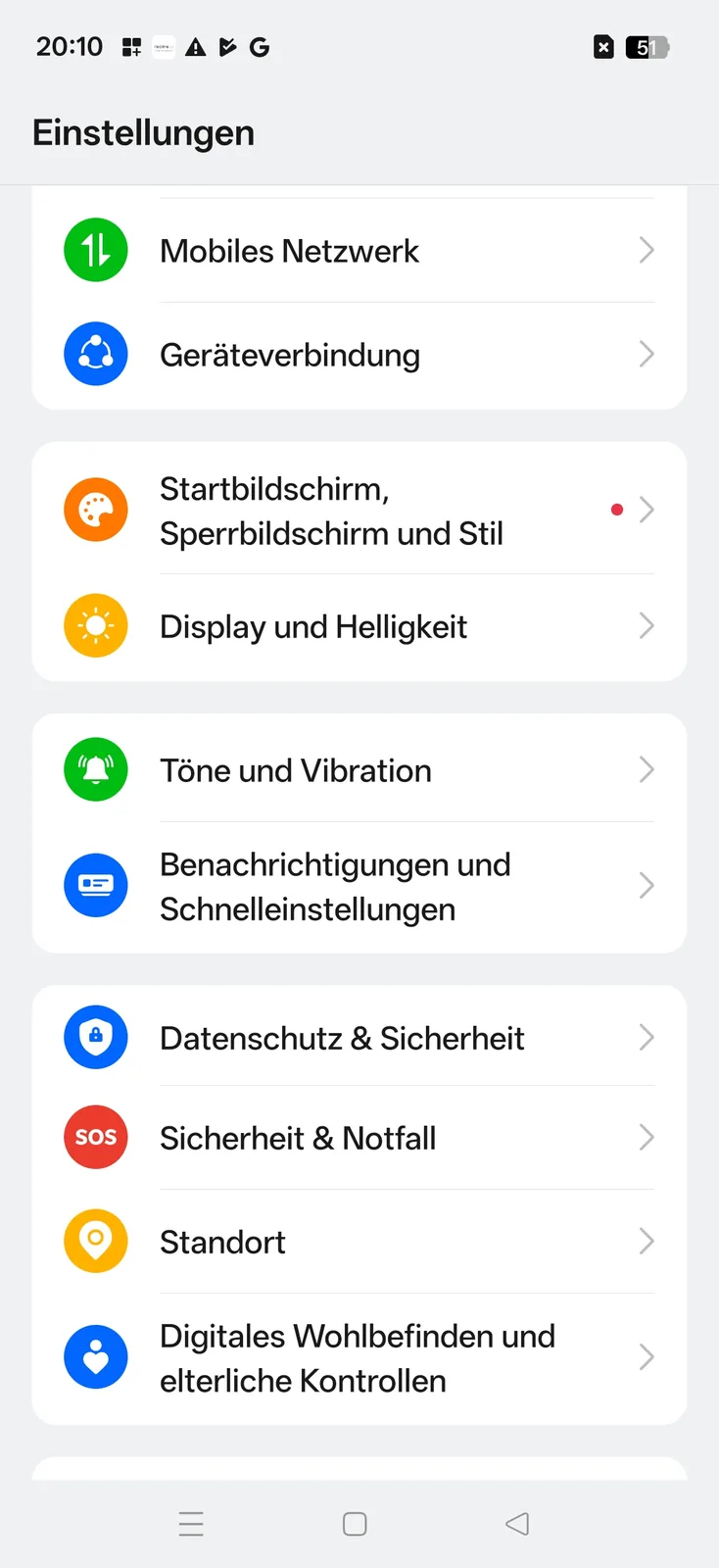
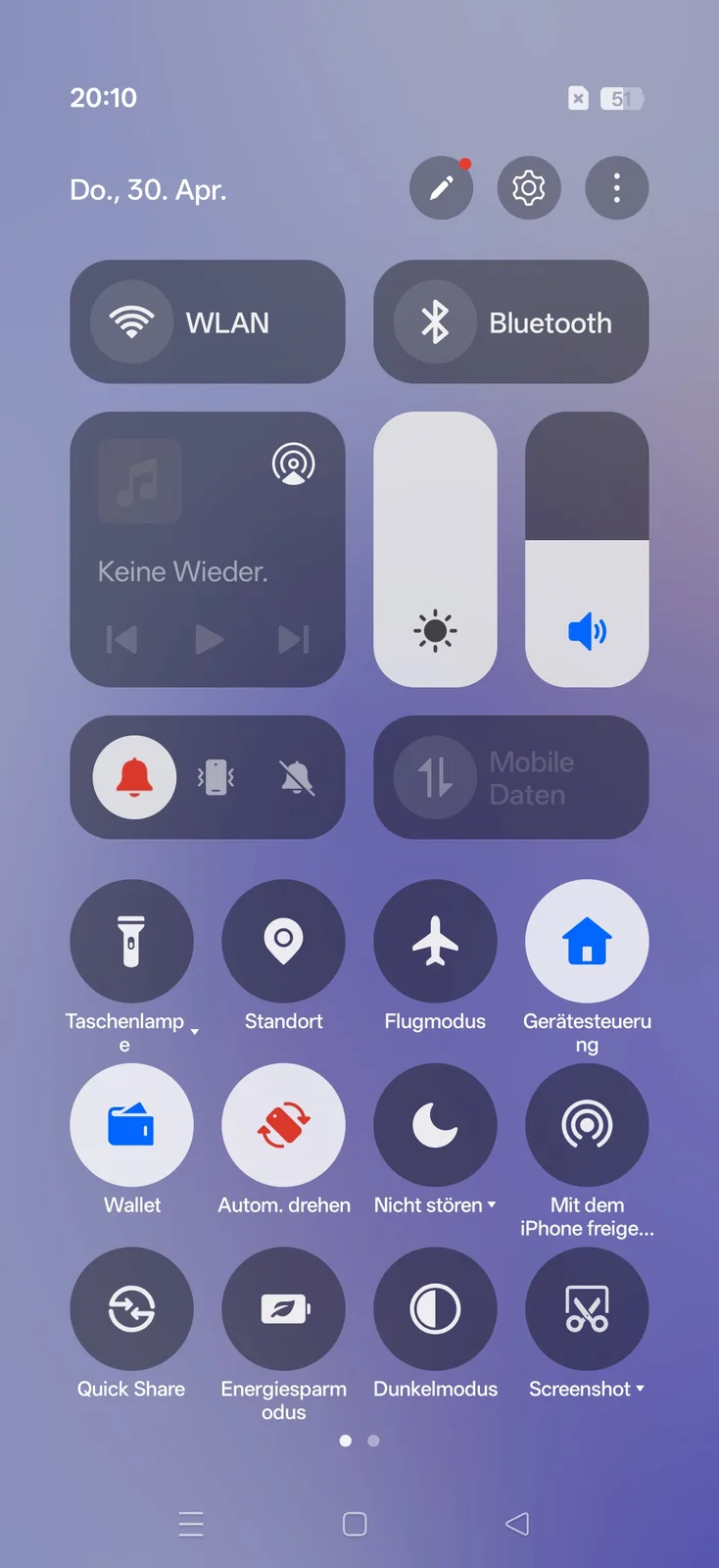
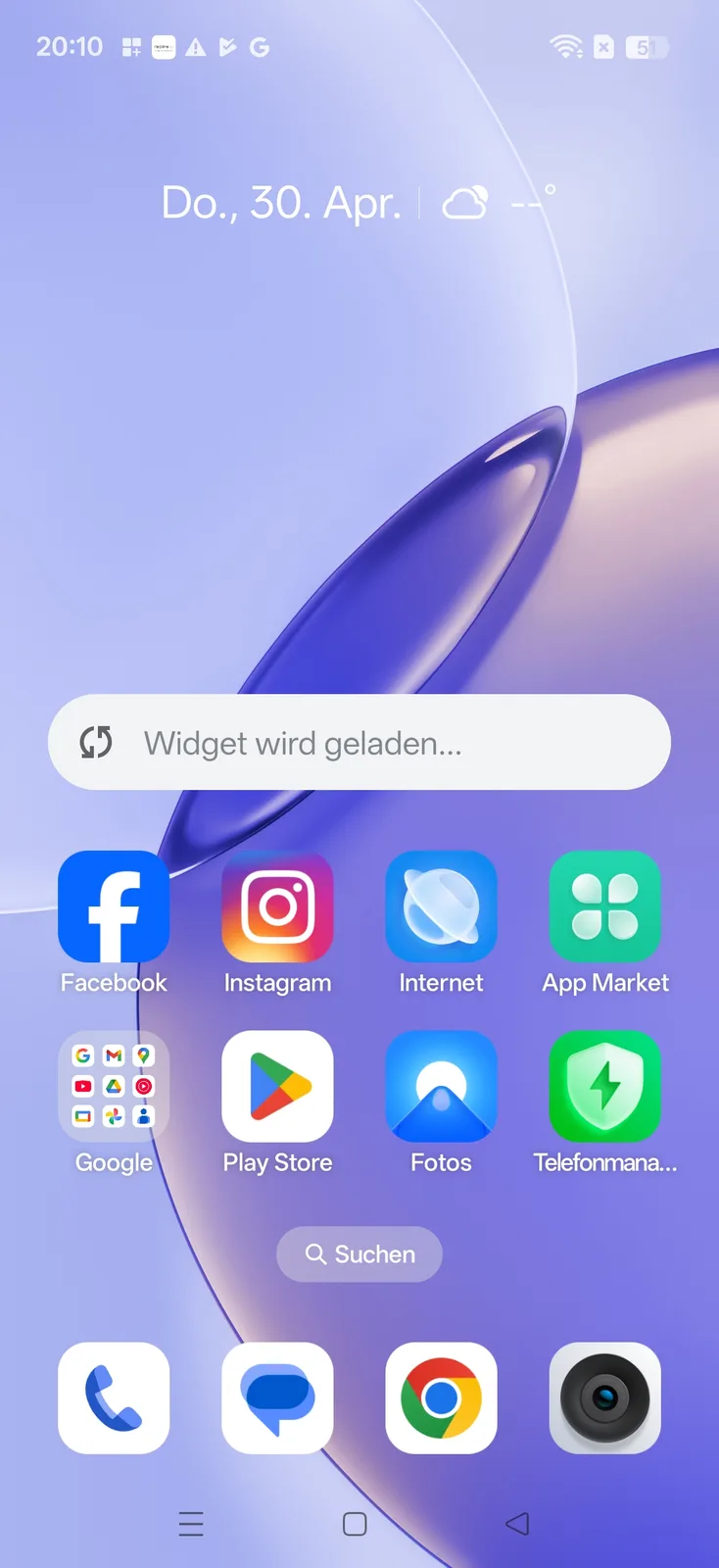
Realme guarantees five major Android upgrades for Europe and the latest security updates for six years. During the test, the realme 16 Pro used Android 16 and the in-house realme UI 7.0.
The manufacturer is keeping a low profile when it comes to sustainability. In the EPREL database, the mid-range phone is listed with repairability class "C". However, no information on recycling is provided here either.
The outer packaging of the realme 16 Pro appears to be free of plastic.
Cameras - mid-range phone with 200 MPix

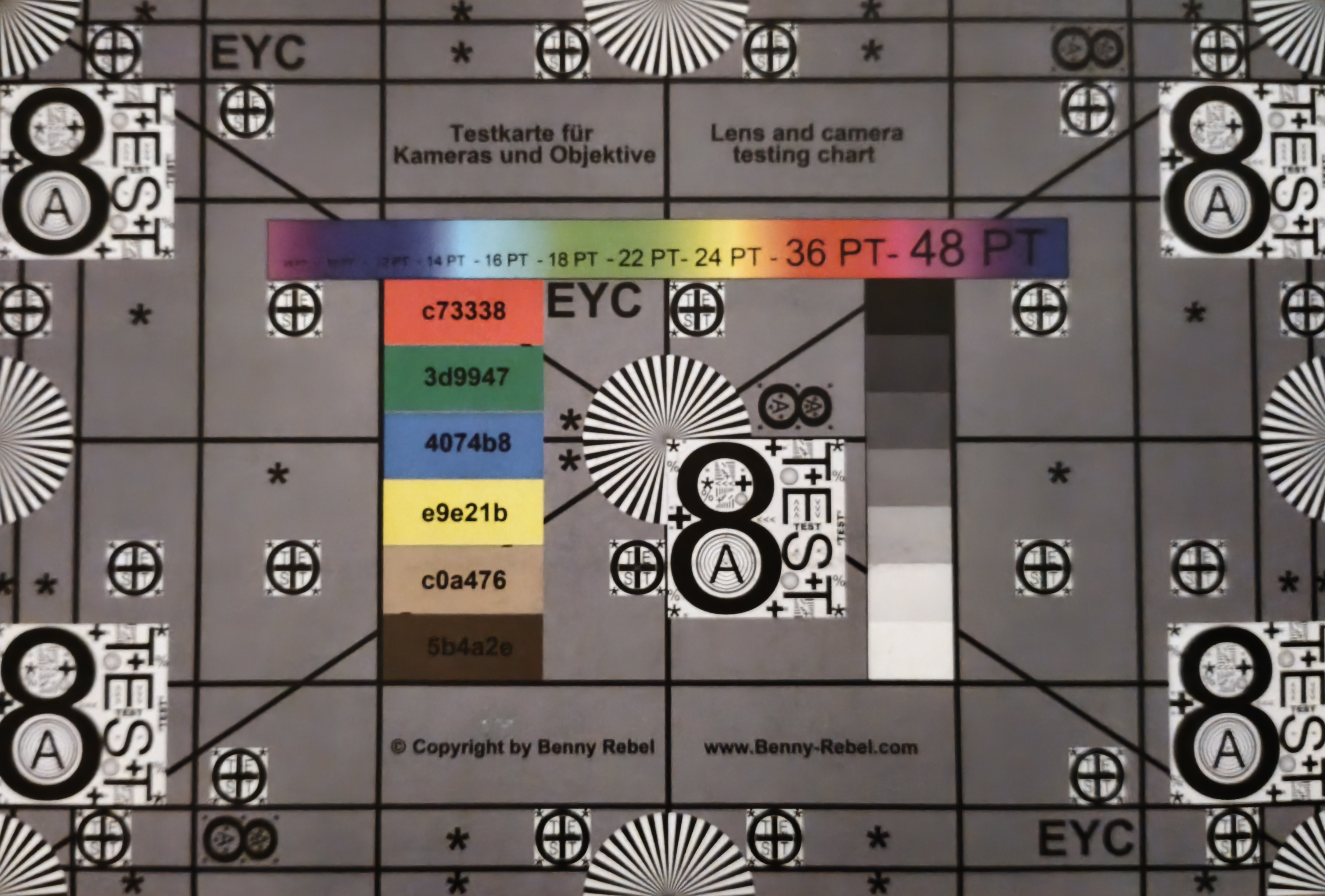
If you like taking selfies with a smartphone, you will hardly find a better phone in the most affordable mid-range than the realme 16 Pro.
However, the 200 MPix main camera gives rise to mixed feelings. In daylight, the results with the Samsung HP5 are quite good, but we would have liked a little more sharpness. There are also some outliers in the color reproduction. In the dark, the shutter release time increases massively and the quality drops significantly.
Zooming on the realme 16 Pro is exclusively digital. Thanks to the high number of pixels, the twofold magnification is lossless. The results are impressive in bright light, but we cannot say the same about the low-resolution 8 MPix ultra-wide angle.
Image comparison
Choose a scene and navigate within the first image. One click changes the position on touchscreens. One click on the zoomed-in image opens the original in a new window. The first image shows the scaled photograph of the test device.
Main cameraMain cameraLow LightUltra wide angle
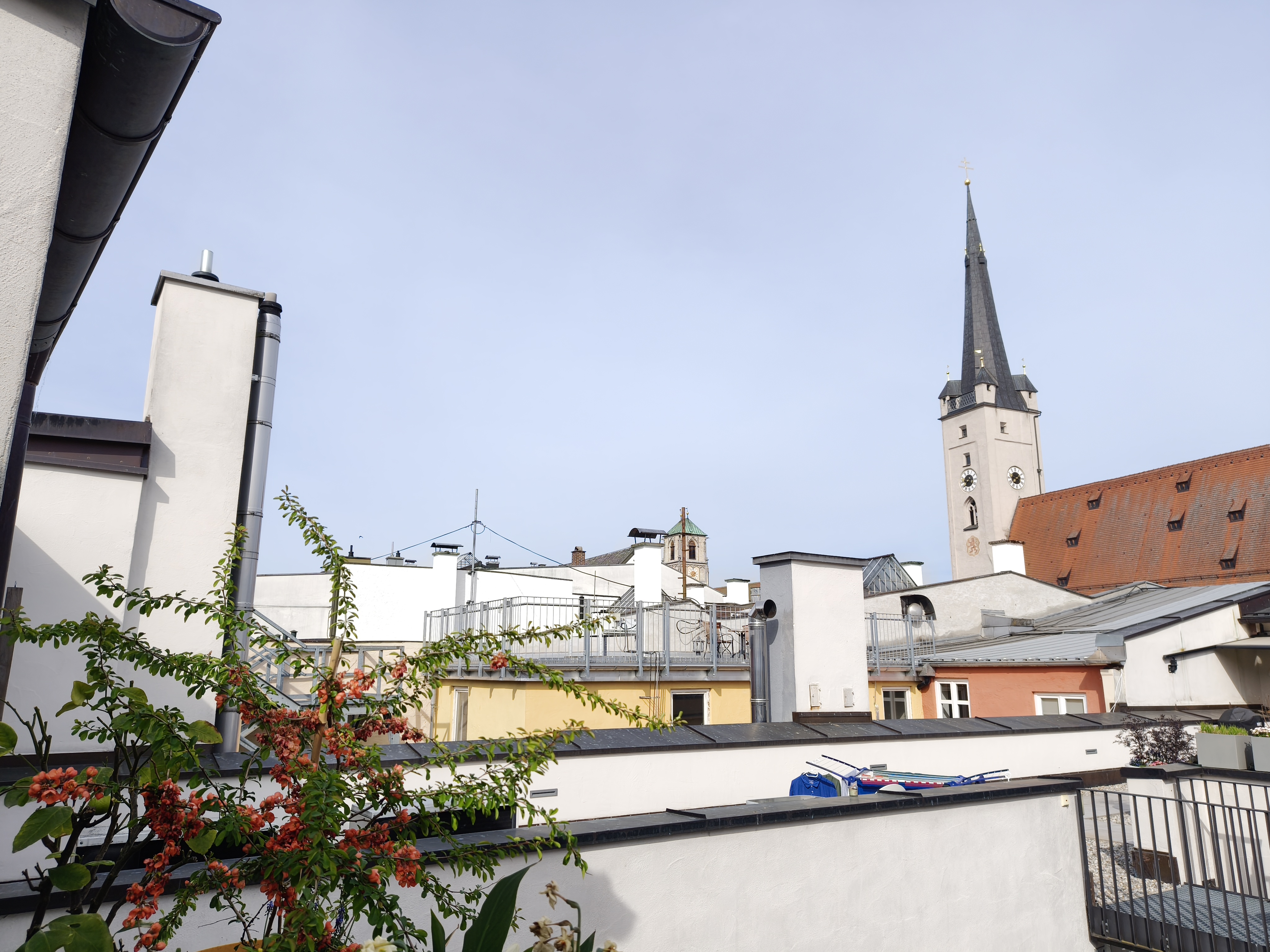

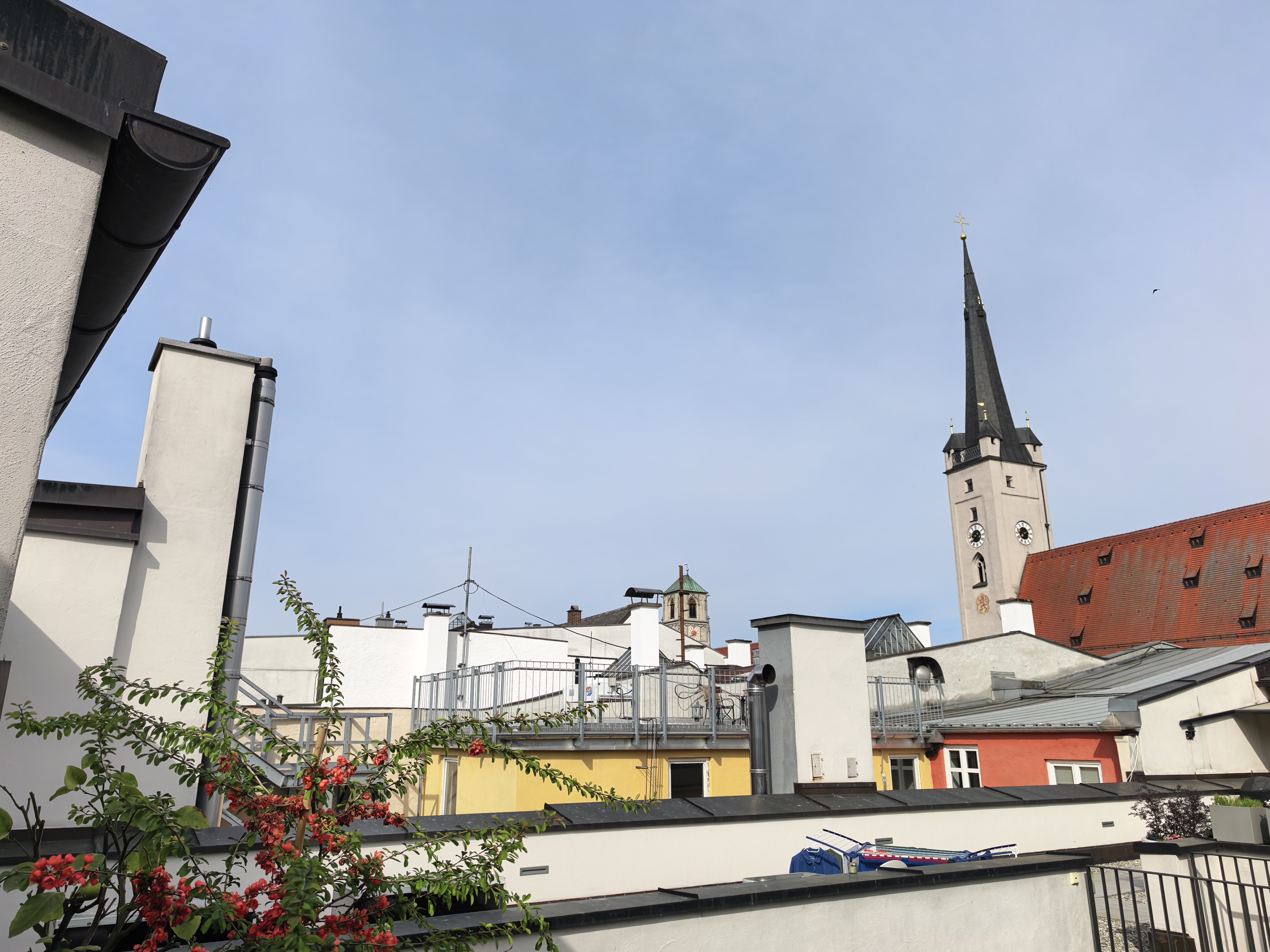









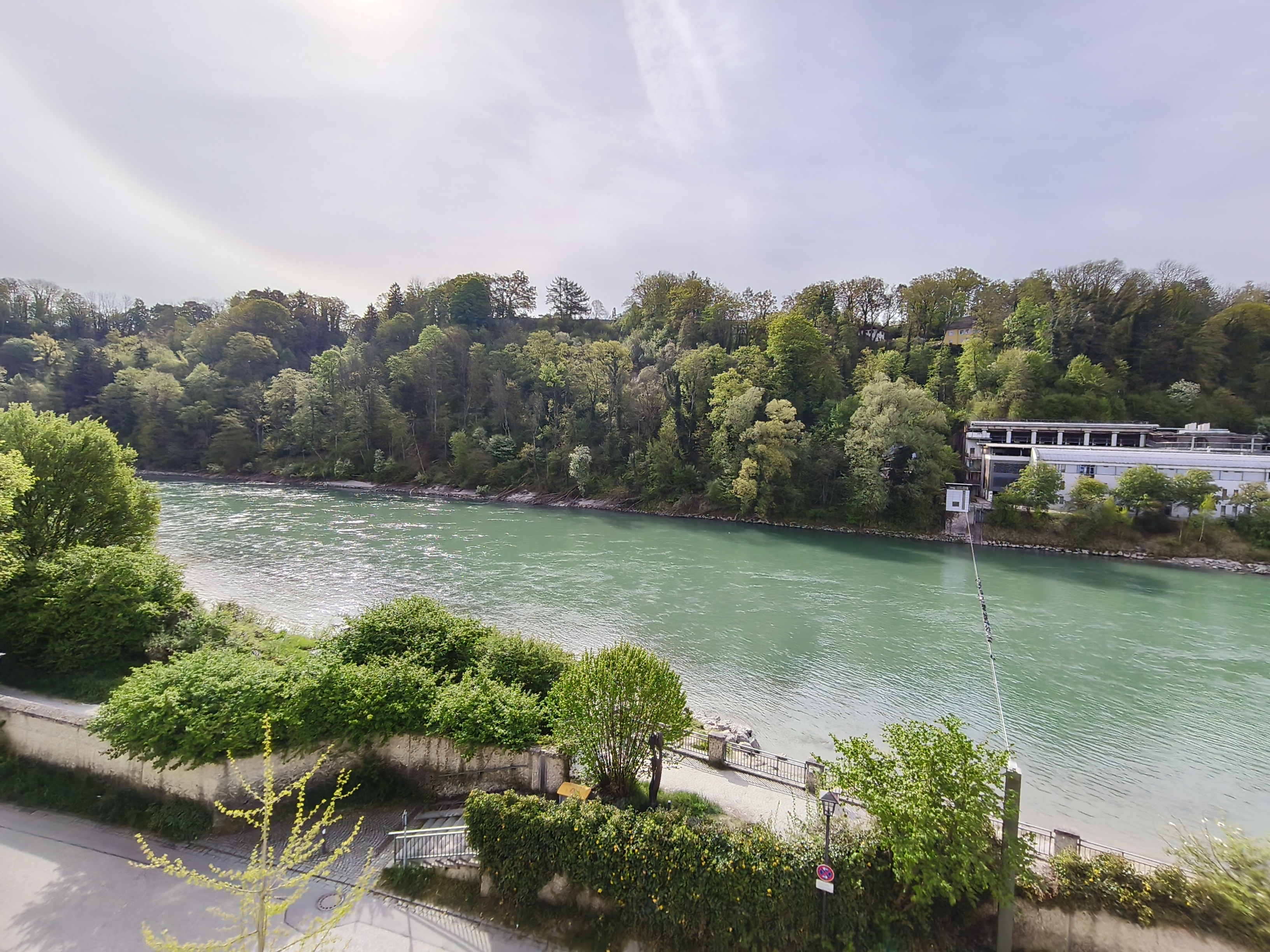




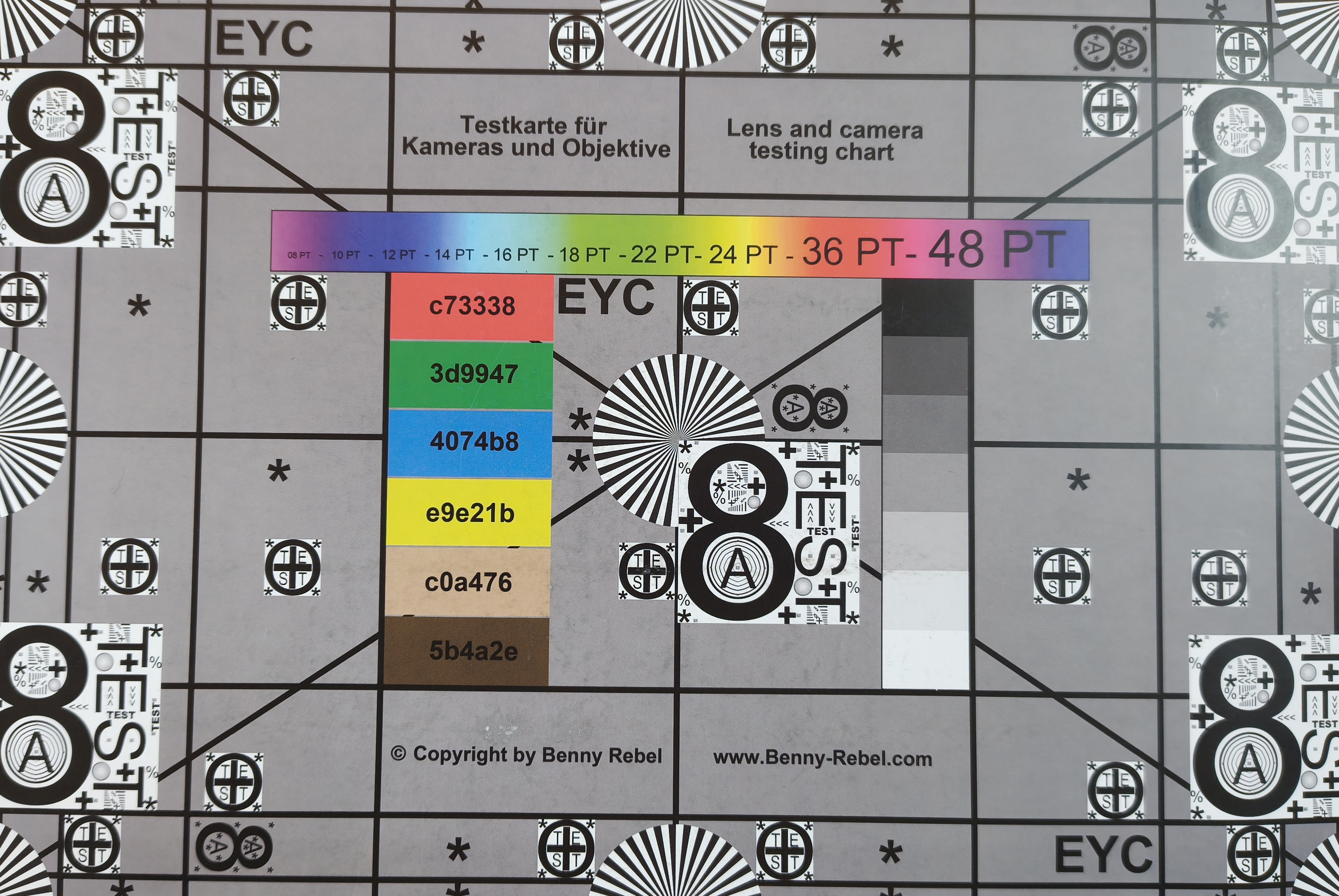


Display - Affordable Android phone with OLED screen
The 6.79-inch AMOLED panel of the realme 16 Pro uses a maximum frame rate of 144 Hz and should achieve a peak HDR brightness of 6,500 nits. However, we did not even achieve half of this in our measurements, although the brightness offered is also sufficient for good HDR effects.
Our APL test, which is relevant for everyday use, is surprisingly weak, as the mid-range phone only achieves a value similar to that of a full-surface white display - which is rather unusual for an OLED panel.
According to some statements, realme uses DC dimming to control the brightness, whereby in contrast to the Sister model Pro+ no precise details are given on the frequency. We measured a basic frequency of only 120 Hz, so people who are sensitive to PWM should test the OLED panel before making a purchase.
| |||||||||||||||||||||||||
Brightness Distribution: 96 %
Center on Battery: 1444 cd/m²
Contrast: ∞:1 (Black: 0 cd/m²)
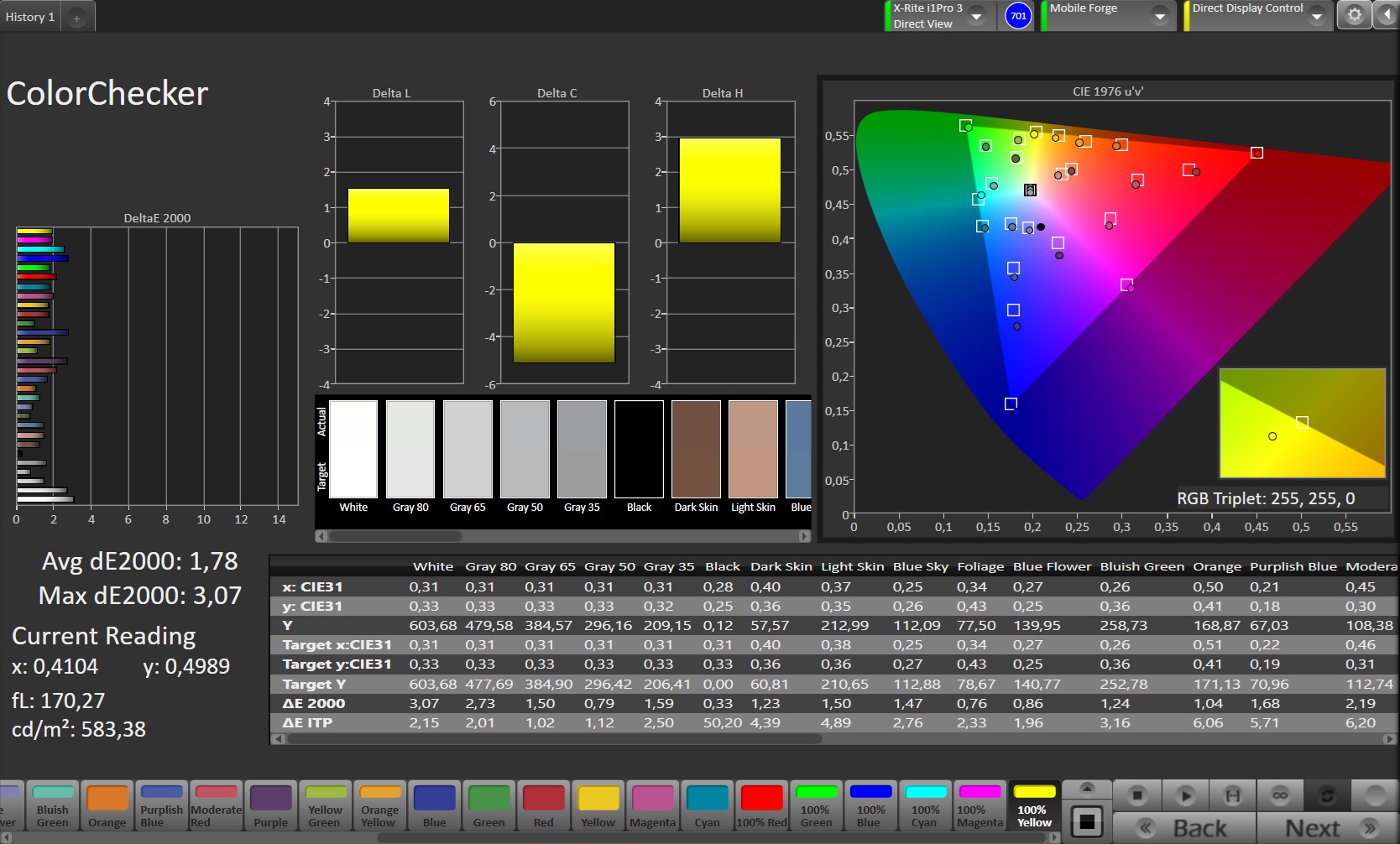
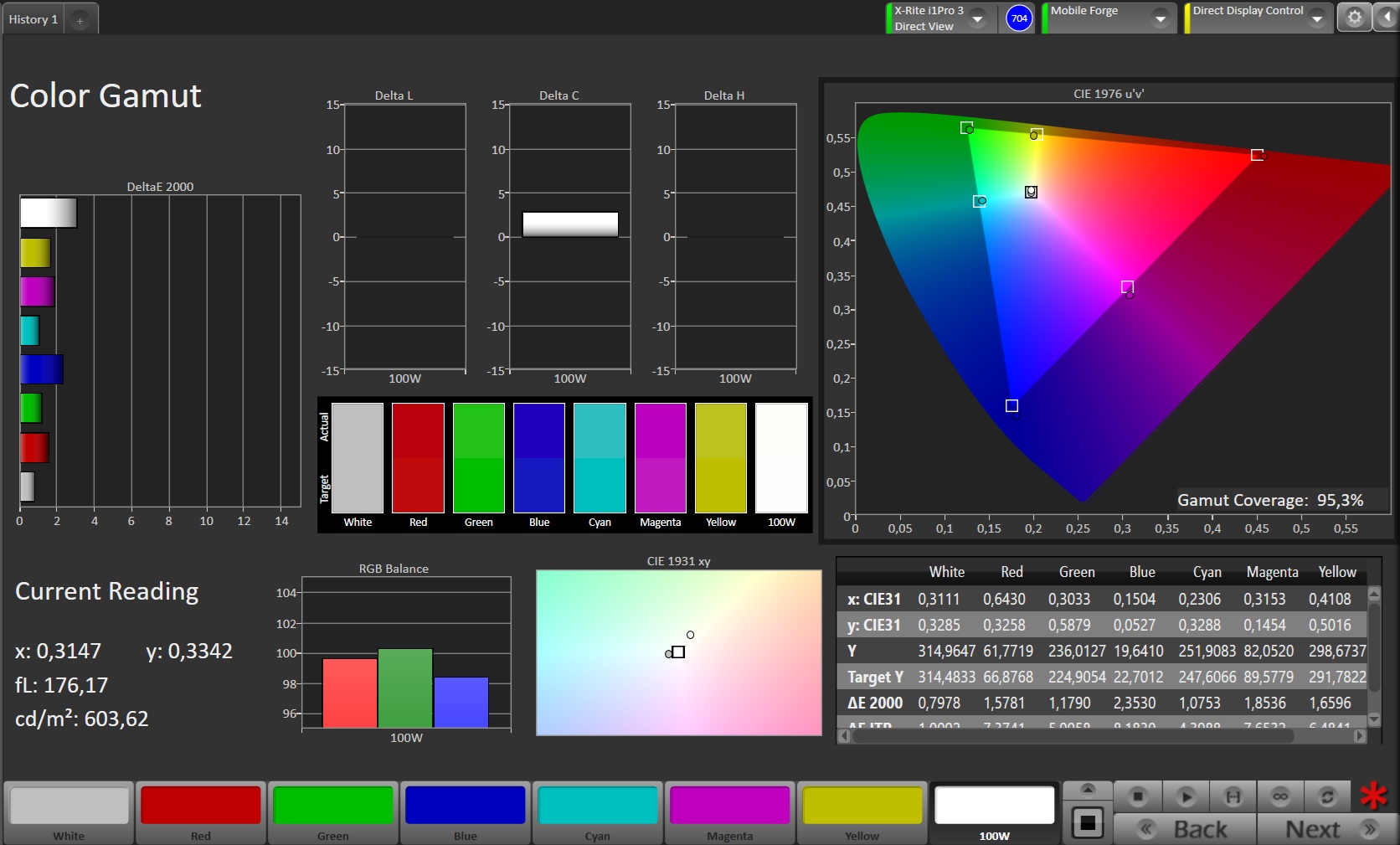
ΔE ColorChecker Calman: 1.78 | ∀{0.5-29.43 Ø4.69}
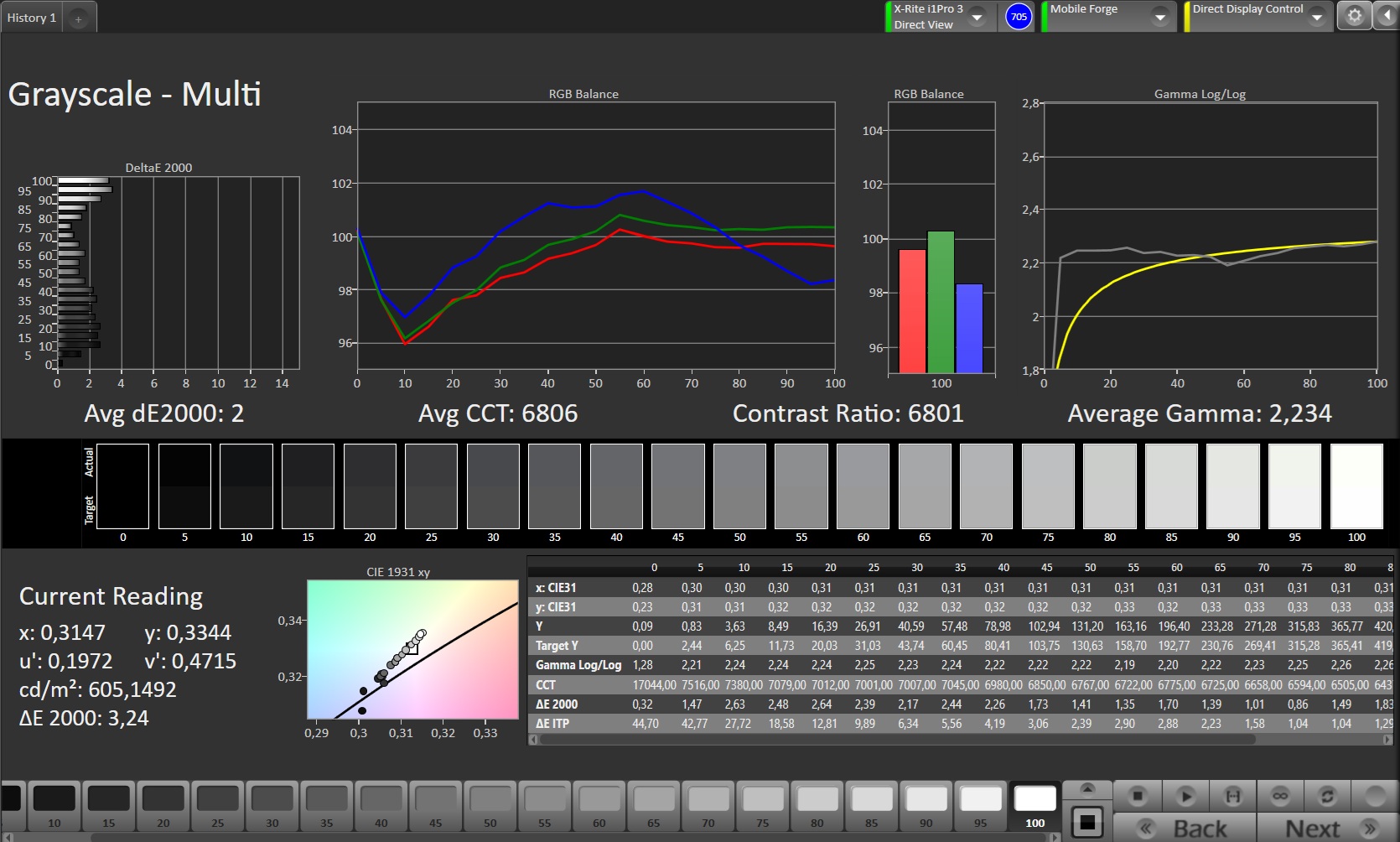
ΔE Greyscale Calman: 2 | ∀{0.09-98 Ø4.94}
95.3% sRGB (Calman 2D)
Gamma: 2.234
CCT: 6806 K
| Realme 16 Pro AMOLED, 2772x1272, 6.8" | Xiaomi Poco X8 Pro AMOLED, 2756x1268, 6.6" | Samsung Galaxy A36 5G Super AMOLED, 2340x1080, 6.7" | Motorola Edge 70 Fusion AMOLED, 2772x1272, 6.8" | |
|---|---|---|---|---|
| Screen | 1% | -6% | -3% | |
| Brightness middle (cd/m²) | 1444 | 1104 -24% | 1127 -22% | 1501 4% |
| Brightness (cd/m²) | 1414 | 1102 -22% | 1137 -20% | 1476 4% |
| Brightness Distribution (%) | 96 | 97 1% | 98 2% | 96 0% |
| Black Level * (cd/m²) | ||||
| Colorchecker dE 2000 * | 1.78 | 1.2 33% | 1.8 -1% | 1.52 15% |
| Colorchecker dE 2000 max. * | 3.07 | 2.4 22% | 2.8 9% | 3.47 -13% |
| Greyscale dE 2000 * | 2 | 2.1 -5% | 2.1 -5% | 2.6 -30% |
| Gamma | 2.234 98% | 2.22 99% | 2.11 104% | 2.184 101% |
| CCT | 6806 96% | 6472 100% | 6466 101% | 6444 101% |
* ... smaller is better
| Display / APL18 Peak Brightness | |
| Motorola Edge 70 Fusion | |
| Xiaomi Poco X8 Pro | |
| Samsung Galaxy A36 5G | |
| Realme 16 Pro | |
| Display / HDR Peak Brightness | |
| Motorola Edge 70 Fusion | |
| Xiaomi Poco X8 Pro | |
| Realme 16 Pro | |
| Samsung Galaxy A36 5G | |
Screen Flickering / PWM (Pulse-Width Modulation)
| Screen flickering / PWM detected | 120 Hz Amplitude: 13 % | 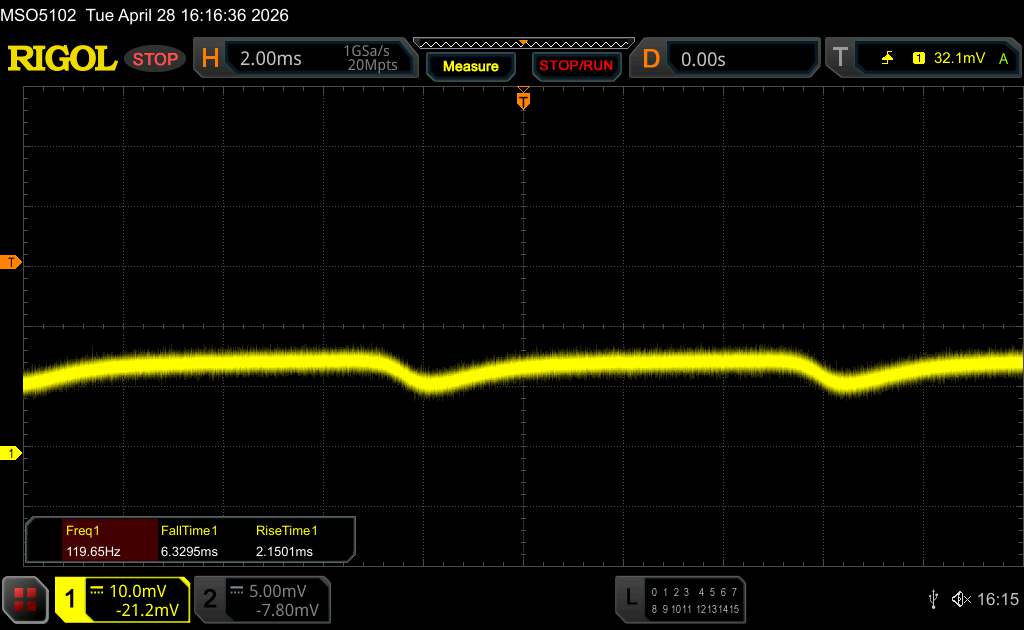 | |
The display backlight flickers at 120 Hz (worst case, e.g., utilizing PWM) . The frequency of 120 Hz is very low, so the flickering may cause eyestrain and headaches after extended use. In comparison: 52 % of all tested devices do not use PWM to dim the display. If PWM was detected, an average of 7625 (minimum: 5 - maximum: 343500) Hz was measured. | |||
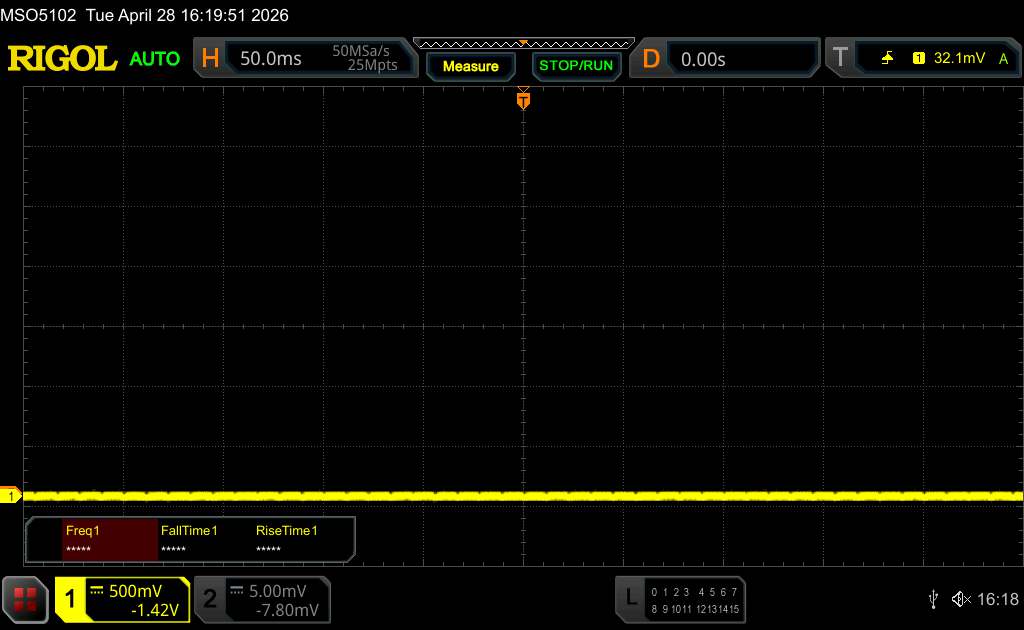
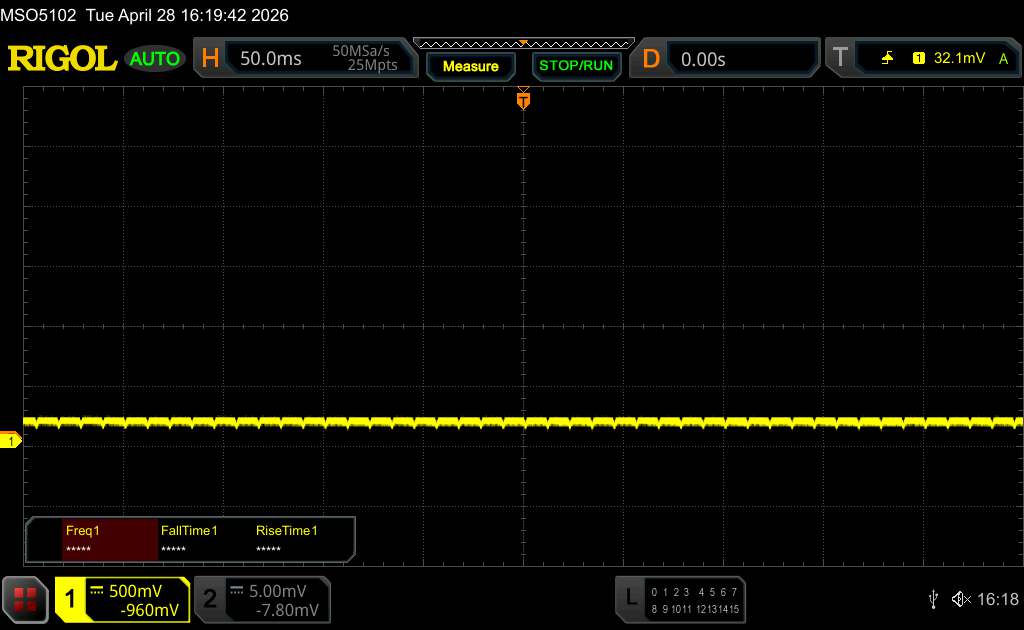
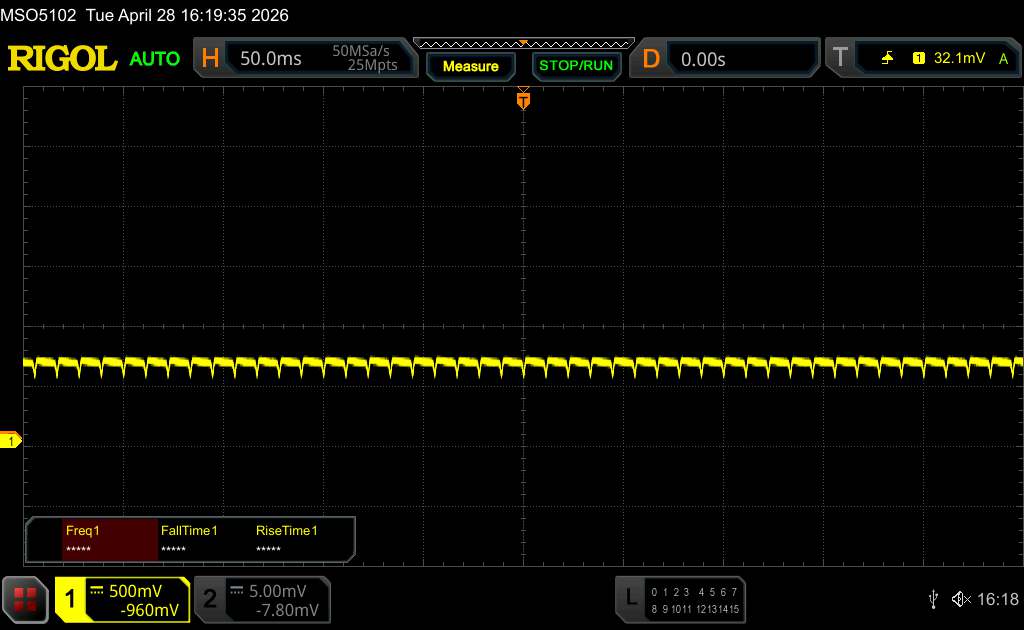
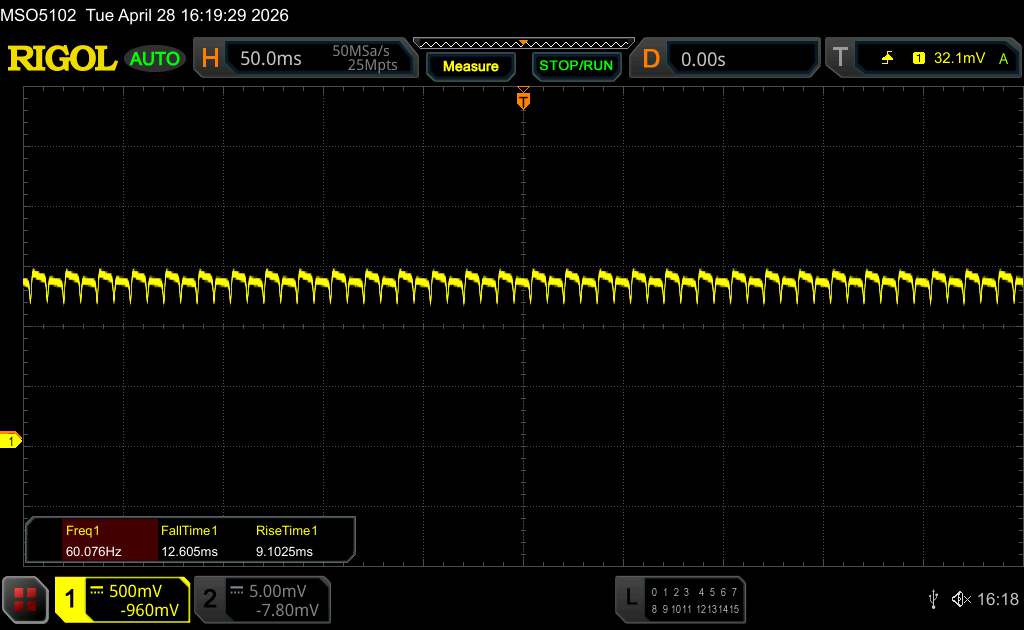
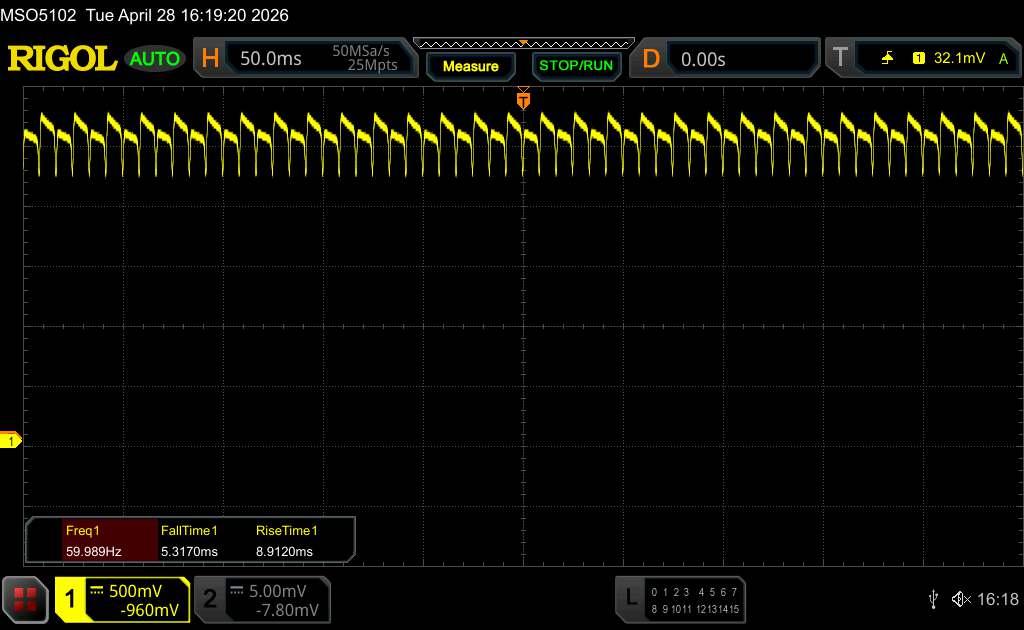
Measurement series with fixed zoom level and different brightness settings (The amplitude curve at minimum brightness looks flat, but this is due to the scaling. The info box shows the enlarged version of the amplitude at minimum brightness)
Display Response Times
| ↔ Response Time Black to White | ||
|---|---|---|
| 1.2 ms ... rise ↗ and fall ↘ combined | ↗ 0.6 ms rise | 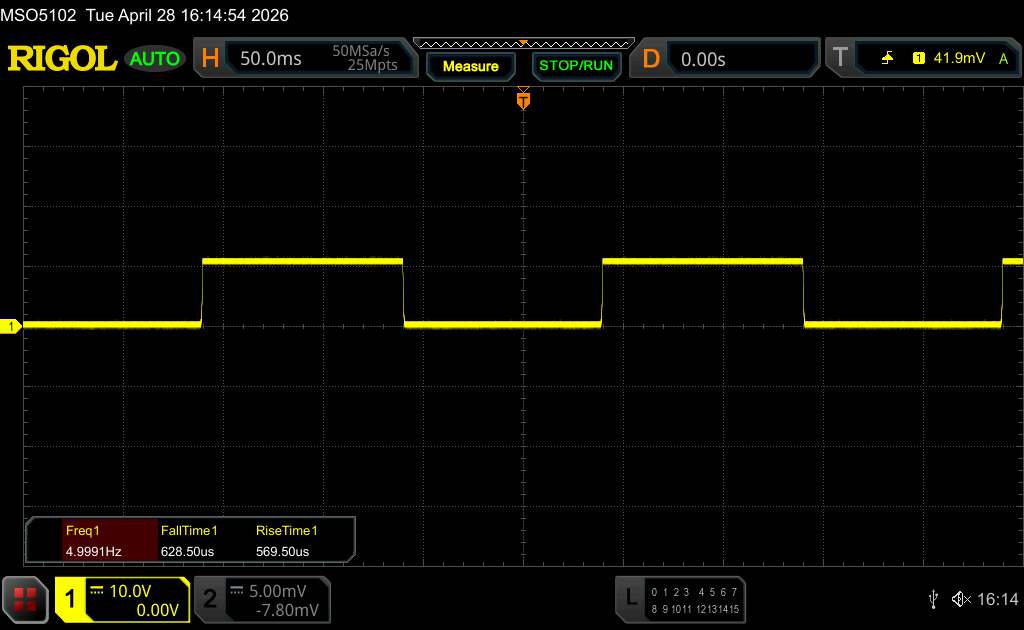 |
| ↘ 0.6 ms fall | ||
| The screen shows very fast response rates in our tests and should be very well suited for fast-paced gaming. In comparison, all tested devices range from 0.1 (minimum) to 240 (maximum) ms. » 7 % of all devices are better. This means that the measured response time is better than the average of all tested devices (19.7 ms). | ||
| ↔ Response Time 50% Grey to 80% Grey | ||
| 8.4 ms ... rise ↗ and fall ↘ combined | ↗ 7.9 ms rise | 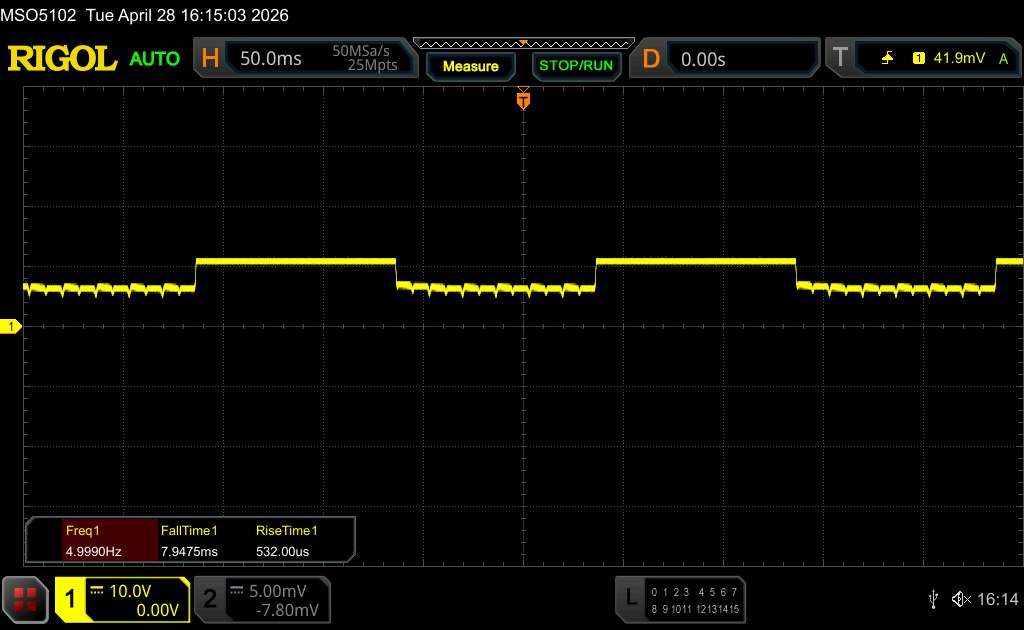 |
| ↘ 0.5 ms fall | ||
| The screen shows fast response rates in our tests and should be suited for gaming. In comparison, all tested devices range from 0.13 (minimum) to 636 (maximum) ms. » 22 % of all devices are better. This means that the measured response time is better than the average of all tested devices (30.7 ms). | ||
Performance, emissions and battery life - Android-Phone with a large battery capacity battery
The realme 16 Pro is equipped with a MediaTek Dimensity 7300 Max, which, however, does not perform better in our benchmark suite than a "normal" Dimensity 7300 with its Mali-G615 MP2. The mid-range phone is therefore not really powerful for this price range and the advertised attributes such as "lag-free" and "buttery smooth" cannot be maintained by the realme 16 Pro in everyday use.
The stereo speakers are okay for the affordable mid-range, but quickly sound tinny at higher volumes. The manufacturer advertises "300% percent ultra volume", so you can increase the volume beyond the normal level, but our pink noise measurement shows hardly any depth in the sound. The speakers don't get really loud either.
Realme installs a large 6,500 mAh battery, which can be charged via USB-C with up to 45 watts. In our Wi-Fi test, we achieved a very good battery life of over a day.
| Jetstream 2 - 2.0 Total | |
| Average of class Smartphone (63.9 - 423, n=116, last 2 years) | |
| Motorola Edge 70 Fusion | |
| Samsung Galaxy A36 5G | |
| Realme 16 Pro | |
| Average MediaTek Dimensity 7300 (60.2 - 138.5, n=9) | |
| Realme 16 Pro | Xiaomi Poco X8 Pro | Samsung Galaxy A36 5G | Motorola Edge 70 Fusion | Average 256 GB UFS 3.1 Flash | Average of class Smartphone | |
|---|---|---|---|---|---|---|
| AndroBench 3-5 | 28% | -65% | 2% | -22% | 0% | |
| Sequential Read 256KB (MB/s) | 1836.83 | 3576.86 95% | 968.34 -47% | 2049.4 12% | 1770 ? -4% | 2280 ? 24% |
| Sequential Write 256KB (MB/s) | 1723.54 | 3565.14 107% | 166.77 -90% | 1825.9 6% | 1236 ? -28% | 1974 ? 15% |
| Random Read 4KB (MB/s) | 371.21 | 324.76 -13% | 233.98 -37% | 351.2 -5% | 289 ? -22% | 316 ? -15% |
| Random Write 4KB (MB/s) | 472.02 | 112.05 -76% | 62.58 -87% | 452.1 -4% | 319 ? -32% | 362 ? -23% |
(±) The maximum temperature on the upper side is 42 °C / 108 F, compared to the average of 35.3 °C / 96 F, ranging from 21.9 to 247 °C for the class Smartphone.
(±) The bottom heats up to a maximum of 43.5 °C / 110 F, compared to the average of 34.1 °C / 93 F
(+) In idle usage, the average temperature for the upper side is 26.6 °C / 80 F, compared to the device average of 33 °C / 91 F.
3DMark Stress Tests
| 3DMark | |
| Wild Life Stress Test Stability | |
| Samsung Galaxy A36 5G | |
| Motorola Edge 70 Fusion | |
| Realme 16 Pro | |
| Xiaomi Poco X8 Pro | |
| Wild Life Extreme Stress Test | |
| Realme 16 Pro | |
| Samsung Galaxy A36 5G | |
| Motorola Edge 70 Fusion | |
| Xiaomi Poco X8 Pro | |
Realme 16 Pro audio analysis
(+) | speakers can play relatively loud (84.7 dB)
Bass 100 - 315 Hz
(-) | nearly no bass - on average 22.7% lower than median
(-) | bass is not linear (21.3% delta to prev. frequency)
Mids 400 - 2000 Hz
(±) | higher mids - on average 7.4% higher than median
(±) | linearity of mids is average (7.9% delta to prev. frequency)
Highs 2 - 16 kHz
(+) | balanced highs - only 3.8% away from median
(±) | linearity of highs is average (7.3% delta to prev. frequency)
Overall 100 - 16.000 Hz
(±) | linearity of overall sound is average (24% difference to median)
Compared to same class
» 56% of all tested devices in this class were better, 8% similar, 36% worse
» The best had a delta of 11%, average was 34%, worst was 136%
Compared to all devices tested
» 72% of all tested devices were better, 6% similar, 22% worse
» The best had a delta of 4%, average was 23%, worst was 136%
Motorola Edge 70 Fusion audio analysis
(±) | speaker loudness is average but good (78.5 dB)
Bass 100 - 315 Hz
(-) | nearly no bass - on average 20.3% lower than median
(-) | bass is not linear (25.6% delta to prev. frequency)
Mids 400 - 2000 Hz
(±) | higher mids - on average 8.1% higher than median
(-) | mids are not linear (15% delta to prev. frequency)
Highs 2 - 16 kHz
(+) | balanced highs - only 3.9% away from median
(±) | linearity of highs is average (13% delta to prev. frequency)
Overall 100 - 16.000 Hz
(-) | overall sound is not linear (35.7% difference to median)
Compared to same class
» 86% of all tested devices in this class were better, 1% similar, 13% worse
» The best had a delta of 11%, average was 34%, worst was 136%
Compared to all devices tested
» 94% of all tested devices were better, 1% similar, 5% worse
» The best had a delta of 4%, average was 23%, worst was 136%
| Realme 16 Pro 6500 mAh | Xiaomi Poco X8 Pro 6500 mAh | Samsung Galaxy A36 5G 5000 mAh | Motorola Edge 70 Fusion 7000 mAh | |
|---|---|---|---|---|
| Battery runtime | ||||
| WiFi v1.3 (h) | 26.3 | 19.4 -26% | 14.8 -44% | 24.5 -7% |
Notebookcheck overall rating
If you are looking for a large and bright OLED screen in the affordable mid-range, the realme 16 Pro is the right choice.
However, the realme phone is a long way off the strong competition in many areas.

Realme 16 Pro
- 05/09/2026 v8
Marcus Herbrich
 Total Sustainability Score:
 Possible alternatives in comparison
Image | Model / Review | Price | Weight | Drive | Display |
|---|---|---|---|---|---|
1. 77.3%  | Realme 16 Pro MediaTek Dimensity 7300 ⎘ ARM Mali-G615 MP2 ⎘ 8 GB Memory, 256 GB UFS 3.1 | List Price: 380€ | 192 g | 256 GB UFS 3.1 Flash | 6.78" 2772x1272 450 PPI AMOLED |
2. 83.8%  | Xiaomi Poco X8 Pro MediaTek Dimensity 8500 ⎘ ARM Mali-G720 MP8 ⎘ 12 GB Memory, 512 GB UFS 4.x | Amazon: $349.99 List Price: 400€ | 202 g | 512 GB UFS 4.1 Flash | 6.59" 2756x1268 460 PPI AMOLED |
3. 78%  | Samsung Galaxy A36 5G Qualcomm Snapdragon 6 Gen 3 ⎘ Qualcomm Adreno 710 ⎘ 6 GB Memory, 256 GB UFS 3.1 | List Price: 379€ | 195 g | 256 GB UFS 3.1 Flash | 6.70" 2340x1080 385 PPI Super AMOLED |
4. 77.4% 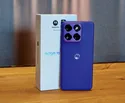 | Motorola Edge 70 Fusion Qualcomm Snapdragon 7s Gen 3 ⎘ Qualcomm Adreno 810 ⎘ 8 GB Memory, 256 GB UFS 3.1 | List Price: 420€ | 193 g | 256 GB UFS 3.1 Flash | 6.78" 2772x1272 450 PPI AMOLED |
Transparency
The selection of devices to be reviewed is made by our editorial team. The test sample was provided to the author as a loan by the manufacturer or retailer for the purpose of this review. The lender had no influence on this review, nor did the manufacturer receive a copy of this review before publication. There was no obligation to publish this review. As an independent media company, Notebookcheck is not subjected to the authority of manufacturers, retailers or publishers.
This is how Notebookcheck is testing
Every year, Notebookcheck independently reviews hundreds of laptops and smartphones using standardized procedures to ensure that all results are comparable. We have continuously developed our test methods for around 20 years and set industry standards in the process. In our test labs, high-quality measuring equipment is utilized by experienced technicians and editors. These tests involve a multi-stage validation process. Our complex rating system is based on hundreds of well-founded measurements and benchmarks, which maintains objectivity. Further information on our test methods can be found here.
 Add as a preferred source on Google


