




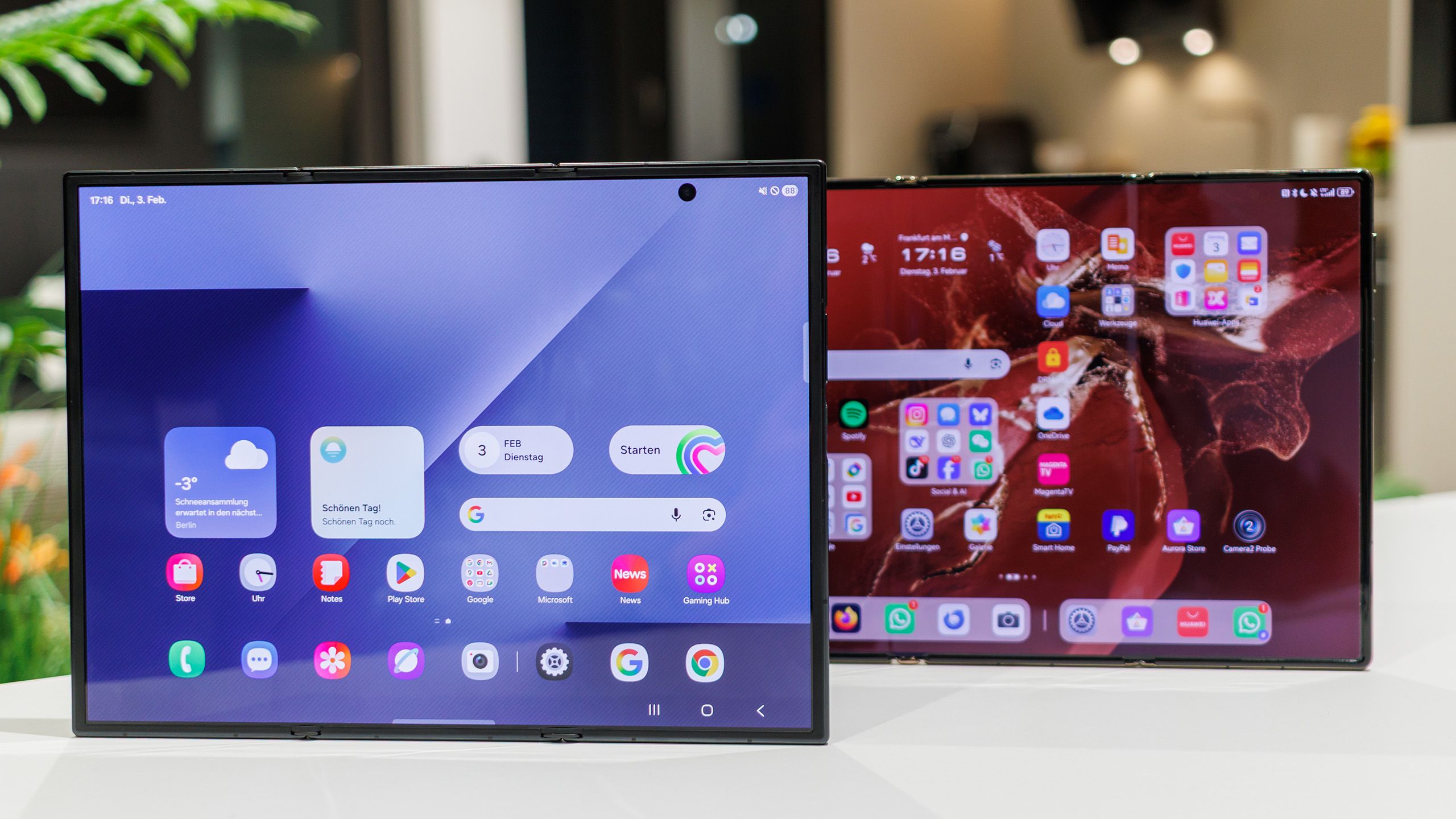
Samsung Galaxy Z TriFold Hands-On: Better than the Huawei Mate XT?
Daniel Schmidt 👁 (translated by Daniel Schmidt) Published 🇩🇪 🇪🇸 ...
The Samsung Galaxy Z TriFold marks Samsung's first commercially viable step into the era of tri-fold devices and is clearly positioned as a technical showcase for users who want to combine a smartphone, tablet, and (to some extent) notebook in one device.
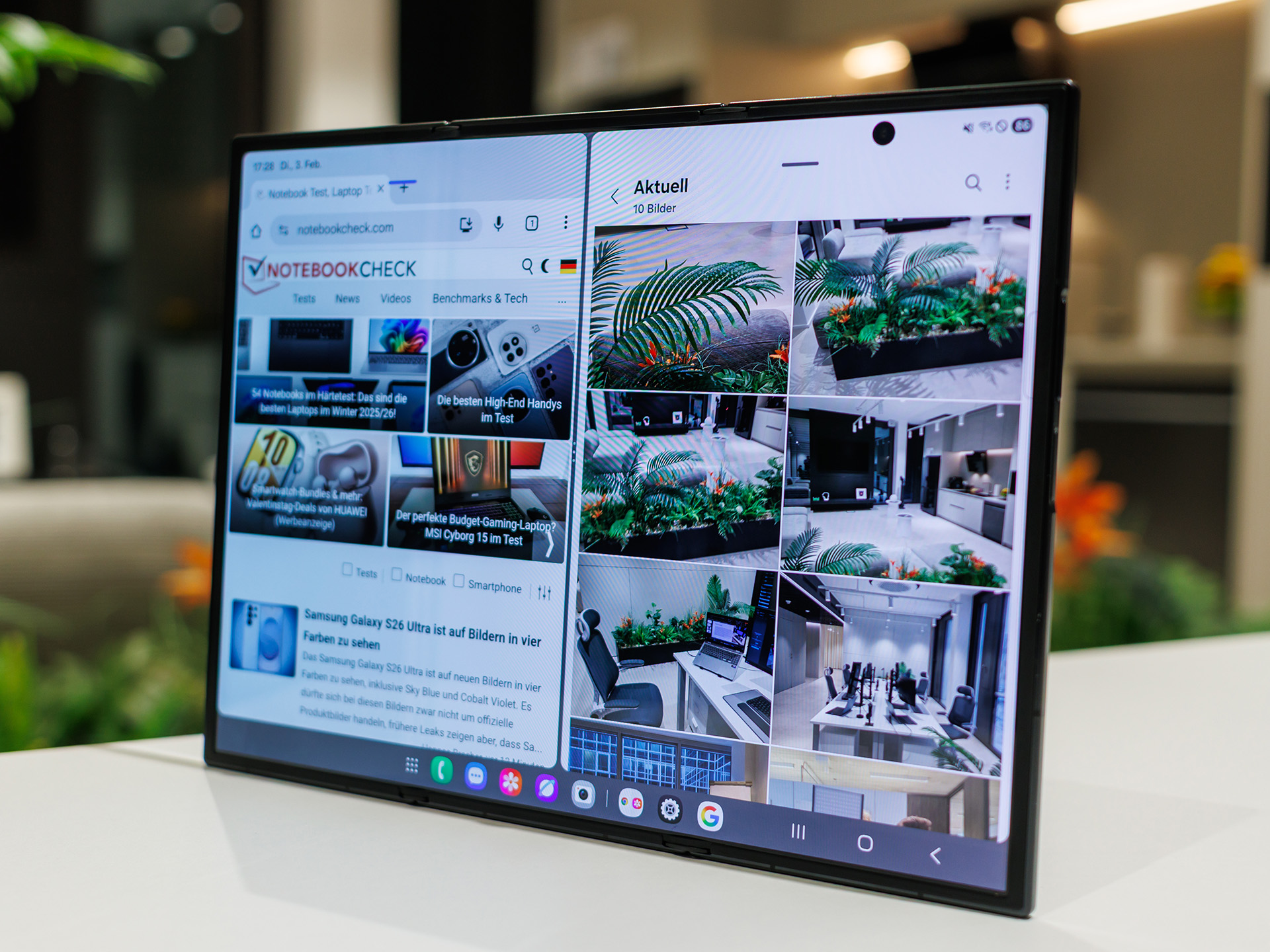
When folded, it fits reasonably well in the hand like a typical smartphone, but when unfolded, it reveals a 10-inch Dynamic AMOLED 2X panel with high resolution and a 120 Hz refresh rate, which is ideal for multitasking, creative work, and media consumption. The inner display is complemented by a full-fledged cover screen, which allows for classic smartphone operation without folding in everyday use and is designed to impress with its high brightness and fast display, even outdoors.
At the heart of the device is a high-end SoC from the Snapdragon 8 Elite class, flanked by ample RAM and up to 1 TB of internal storage, providing performance reserves for demanding apps, multi-window operation, and the numerous Galaxy AI features. The battery uses a multi-cell design to make optimal use of the complex folding layout, offers a solid nominal capacity, and supports fast charging (by Samsung standards). However, given the large display area, the actual runtime remains an important practical issue that still needs to be clarified in a detailed test.
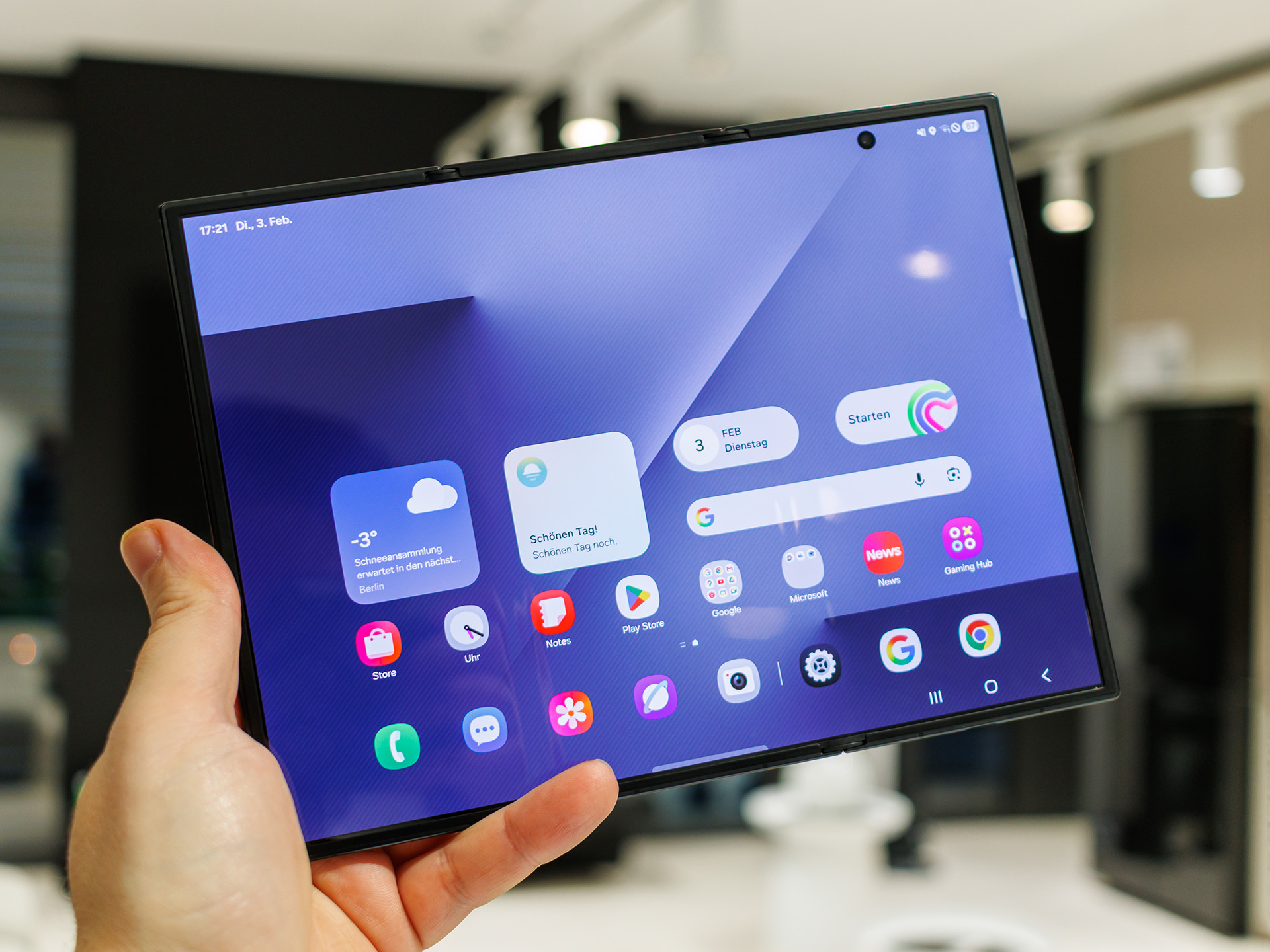
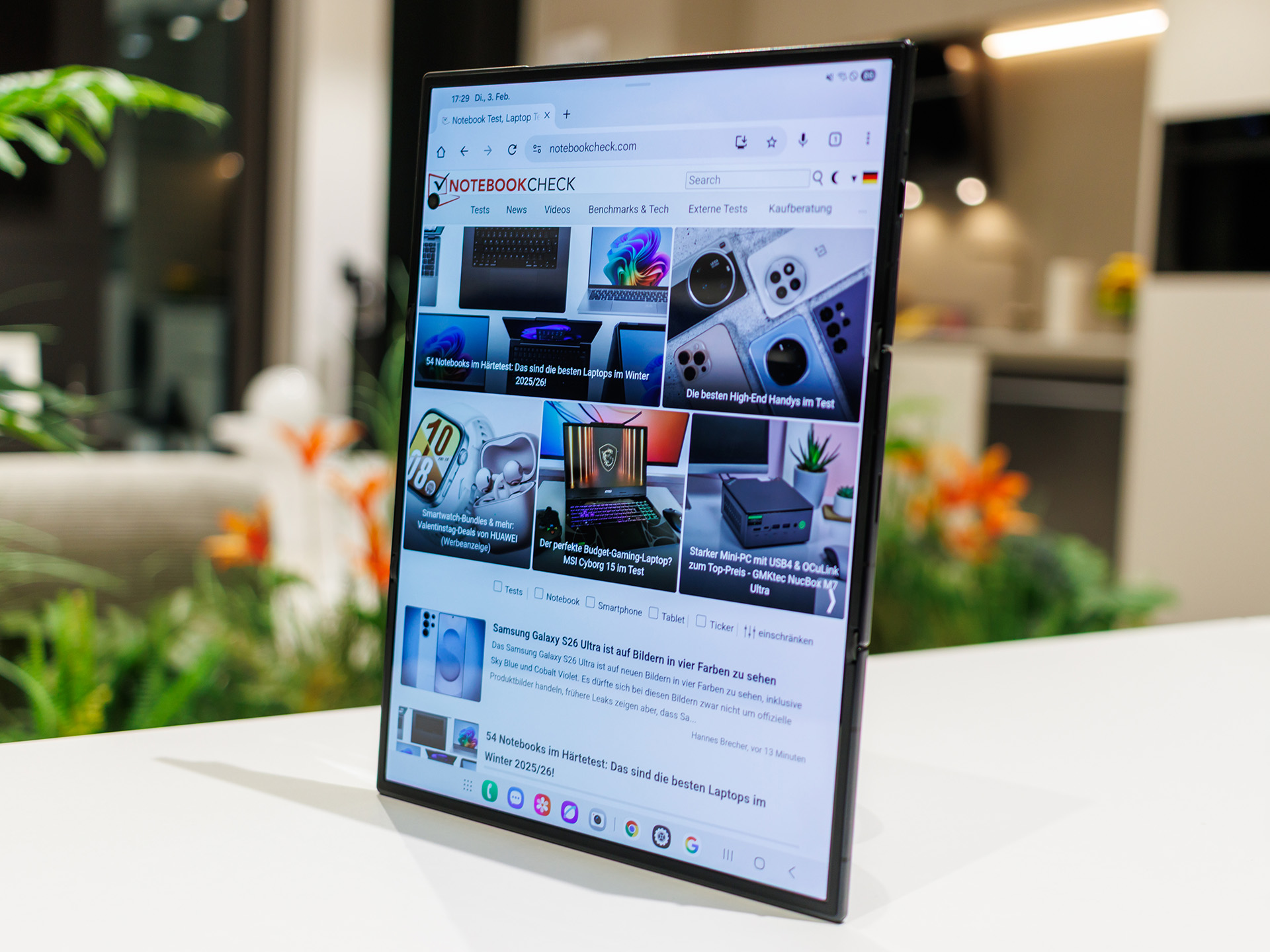
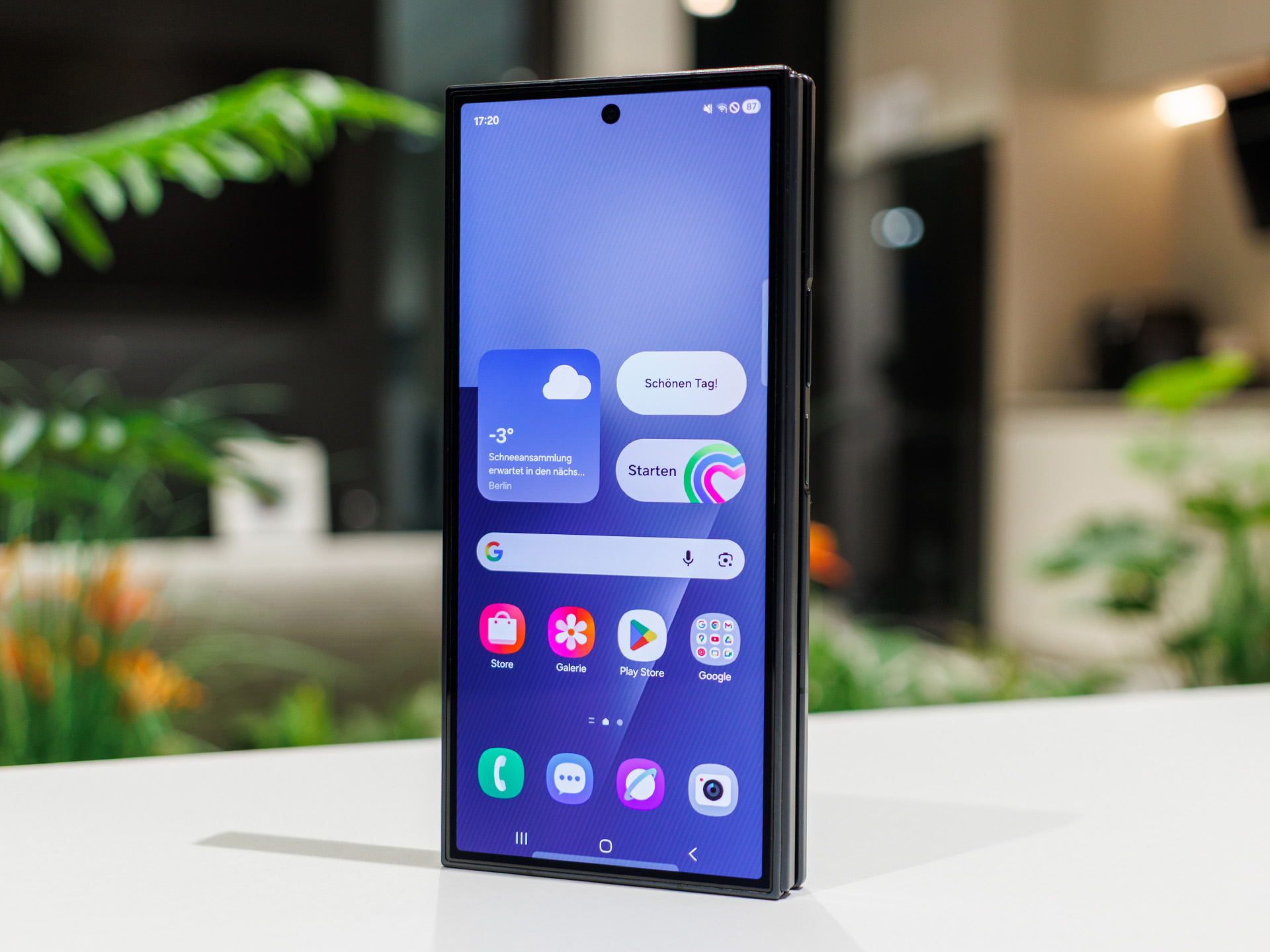
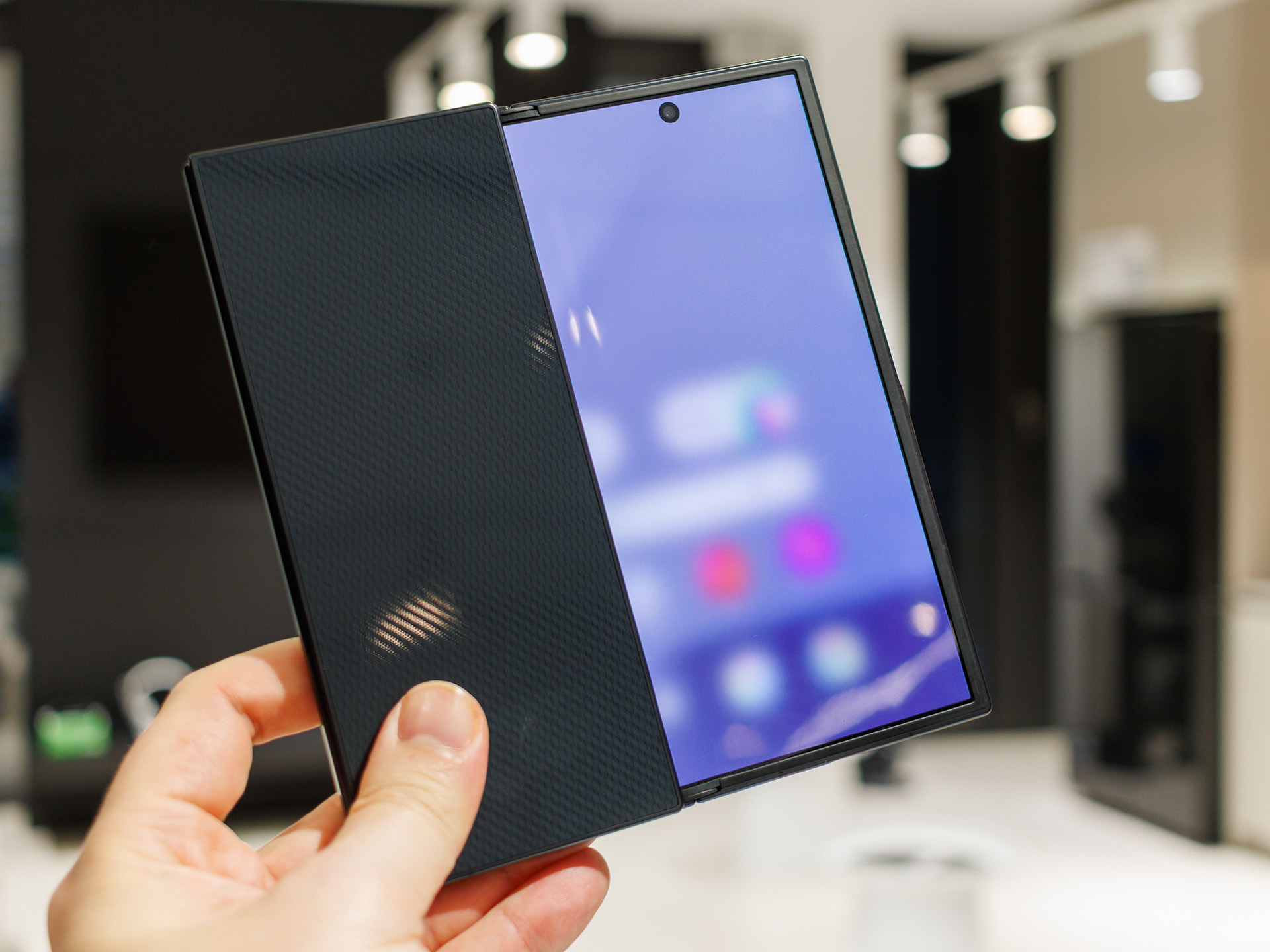
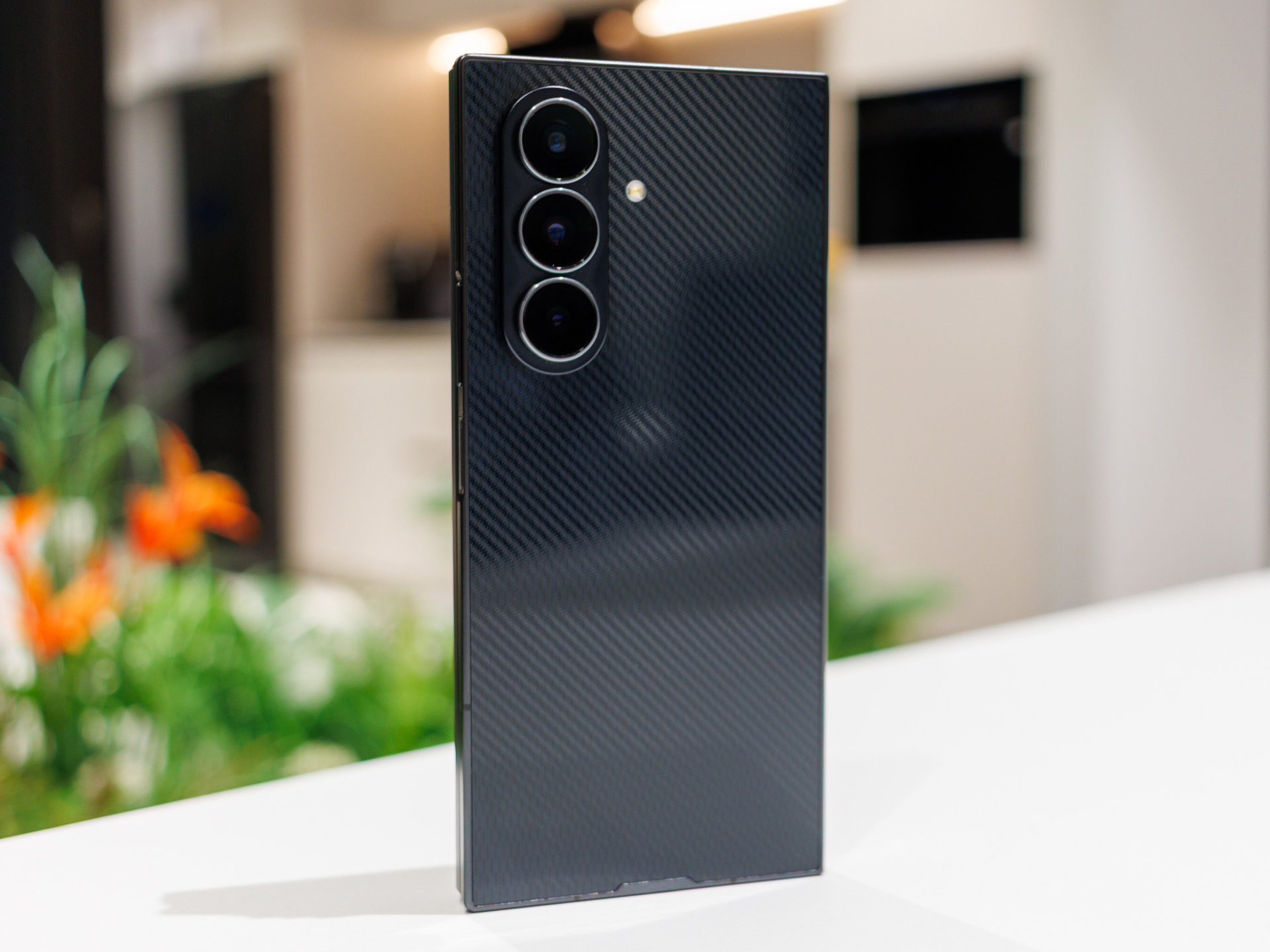
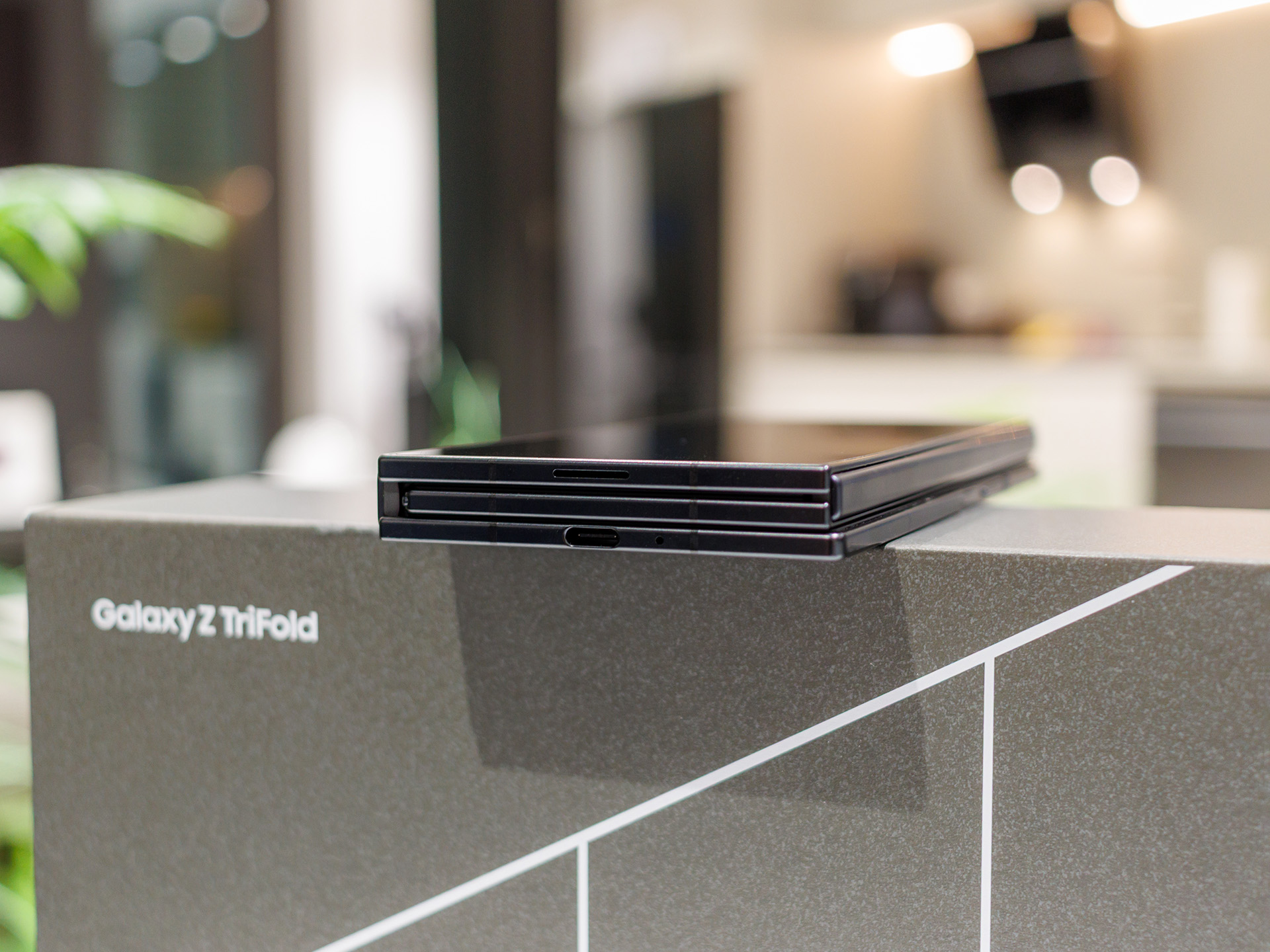
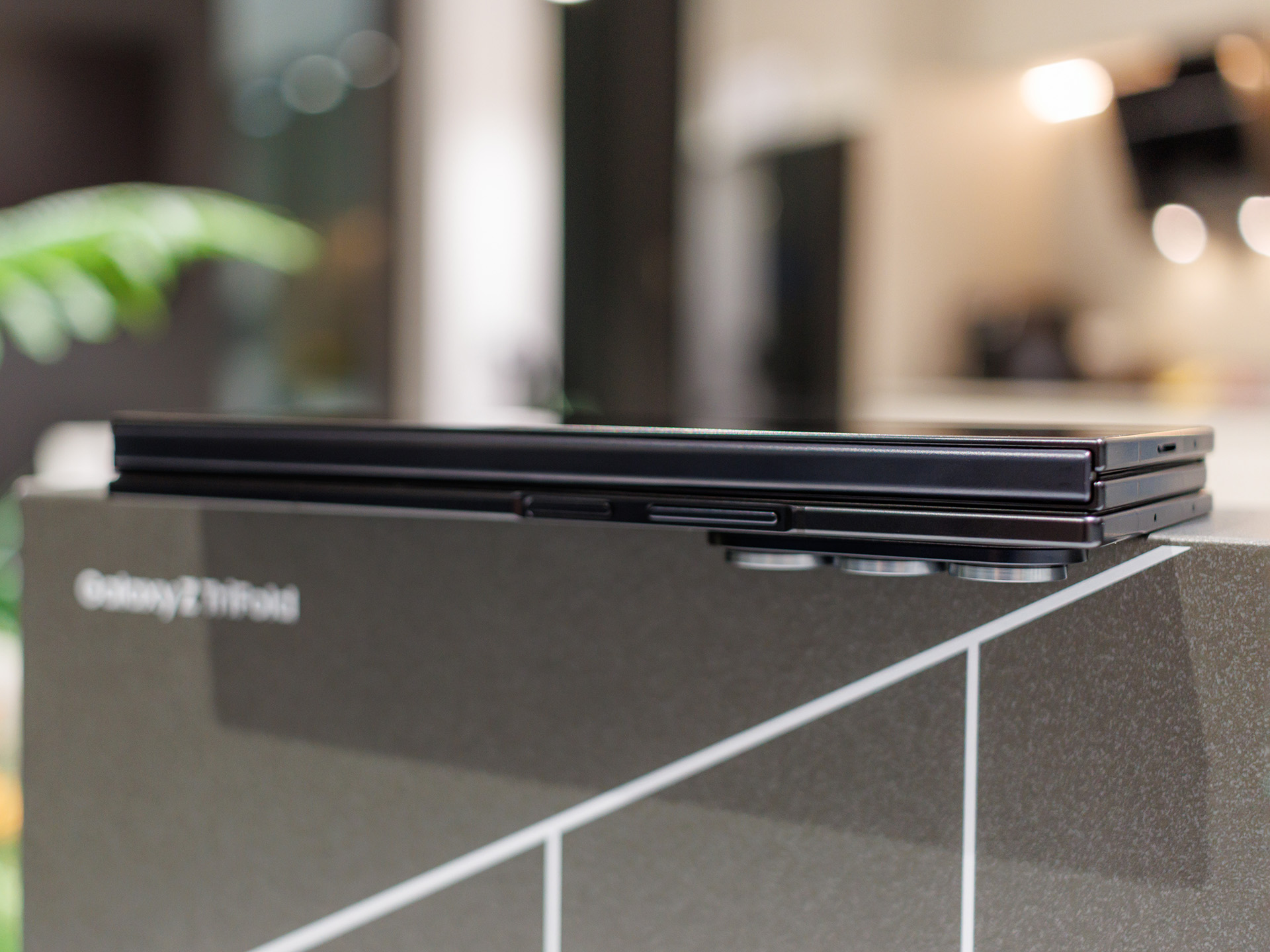
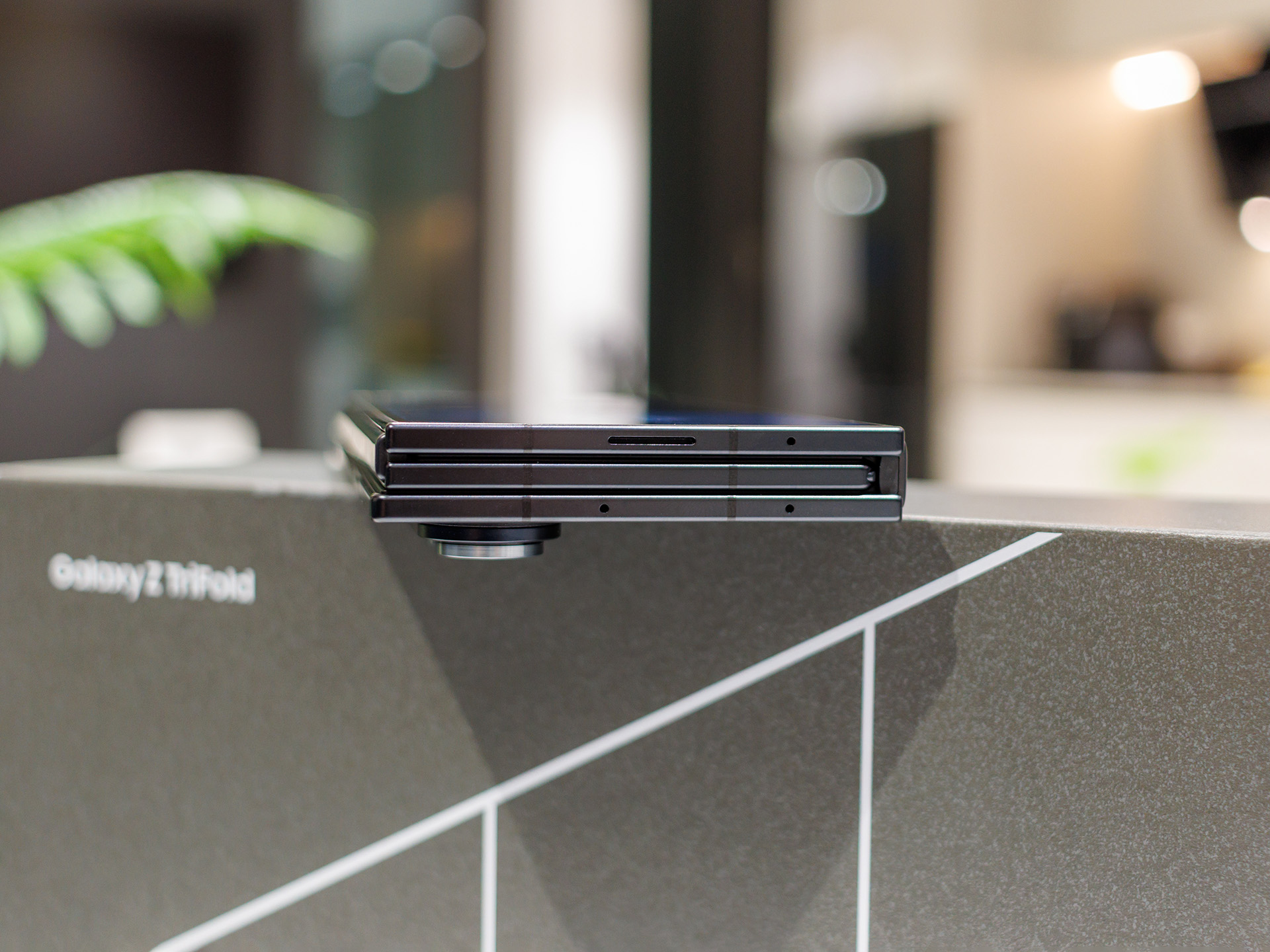
On the back, Samsung has installed a triple camera system with a high-resolution main camera, ultra-wide angle, and telephoto lens, which on paper can compete in the premium class and benefits from the Flex form factor, for example for hands-free shooting or creative perspectives when the device is half open and serves as a tripod. In addition, there are several front cameras for video chats and selfies, which, in combination with the large internal display, can be particularly exciting for productive meetings or content creation. The design with two hinges, titanium elements, and reinforced glass is intended to provide improved robustness despite the complex mechanics, but naturally remains more sensitive than a classic monoblock.
Samsung Galaxy Z TriFold vs. Huawei Mate XT

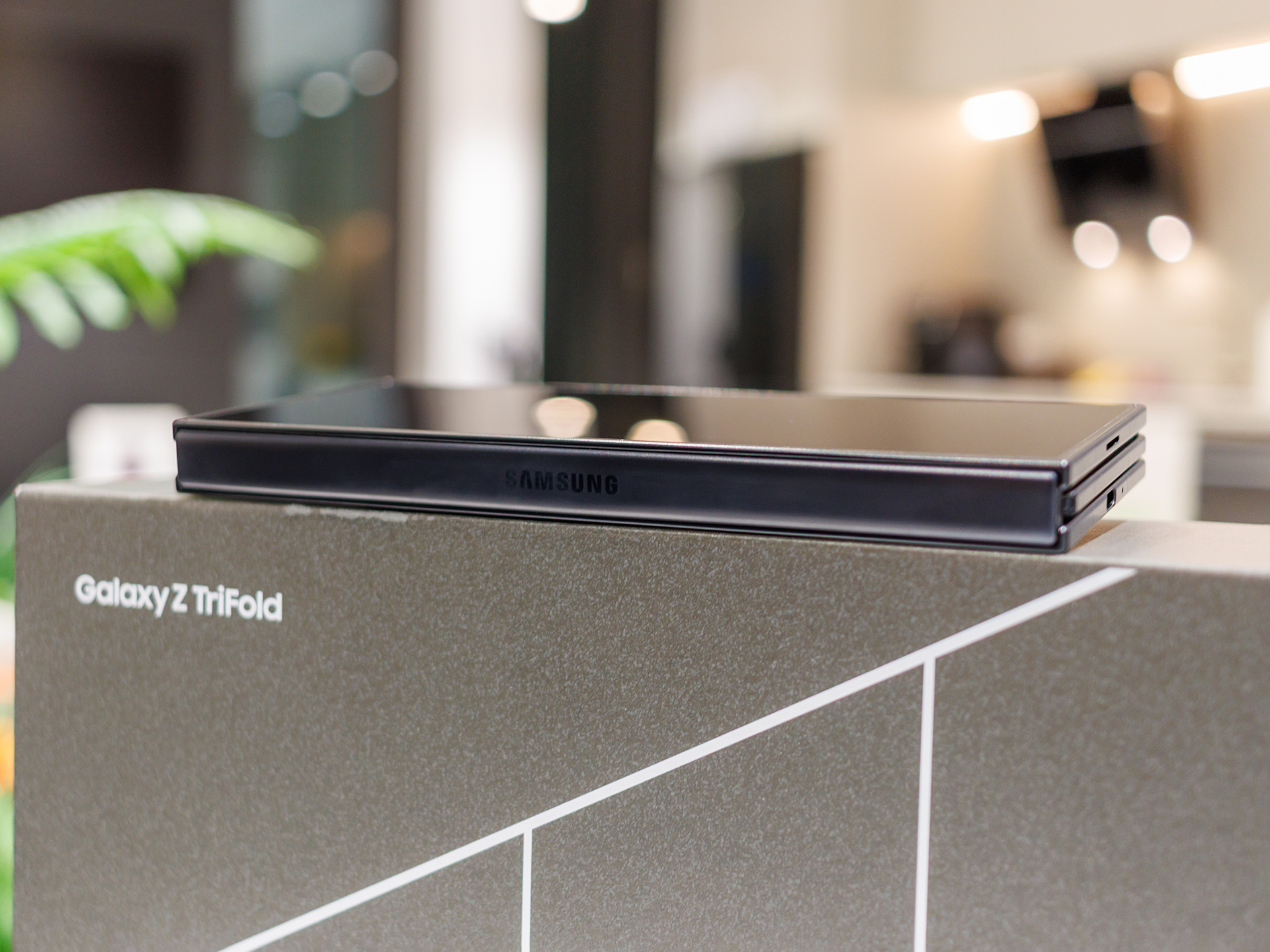
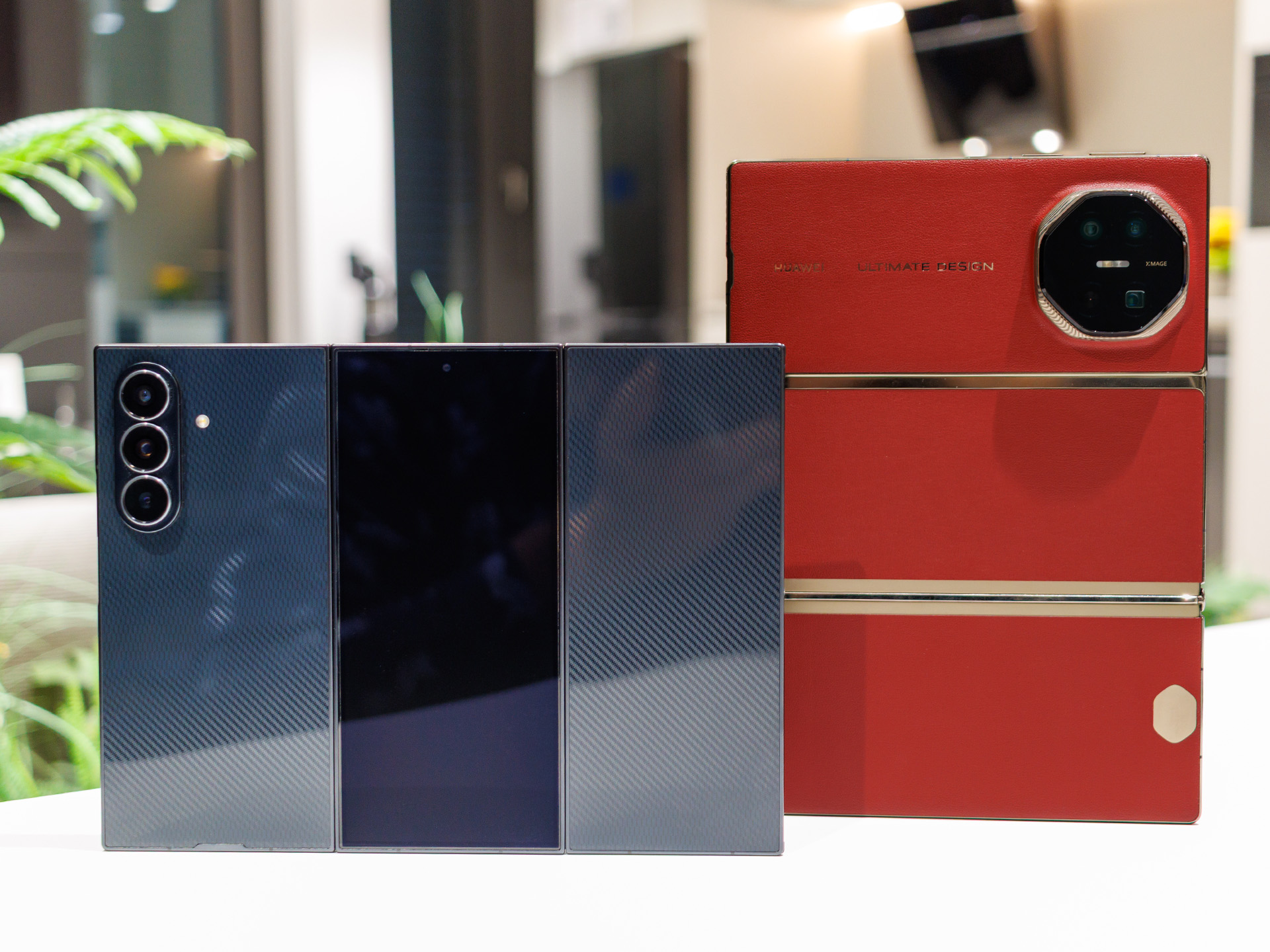
Huawei pioneered an elegant Z-fold mechanism with the Mate XT (here in hands-on), which can seamlessly switch between a 6.4-inch cover, 7.9-inch dual, and 10.2-inch full screen. At a minimum of 3.6 mm when unfolded, it is ultra-thin (thickest element: 4.25 mm) and weighs 298 grams. Samsung (height: 3.9 / 4.2 / 4.0 mm), on the other hand, relies on a U-shaped design with a separate 6.5-inch cover display and two side wings that open up to a 10-inch Dynamic AMOLED 2X panel; The result is more robust (IP48), but bulkier (12.9 mm folded, 309 g) and visually more sober with thicker edges. The carbon-look back is also very susceptible to fingerprints. In return, the TriFold's hinge is tighter and thus gives a more stable impression. It's a shame, however, that Samsung doesn't allow you to use only two screen elements. The differences in height and weight are hardly noticeable in everyday use.

In terms of performance, the Snapdragon 8 Elite for Galaxy (3 nm) dominates in the TriFold with better efficiency and significantly higher performance, while the 7 nm Kirin 9010 in the Mate XT appears solid but outdated, and HarmonyOS offers uncertain update support. Cameras show strengths in different areas: Samsung's 200 MPix main module with 3x telephoto lens trumps in resolution, but Huawei's 50 MPix system shines with a 5.5x periscope telephoto lens and variable aperture. Both have 5,600 mAh batteries, but Huawei charges faster (66 W wired, 50 W wireless), while Samsung's 45 W (wired) and 15 W (wireless) is nominally slower.
Overall, Huawei appears more innovative and flexible in design with more usage scenarios, while Samsung is more mature in display quality, performance, and software. The TriFold is better suited for productivity users with an Android ecosystem, while the Mate XT is better for design fans and photo enthusiasts who accept the price and HarmonyOS. It should be noted that there is now a Mate XTs (we report) that has been significantly improved in terms of camera and also has the faster Kirin 9020.
Nevertheless, when it comes to modern interfaces, the Galaxy Z TriFold comes out on top in comparison: The Mate XT has neither 6 GHz Wi-Fi nor UWB, not to mention 5G. The Mate XT's display also only operates at a refresh rate of 90 Hz, but offers PWM dimming at 1,440 Hz, making it much easier on the eyes than Samsung's foldable.
Ultimately, it also remains a question of availability.



Galaxy Z TriFold: Opinion, price and availability
The Galaxy Z TriFold is a highly specialized product for early adopters, professionals, and enthusiasts who value maximum display area and flexibility over weight, price, and simplicity. Technically, the concept seems extremely exciting and more sophisticated than previous foldable experiments, but the high entry price and the open question of its suitability for everyday use make it more of a prestige gadget than a mass-market product for the time being.
Compared to the Huawei Mate XT / XTs, global use is easier and possible without restrictions thanks to full-fledged Google Android, and the SoC is also significantly faster and supports 5G.
The Galaxy Z TriFold has been available in South Korea since last year and costs the equivalent of around $2,500 for 512 GB. The smartphone has also been successfully launched in the US, where it costs $2,899 (buy at Samsung). A launch date for Europe or other regions has not yet been announced, but rumors suggest it could be in the summer of 2026.
 Add as a preferred source on Google


