




Fallout creator Tim Cain claims its biggest setbacks became its secret weapon for success
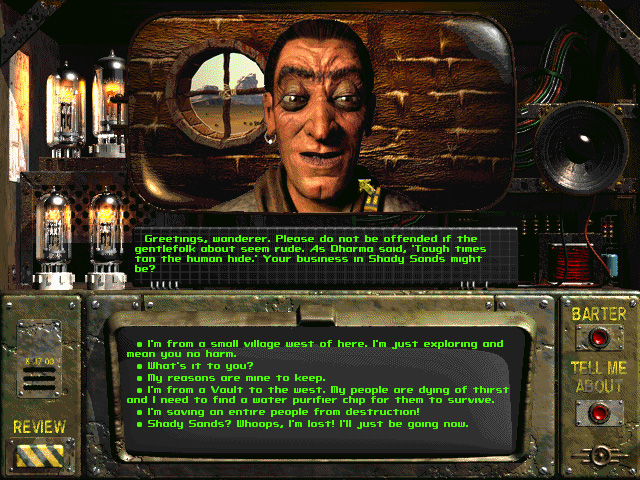
In a recent interview with Game Informer, Tim Cain, Leonard Boyarsky, and Brian Fargo discuss the humble beginnings of Fallout and how the hurdles they faced helped shape the game into what it became and contributed to its eventual success. "That sprite engine I wrote had limitations we had to work around, and those workarounds ended up making the game really cool," said Cain. He went on to explain that, at the time, these hurdles felt more like “Oh no, another setback,” but that they became a positive thing, changing his view of things for years to come.
For example, like Baldur’s Gate 3, which is based on the Fifth Edition of DnD rules (albeit with some changes to flow better with the game), Fallout was originally meant to be based on Steve Jackson Games' GURPS (Generic Universal Roleplaying System), another popular ruleset for tabletop games. However, after the team had shown Jackson the game, he was put off by Fallout’s gritty setting and pulled out of the collaboration.
Art Director and designer Leonard Boyarsky chimed in about how this setback eventually led them to create the ‘SPECIAL’ system, an acronym standing for the primary stats in the system: Strength, Perception, Endurance, Charisma, Intelligence, Agility, and Luck, which, as it turns out, “was way better for a computer game than trying to make a really faithful GURPS adaptation."
Fallout also might have been the sequel to Wasteland, as the game’s designer and Interplay cofounder Brian Fargo recalls, "EA said, 'No, not going to happen.” That, however, was not the end of the Interplay project. ”We were being hopeful for a while, but ironically, that pivot ended up being wonderful because we ended up with Fallout,” which, as it stands now over two and a half decades later, was a good thing, especially seeing how popular the TV series is.
Cairn recalled how "So many negatives turned out to be positives,” even though the project being called a B-Tier product, which at the time would be considered an insult. However, that would not be the case for the Fallout team, even though they were underestimated, because it “turned out to be a great thing because we were pretty much ignored for years," allowing them to have complete creative control and freedom, without being tied down to some major project.
The team, though, maintained a good professional attitude and kept the project moving forward, even when some felt it might not live up to their expectations. “In a week, everyone’s going to know how great Fallout is before we shipped. And Tim emailed me back, and he said, 'In a week, we’re going to be asking whether people want fries with their meal,” said Boyarsky. In retrospect, the devs, fans, and critics alike are glad to have seen Fallout's evolution and growth, and where it stands today.
Source(s)
 Add as a preferred source on Google


