




DJI Osmo Pocket 4 vs Osmo Pocket 3: All the differences - 240fps, 37MP sensor, true D-Log, ActiveTrack 7.0, more
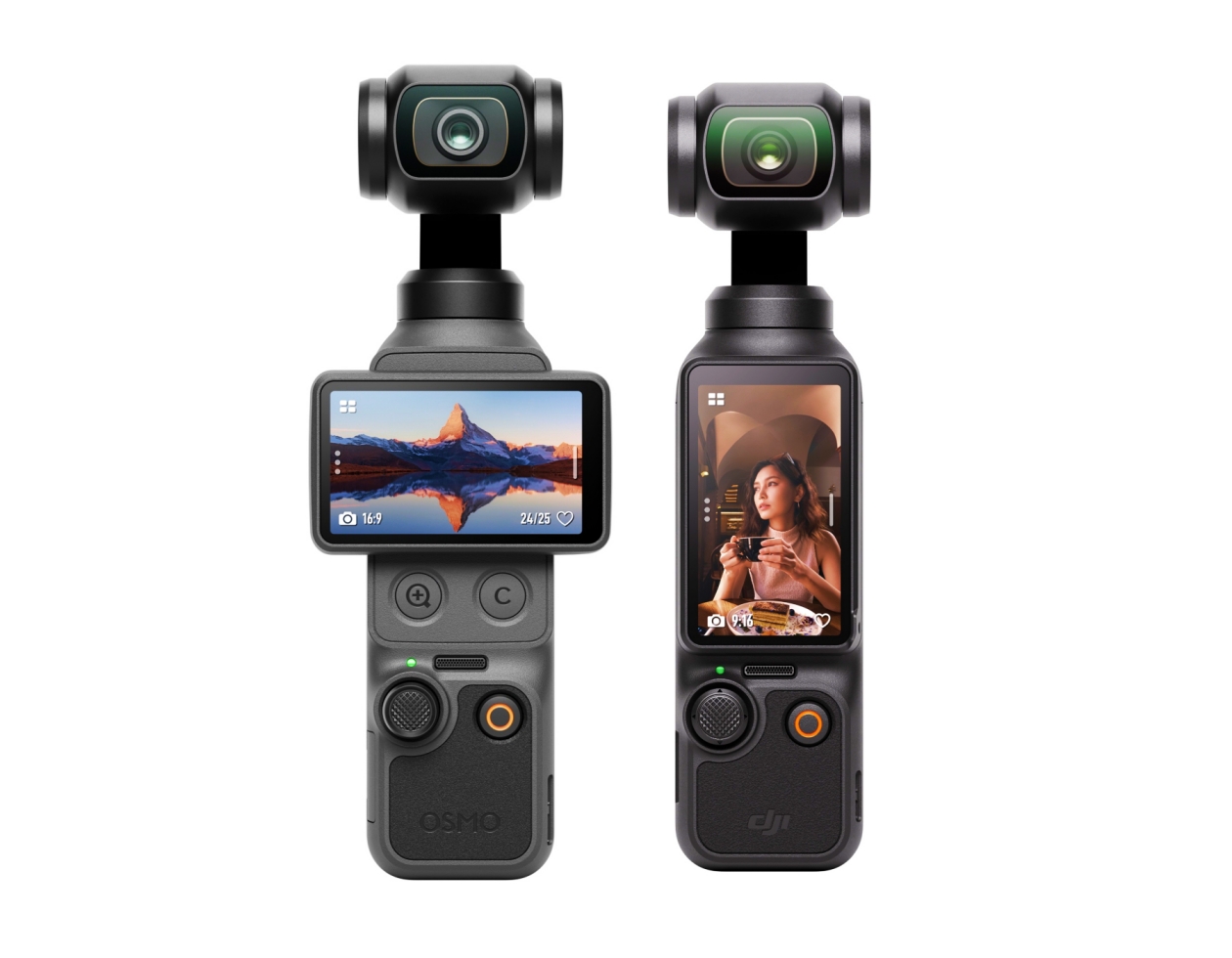
DJI has officially launched the Osmo Pocket 4, and (surprisingly) it is far more than a simple iterative update. While the Osmo Pocket 3 was a massive upgrade over the Pocket 2, the Pocket 4 targets the more serious cinematographers boasting a brand-new, stacked 1-inch sensor with 14 stops of dynamic range and a groundbreaking jump to 4K/240fps slow motion.
However, it isn't just about additions. DJI has “refined” the software experience, removing HLG support to focus entirely on a more robust, truly flat 10-bit D-Log profile (think: iPhone 17 Pro LOG), and adding high-speed internal storage - a first for the Pocket series.
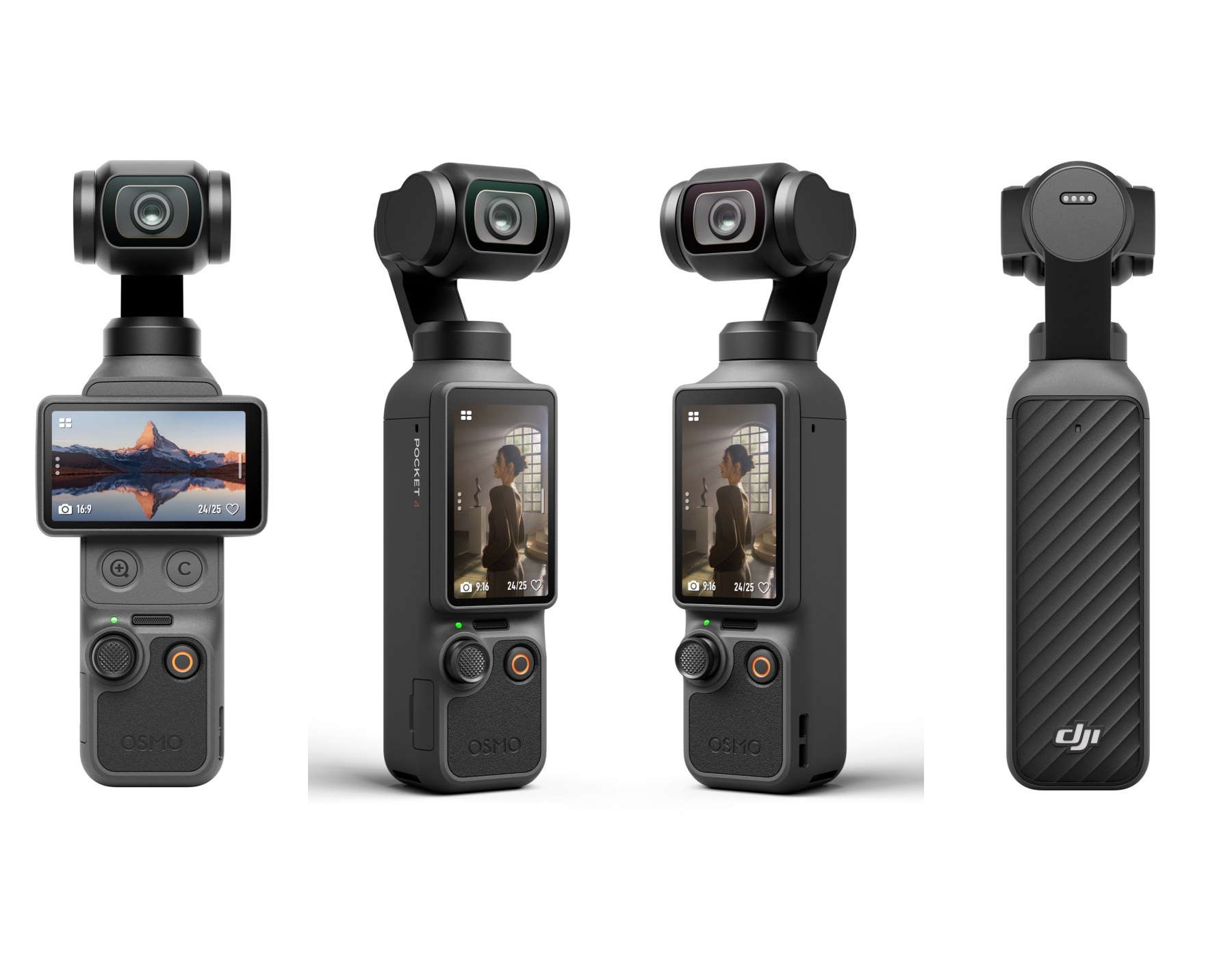
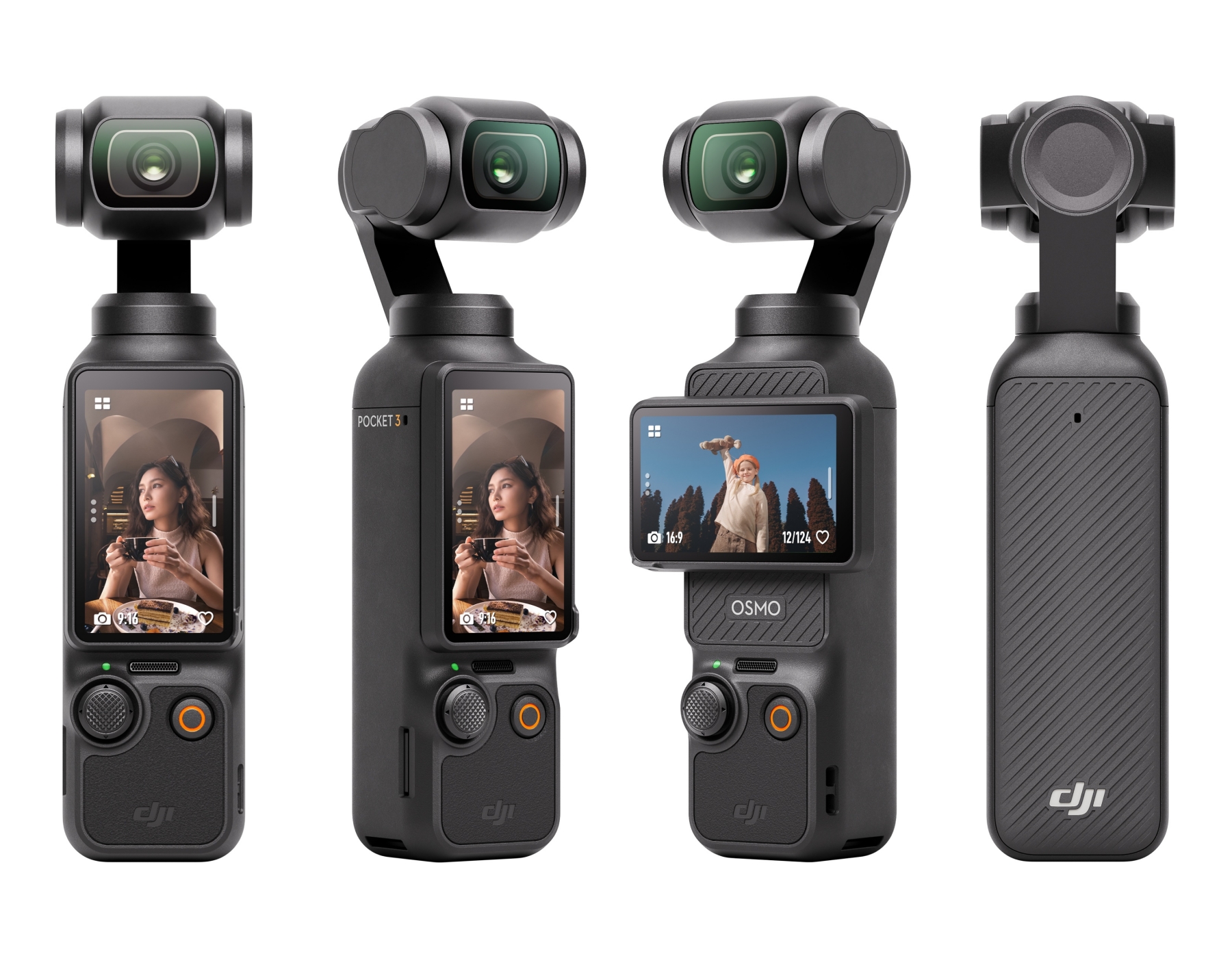
Osmo Pocket 4 vs Osmo Pocket 3: Full specs and features breakdown - everything DJI added or removed
| Feature | DJI Osmo Pocket 4 | DJI Osmo Pocket 3 |
|---|---|---|
| Sensor, aperture, dynamic range | Stacked 1-inch CMOS, 37MP, 20mm, f/2.0, 14 stops of dynamic range | 1-inch CMOS, 9.4MP, 20mm, f/2.0 12 stops of dynamic range |
| Slow motion video | 4K/240fps | 4K/120 fps |
| Max ISO | Photo: 12,800 Video: 26,600 Low-light: 12,800 Slow-motion: 12,800 | Photo: 6,400 Video: 16,000 Low-light: 6,400 Slow-motion: 6,400 |
| LOG video color profile | 10-bit D-Log (truly flat), 14 stops of dynamic range | 10-bit D-Log M, HLG, 12 stops of dynamic range |
| Video codecs | MP4 (H.265) in 10-bit | MP4 (H.265) in 10-bit MP4 (H.264) in 8-bit |
| Storage | Internal (107GB), microSD - up to 1TB, faster transfer | No internal storage, microSD - up to 1TB |
| Buttons | Record button, Zoom button, Custom button, | Record button |
| Joystick | Upgraded speed-sensitive, analogue joystick | Standard multi-function joystick |
| Fill light support | Magnetic fill light (attaches to the gimbal top) | No magnetic fill light support; relies on third-party accessories |
| Protective case | Gimbal head protective cover (stops gimbal from moving); fabric pouch | |
| Weight and dimensions | 198g, 144.7 x 42.2 x 33.5mm (slightly taller) | 179g, 139.7 x 42.2 x 33.5mm (shorter) |
| Battery endurance and charging | 1,545 mAh 240 min (1080p/24fps) 80% charge in 18 min 100% charge in 32 min | 1,545 mAh 166 min (1080p/24fps) 80% charge in 16 min 100% charge in 32 min |
| Tracking system | ActiveTrack 7.0 | ActiveTrack 6.0 |
| Connectivity | Wi-Fi 6, USB 3.1 | Wi-Fi 5, USB 2.0 |
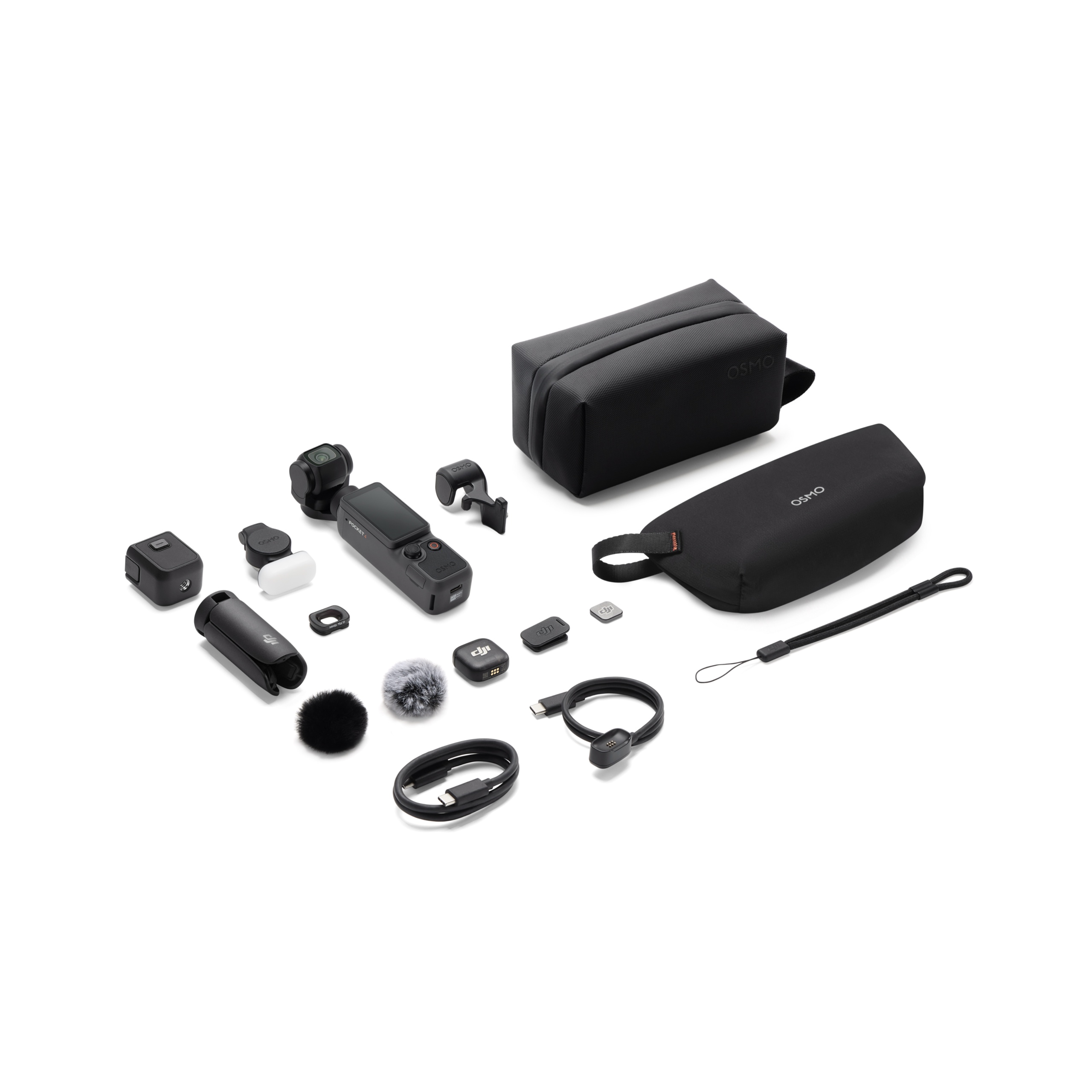
| Creator Combo package | DJI Mic 3, Magnetic Mini Fill Light, Gimbal clamp, Battery handle, Mini tripod, 1/4" Thread adapter, Wide-angle lens adapter, Soft carrying pouch, Carrying bag, PD Charging cable | DJI Mic 2, Battery handle, Mini tripod, 1/4" Threaded handle, Wide-angle lens adapter, Rigid protective case, Carrying bag, PD Charging Cable |
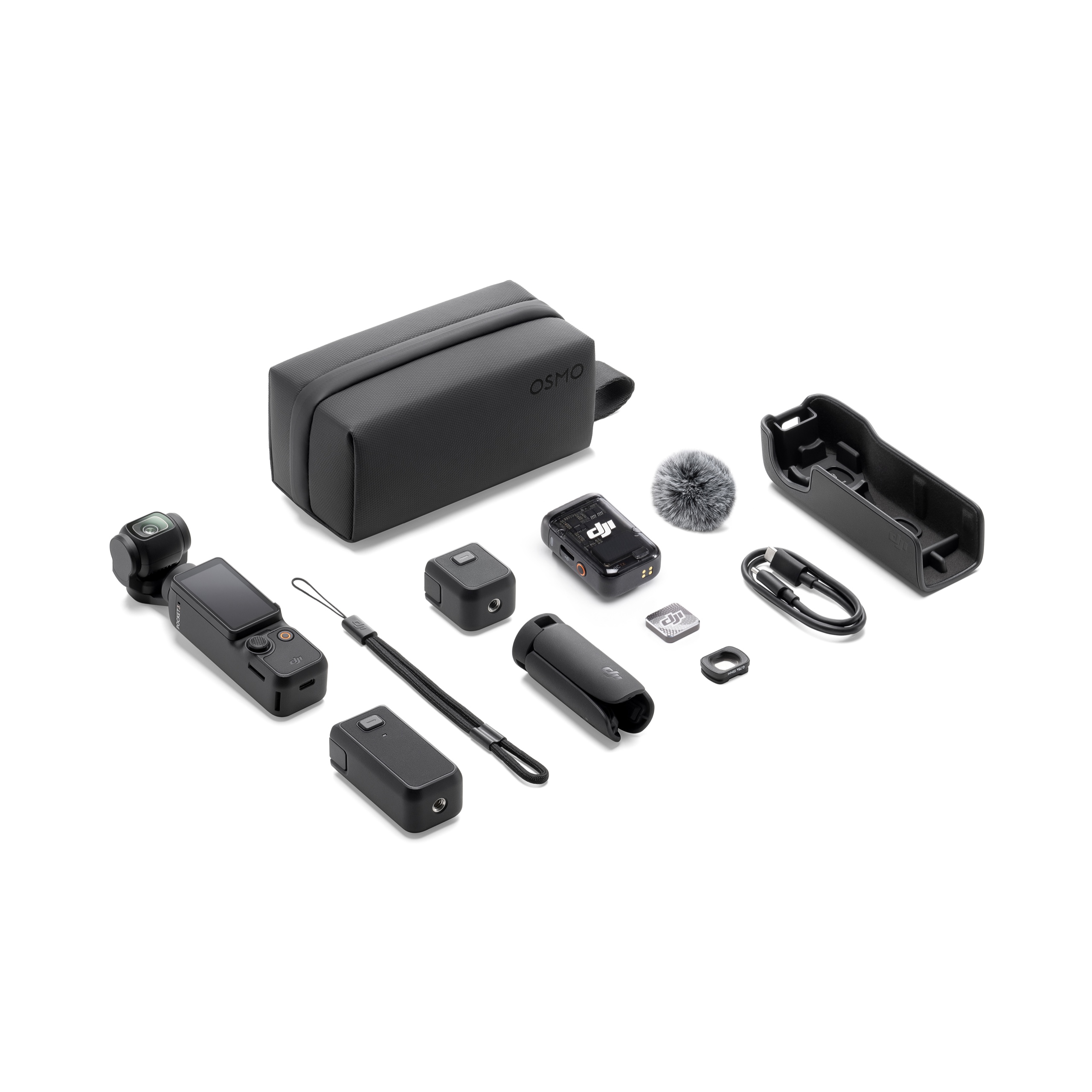
Osmo Pocket 4 boasts superior hardware, but it’s also more practical than the Osmo Pocket 3
As you can see, the most significant practical shift in the Pocket 4 is the move toward a standalone professional workflow. The inclusion of 107 GB of internal storage is a game-changer for creators who forget their SD cards or run out of space mid-shoot.
Osmo Pocket 4 has a truly flat “D-Log” color profile; ditches the H.264 codec for H.265 in all recording modes
DJI has made a decisive move by removing HLG and D-Log M in favor of a true 10-bit D-Log profile. While D-Log M was a "gamma-assisted" profile designed for easier grading, the new D-Log provides a truly flat image - similar to the LOG recording you get with an iPhone 17 Pro. This, paired with the 14-stop dynamic range, will let videography and color enthusiasts to pull significantly more detail out of shadows and highlights without the "thin" look of Pocket 3’s “sort of LOG” D-Log M profile.
Furthermore, it seems like DJI has streamlined the codec situation on the Pocket 4 by dropping the aging H.264 codec entirely. According to DJI, the Pocket 4 records exclusively in MP4 (HEVC/H.265), reflecting the industry's shift toward more efficient, high-bitrate compression that handles the increased 180 Mbps max bitrate. It’s now Sony’s turn to give us 1080p HEVC/H.265 - if a man could dream.
Osmo Pocket 4 can record 77 minutes longer than the Osmo Pocket 3; has far superior ergonomics
The physical addition of dedicated zoom and custom buttons on the Pocket 4 is a more practical change that addresses the biggest ergonomic complaint of the Pocket 3, allowing for tactile control without fumbling on the touchscreen.
The battery life has also seen a massive boost to 240 minutes, and while the 0-80% charge time is more or less the same (16 vs 18 minutes), the battery capacity and recording efficiency are upped - now able to handle longer pro-grade shoots.
When combined with ActiveTrack 7.0, which now supports 2x and 4x zoom tracking and improved subject recognition (including pets and vehicles), the Pocket 4 becomes a significantly more capable "solo-operator" camera than its predecessor.
All in all, although not necessarily groundbreaking in every single way possible, the upgrades coming with the Pocket 4 add up to make filming significantly less stressful, which (for anyone who’s ever recorded anything longer than a TikTok) is more important than a boost in image quality.
Source(s)
 Add as a preferred source on Google


