




Apple unveils M5 Pro and M5 Max with new Fusion architecture and more performance cores
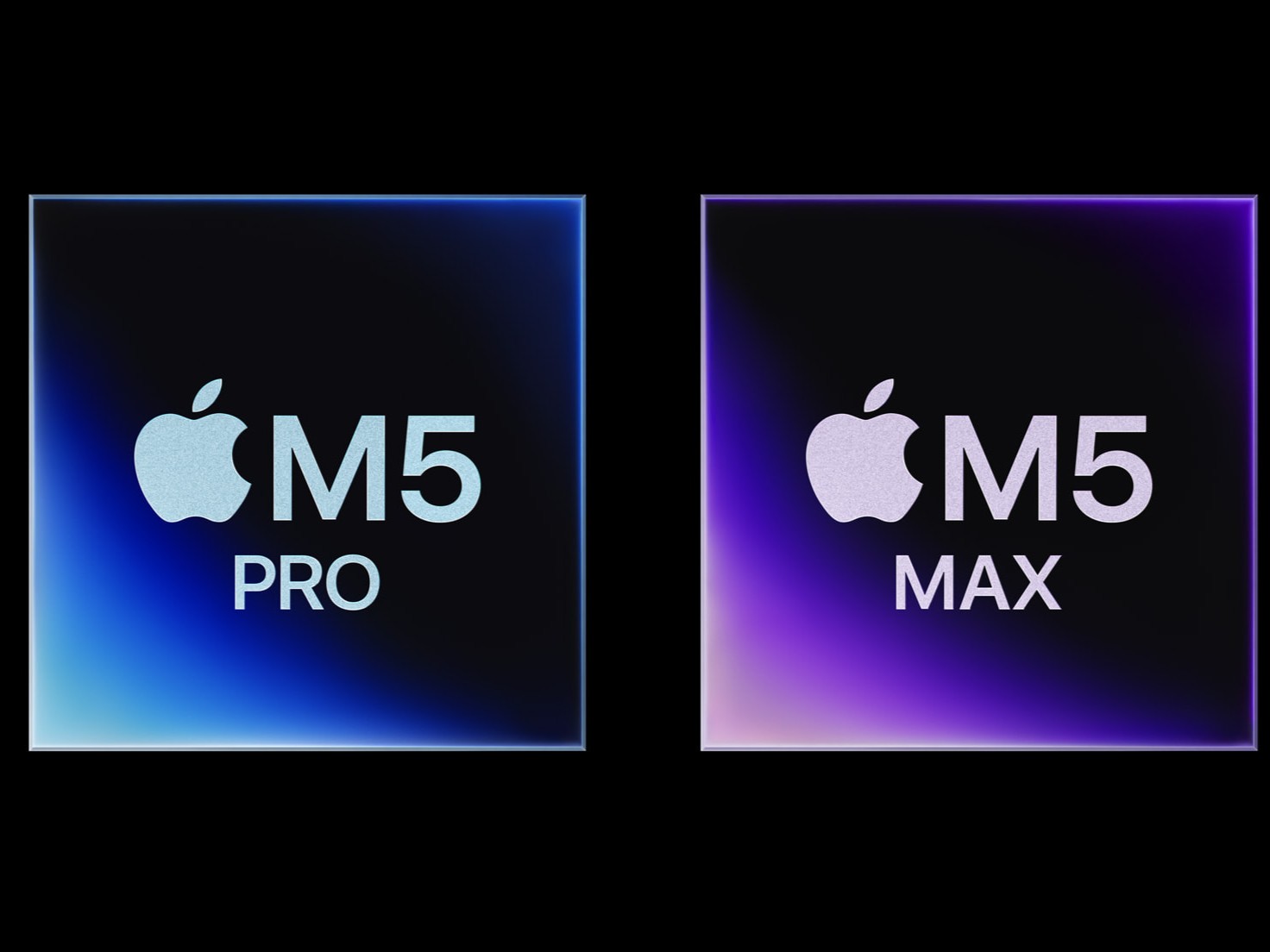
Apple’s newest high-end laptop chips are finally here. The M5 Pro and M5 Max have finally been shown off months after the regular M5 debuted alongside the newest iPad Pro variant. Apple has tacitly confirmed both chips have been manufactured on TSMC’s N3P mode. Notably, the M5 Pro and M5 Max fuse two N3P chiplets into a single unified chip—something we’ve seen before with Ultra-branded chips from Apple. It also opens op the possibility of an M5 Ultra showing up at a later point.
Starting with the M5 Pro, we get up to 18 CPU cores with 12 performance cores (formerly known as E-cores), 6 super cores (formerly known as P-cores), and a 20-core GPU. A lower-spec configuration with 15 CPU (10+5) cores and 16 GPU cores is also available. For the M5 Max, an 18-core CPU is guaranteed, and it can be paired with a 32-core or 40-core GPU. Overall, the number of CPU cores have increased across the board, but the GPU has remained largely the same, at least on a physical level.
Apple claims the M5 Pro and M5 Max offer up to a 35% GPU performance increase over the M4 Pro and M4 Max, at least in applications that require raytracing. For more general-purpose applications, the M5 Max’s GPU is up to 20% faster than the M4 Max. The M5 Max can now support up to 128GB of unified memory with a maximum memory bandwidth of up to 614GB/s.
Then again, these are Apple-provided figures, and it’s best to reserve judgment until third-party data shows up. Apple will likely keep the single-core performance crown, and the extra CPU cores could help it bridge the gap with AMD Strix Halo. Lastly, the Apple M5 Pro and M5 Max support Thunderbolt 5.0 ports, hardware-accelerated H.264/HEVC, AV1, and ProRes decode and encode engines. Apple has also included a 16-core NPU for AI-related workloads.
Source(s)
 Add as a preferred source on Google


