




16-year-old PC game gets 750,000 Steam wishlists in two weeks after developer expected just 5,000

There are successful Steam launches, and then there are games that apparently spend 16 years quietly storing up an audience before suddenly discovering it is still there.
Happy Wheels, the physics-based sandbox game first released in 2010, launched on Steam on September 21 for £4.59. It would have been easy to treat the release as another nostalgia-driven revival of a game from the browser era, but creator Jim Bonacci disclosed an altogether more surprising figure immediately before launch: 750,000 people had wishlisted the Steam version within approximately two weeks of its store page appearing.
That appears to have surprised Bonacci at least as much as anyone else. In his official Steam launch announcement, he said he had realistically expected "maybe 5k at best", before describing the eventual 750,000 figure as "absurd".

From an expected 5,000 wishlists to 750,000
The scale of the difference is rather extraordinary.
If Bonacci's initial 5,000 expectation is taken simply as the comparison he himself provided, the eventual figure was 150 times larger. Put another way, the Steam page would have attracted an average of roughly 53,600 wishlists per day over a 14-day period if "two weeks" is taken literally, although Bonacci supplied only the overall 750,000 figure rather than a daily breakdown.
Why would a game that people have been able to play for 16 years suddenly generate three-quarters of a million Steam wishlists?
Bonacci offered an interesting explanation of his own, writing that the game had effectively been "floating on an isolated island in space". The analogy makes some sense. Happy Wheels was enormously visible during the browser and YouTube gaming era, but existing somewhere on the internet is not quite the same thing as appearing directly inside the storefront used by a vast PC gaming audience.
The numbers suggest Steam may have reconnected the game with that audience remarkably quickly.
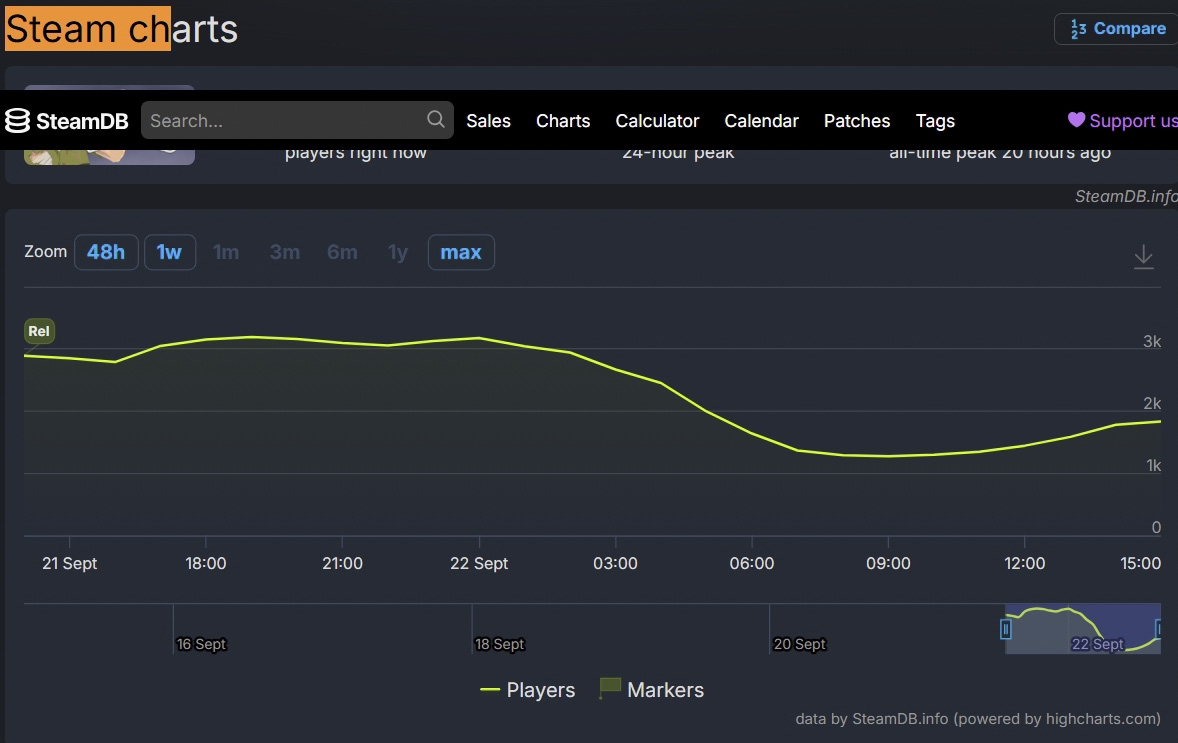
At the time of checking, SteamDB's current data placed Happy Wheels at No. 1 in its wishlist-activity ranking and No. 17 among Steam's top sellers, while recording an initial all-time peak of 3,193 concurrent players on September 21.
That last number is worth putting in context rather than inflating it. A 3,193-player peak does not make Happy Wheels one of Steam's giant concurrent-player launches, nor does a wishlist automatically translate into a sale. Steam does not publicly disclose wishlist totals itself, so the 750,000 figure should specifically be attributed to Bonacci.
But that may be what makes the story interesting. This is not a case of 750,000 people simultaneously playing a new blockbuster. It is a 16-year-old game suddenly attracting 750,000 expressions of purchase interest after becoming visible on Steam, despite its creator apparently expecting only a tiny fraction of that figure.
More than five million levels come with it
The Steam edition isn't simply an empty re-release waiting for players to rebuild the old community.
According to the official Steam listing, it arrives with access to more than five million user-created levels, alongside the level editor that allowed the community to build that enormous archive in the first place.
There are some distinctly 2026 additions, too. The Steam version adds controller support, Steam achievements and statistics, offline level downloads and the ability to link an existing Happy Wheels account to a Steam ID. A new date-selection feature in the level browser even allows players to rummage backwards through old community creations.
And, perhaps fittingly for a game born in the browser era, there are no advertisements in the Steam version.
The game also supports both Windows and Linux natively.
Players seem remarkably happy to pay for something they remember playing for free
There was another question hanging over this release: would players actually pay £4.59 for a game associated so strongly with free browser gaming?
The first day's reception suggests that quite a few are perfectly willing to.
At the time of checking, Steam showed that Happy Wheels had already attracted more than 1,000 user reviews, with around 95% being positive. SteamDB separately recorded a launch-day peak of 3,193 concurrent players.
Those numbers will naturally move as the release gets older, but the speed of the initial response is notable for a game whose basic premise is hardly unknown.
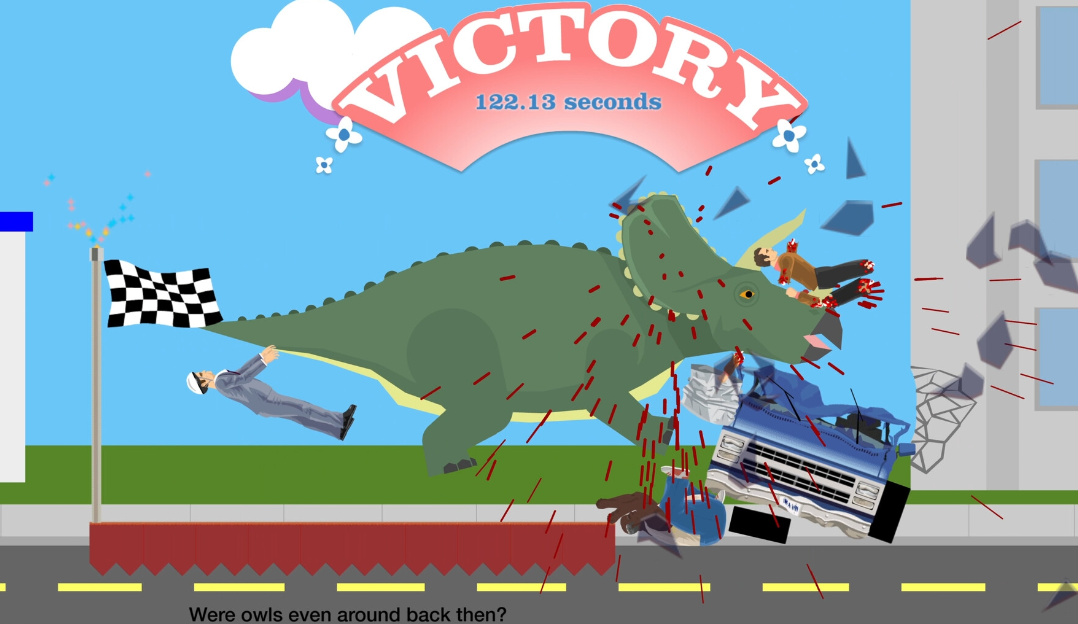
There is an amusing mismatch here. Happy Wheels has not returned because somebody discovered an obscure game that deserved a second chance. It was already a fixture of an earlier internet gaming culture, built around deliberately unforgiving physics, user-generated obstacle courses and spectacularly unsuccessful attempts to get fragile characters from one end of a level to the other.
What appears to have changed is the storefront.
Sixteen years after its original release, placing Happy Wheels in front of Steam's PC audience has apparently revealed demand that even its creator did not expect. 750,000 wishlists in two weeks for a game that has been publicly playable since 2010 is a curious reminder that an old game does not necessarily need a new audience. Sometimes it may simply need its old audience to find it again.
Bonacci says development will continue after launch, with further improvements planned for controller and Steam Deck play, offline support, achievements and bug fixes.
For now, though, the strangest number remains the one that appeared before anybody could buy it: 750,000 wishlists, against an expectation of around 5,000.
Source(s)
 Add as a preferred source on Google


