 Deutsch
 Español
 Français
 Italiano
 Nederlands
 Polski
 Português
 Русский
 Türkçe
 Svenska
 Chinese
 Magyar
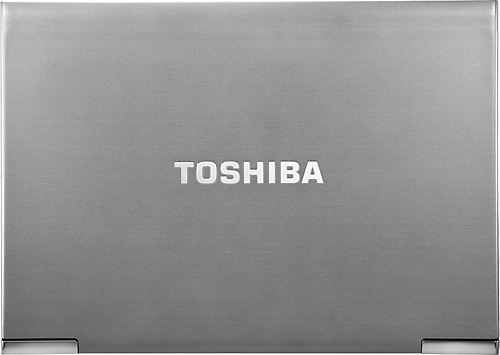
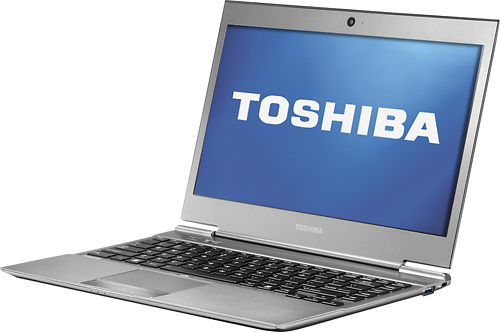
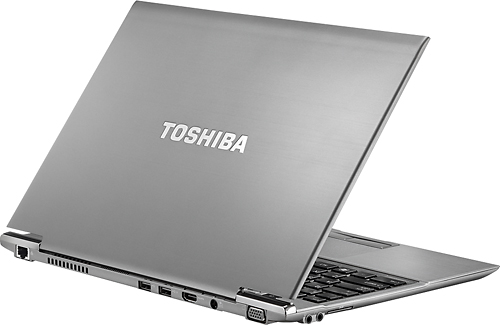
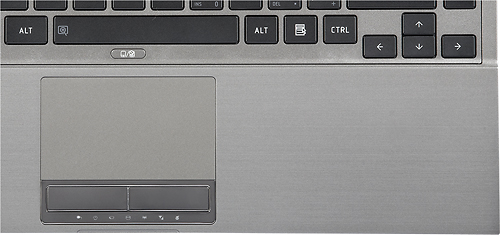
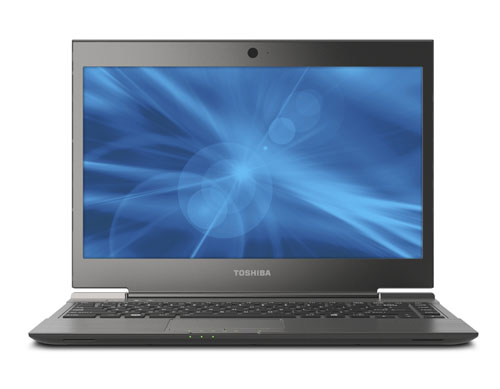
Toshiba Portégé Z835 Series
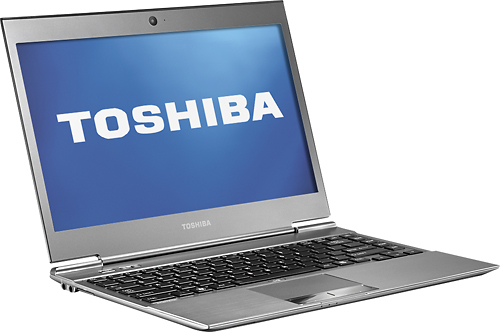 Processor: Intel Core i3 2367M, Intel Core i5 2467M, Intel Core i7 2677M
Graphics Adapter: Intel Graphics Media Accelerator (GMA) HD Graphics, Intel HD Graphics 3000
Display: 13.30 inch
Weight: 1.1kg, 1.2kg
Price: 700, 1000, 1100 euro
Average of 3 scores (from 4 reviews)
Toshiba Portégé Z835-P360
Specifications
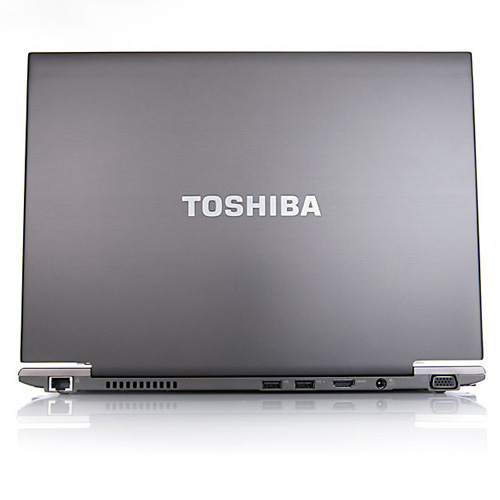 Notebook: Toshiba Portégé Z835-P360
Processor: Intel Core i3 2367M
Graphics Adapter: Intel Graphics Media Accelerator (GMA) HD Graphics
Display: 13.30 inch, 16:9, 1366 x 768 pixels
Weight: 1.1kg
Price: 700 euro
Links: Toshiba homepage Toshiba notebook section
Pricecompare
Foreign Reviews
Source: Zoom
 RU→EN Archive.org version
Single Review, online available, Medium, Date: 02/02/2012
Toshiba Portégé Z835-ST6N03
Specifications
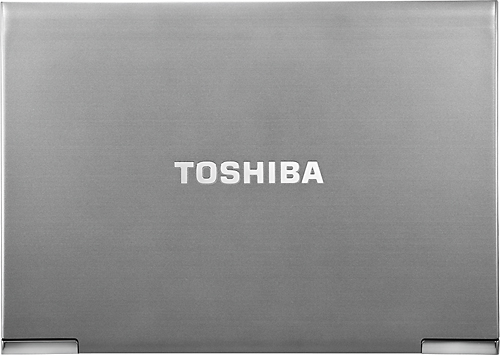 Notebook: Toshiba Portégé Z835-ST6N03
Processor: Intel Core i7 2677M
Graphics Adapter: Intel HD Graphics 3000
Display: 13.30 inch, 16:9, 1366 x 768 pixels
Weight: 1.1kg
Price: 1100 euro
Links: Toshiba homepage Toshiba notebook section Portégé Z835-ST6N03 (Model)
Pricecompare
Average Score:
Reviews
Source: Digital Trends
 Archive.org version
Toshiba’s Z835 does not make a good first impression. It’s as thin as a piece of cardboard, and feels just slightly stronger. These snap judgments about the laptop’s strength are only worsened by a sub-par keyboard and a display that isn’t sharp or beautiful. After a couple of days, the strengths of this laptop become apparent.
Single Review, online available, Long, Date: 03/09/2012
Rating: Total score: 70%
Toshiba Portégé Z835-P370
Specifications
Notebook: Toshiba Portégé Z835-P370Processor: Intel Core i5 2467M
Graphics Adapter: Intel HD Graphics 3000
Display: 13.30 inch, 16:9, 1366 x 768 pixels
Weight: 1.2kg
Price: 1000 euro
Links: Toshiba homepage Toshiba notebook section Portégé Z835-P370 (Model)
Pricecompare
Average Score:
Reviews
Source: PC Mag
Archive.org versionIts more comfortable keyboard and elegant design touches narrowly keep the HP Folio 13 as our category Editors' Choice, but we're impressed by the Toshiba Portege Z835-P370. With the same light weight and high connectivity plus the best price/performance ratio of Toshiba's ultrabook trio, it'll never be a briefcase burden.
Single Review, online available, Very Short, Date: 03/29/2012
Rating: Total score: 80%
Source: CNet
Archive.org versionAlthough it's less than 6 months old, it already feels as if we've been living in the ultrabook era forever. The original Toshiba Portege Z835 was a fantastic value that helped us overlook a weak touch pad/keyboard combo. This faster version is about $200 more, but keeps the same so-so design.
Single Review, online available, Long, Date: 03/21/2012
Rating: Total score: 70% performance: 70% mobility: 80%
Comment
Toshiba: Toshiba Corporation is a Japanese conglomerate or technology group. The company was established in 1939 and in 1978 Toshiba became the official company name. The company's products and services include power, industrial and social infrastructure systems, elevators and escalators, electronic components, semiconductors, hard drives, printers, batteries, lighting, logistics and information technology. Toshiba was one of the largest manufacturers of personal computers, consumer electronics, home appliances and medical equipment.
Only some 3D games with very low demands are playable with these cards.
Intel Graphics Media Accelerator (GMA) HD Graphics: Onboard graphics card that is built in the new Arrandale CPUs (Core i3 / i5 / i7 Dual Cores). Depending on the model and Turbo Boost, the GMA HD is clocked between 166 and 766 MHz.
Intel HD Graphics 3000: Integrated graphics card in the Intel Sandy Bridge processors (Core ix-2xxx). The HD 3000 is the faster (internally GT2 called) version with 12 Execution Units (EUs).
» Further information can be found in our Comparison of Mobile Graphics Cards and the corresponding Benchmark List.
Intel Core i3:
2367M: Power efficient ULV processor clocked at 1.4 GHz without Turbo boost. Offers an integrated HD 3000 clocked at slow 350 / 1000 MHz and a DDR3-1333 memory controller.
Intel Core i7: The Intel Core i7 for laptops is based on the LG1156 Core i5/i7 CPU for desktops. The base clock speed of the CPUs is relatively low, but because of a huge Turbo mode, the cores can dynamically overclock to up to 3.2 GHz (920XM). Therefore, the CPU can be as fast as high clocked dual-core CPUs (using single threaded applications) but still offer the advantage of 4 cores. Because of the large TDP of 45 W / 55 W, the CPU is only intended for large laptops.
2677M: Power saving ULV processor clocked at 1.8-2.9 GHz due to Turbo Boost. Offers an integrated HD 3000 clocked at slow 350 / 1200 MHz and a DDR3-1333 memory controller.
Intel Core i5:
2467M: Power saving ULV processor clocked at 1.6-2.3 GHz due to Turbo boost. Offers an integrated HD 3000 clocked at slow 350 / 1150 MHz and a DDR3-1333 memory controller.
» Further information can be found in our Comparison of Mobile Processsors.
» To find out how fine a display is, see our DPI List.
No weight comment found (one expected)!
73.33%: This rating is poor. More than three quarters of the models are rated better. That is rather not a purchase recommendation. Even if verbal ratings in this area do not sound that bad ("sufficient" or "satisfactory"), they are usually euphemisms that disguise a classification as a below-average laptop.
» Further information can be found in our Notebook Purchase Guide.