Uber and Verne begin new experiment: Europe's first commercial robotaxi service launches
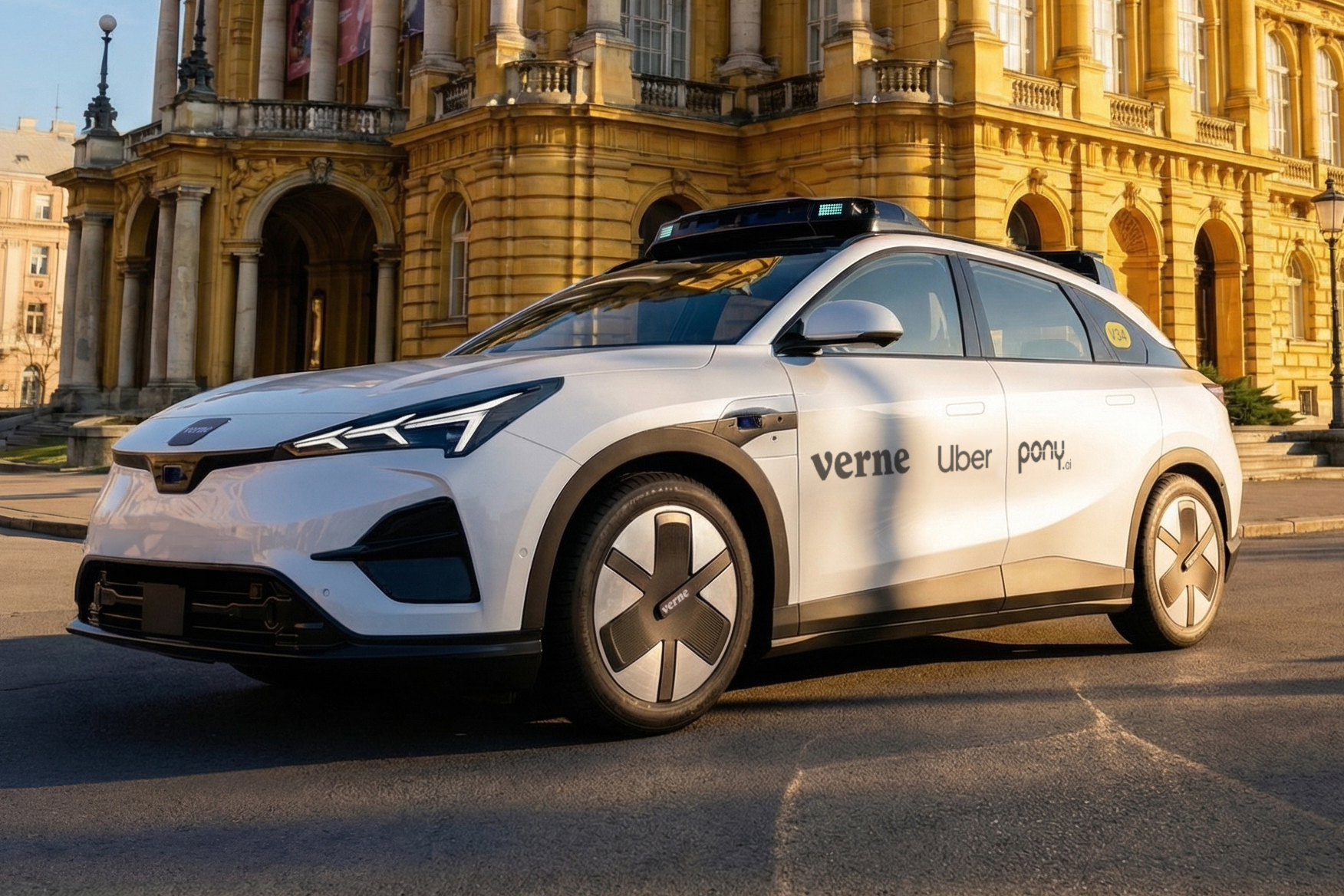
The battle for dominance in autonomous driving has reached Europe, with Verne, Pony.ai, and Uber set to launch the continent’s first commercial robotaxi service shortly. The Croatian capital, Zagreb, is serving as the first test market. There, the autonomous vehicles are currently on public roads for final testing.
The division of responsibilities among the three partners is asymmetrical but clearly defined. Pony.ai provides the seventh-generation autonomous driving system, bringing extensive experience from China to the project. In metropolises such as Guangzhou and Shenzhen, the software is already operating so efficiently that driverless fleets there have reached the break-even point. Verne acts as the fleet owner and handles the operational management of the electric vehicles on-site. The European company is also spearheading efforts to acquire the strict regulatory approvals required for autonomous driving on the continent. Uber takes the finished service and integrates it directly into its globally used ride-hailing app. In addition, as a strategic partner, Uber is injecting fresh investor capital into Verne. The goal of the partnership is ambitious: in the coming years, the fleet is set to grow to several thousand autonomous BEVs and expand into additional markets across Europe.
The Arcfox Alpha T5 model is serving as the technological basis for the launch in Zagreb. For commercial fleet operations, minimizing downtime is paramount. The electric vehicle used provides the necessary technical prerequisites and is based on a modern 800-volt architecture. At dedicated DC fast-charging stations in the depots, the vehicles can recharge enough power for over 250 kilometers of range in approximately ten minutes. Combined with Pony.ai's Gen 7 driving system, which utilizes a massive array of lidar sensors, cameras and radar systems on the roof, the Arcfox Alpha T5 is designed to operate in shifts with minimal interruption and human intervention.
 Add as a preferred source on Google