


This asteroid is behaving strangely, and astronomers don't know why
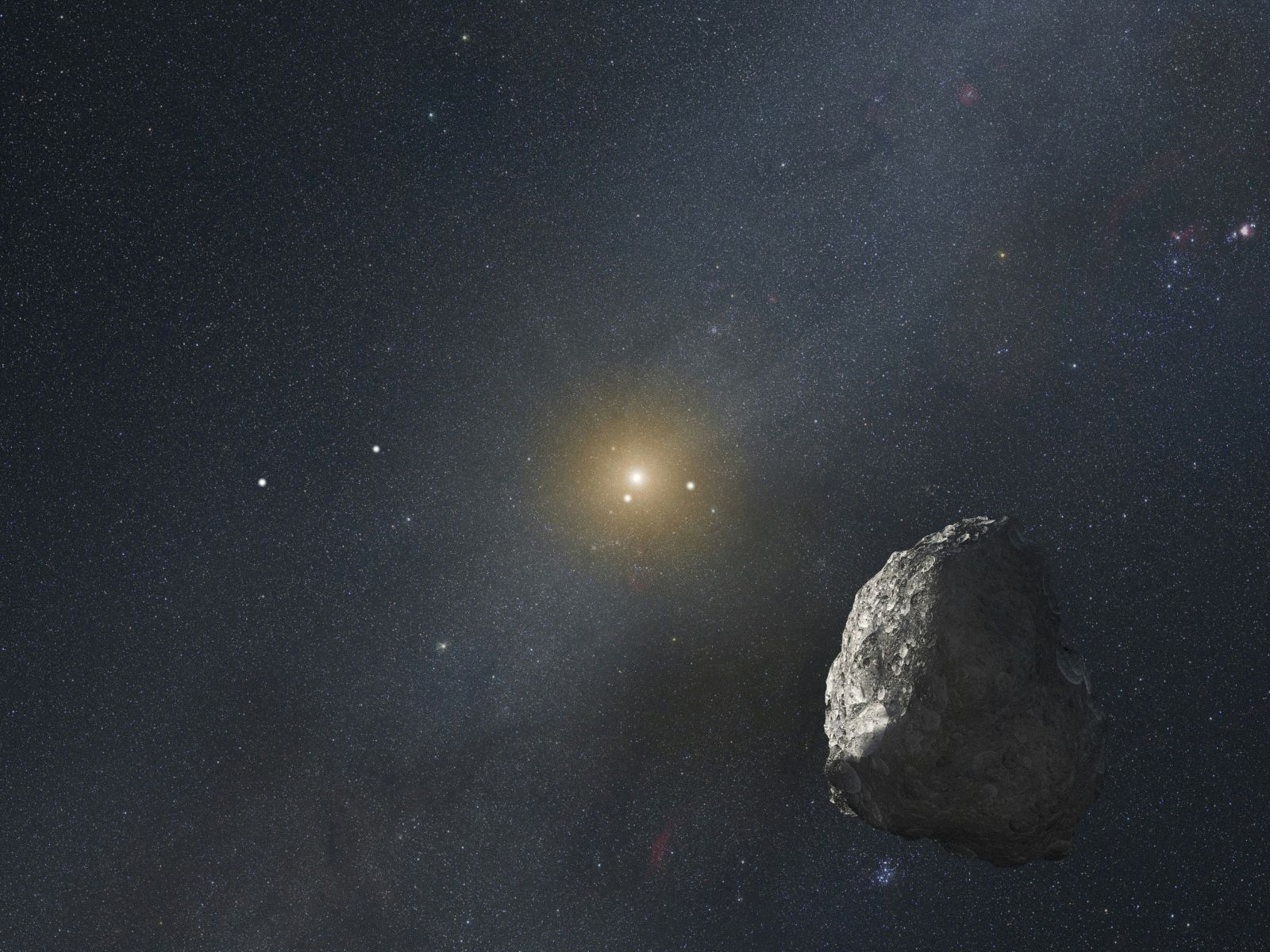
Classified as an Apollo-class asteroid, 1998 KY26 is a small celestial object with a diameter of about 11 meters. Although its orbit crosses Earth's, astronomers detected an unusual acceleration in its motion in 2023.
Faced with this unusual behavior, several scientists have wondered about the exact nature of this asteroid. Indeed, some thought that it might be a celestial object known as a dark comet. This type of comet does not have a tail visible through telescopes. However, they undergo non-gravitational acceleration that may be caused by the sublimation of ice.
This theory could explain why the orbit of 1998 KY26 has been altered. But by studying the temperature of this asteroid, researchers found that even its coldest regions average at least -78 °F (-61 °C) as it orbits the Sun. For water ice to survive over long periods, temperatures must remain below approximately -198 °F (-128 °C).
Furthermore, if ice were the cause of this acceleration, its supply would be exhausted in just 62 years. However, this asteroid appears to be several billion years old.
But there is still hope, and it lies in the Japanese space agency’s probe, Hayabusa2. It should reach the asteroid 1998 KY26 in July 2031 to study it using its ONC-W and ONC-T cameras, as well as its Lidar laser altimeter.
Source(s)
Image source: NASA Hubble Space Telescope - Unsplash
 Add as a preferred source on Google


