


Moon could get solar-powered 5G network with 400-hour reserves and robotic relay stations
A mobile network for the Moon
Getting a reliable mobile signal can be frustrating enough on Earth. On the Moon, it becomes a considerably more ambitious engineering problem.
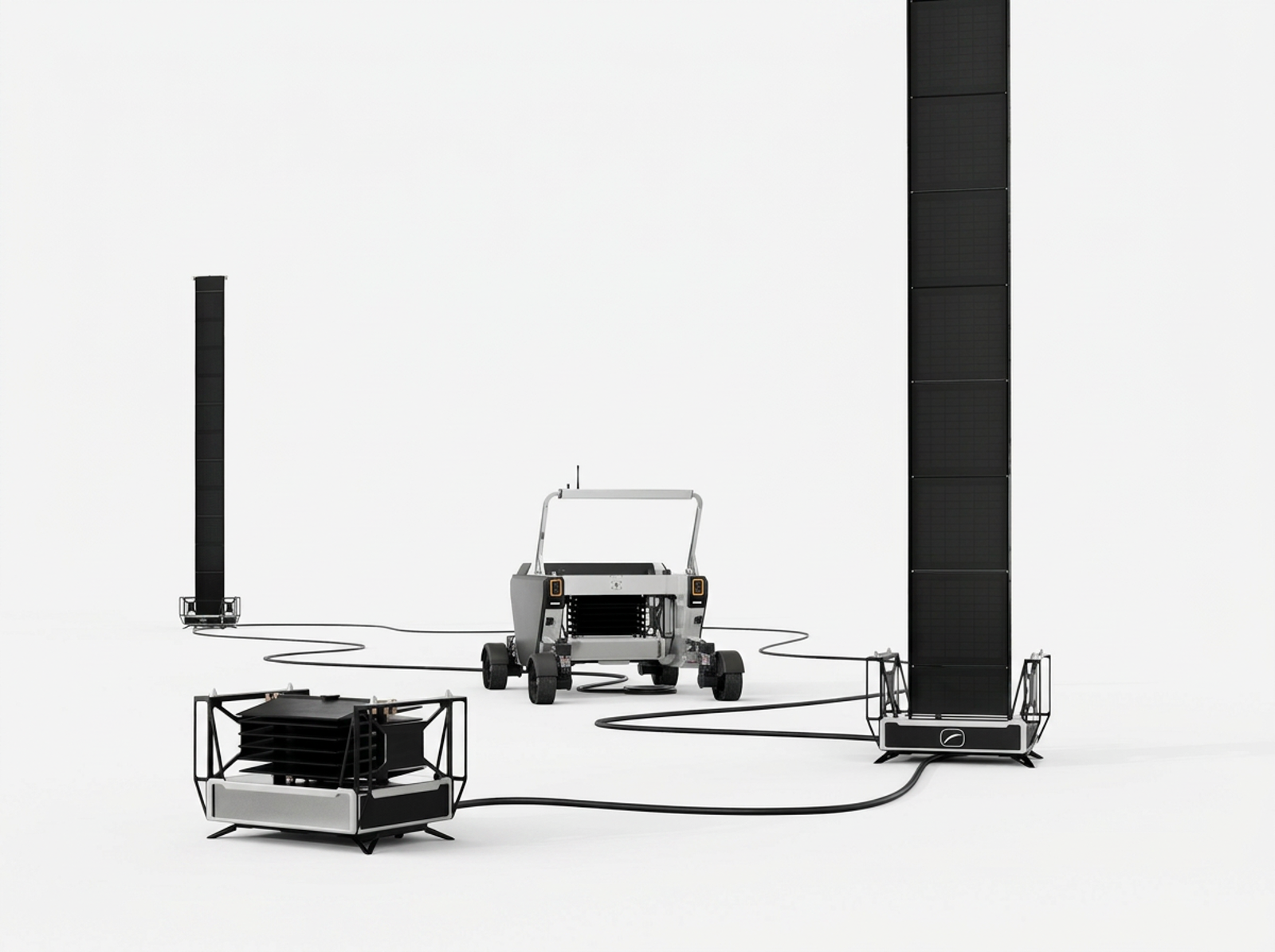
US space technology company Astrolab has unveiled LUMIS (Lunar Utility Module for Industrial Services), a proposed network of solar-powered stations designed to supply electricity, Wi-Fi, 5G connectivity and computing services to equipment operating on the lunar surface.
In its 4 November announcement, Astrolab outlined plans for initial demonstration nodes designed to generate 2 kW, with future versions potentially producing 20 kW each. The company envisages interconnected installations delivering more than 100 kW.
Why moving a tower matters
The clever part is that the stations would not have to stay wherever a spacecraft happens to land. Astrolab plans to use its FLEX (Flexible Logistics and Exploration) robotic rovers to transport the stations to locations offering better sunlight and communications coverage.
Near the Moon's south pole, moving equipment by just 50 metres could mean hundreds of additional hours of darkness or reduce nearly continuous visibility of Earth to roughly half the time. Astrolab proposes relay links spanning more than 100 kilometres, connecting areas unable to communicate directly with Earth.
The stations would incorporate vertical solar arrays, batteries, antennas and onboard computing equipment. Astrolab says the design could operate for more than 400 hours using internal power reserves, while continuing to support external equipment.

From demonstration models to lunar deployment
Astrolab plans to display full-scale models at the Max Power showcase at Kennedy Space Center on 7–8 November, offering a glimpse of how its proposed lunar network could take shape.
The longer-term ambition goes beyond individual power stations. Through its proposed Lunar Operating System (Lunar OS), Astrolab envisages a shared network that future Moon missions could tap into for electricity and communications, rather than each having to provide everything themselves. The company is targeting its first LUMIS deployment in 2028 aboard a planned commercial FLEX mission using SpaceX's Starship.
It's tempting to imagine a rover exploring the Moon's surface, miles from its landing site, relying on solar-powered stations to stay connected and keep its equipment running. Rather than bringing every piece of infrastructure along for the journey, future missions could potentially tap into a network already in place.
For now, these remain proposed capabilities, not the performance of an operational lunar network. But if Astrolab's plans become reality, future Moon missions might need something resembling a mobile network operator as much as another rover.
Source(s)
 Add as a preferred source on Google


