


Hubble reveals new clues about the origin of the mysterious cosmic cat's tail
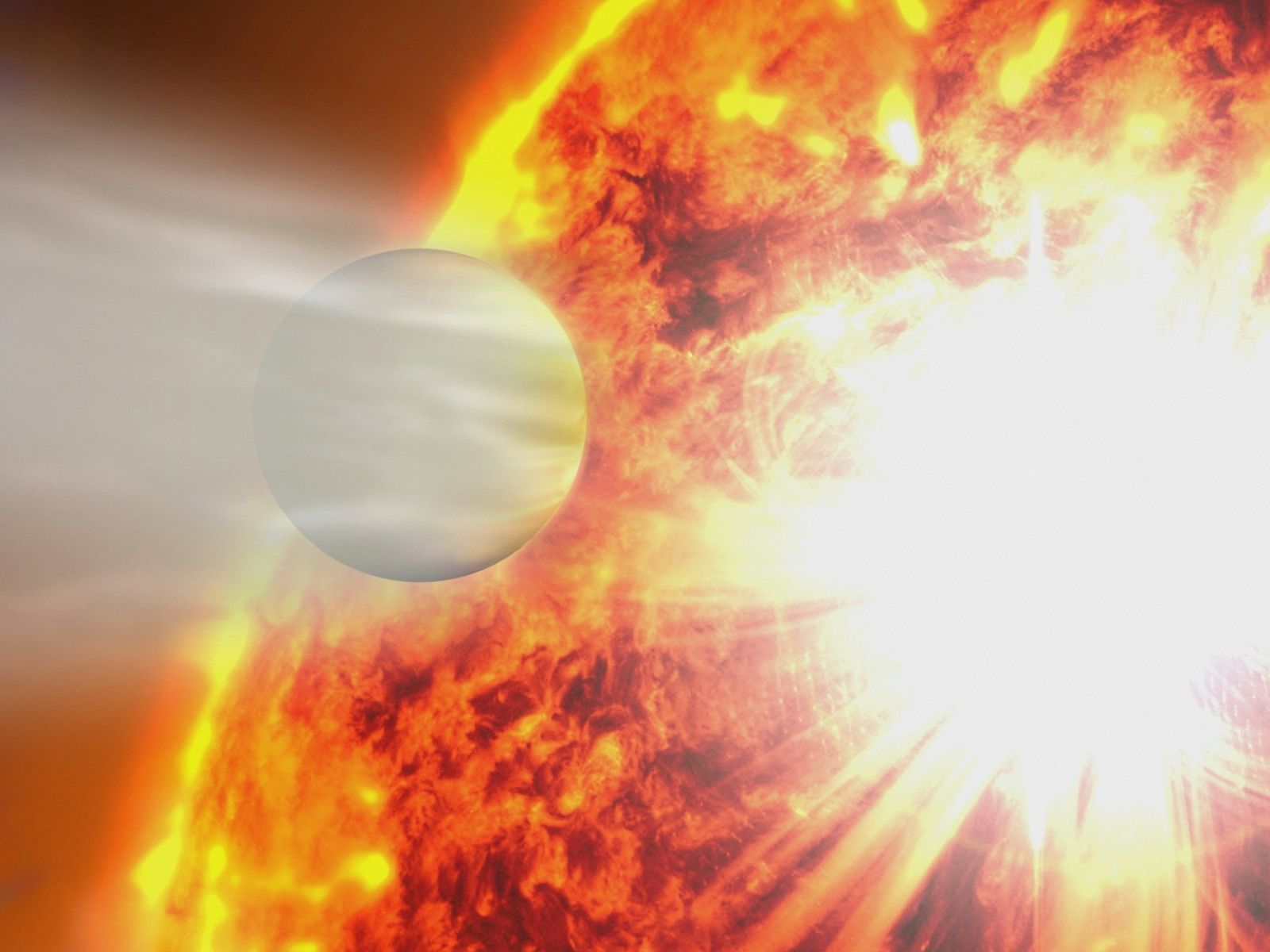
Located about 63 light-years from Earth, in the constellation Pictor, this structure is impressively large: about 1,000 times the Earth-Sun distance. It extends from the debris disk surrounding Beta Pictoris, a star at the center of a planetary system younger than our own.
To study this structure, a team led by Arin Avsar, a planetary scientist at the University of Arizona, used the Hubble Space Telescope and combined new observations with images dating back more than 14 years. Based on their findings, astronomers believe that this structure was caused by a collision between two celestial objects similar to Pluto.
Indeed, young planetary systems often have chaotic environments, with disks of gas and dust surrounding their central stars and numerous collisions occurring between celestial bodies.
In addition, Hubble observations suggest that this structure consists of extremely porous, micron-sized dust grains, as Kevin Wagner, a co-author of the study, explains:
"It's possible that the velocities involved in the collisions were so high that the carbon grains vaporized, turned into gas, and then recondensed as they cooled, and that's how they became so porous."
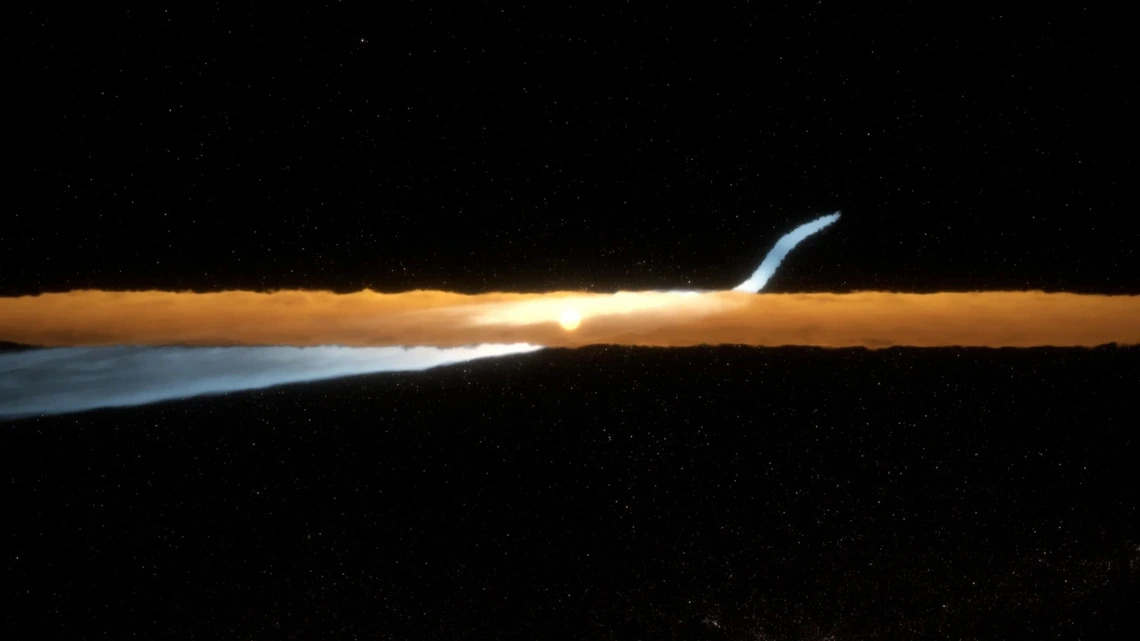
Using Hubble in a new configuration, scientists also detected a warp in the dust halo surrounding Beta Pictoris. It is believed to be caused by one of the planets in this system, Beta Pic b, a gas giant with a mass about 10 times that of Jupiter.
Source(s)
The Astrophysical Journal Letters
Image source: NASA Hubble Space Telescope - Unsplash / NASA, ESA, CSA, STScI, Ralf Crawford (STScI)
 Add as a preferred source on Google


