




This DIY cassette player records your Spotify sessions in real time for true analog vibes
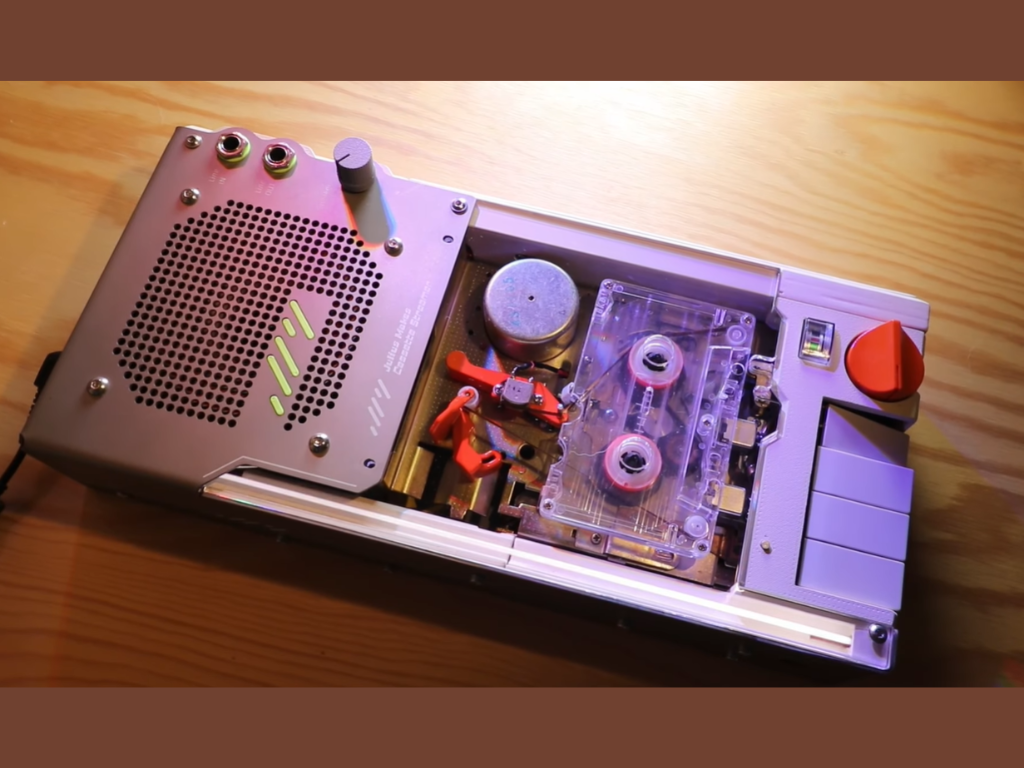
Streaming services these days deliver decent audio quality straight to our phones and earbuds, but a DIY creator and YouTuber is taking things a step further. Julius Curt or Julius Makes has built a custom cassette-tape-themed Bluetooth music player.
But instead of playing it directly, the music player records the audio in a cassette loop in real time. Then it plays back the music, giving you warm, nostalgic vibes with hints of lo-fi and subtle saturation.
The concept behind this is clever, yet simple. The music player receives audio from your phone via Bluetooth, converts it to an analog signal, mixes it down to mono, and feeds it to the record head of a modified cassette deck.
Following this, the visible tap loops around 3D-printed guides and passes a playback head. The audio is then played via a built-in speaker or through headphones. This intricate journey through the cassette deck and tape introduces a bit of natural compression and imperfections that digital plugins have tried to replicate. Still, it can’t quite match, given the analog nature of this music player.
However, creating the analog music streaming device wasn’t a walk in the park. Old cassette decks have intricate electrical designs, such as grounding the housing to the positive power rail rather than to ground, which can cause short circuits when using Bluetooth modules.
Julius had spent months debugging, trying isolation transformers and custom voltage regulators, before getting the analog streaming device working. He had to design five custom PCBs in KiCad, along with circuits to convert stereo audio to mono, play pre-mapped audio with EQ, and enable auto-start functionality for the Bluetooth module.
To make the device even more immersive, he added a glowing VU meter that dims during loud peaks in the music.
The result is an analog Bluetooth Spotify streaming cassette deck housed in a stainless steel body with a transparent acrylic front to visualize the internal components. The visible tape loop guides the brown tape, just as your music player does. It also features big orange knobs to tune record levels for distortion or adjust the output volume.
All in all, it makes for an interesting DIY project, albeit one with a layer of complexity for some users thanks to the soldering involved, even if one follows the instructions to the letter. For those looking just to get a brand new cassette player with basic ammenities and features such as USB-C charging instead, the FiiO CP13 is an easy, but expensive recommendation to make.
Source(s)
 Add as a preferred source on Google


