The next evolutionary step for mini PCs? YouTuber packs entire PC into a mouse
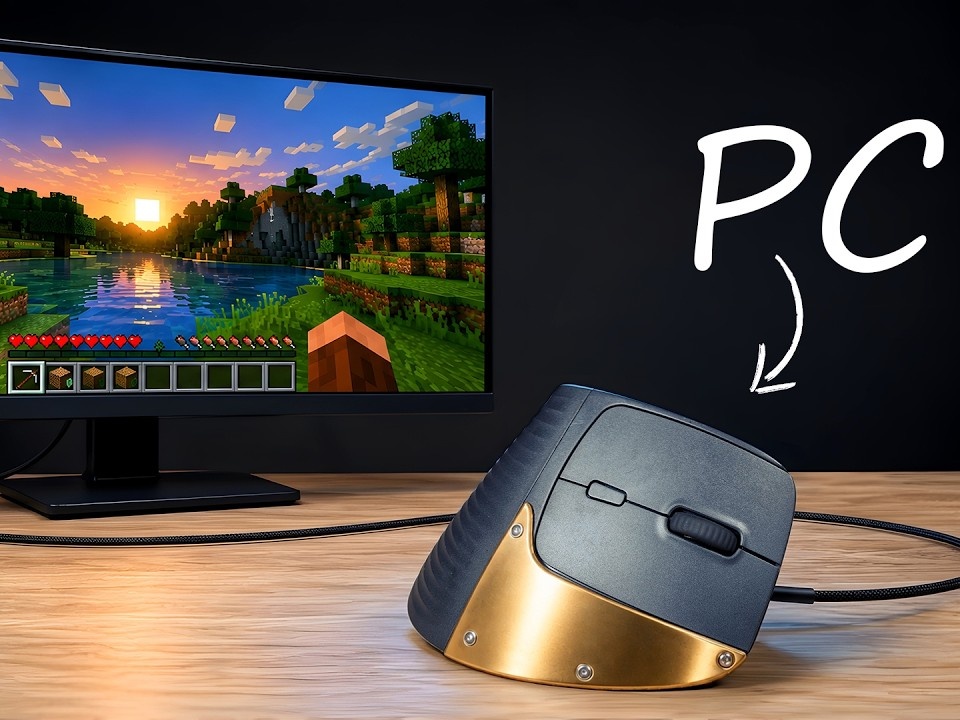
YouTuber Gadget Industry, a hobbyist builder who creates "exciting DIY projects, innovative gadgets, and powerful builds that make everyday life smarter and more fun," has turned a computer mouse into a functioning PC by repurposing the internal components of a broken Samsung smartphone. The mouse-turned-mini PC uses Samsung DeX, which allows compatible smartphones to provide a desktop-style interface when connected to an external display.
Rather than attempting to fit the entire handset inside the mouse, the builder simply stripped out the motherboard, USB-C sub-board and power button. Fitting the components inside the mouse introduced two clear engineering problems: physical space and heat. The smartphone's original metal frame had originally provided cooling for the processor, leaving the exposed motherboard vulnerable to overheating. To solve this, the builder fashioned a replacement heatsink from scrap brass sheet, shaping it into an L-bracket that could sit inside the mouse shell and conduct heat away from the board. The cramped enclosure also required modifications to the mouse, including removing its battery holder, relocating connections and adding a physical switch.
Because the phone's replacement battery operates at a much higher voltage than the mouse's original AA battery, a converter was installed to reduce the output to 1.5 volts. Otherwise, the higher voltage directly would have destroyed the shell's original circuitry. The builder also had to solve two separate accessibility problems. First, the phone's original power button was too small and short to reach once buried inside the mouse's shell, so it was extended using a separate push-button switch wired in from outside.
Second, the sub-board, which houses the phone's USB-C port and is required to both charge the device and carry a display signal to the monitor, could not be positioned favourably. To get around this, the builder connected it via a USB 3.2 extension cable capable of carrying video data (not just power), routed to a cutout hole on the front of the mouse where it could be accessed easily.
Once reassembled, the device is shown as successfully connecting to a monitor, booting into DeX mode, playing 4K video and running Minecraft, all while retaining the mouse's normal functionality. After extended use, the brass section becomes warm, which the builder characterizes as evidence the cooling solution is functioning. The result is an impressive example of how much computing hardware can be repurposed into an extremely small enclosure. Although far from the performance of a conventional mini PC, it nevertheless demonstrates the power of community-driven innovation in possibly shaping mainstream technological evolution.
Source(s)
 Add as a preferred source on Google