




CheckMag | "The best T14 we've ever built": Interview on the new Lenovo ThinkPad T14 G7
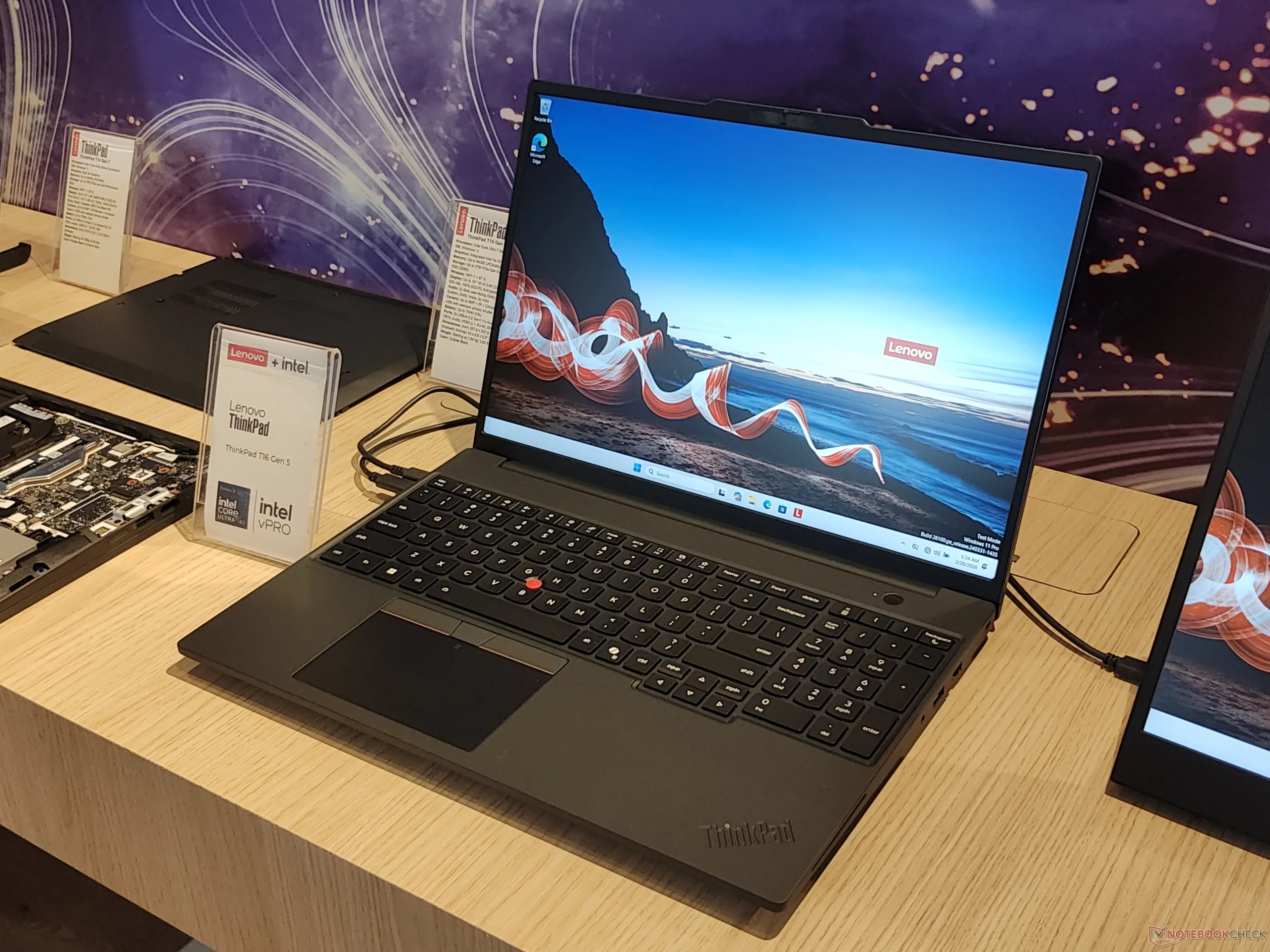
The Lenovo ThinkPad T series is known for its consistency. This makes big design changes all the more significant, as they do not happen often. The new Lenovo ThinkPad T-series laptops of the 2026 generation, the Lenovo ThinkPad T14 Gen 7 and the Lenovo ThinkPad T16 Gen 5, were announced at Mobile World Congress (MWC), successors of the ThinkPad T14 Gen 6 and ThinkPad T16 Gen 4. We were able to take a look at both at MWC - and to conduct an interview with the responsible product manager.

Christoph Blindenbacher, originally from Switzerland, has been a ThinkPad product manager for Lenovo since October 2016. Prior to that, he worked in various roles for Lenovo and IBM, where he started his career in 1999. He is currently primarily responsible for the product development of the ThinkPad T series, in particular the ThinkPad T14 and ThinkPad T16.
Mr. Blindenbacher, everything is currently dominated by AI - not only in terms of AI functions, but also because of the memory crisis - prices are rising practically every day. How do you deal with this as a product manager of a brand like the Lenovo ThinkPad T series?
The effect doesn't just affect us, but applies industry-wide. Of course, we are looking at whether there are ways to balance the costs a little. The effect is actually present across all memory technologies. So your hands are almost tied.
Lenovo is fully committed to the topic of repairability with the T series. Does this also bring an advantage with regard to the memory crisis, for example, by saying that customers buy a device with 8 GB RAM and then upgrade when RAM prices fall again?
Repairability is an important customer requirement and will remain an important customer requirement. I see this primarily as an opportunity for the customer to extend the lifecycle by repairing the device - or to give it a second life by upgrading it. Another key factor here is that wear parts such as the keyboard can be easily replaced, so that a laptop can also pass through the hands of different employees within the company without them immediately realizing "hey, this laptop has actually been around for a few years".
If RAM is so scarce, could configurations with less RAM be offered more often again - perhaps even less than 8 GB?
In the enterprise environment, where ThinkPads are mainly sold, I don't think it will go below 8 GB. These devices are often equipped with security and management programs by the IT departments, so that a large part of the RAM is already reserved before the user applications run. 8 GB is the minimum standard. We are actually seeing 32 GB becoming more widespread and more mainstream as a memory size. Of course, if the cost trend continues, some customers may consider sticking with 16 GB for the time being. At best, you could also consider offering an intermediate size such as 24 GB. But I don't think that RAM configurations with less than 16 GB will become more popular in the commercial environment. In the end, the user has to work with the device and the user experience suffers greatly.
While we're on the subject of user experience, SSDs are also becoming more expensive alongside memory. In the past, there were mechanical hard disks as a cheaper alternative, where the user experience was not as good compared to SSDs - Lenovo last offered them five years ago with the ThinkPad L series. Will hard disks in laptops perhaps become an issue again?
We haven't even considered that yet. We would have to create more space in the housing for mechanical drives. We also have to keep in mind that we need to remain competitive in terms of form factor. At the moment, I don't see HDDs making a comeback. I think there are other considerations that can be made without major design changes, such as cheaper storage technologies.
At CES, Lenovo presented the X1 Carbon Gen 14 with the "Space Frame". Why has the new ThinkPad T14s Gen 7 not yet adopted this design?
Our philosophy is basically that we try to offer the same user experience across the ThinkPad portfolio. This has always characterized the ThinkPad brand. When you have a new technology, it's always a goal to scale that across the portfolio. The same applies to the Space Frame. Of course, it always depends on various factors, for example the question: How innovative is a technology really? How high are the costs? In some cases, the repairability that the Space Frame offers us can also be achieved with a different design, as you can see with our classic T-series with the repairable keyboard. There are various ways to achieve this. Basically, however, it is a long-term goal to have an identical repairability experience across the entire lineup.
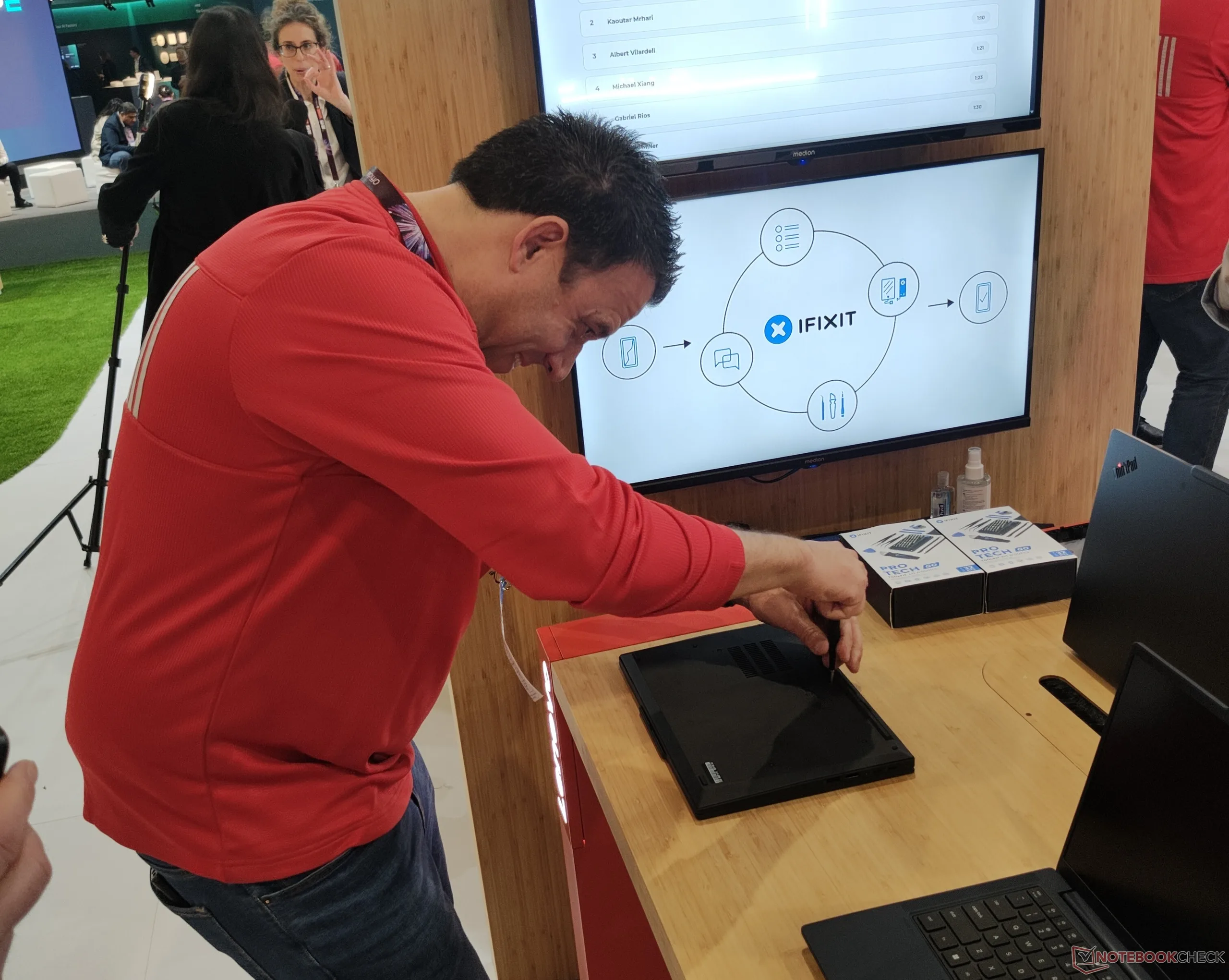
On the subject of repairability: iFixit gave the T14 Gen 7 a "10/10", but the Wi-Fi card, for example, is still soldered - what is the specific reason for this design decision?
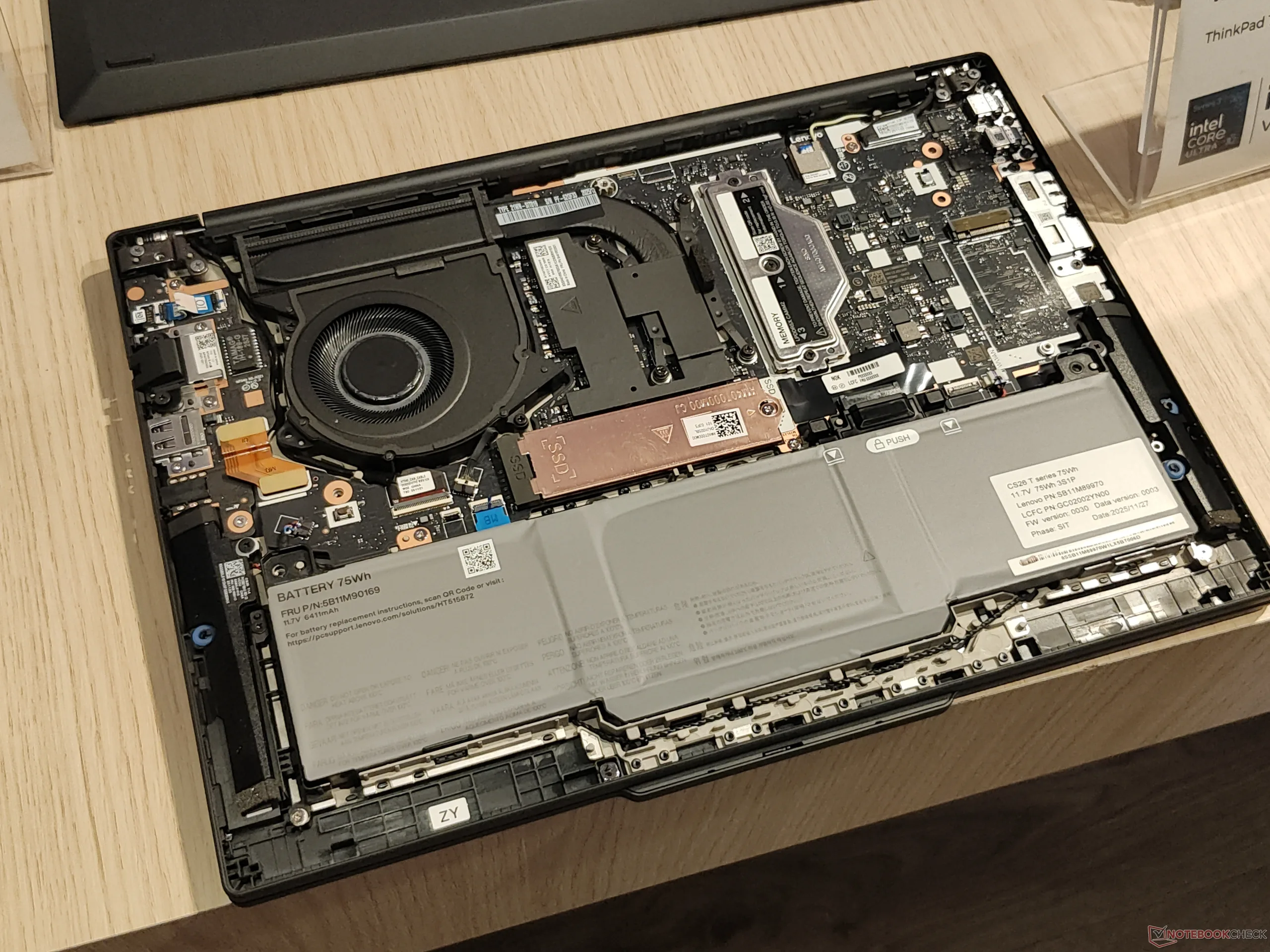
When we look at repairability, we also take a look first: Which components fail the most? There are different perspectives. First of all, there is "serviceability" from the point of view of our support service providers - how easy is the device to maintain? Then there is "repairability" from the customer's point of view. And then there is upgradeability. We look at the features of each ThinkPad model from all three perspectives and define which components have which priority.
As far as the Wi-Fi module specifically is concerned, this was originally planned as a modular solution. However, Wi-Fi modules do not break often, so it is not a high priority from a serviceability perspective. We also see few customer inquiries on the subject of upgradeability. Of course, this could change in the future, especially if customers want to use the devices for longer - and then want to upgrade from Wi-Fi 7 to Wi-Fi 8, for example. That would be a good reason to adapt the design.
In the case of the new T series, we unfortunately had to leave the module soldered. That was a classic trade-off. Intel and AMD models use the same motherboard design, but the two SO-DIMM slots in the AMD version require more space. As a result, it was ultimately not possible to implement a modular solution for the Wi-Fi module. However, we will look at this again in the future; it is already a goal, especially for the L or T series, to move towards a modular design.
Is there a specific innovation in the new T-series that most users won't notice, but a lot of work has gone into it?
I would like to focus on three points. The first is the LPCAMM2 memory module in the T-Series with Intel CPUs. Why did we do that? Today, everyone talks a lot about CPU, GPU and NPU performance, but at the end of the day, a lot comes down to memory bandwidth. With LPCAMM2, we are future-proof in terms of memory speed and at the same time still repairable - and the power consumption is also lower. Users will not notice this, but it is a significant change. I am very proud that we have been able to implement this in the T series, our best-selling series.
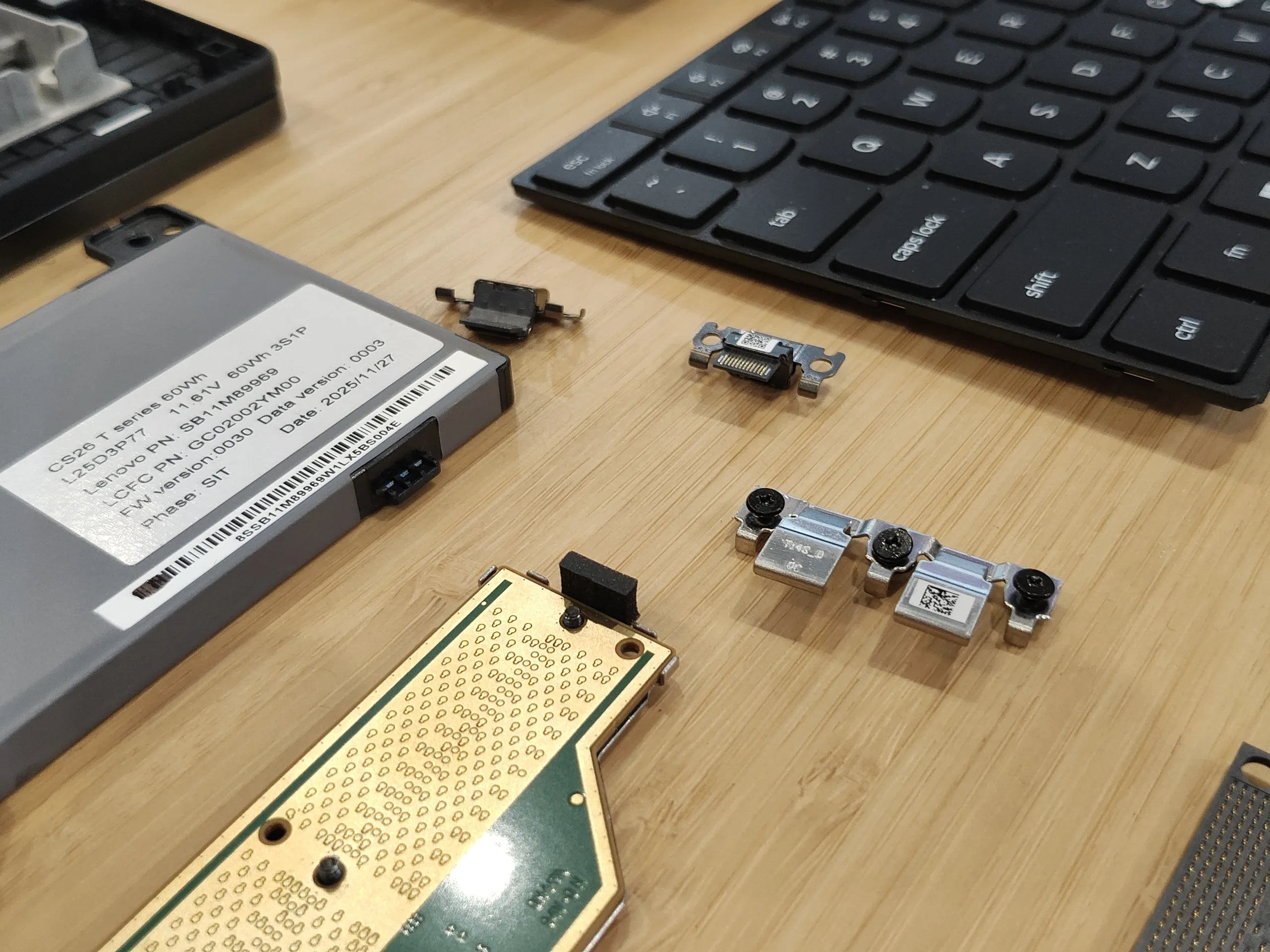
The second point is that we have integrated replacement screws into the design. This is primarily for the service technicians, but of course also for the customers. Many of the screws on all CRU parts are captive and therefore cannot get lost. However, this does not apply to the other parts and it actually happens more often than you might think that screws get lost. That's why we now have four replacement screws for the touchpad, to the right of it, as well as two screws on the left and right corners that correspond to the screws on the mainboard.
Thirdly, the weight. We have become around 100 grams lighter compared to the previous generation. Many people may not notice this directly, but for us it's a lot. I'm very proud of the team for achieving this goal.
Finally, is there a personal favorite among the ThinkPads in the T series?
What I have to say clearly is that ThinkPad T14 Gen 7 and T16 Gen 5 is in my opinion the best T-Series we have ever built. iFixit 10 out of 10, more CRU parts, 100 grams lighter and the performance is 30 percent higher thanks to the higher TDP of 30 watts. With the Intel ARC B390 you almost get Nvidia GeForce RTX 4050 performance. And the design is more modern and very well executed.
When it comes to historical models, for example, I would mention the ThinkPad T450 for example - especially because of the replaceable battery design with the expandable external battery. We sometimes look back at the older T models with this design and see what we can learn from them. The hot-swappable battery design in particular is something we like and are thinking about whether it could find its way back into the T-series in the future.
Source(s)
Own
Lenovo
 Add as a preferred source on Google


