




Steam updates AI disclosure form, requiring developers to report visible and in-game AI but not background tools

Valve has quietly updated Steam’s AI disclosure form, making it much clearer what kinds of artificial intelligence usage developers actually need to disclose on their store pages. The focus of the disclosure is not on efficiency gains during development, but on AI-generated content that players can actually see, hear, or interact with.
The biggest change is that Steam is now explicitly not concerned with AI-powered tools used behind the scenes for efficiency, such as coding helpers or development software that uses AI in the background. Instead, the updated form focuses on two specific types of AI use that developers must disclose.
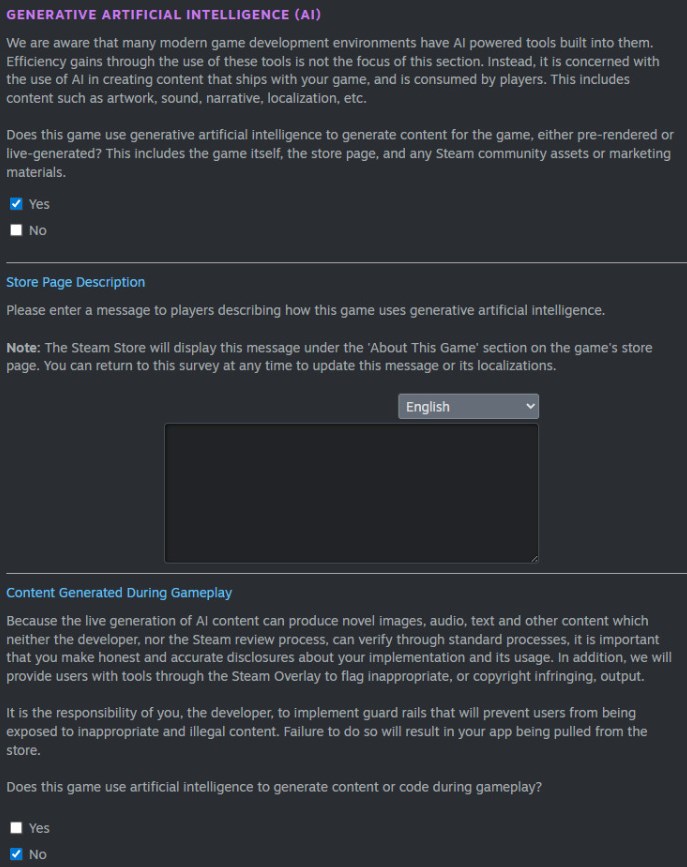
First, developers must confirm whether generative AI is used to create content that ships with the game. This includes things like artwork, sound, story elements, localization, store page descriptions, or even marketing materials. If a game uses AI in this way, developers are required to write a short message explaining how it’s used. This message will appear publicly on the game’s Steam store page under the “About This Game” section and can be updated at any time.
Second, Steam asks developers to disclose whether a game generates AI content during gameplay. This applies to games that create images, audio, text, or other content dynamically while players are playing. Because this kind of content can’t be fully reviewed ahead of time, Valve places extra responsibility on developers to put proper safeguards in place.
Valve also makes it clear that developers are responsible for preventing inappropriate or illegal AI-generated content from reaching players. Steam will offer tools that let players report issues through the Steam Overlay, but if developers fail to control these systems, their game could be removed from the store.
Source(s)
 Add as a preferred source on Google


