




SanDisk makes first 3D Matrix Memory chips — aiming for half the cost per bit of DRAM
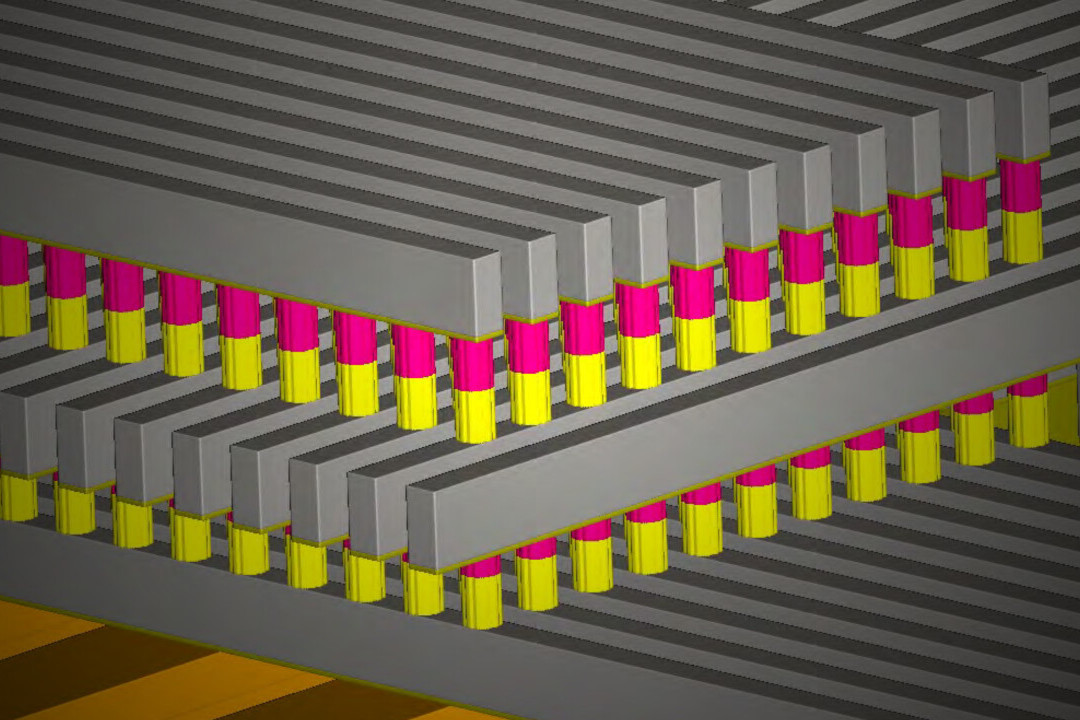
SanDisk has provided a small but significant update on its experimental 3D Matrix Memory, saying it has produced the first chips of the new memory technology on standard 300-mm silicon wafers and packaged them for further testing. According to the company, the prototypes are already capable of storing several gigabits of data, and their performance is approaching the specifications planned for the final product.
3D Matrix Memory has been under development since 2017 as a potential alternative to conventional DRAM, but with a fundamentally different three-dimensional structure. SanDisk says the technology could eventually deliver similar performance while offering up to four times the capacity of DRAM. The company also aims to cut the cost per bit by half compared with traditional DRAM.
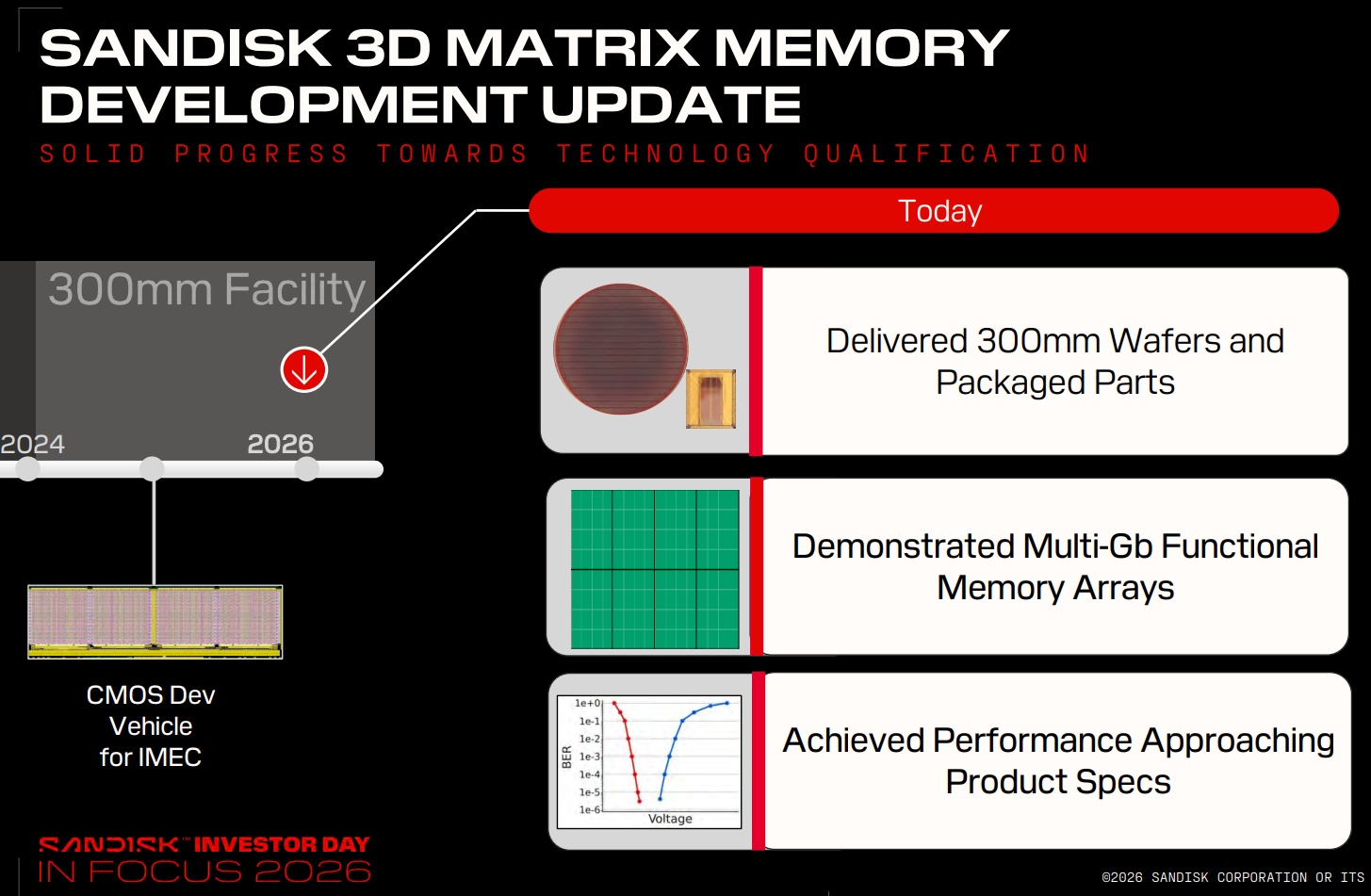
The latest prototypes build on a test vehicle developed with SanDisk's research partner Imec last year. SanDisk has since begun stacking multiple memory layers and manufacturing prototypes on 300-mm wafers. The packaged chips are now being used for additional testing. According to the company, the experiments have already demonstrated functioning memory arrays with multiple gigabits of capacity. SanDisk also says the performance level is already very close to the specifications it has set for a potential end product.
However, SanDisk is not yet ready to talk about a commercial launch. SanDisk CTO Alper Ilkbahar noted that 3D Matrix Memory remains a long-term project and that it may be quite some time before the technology reaches the market.
It’s moving forward, but it’s a project with a longer time horizon. We will continue to keep you updated on our progress - Alper Ilkbahar.
SanDisk's latest roadmap provides few details about what comes next. An earlier roadmap had shown plans for 32- to 64-Gbit samples, though no schedule had been given for their arrival.
latest roadmap provides few details about what comes next. An earlier roadmap had shown plans for 32- to 64-Gbit samples, though no schedule had been given for their arrival.
For now, 3D Matrix Memory remains more of a research project than a realistic replacement for DRAM in the near future. Still, the ability to manufacture multi-layer prototypes on standard 300-mm wafers, demonstrate multi-gigabit memory arrays, and achieve performance approaching the company's target specifications marks a significant step forward in SanDisk's long-running effort to develop a new type of high-density memory.
SanDisk is also working on another advanced memory technology, High Bandwidth Flash (HBF). Unlike 3D Matrix Memory, HBF does not introduce an entirely new memory architecture. Instead, it essentially stacks conventional NAND chips to increase bandwidth. That project is much closer to commercialization. SanDisk says the first HBF design has completed its tape-out, and samples are expected to become available for validation next year.
Source(s)
SanDisk via Computer Base
 Add as a preferred source on Google


