




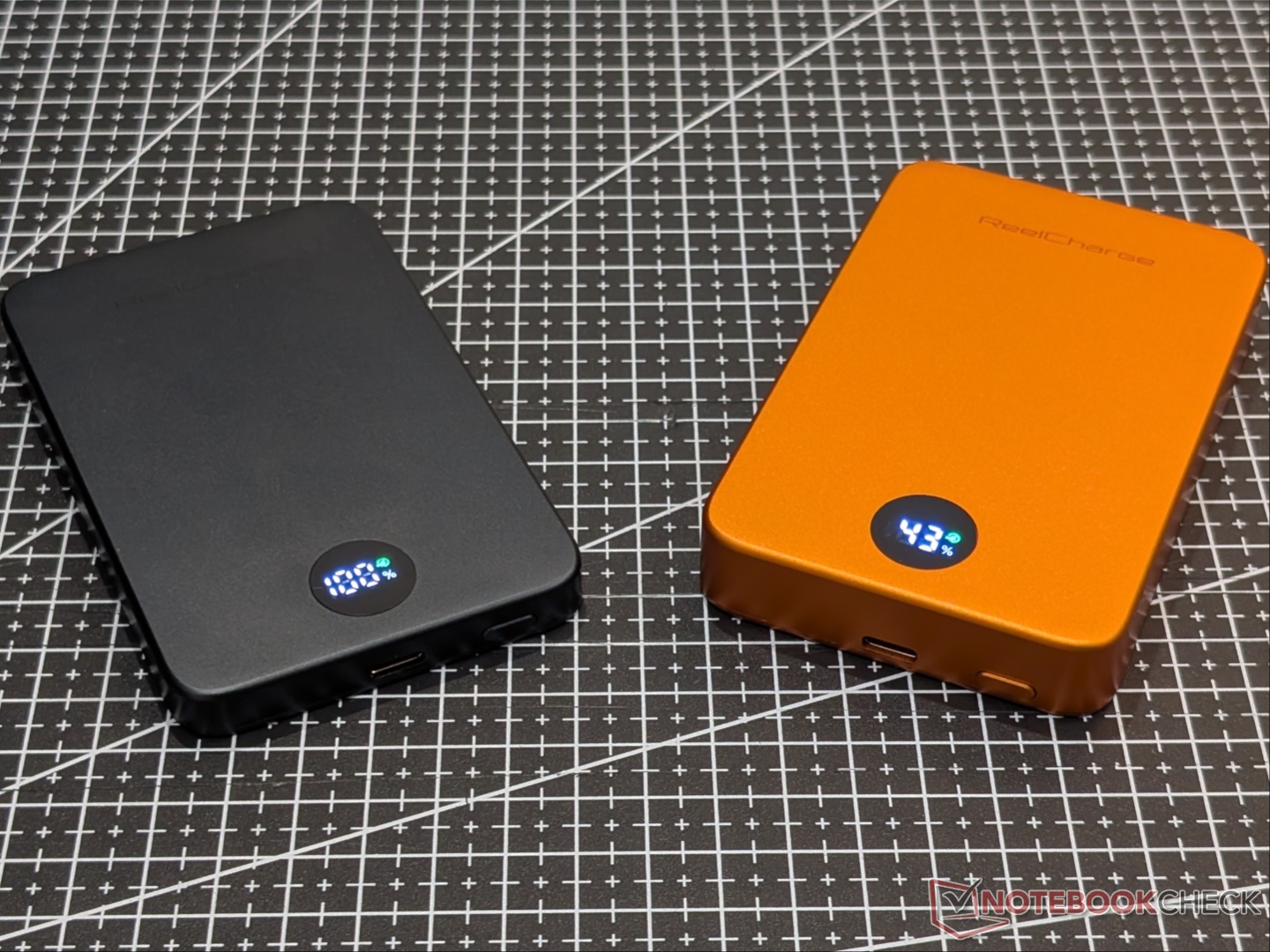
ReelCharge Solid State Wireless Power Bank review: Extra safety for extra cost
New tech for early adopters.
The Solid State Wireless Power Banks from ReelCharge are very similar to traditional power banks in terms of performance and design, but they come with an additional layer of safety.Vineet Washington Published 🇳🇱 🇫🇷 ...
Verdict - Typical power bank performance but with improved safety
ReelCharge is one of the very few brands that have released solid-state or semi-solid-state power banks. As more companies enter this space, the prices will start coming down. Meanwhile, the relatively higher pricing compared to other similar-capacity non-solid-state power banks can be considered the cost of early adoption, as well as added safety. While they may not be the fastest to charge your devices, ReelCharge Solid State Wireless Power Bank – 10,000 mAh and 5,000 mAh are compact, easy to carry, and provide two modes of charging. For devices with built-in magnets or magnetic cases, these are solid (no pun intended) everyday carry accessories.
Our early samples had some production issues, like the loose power button and light bleed, but ReelCharge has assured us that these will be addressed with future batches.
Pros
Cons
Price and availability
The ReelCharge Solid State Wireless Power Bank – 10,000 mAh is priced at $70, and the 5,000 mAh model is priced at $50. Both are available in grey and orange colors. There is also a Solid State Premium Wireless Power Bank – 5,000 mAh listed on the website that’s $60. The only difference seems to be a curved design with tempered glass and aluminum frame.
Specifications
| Type | Semi solid state power bank |
| Capacity | 10,000 mAh/ 5,000 mAh |
| Charging | Wired + wireless |
| Wireless charging | Qi compatible |
| Claimed charging speed | up to 20W wired/ up to 15W wireless |
| Colors | Grey/ orange |
| Ports | One USB C |
| Display | Round LED with battery percentage and charging indicator |
| Size | 104x66x15.6mm (10,000 mAh)/ 104x66x9.8mm (5,000 mAh) |
Unboxing
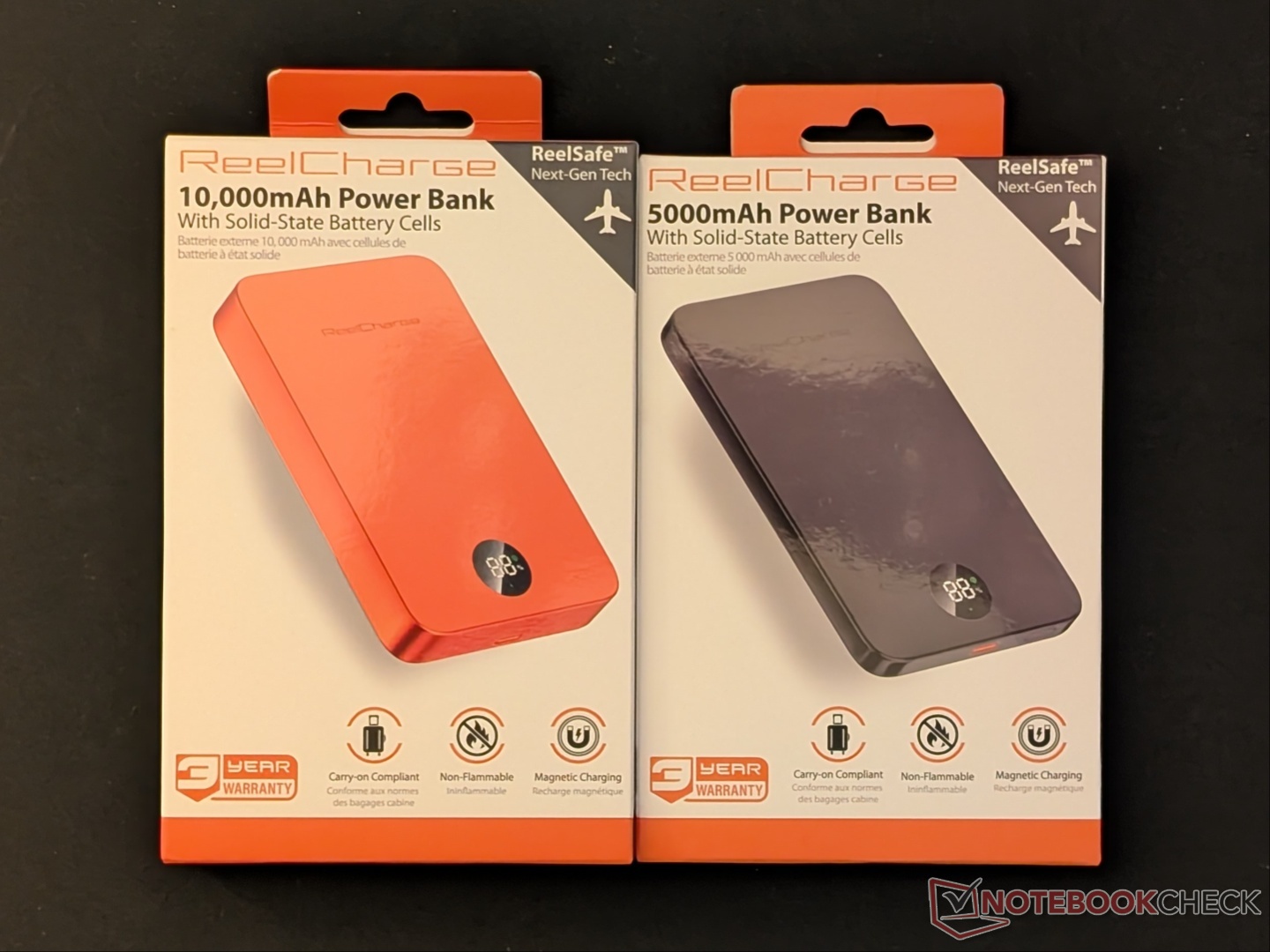
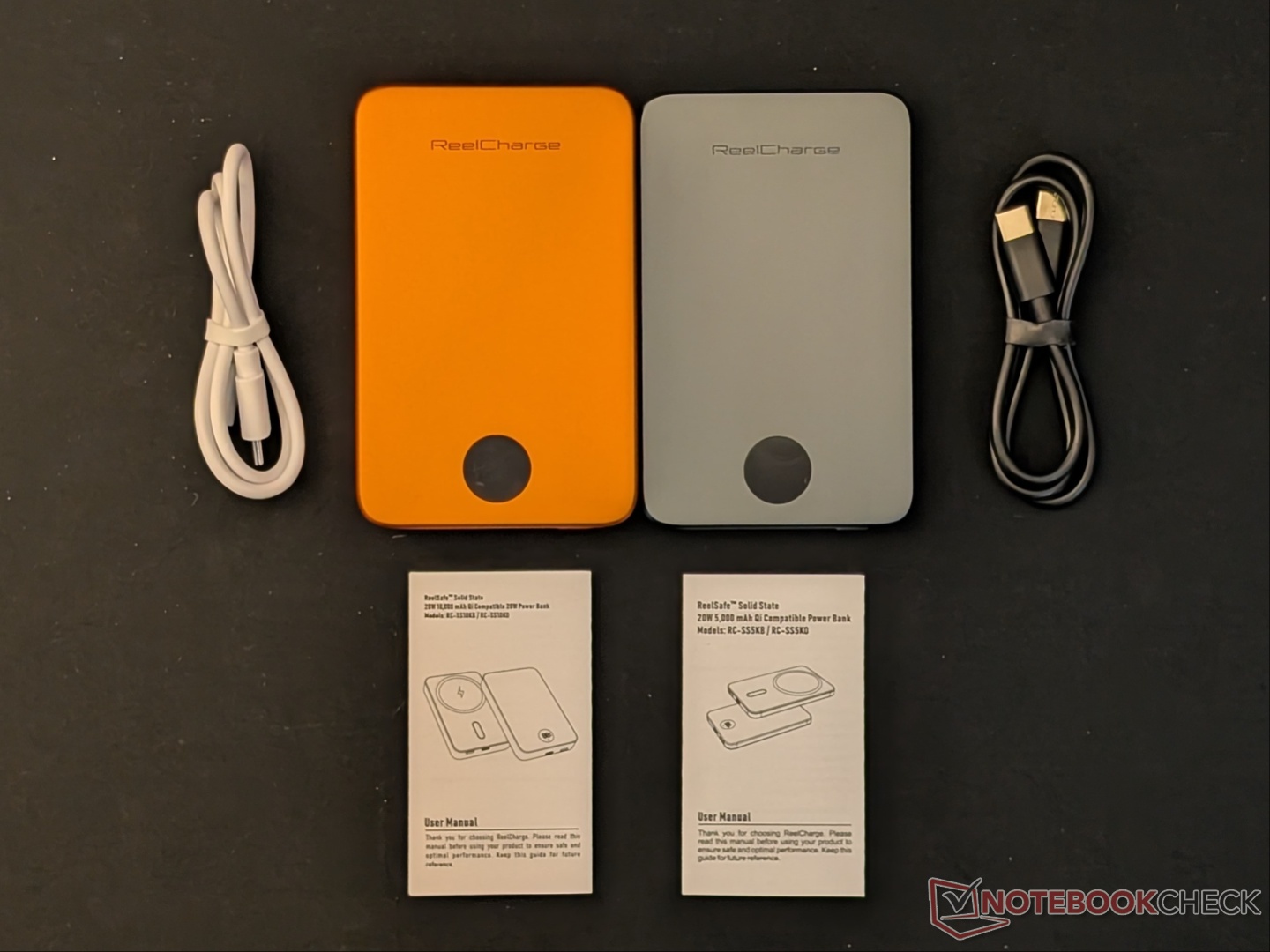
A pretty bare-bones unboxing experience with just the power bank, a USB Type-C to C cable, and a small user manual inside. The orange 10,000 mAh model comes with a white cable, while the grey 5,000 mAh model comes with a black cable.
Design and features
Both the 10,000 mAh and 5,000 mAh power banks are quite compact, with the former coming in at 15.6mm thick and the latter measuring 9.6mm. The Baseus PicoGo Air (check out our review) is still thinner (at 5,000 mAh), but ReelCharge isn’t aiming to be the slimmest power bank. There is a small LED display on one side with a single USB-C port at the bottom, next to the power button. The wireless charging coil is on the other side with strong magnets; more on that later.
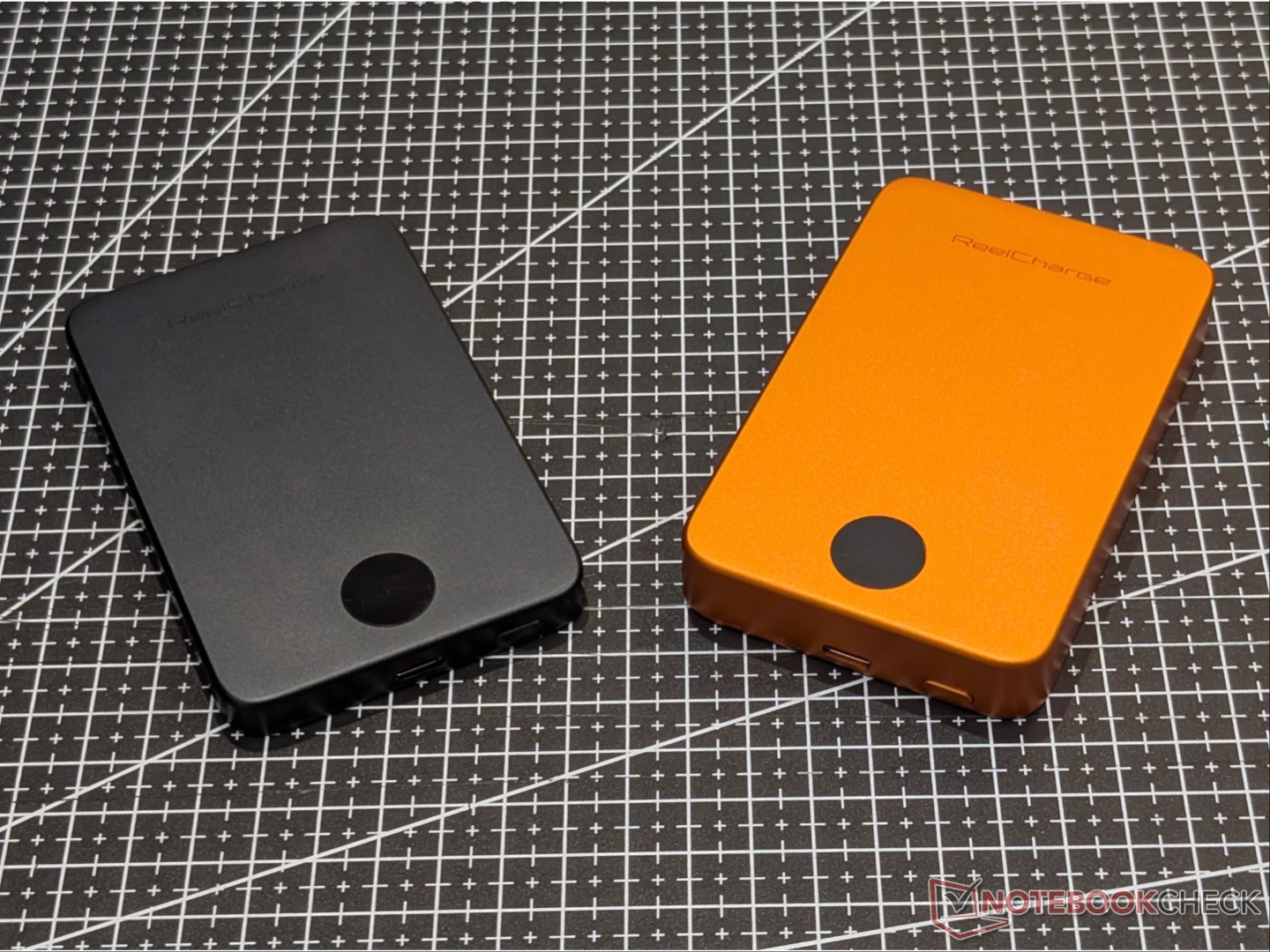
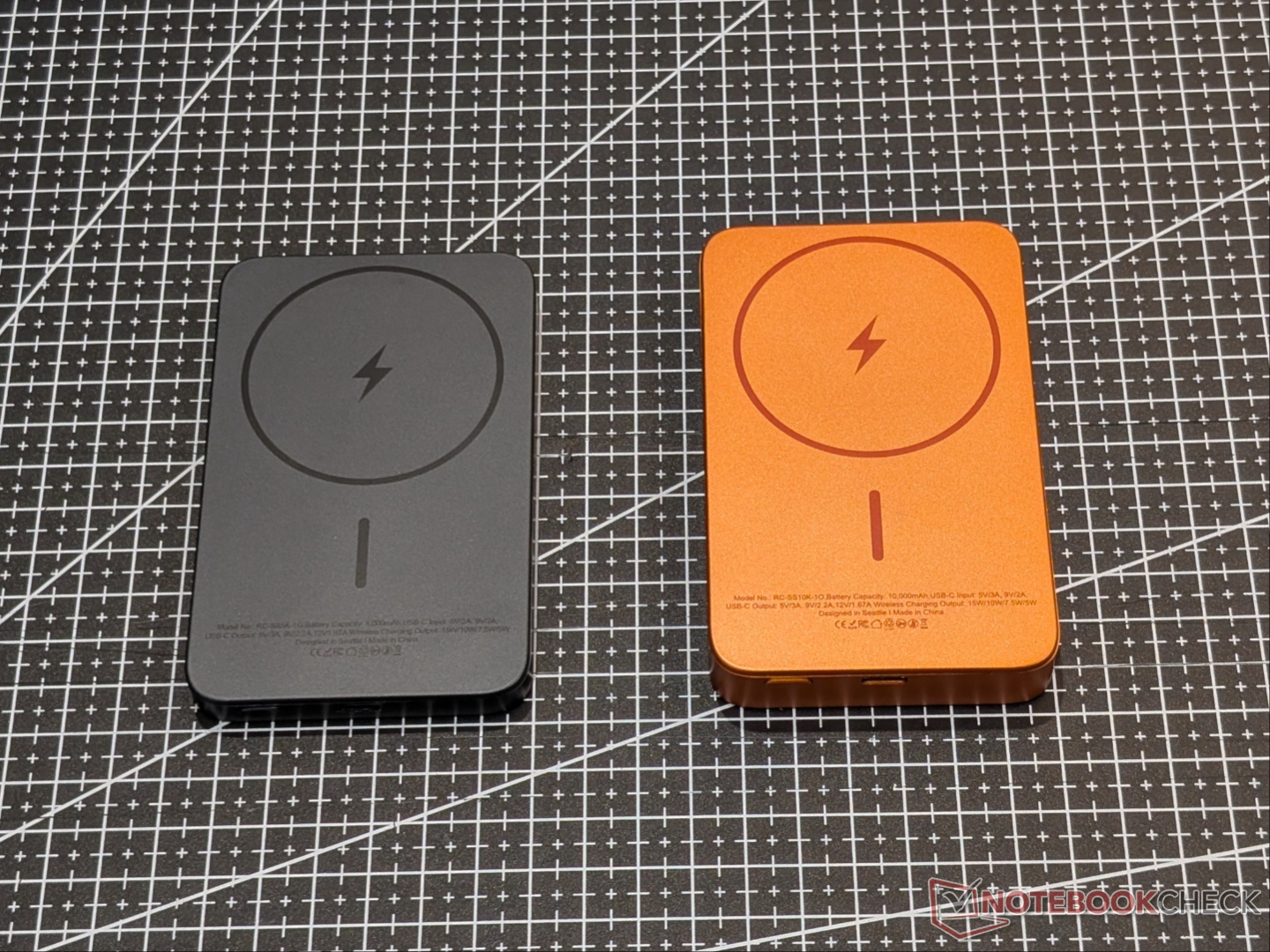
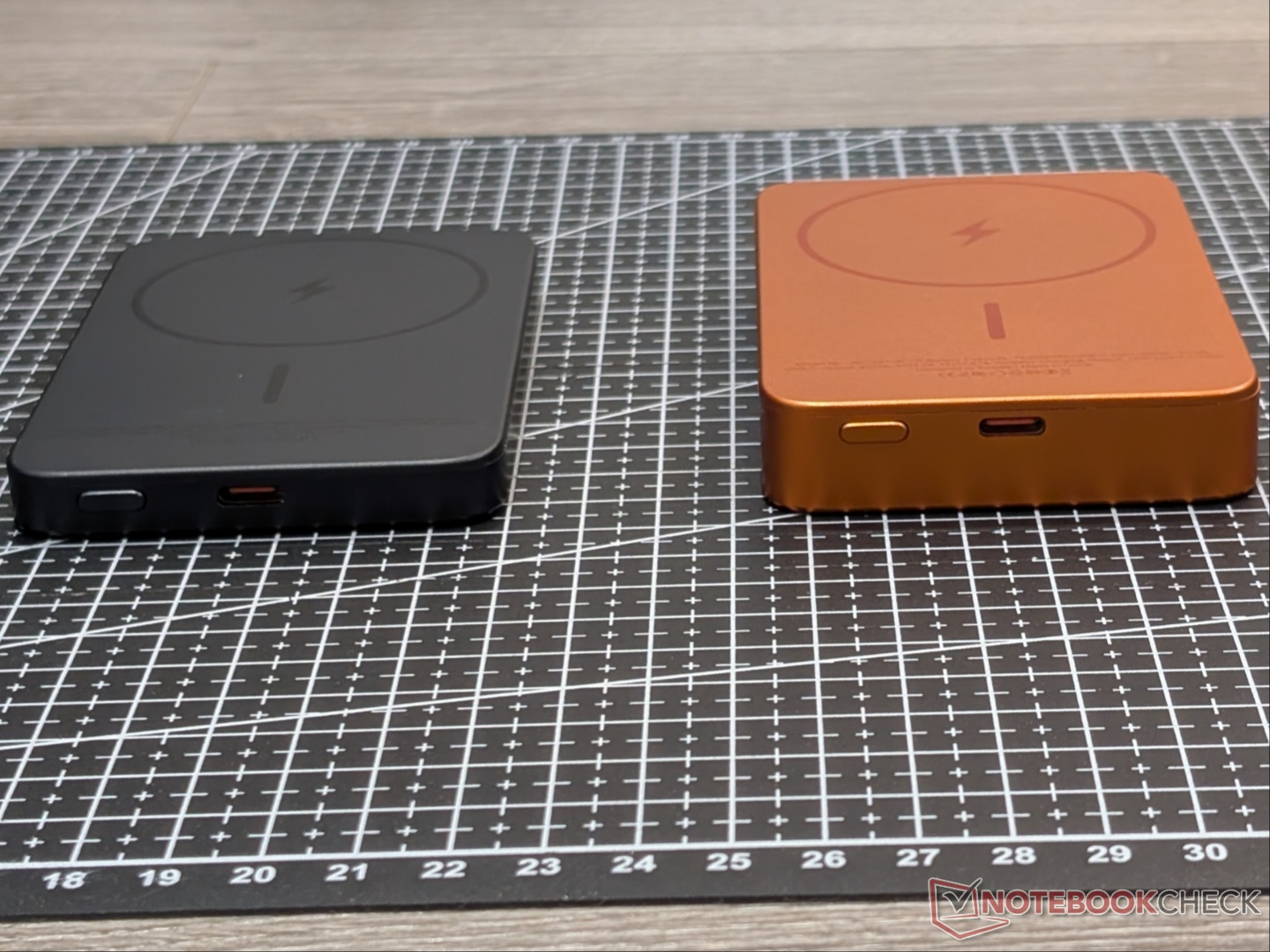
In terms of charging speed, the company rates both at 20W maximum in wired mode and 15W maximum in wireless mode.
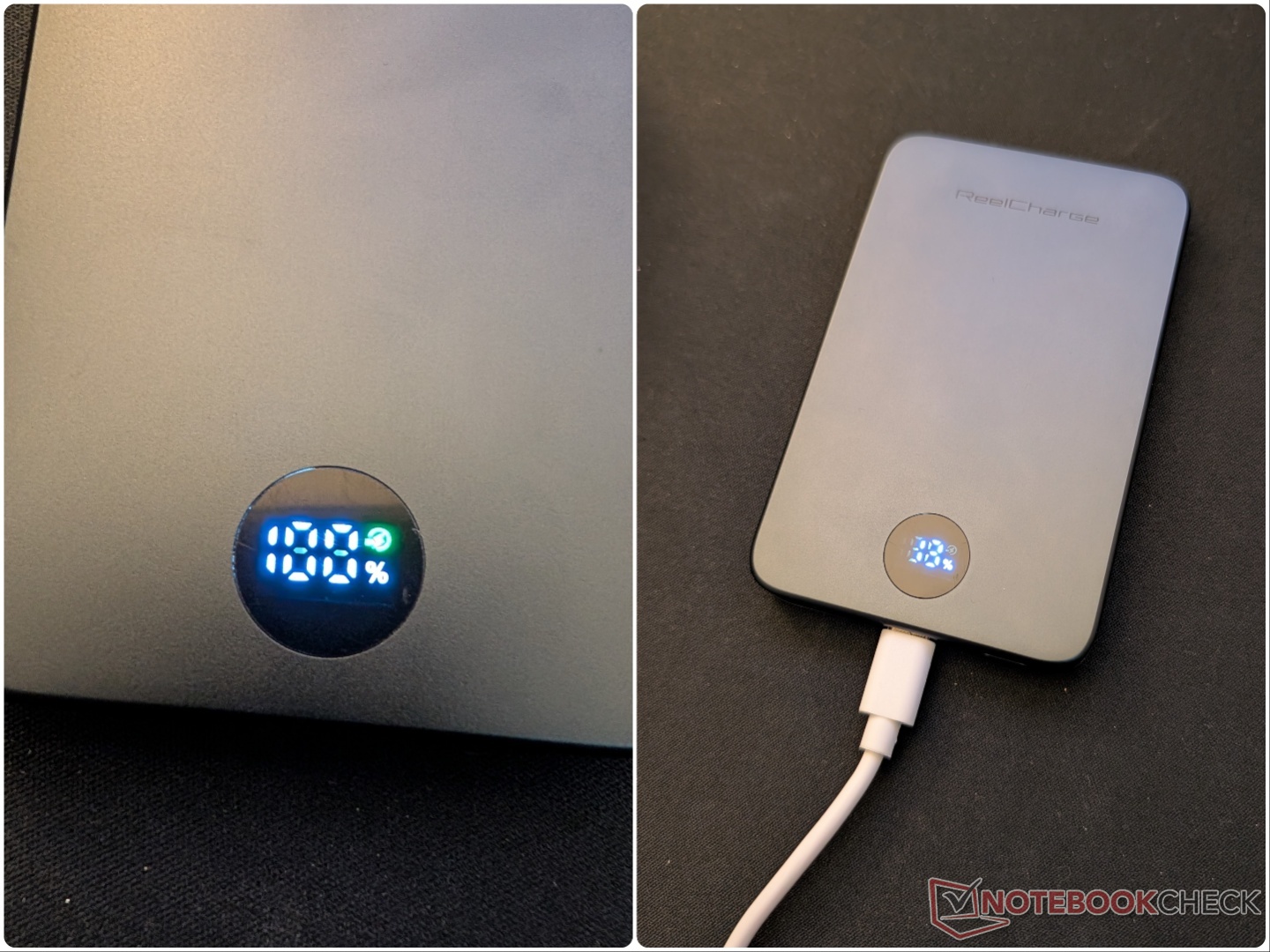
The LED display shows a charging icon when connected either through a wire or wirelessly. It, of course, also shows battery percentage, which doubles as the charging indicator for the power bank itself. The ReelCharge power banks have an all-aluminum design, but our early samples had some design flaws. The power button rattles on both, and the 5,000 mAh model’s LED display has some light bleed. ReelCharge told us that the rattling will be fixed with an updated design that has tighter tolerances for the next production run. Notably, the light bleed was only present on the 5,000 mAh model, so it could just be a one-off.
The USP for these ReelCharge power banks is the semi-solid-state battery technology. With traditional lithium-ion batteries, there is a liquid electrolyte inside that facilitates the movement of ions between the cathode and anode. With semi-solid-state batteries, the electrolyte is gel-based, and this makes the power bank safer to use while at the same time offering higher energy density.
Of course, these are costlier to produce than conventional lithium-ion power banks, but not as costly as solid-state ones. Interestingly, ReelCharge calls them solid-state power banks, but they’re actually semi-solid-state. Pricing is also relatively higher.
Performance
As mentioned earlier, both the 10,000 mAh and 5,000 mAh power banks are rated for up to 20W wired charging and up to 15W wireless charging.
In our testing with the Pixel 9 Pro XL, which supports up to 37W wired fast charging and up to 23W wireless charging (with the Pixel Stand 2), the ReelCharge Solid State power banks were able to push a peak of 18W (average of 17.5W) in wired mode, according to the USB tester. As per the AccuBattery app, the speeds were even lower, averaging 15.5W. Despite the difference in charging speed, the Pixel 9 Pro XL showed the fast-charging notification. Based on how the connected device accepts charge, the speed drops over time. With the Pixel 9 Pro XL, the charging speed starts off at 18W, then drops to around 11W at around the 50% mark, and then keeps dropping for the remainder of the charging cycle.
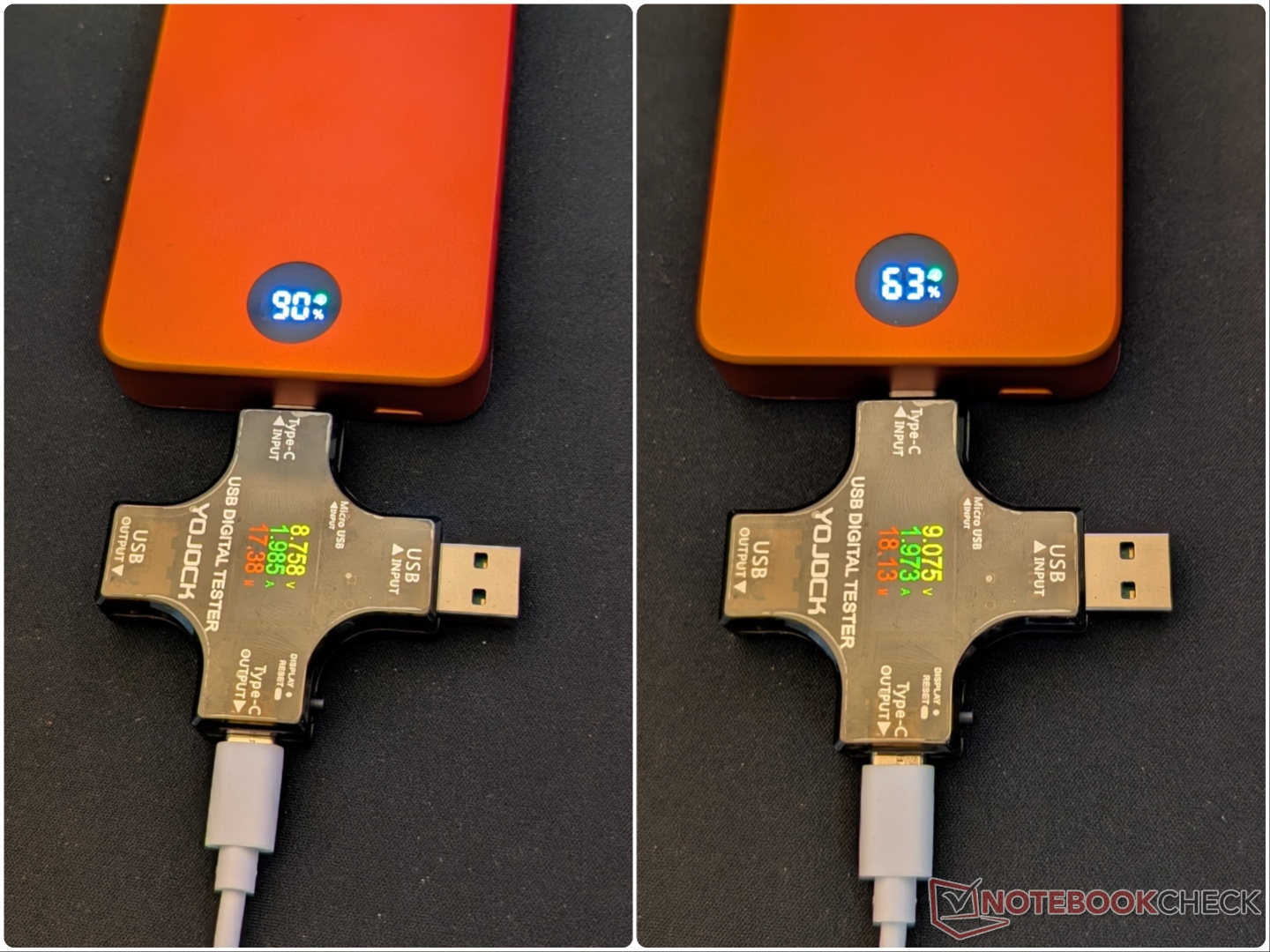
The power banks themselves are rated to charge at 18W, and that’s what we observed as well when charging via the Baseus Spacemate RD1 Pro dock (check out our review).
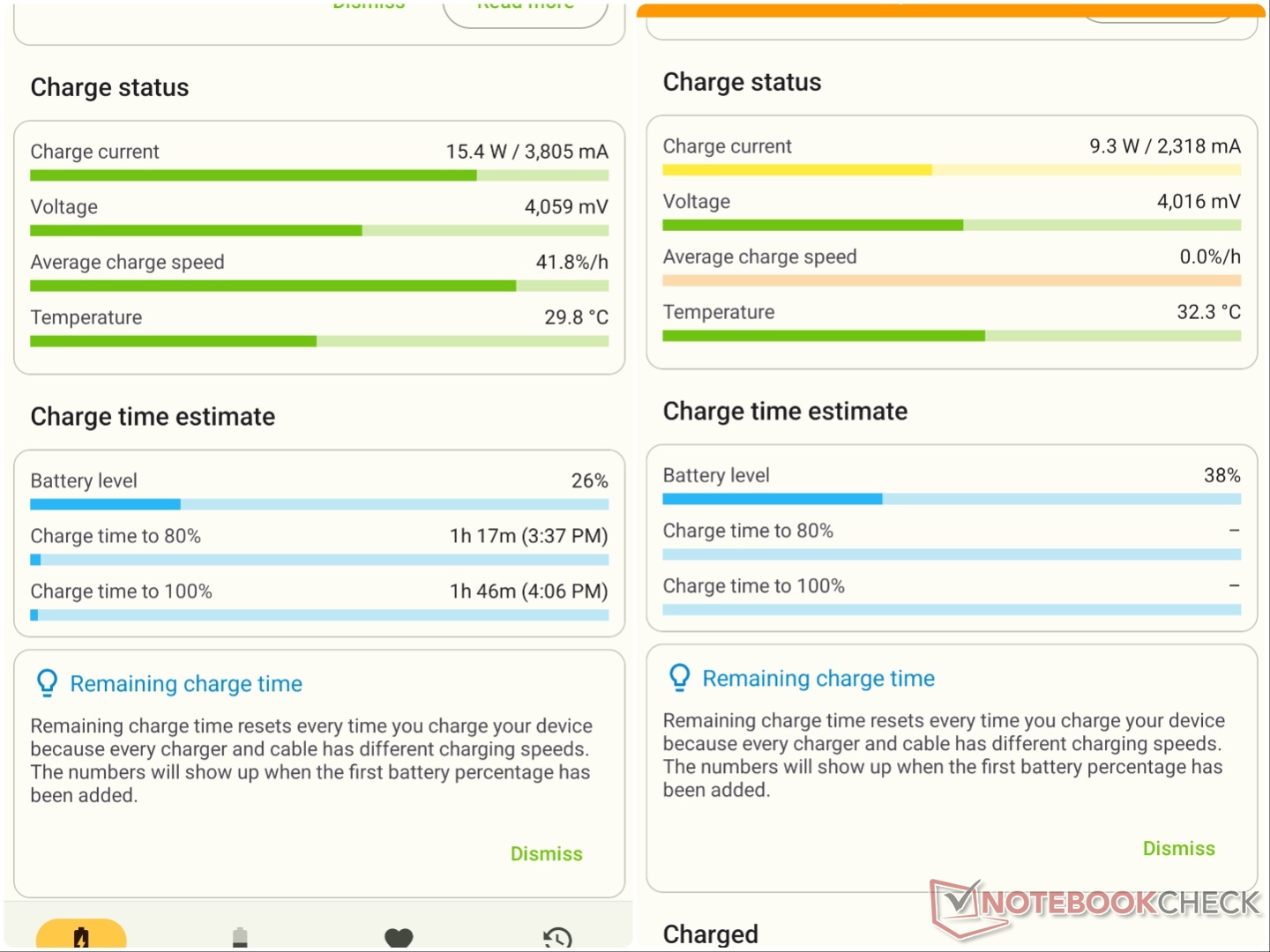
When charging wirelessly, the peak output, as per the AccuBattery app, was 9.3W, which the Pixel 9 Pro XL didn’t consider to be fast charging. Notably, neither of the power banks is Qi-certified, but Qi-compatible instead. There are fairly strong magnets inside, allowing them to attach to phones that either have built-in magnets or use MagSafe cases. However, with the Pixel 9 Pro XL, Google decided to add weak magnets so none of the magnetic accessories stick. That’s not a ReelCharge issue but a Pixel issue. Wireless charging starts automatically when a device is placed on top.
Over the course of testing, there was an instance where the power bank made a noise when the Pixel 9 Pro XL was being wirelessly charged. It sounded like air/steam escaping from a thermos. Of course, there was no air actually escaping from anywhere, as it was the mechanical coil whine. It should be noted that the noise only occurred once and never again.
While the Pixel itself lowers charging rate over time, ReelCharge told us that due to the single-cell design of the 5,000 mAh power bank, sustaining 17W places a heavier load, and as that load builds, the power bank can step down to a lower output to stay within its operating limits. That’s irrespective of temperature, as the protection system monitors internal cell and board temperatures. Therefore, the step-down can occur before the exterior of the power bank feels noticeably warm.
We also noted that the power banks can pull off wired and wireless charging at the same time, but since the bandwidth is split, there’s no fast charging for either device.
Efficiency and temperatures
In terms of capacity, charging the phone from 15% to full drained 75% of the 10,000 mAh power bank. Extrapolating from this, the 10,000 mAh ReelCharge Solid State power bank can charge an approximately 5,000 mAh device 1.3 times at max. That’s quite common with power banks due to voltage conversion and efficiency loss.
As for temperatures, they only get moderately warm at 32 degrees C (tested with an IR temperature gun) when charging via the included USB-C cable. Wireless charging causes both the phone and the power bank to get warmer (which is normal), with the hottest spot reaching 42 degrees C on the power bank. When charging the power banks, they reached a peak of 39 degrees C at the hottest spot, with the majority of the surface peaking at 35 degrees C.
Neither of the ReelCharge Solid State power banks got hot or stopped charging. Thanks to the compact size and improved safety from the semi-solid-state batteries, it’s convenient to carry either of them in a backpack or your pocket wherever you go. A retractable cable would have made the experience more seamless, but that’s a want rather than a need.
Plenty of Power on the Go: The 200W Power Bank Pro from Reelcharge
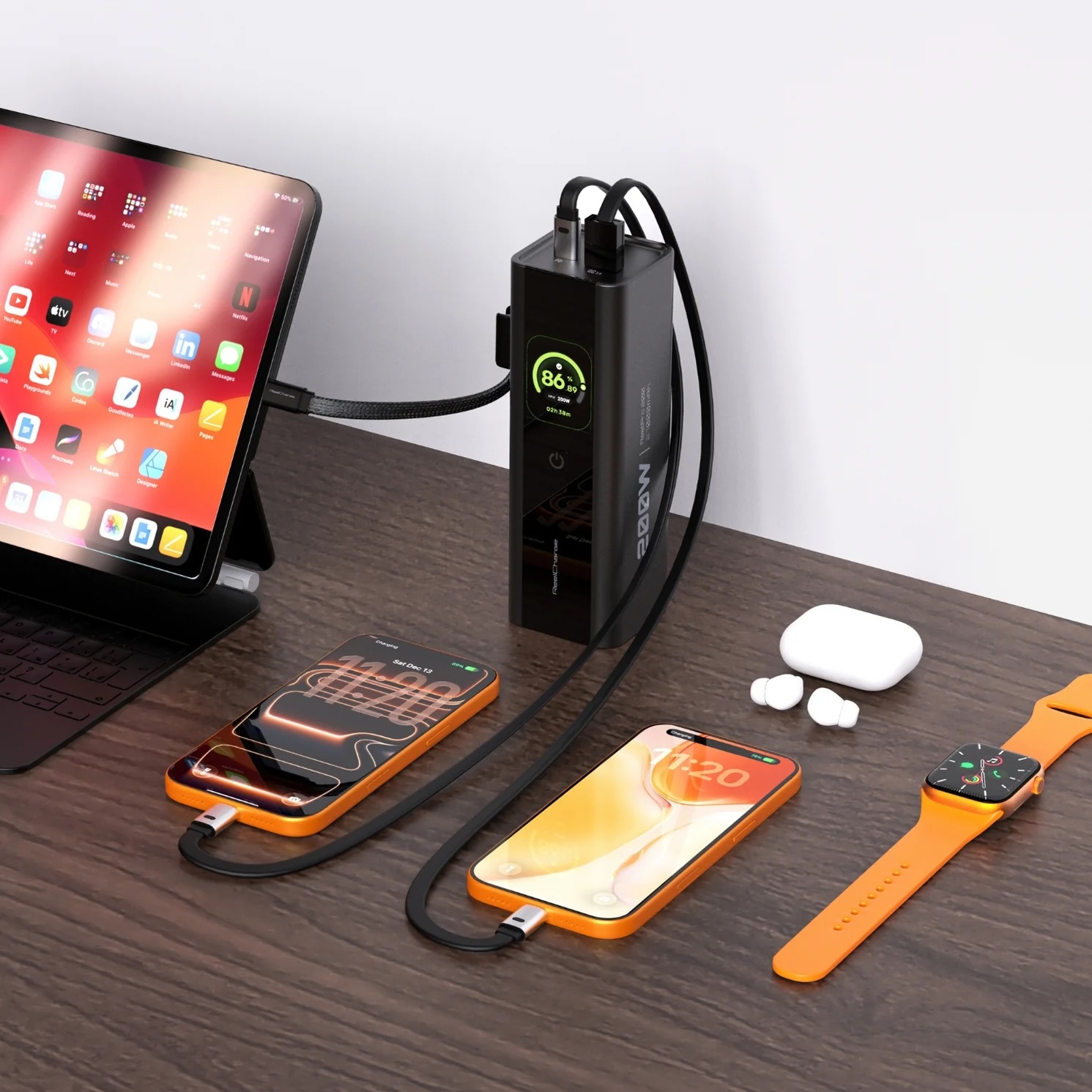
No more dead batteries at the worst possible moment! With a massive 27,000 mAh capacity and an impressive charging output of up to 200 watts, the ReelCharge Power Bank Pro is the ultimate portable power station for frequent travelers, tech enthusiasts, and digital nomads.
Whether it’s a power-hungry MacBook, a tablet, or a smartphone, the integrated 140W USB-C cable delivers ultra-fast USB-C PD charging without the need to pack an extra cable. The integrated smart display shows you the exact charging status, voltage, and remaining capacity at all times.
Compact, extremely powerful, and absolutely reliable: Get your maximum mobile freedom directly at reelcharge.com.
Transparency
The selection of devices to be reviewed is made by our editorial team. The test sample was given to the author by the manufacturer free of charge for the purposes of review. There was no third-party influence on this review, nor did the manufacturer receive a copy of this review before publication. There was no obligation to publish this review. As an independent media company, Notebookcheck is not subjected to the authority of manufacturers, retailers or publishers.
 Add as a preferred source on Google


