Nvidia’s retreat from Huang's circular AI financing won’t bring back affordable GeForce cards in 2027
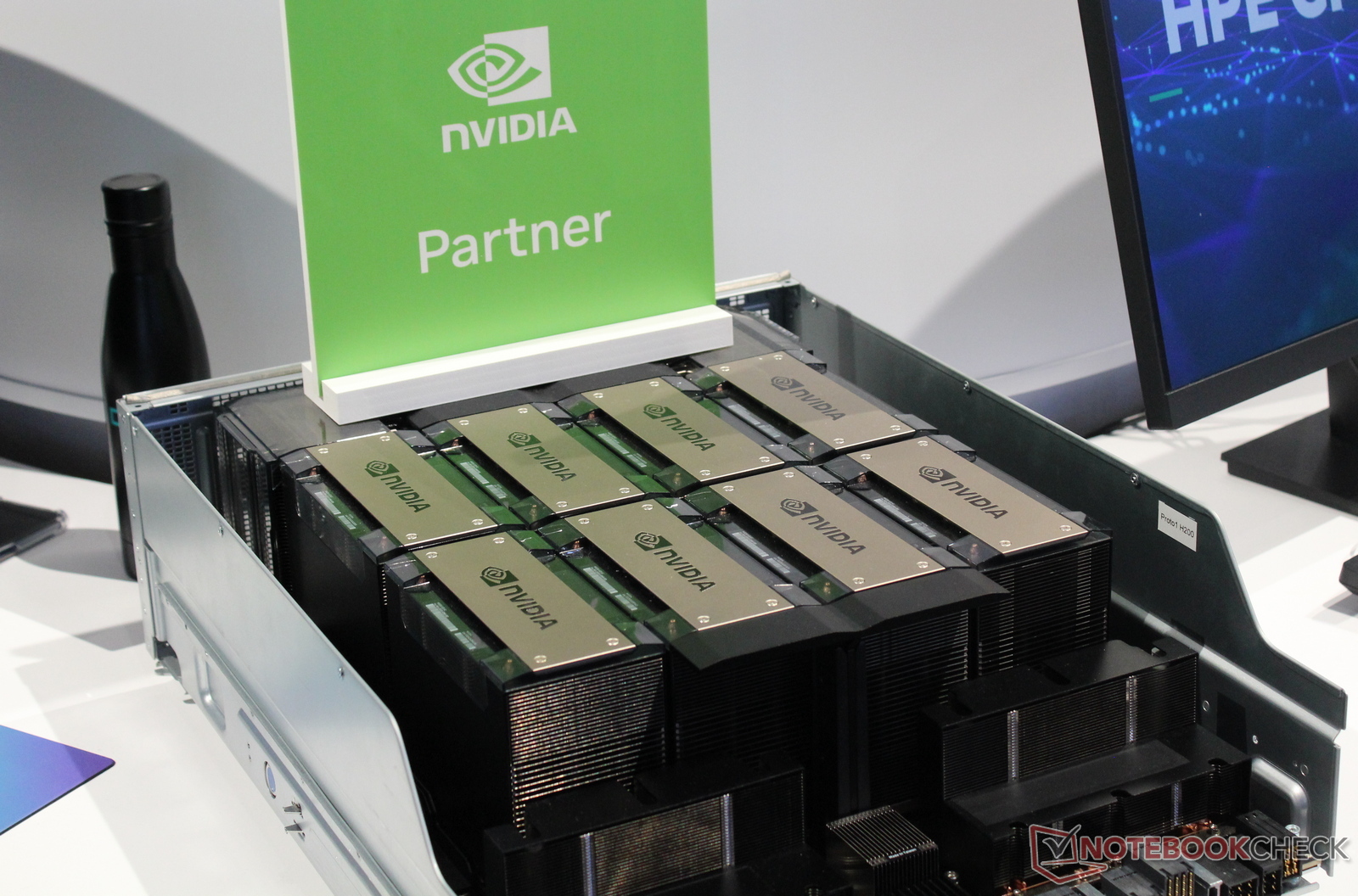
Nvidia’s financial support for AI startups and cloud providers buying its data-center GPUs has led some people to blame the company for the shortage and high prices of gaming graphics cards. But that connection is not that simple. Even if Nvidia scales back these arrangements, gamers are unlikely to see cheaper GeForce graphics cards in 2027. AI accelerators and gaming GPUs rely on different components and manufacturing processes, so a slowdown in one market will not automatically improve supply in the other.
Nvidia has reportedly provided guarantees and other financial support that helped cloud providers and AI companies secure funding to buy Nvidia hardware. In practice, the chipmaker helped create demand for its own products — a model often described as “circular financing.”
The arrangement carries financial risks: if customers cannot meet their obligations, Nvidia could face losses on its guarantees and be left with equipment it cannot sell. The size of these financial commitments reportedly caused disagreements between former CEO Jensen Huang and CFO Colette Kress, who now serves as interim CEO. Huang reportedly wanted to maintain demand for server accelerators, while Kress favored reducing Nvidia’s exposure to the guarantees.
Some might have hoped that Kress's appointment would eventually help ease the problems facing GeForce buyers. But supporting demand for AI accelerators is not the same as restricting supplies of gaming graphics cards. Although both product families use GPUs, they rely on different types of memory and different hardware designs.
Nvidia’s advanced data-center accelerators typically use high-bandwidth memory (HBM) and complex chip packaging, while GeForce cards rely on GDDR memory. A server accelerator cannot simply be converted into a gaming graphics card. Even if Nvidia redirected capacity toward GeForce, it would still need enough GDDR memory, packaging capacity, and circuit boards before additional cards could reach stores.
There is also a considerable delay between placing a manufacturing order for chips and getting a finished product onto store shelves. Semiconductor analyst Ian Cutress told PCWorld that producing silicon wafers at a foundry such as TSMC typically takes around six months. Manufacturers must then secure memory, arrange packaging, and assemble the graphics cards. Increasing GeForce orders today therefore will not translate into a sudden rise in retail availability within a few weeks.
That does not mean the AI and gaming GPU markets are completely separate. Both compete for manufacturing resources, investment, and suppliers’ attention. Because data-center hardware is considerably more profitable, Nvidia and memory manufacturers have reason to prioritize AI products.
If Nvidia reduced its financing programs, demand for data center GPUs could eventually weaken. That might free up some capacity for GeForce production over time. But suppliers would need new orders and revised production plans, and the process would take time. Existing contracts would not simply disappear, either. With memory availability and manufacturing constraints still in the way, affordable gaming GPUs are unlikely to make a comeback in 2027.
Source(s)
 Add as a preferred source on Google