




Modder liberates ThinkPad T430 from Intel's secret backdoor
Privacy has become a growing concern as tech giants continue to push products that claim to provide users with an unrivaled productivity boost, at the expense of having all their data harvested and sold in bulk. Unfortunately, as consumers become more aware of companies' data-collection practices in the software side of their products, many overlook similar methods on the hardware side. Intel, like many others, has undoubtedly built backdoors into many of its products, with motivations ranging from the helpful, such as remote tech support, to meeting the morally ambiguous demands of government agencies. One example that remains in most, if not all, Intel processors today is the Intel Management Engine.
The Intel Management Engine (ME) is a mini, closed-source operating system that has been present on Intel processors since its introduction in 2008. According to Intel, the ME is closed-source to provide "security through abstraction," even though it has access to the system's CPU, RAM, and network cards. Despite Intel's claims about the effectiveness of this approach, the ME has been successfully leveraged as a vector for privilege escalation and other exploits. Furthermore, the NSA has removed the ME from all its computers, which lends less credibility to the effectiveness of Intel's strategy and more credibility to the idea that the ME is a backdoor, if not outright spyware.
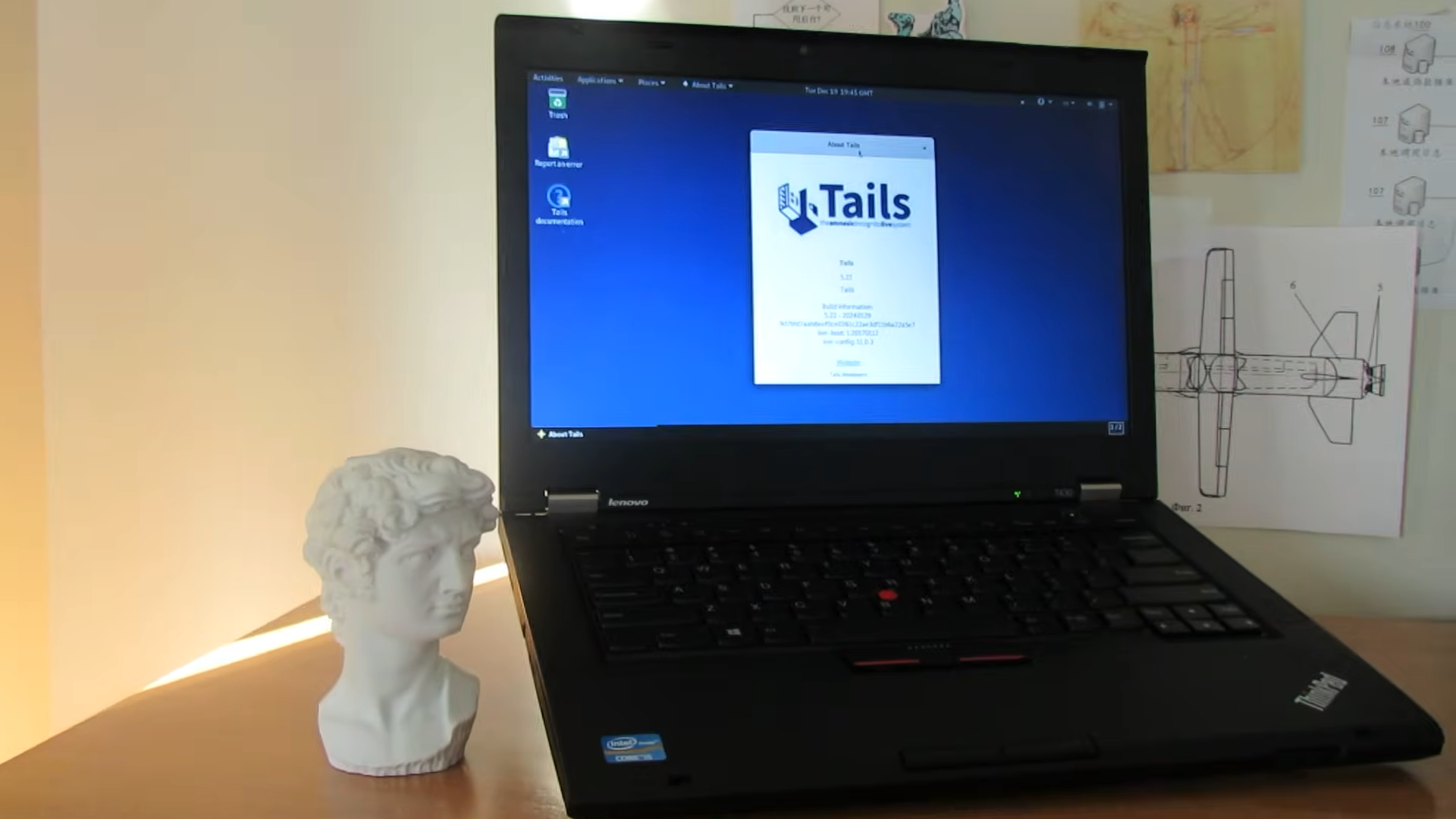
Regardless of what the ME is, YouTuber and modder Livny set out to disable it from persisting in his system in a modding process that is not for the faint of heart.
For this mod, one needs not only the proper hardware but also to determine whether the handful of open-source BIOS options available for Intel processors support it. In this case, the ThinkPad T430 is selected for its place on the list of modifiable, future-proof ThinkPads endorsed by the security community. Lastly, using a Raspberry Pi, SOIC clip, and a fully disassembled T430 with its BIOS chip exposed, Livny flashed a pre-built version of coreboot onto the ThinkPad and ran a utility called me_cleaner to disable ME outside of boot verification.
For most, this is a large undertaking for what may seem like a small payoff. However, the complexity of this operation ultimately speaks to the magnitude of trust users place in something that is assumed to have their best interests in mind. A secure personal computer is a great thing. Still, without transparency from the manufacturer, users will never really know if their computer is safe or a pawn in the surveillance state.
It's worth noting that reports of users disabling what they call "the perfect trojan" first emerged years ago (example: Pikabu.ru article).
Source(s)
Livny on YouTube
 Add as a preferred source on Google


