




Lightest 2 kWh power station: Anker Solix introduces the S2000 at an early bird price
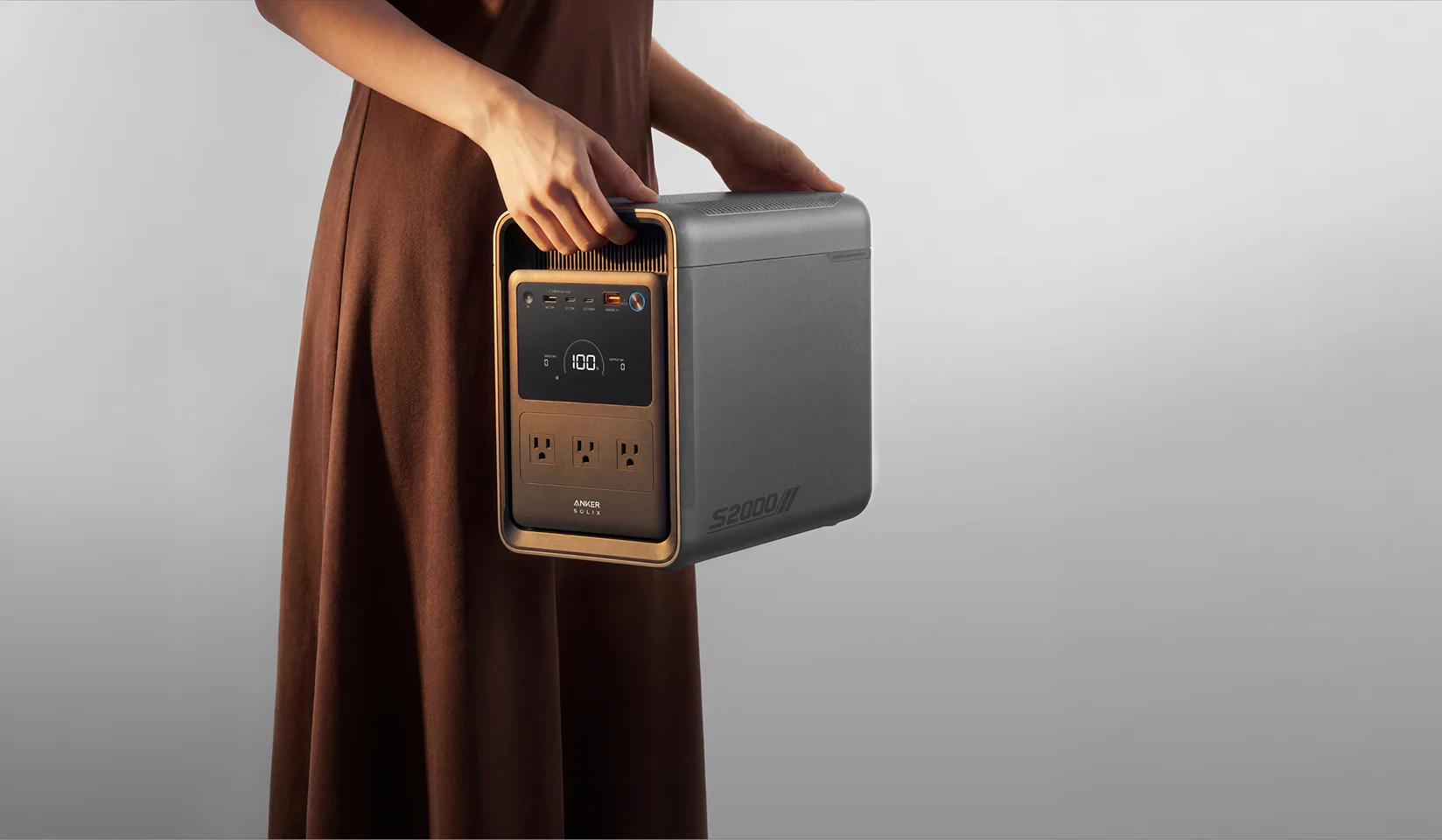
It wasn't that long ago that Anker Solix launched the C2000 Gen 2 (approx. $800 on Amazon), a 2 kWh power station that was significantly more compact and lighter than its predecessor. Now, the manufacturer has shaved off even more weight, unveiling the new Anker Solix S2000—initially in the US.
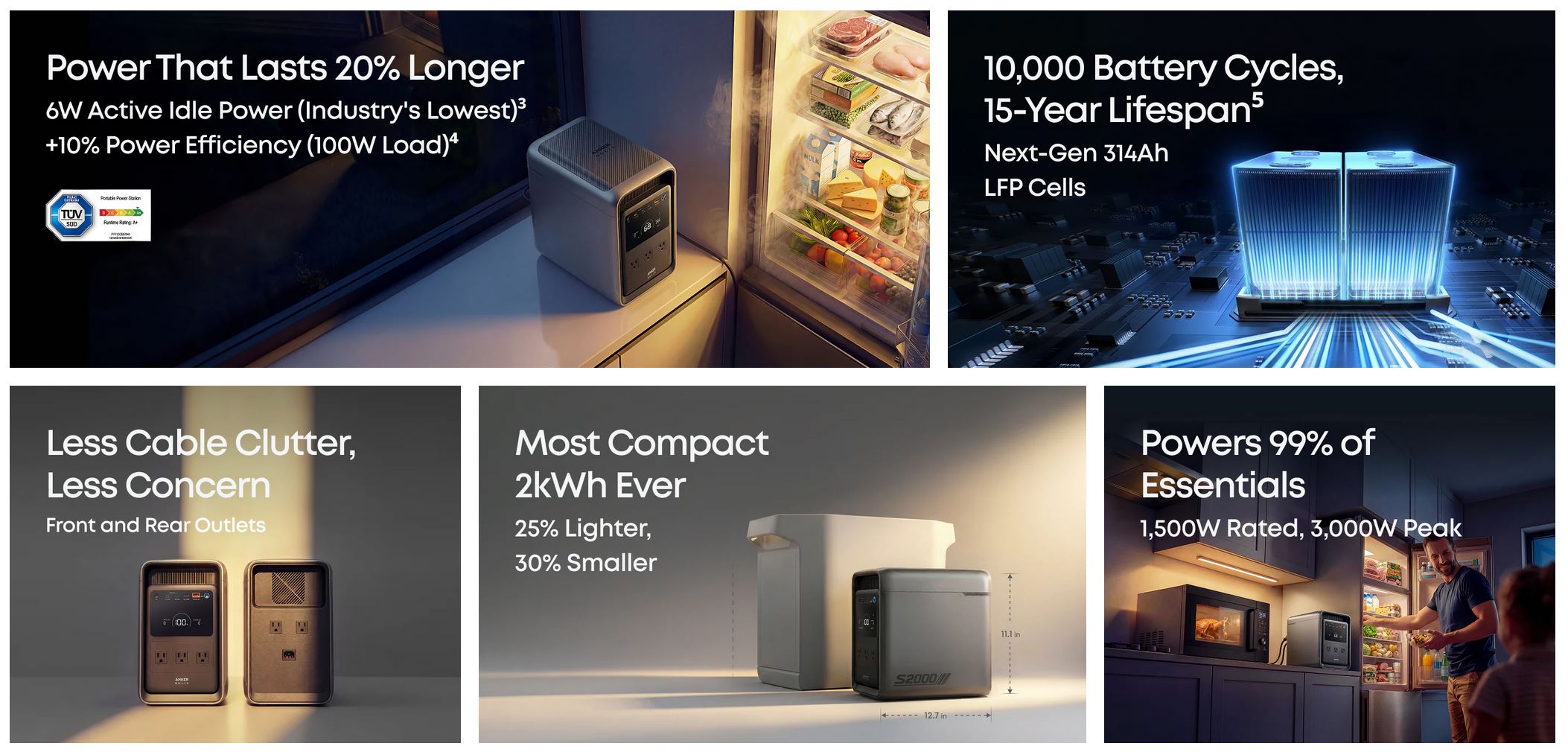
The new power station features 314 Ah LFP cells with a total capacity of 2,010 Wh, which are rated to retain 60 percent of their original capacity even after 10,000 cycles. This portable battery is housed in a compact frame measuring roughly 20 x 28 x 32 cm, weighing in at a mere 16.2 kg. This makes the S2000 another 2.7 kg lighter than the already streamlined 18.9 kg C2000 Gen 2.
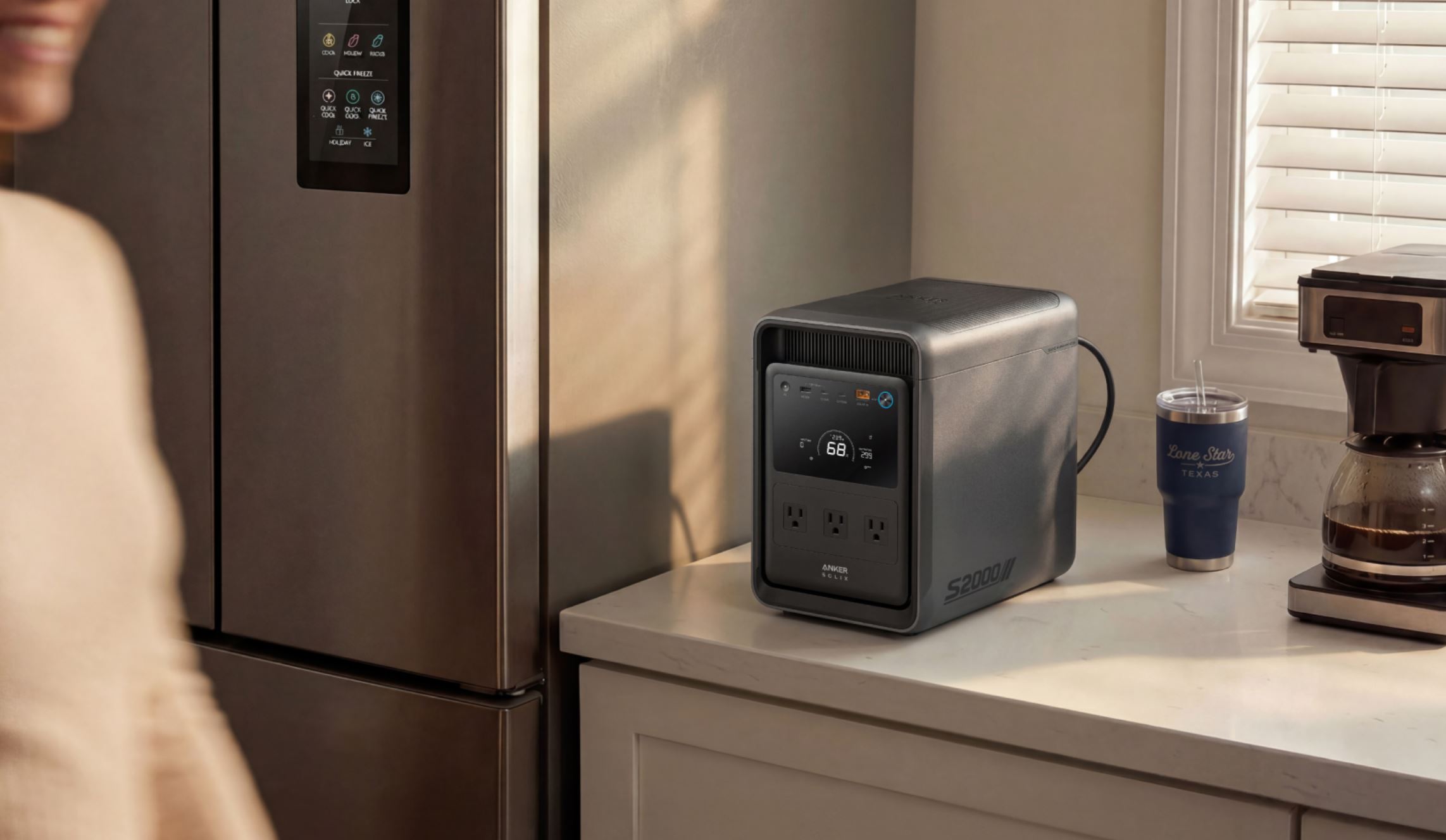
In a practical design choice for the US version of the S2000, Anker Solix has split the five AC outlets between the front and the back of the unit. This helps reduce cable clutter and allows the power station to be easily accessed from both sides. While the maximum AC output of the US model is lower than that of the C2000 Gen 2 at 1,500 W (1,800 W in bypass mode), it should still be sufficient for many use cases, especially when used on the go, such as camping.
Disclaimer: Notebookcheck is not responsible for price changes carried out by retailers. The discounted price or deal mentioned in this item was available at the time of writing and may be subject to time restrictions and/or limited unit availability.
The front panel features a large display alongside two USB-C ports (100W and 15W) and one USB-A port (12W). However, the manufacturer has chosen to omit a 12V car socket. When it comes to recharging, the Anker Solix S2000 can pull up to 1,600 W from a wall outlet, or up to 400 W via the XT60i port using a solar panel, among other methods.
Anker Solix kicked off a pre-order campaign in the US today, allowing buyers to lock in a discount on the new Anker Solix S2000, which features an introductory price of $679.99. Whether and when the new power station will make its way to Europe—and what the regional pricing will be—remains unknown for now.
Source(s)
 Add as a preferred source on Google


