




Keychron Nape Pro wireless trackball estimated to cost ~$130 and will launch after a concrete wireless gaming keyboard
 CES 2026
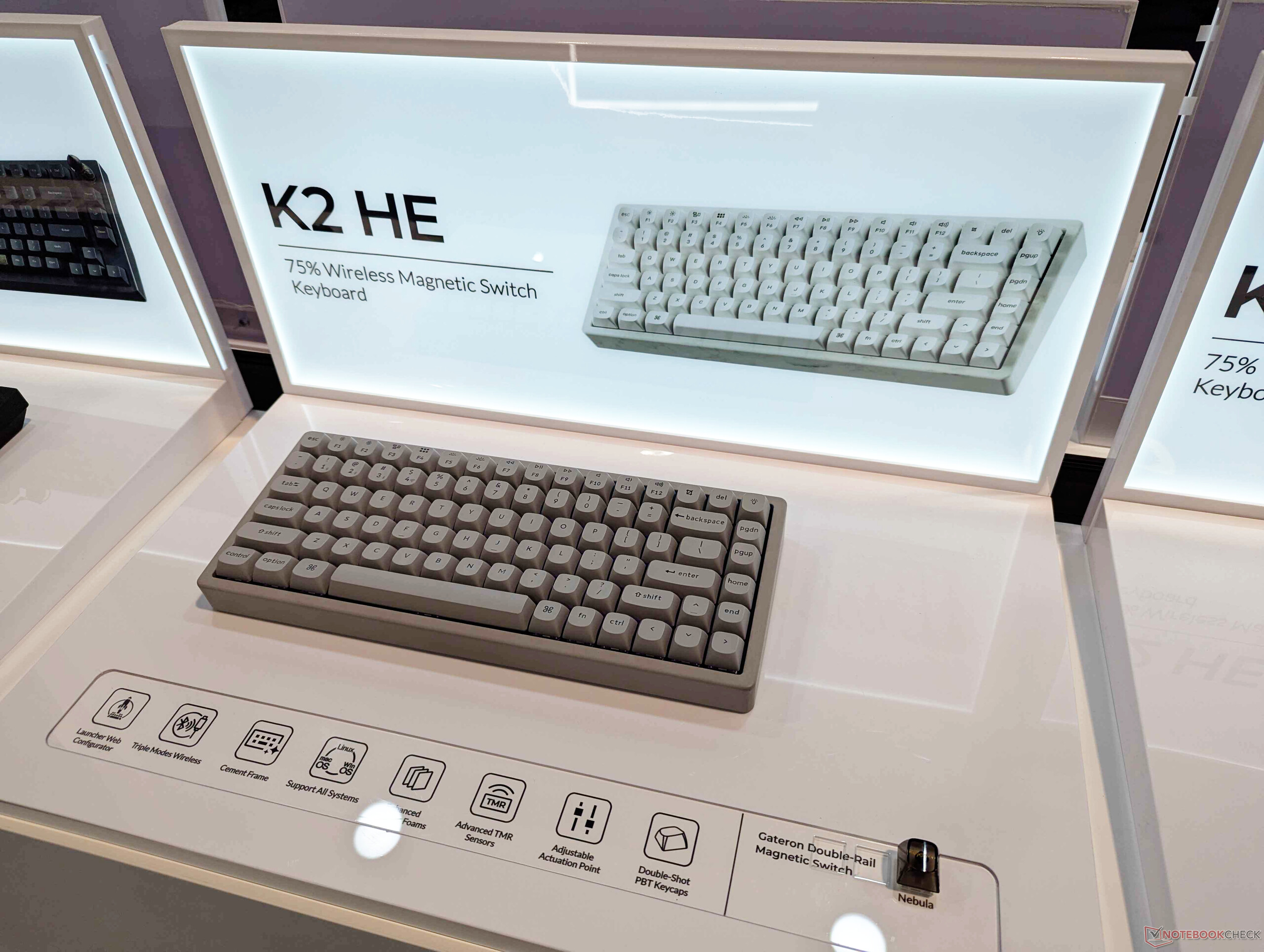
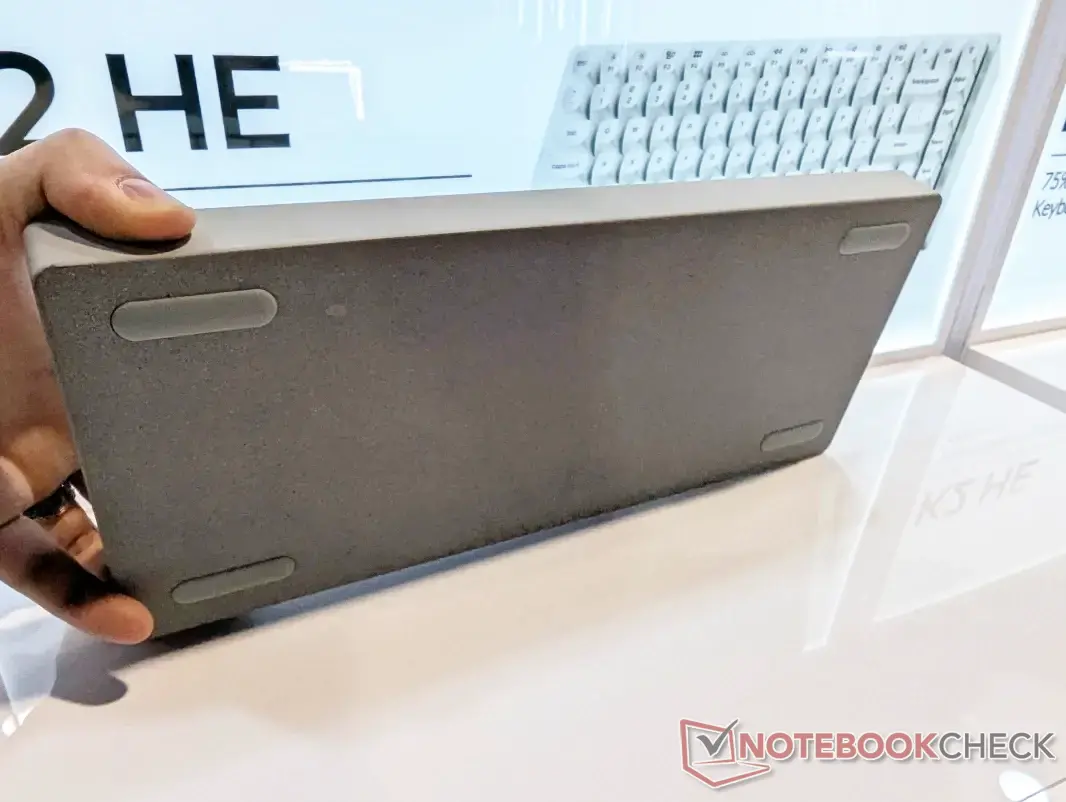
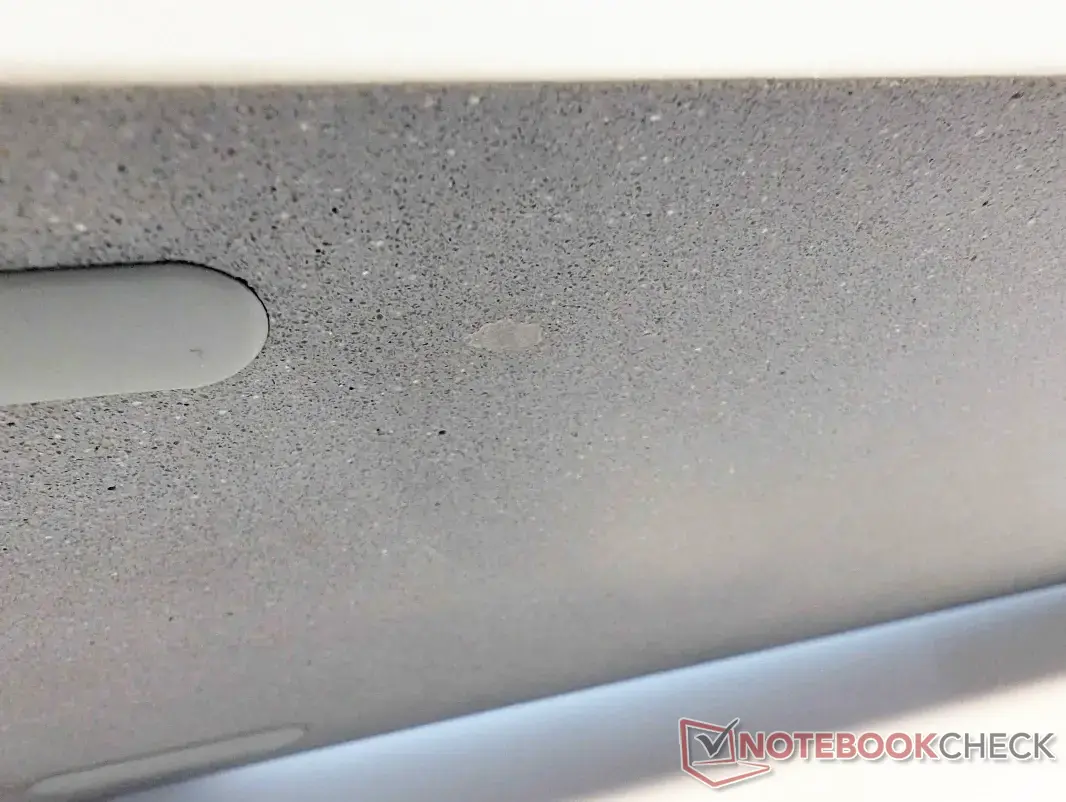
Of all the myriad things Keychron showed off at CES 2026, the K2 HE Concrete may have been the strangest. The upcoming Concrete keyboard will be one of three special edition HE keyboards the brand plans on launching in February 2026. The Notebookcheck team stopped by the Keychron CES booth to take a look at the K2 HE Concrete keyboard, and the main takeaways were that it is very heavy, has a matte texture, and "feels like a bath tile."
Aside from the colour-matched keycaps, the K2 HE Concrete will likely be otherwise identical to the other Keychron K2 HE models — you can read our review of the Keychron K4 HE to get a feel for what the K2 HE is like, since the only difference is the layout. That means it will have the same Gateron Double-Rail Magnetic Nebula switches, double-shot PBT keycaps in OSA profile, and the same Bluetooth and 2.4 GHz connectivity and super-convenient hardware switches for OS and connectivity modes. The familiar specs and hardware also mean that the K2 HE Concrete will have the same 1 kHz polling rate, TMR sensors, and excellent 100-hour battery life.
Keyhcron Nape Pro wireless trackball details
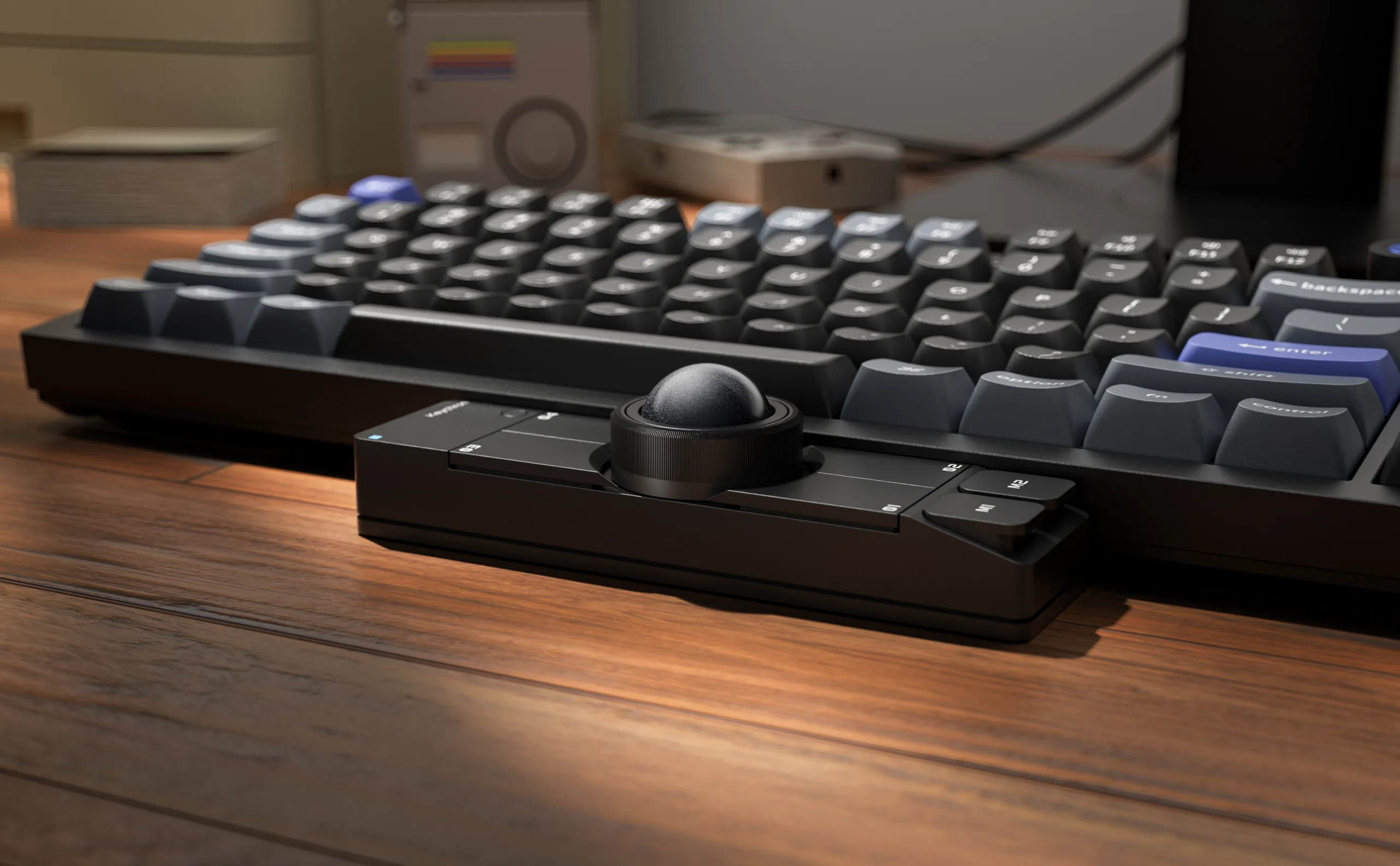
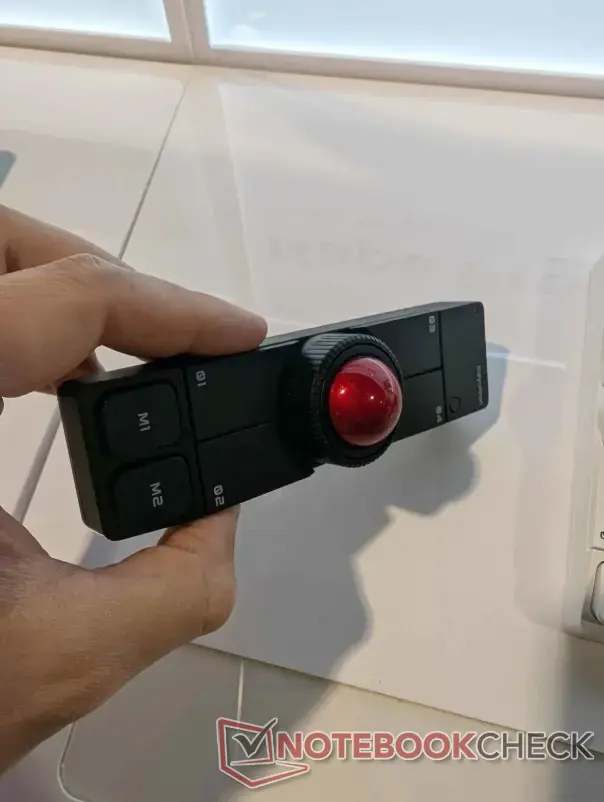
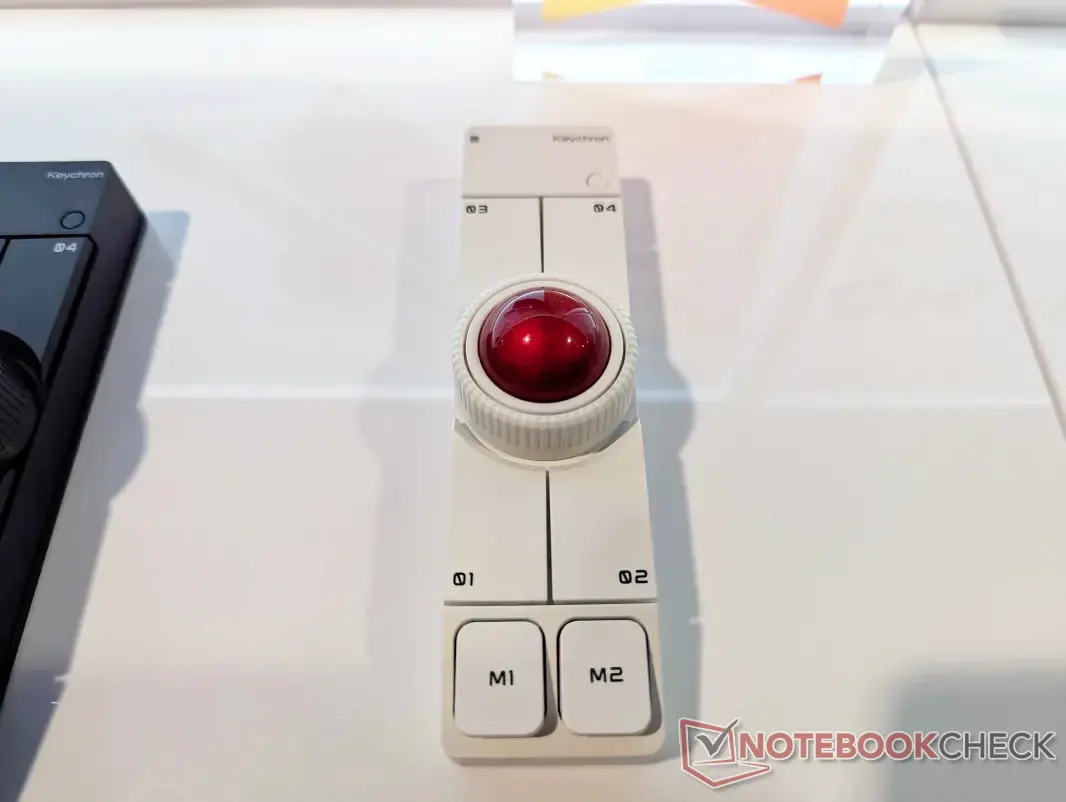
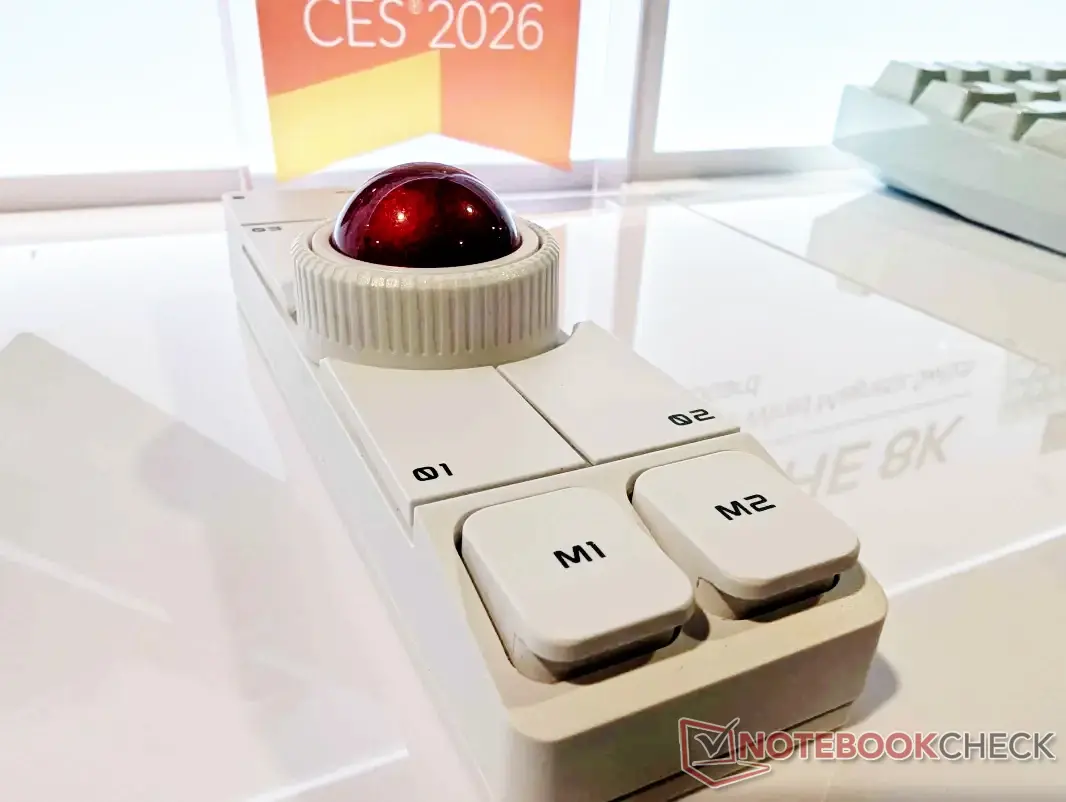
Concrete keyboards might be fun, but Keychron also announced a new wireless trackball called the Nape Pro, which is designed to be a companion device for Keychron wireless mechanical keyboards — or any other keyboard, really. The Nape Pro has a somewhat unusual design, being a 25 mm trackball mounted in the middle of a bar with six customisable buttons surrounding it. Two of the buttons are assigned as mouse buttons by default, but all of the keys will be customisable in Keychron Launcher, a web app that has proven itself time and time again as a top-notch customisation tool in our reviews. All of the switches in the Nape Pro are Huano silent switches — likely the same ones found in the Keychron M6 8K we recently tested. These mouse switches have a shorter mean time to failure than other mouse switches but have decent tactile feedback and don't feel mushy.
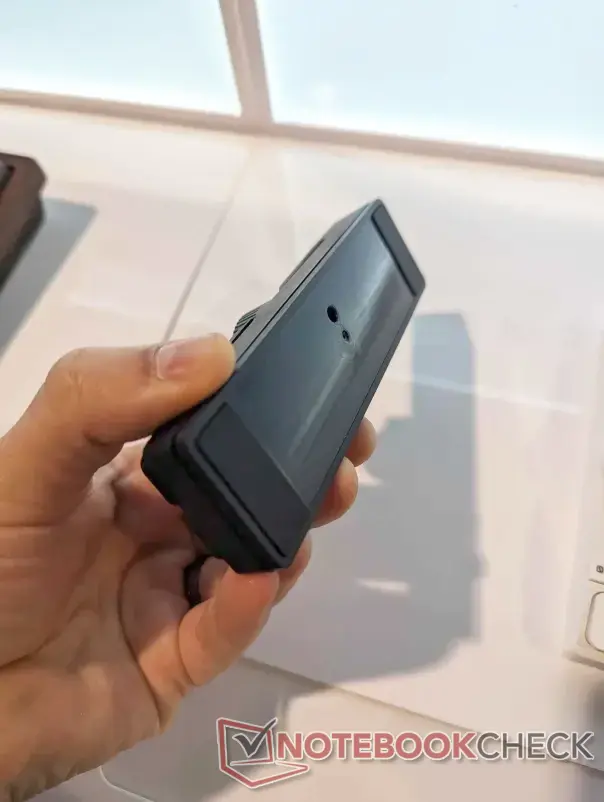
The Keychron Nape Pro has some thoughtful design touches that expand its usability. It can be used in a horizontal orientation to the side of a keyboard, where you would move your hand off the keyboard in order to move the cursor, or you could position it horizontally along the bottom of the keyboard, where it would put your thumbs to use for navigation and scrolling. In addition to the track ball and the buttons on the Nape Pro's body, there is a rotary dial-style ring mounted around the track ball, which seems particularly useful for tasks like scrolling. Fun design and internals aside, the new trackball module seems to have a 1/4-20 threaded tripod mount on the bottom, a common addition for ergonomic split keyboards that opens up a lot of options for angular mounting and similar ideas.
The Nape Pro will have a 200 mAh battery, which Keychron estimates will deliver 50 hours of constant use. It uses a PixArt 3222 sensor and supports up to 1 kHz polling over 2.4 GHz. It's unclear whether the battery life was tested over Bluetooth or 2.4 GHz, though.
Keychron has confirmed that the Nape Pro wireless track ball will launch in April or May in the US. Although pricing has yet to be determined, the Nape Pro is listed at 21,648 Yen at a 20% discount on the crowdfunding platform CoStory. That roughly translates to around $137 before the discount and $171 MSRP. This is obviously not an official price, and Keychron's prices in Japan are often inflated by as much as 30% in the Japanese market — the K10 HE costs $144.99 in the US, but retails for the equivalent of $187 in Japan. Extrapolating this, it wouldn't be a surprise to see the Nape Pro launch at closer to $130 when it arrives in the US and other international markets. Time will tell how useful the Nape Pro will be, but the first impressions are positive, especially considering that the trackball can be placed near the space bar and used without removing your hands from the keyboard.
Source(s)
Keychron, CoStory
 Add as a preferred source on Google


