




Hyundai tests clear Unigrid’s sodium-ion battery with no fire or thermal propagation
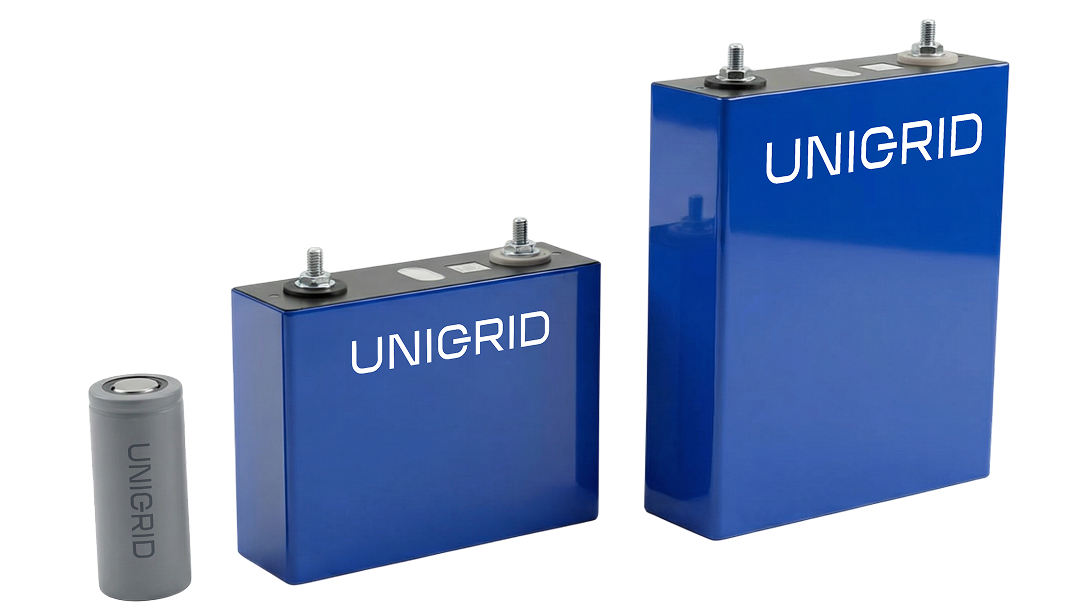
A sodium-ion battery developed by California startup Unigrid has passed Hyundai Motor Group's technology validation program without catching fire or exhibiting thermal propagation, highlighting the chemistry's growing potential as an alternative to conventional lithium-ion batteries. The testing focused on Unigrid's sodium chromium oxide, or NCO, cell chemistry and was conducted through Hyundai's Zer01ne Accelerator program.
An important safety milestone achieved
During the trial phase, the NCO cells demonstrated complete resistance to thermal propagation (an essential safety feature that ensures a single compromised battery will not ignite adjacent units in high-voltage packs). The validation also covered durability and temperature performance. UNIGRID says its cells demonstrated minimal capacity degradation during sustained cycling at 100% depth of discharge, while operating performance was validated across temperatures ranging from -20°C to 60°C.
An impressive achievement, but one that has limited use-cases for EVs
The core appeal of sodium-ion chemistry boils down to supply chain economics and material safety. While lithium extraction involves high environmental costs and volatile market pricing, sodium is globally abundant, easier to refine, and far cheaper at the raw-material level. Shuttling sodium ions between electrodes also eliminates much of the internal heat generation that plagues lithium-ion battery packs. The primary trade-off remains volumetric energy density, as sodium-ion cells are naturally heavier and physically larger to store an equivalent charge. That is why sodium-ion cells cannot be a straightforward replacement for lithium-ion in every device. However, the sodium-ion cell’s characteristics make it particularly interesting for stationary energy storage, where weight and physical size are generally less restrictive.
Unigrid's Hyundai validation is therefore aimed at that specific market. The companies say Hyundai and Korean system-integration partners will now jointly develop a sodium-ion NCO battery energy storage system, with potential applications at Hyundai Motor Group's global manufacturing facilities and within its energy business.
Unigrid is not the only company pushing sodium-ion toward commercialization. Catl, the world's largest battery manufacturer, has announced plans to begin mass production of its own sodium-ion batteries before the end of 2026. CATL's technology uses a different chemistry, based on Prussian white, demonstrating that the industry is still experimenting with several approaches rather than converging on one universal sodium-ion design.
For now, sodium-ion battery technology looks less like the successor that will suddenly replace lithium-ion in EVs and more like a second major battery chemistry finding its place alongside it. Hyundai's testing does not change that equation overnight, but a successful safety validation from a major industrial player is another meaningful step toward making sodium-ion cells practical at scale.
Source(s)
 Add as a preferred source on Google


