




Sodium-ion batteries enter mainstream as CATL cracks manufacturing for record large order
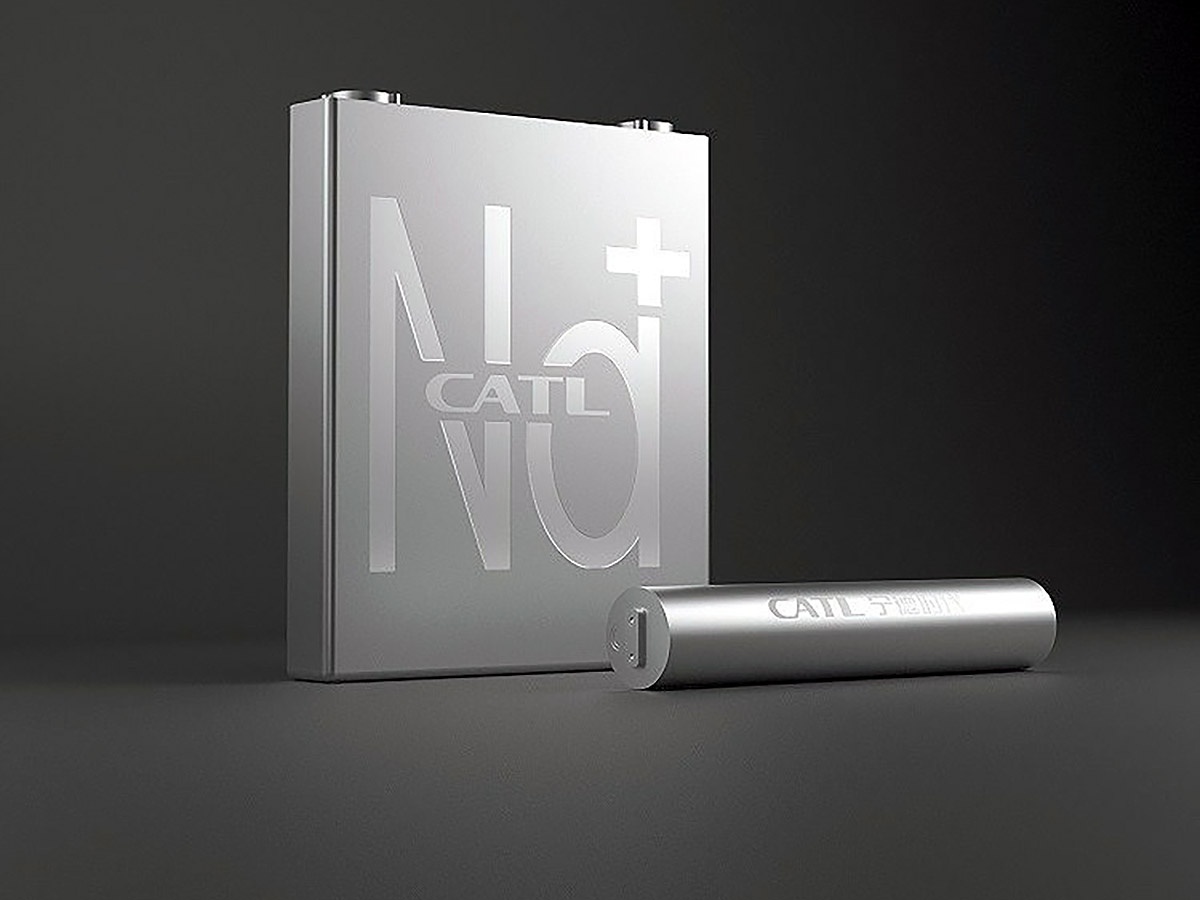
The world’s biggest battery maker has now mastered profitable sodium-ion battery production at scale for the first time. At CATL’s Tech Day event, its chief scientist confirmed that the company has resolved the core manufacturing challenges blocking sodium-ion production, with mass output expected by Q4 2026.
CATL’s CTO went even further, detailing how the company has systematically addressed more than one hundred engineering challenges, tackling four major industry hurdles: extreme moisture control, hard carbon gas generation, aluminum foil bonding bottlenecks, and mass production of self-generating anodes.
Progress hasn’t been incremental, though, as the comprehensive technical overhaul was backed by nearly 10 billion yuan (~$1.45 billion USD) poured into sodium battery R&D through 2025 as lithium prices dropped enough to make Na-ion EV and energy storage projects profitable again.
The market has now responded, as CATL and energy storage integrator HyperStrong announced a three-year, 60 GWh sodium-ion supply agreement. That is the largest sodium-ion battery order ever received, boasted CATL, marking a potential inflection point for the large-scale commercialization of the technology. To put that into perspective, 60 GWh equals roughly half of CATL's entire energy storage business orders in 2025.
The chemistry itself is well-suited to stationary storage, as sodium-ion cells offer wide temperature adaptability and longer cycle life at higher temperatures while generating less heat and cell expansion stress. These are all characteristics that are very desirable in grid-scale applications. On the automotive side, CATL sees sodium-ion eventually powering vehicles to 600 km of range as the supply chain matures, with Chairman Robin Zeng projecting the technology will displace 30–40% of the existing battery market.
CATL already demonstrated the first EV with its sodium-ion Naxtra battery technology that is entering mass production. The car charged normally at temperatures of -30°C (-22°F) and drove even at -50°C (-58°F) in arctic weather testing, proving far superior to conventional electric cars with lithium batteries.
Get a 6000A sodium-ion car jump starter and portable battery on Amazon
Source(s)
 Add as a preferred source on Google


