




Unigrid unveils Na+ Fleet: A drop-in 12-volt sodium-ion battery replacement for automobiles
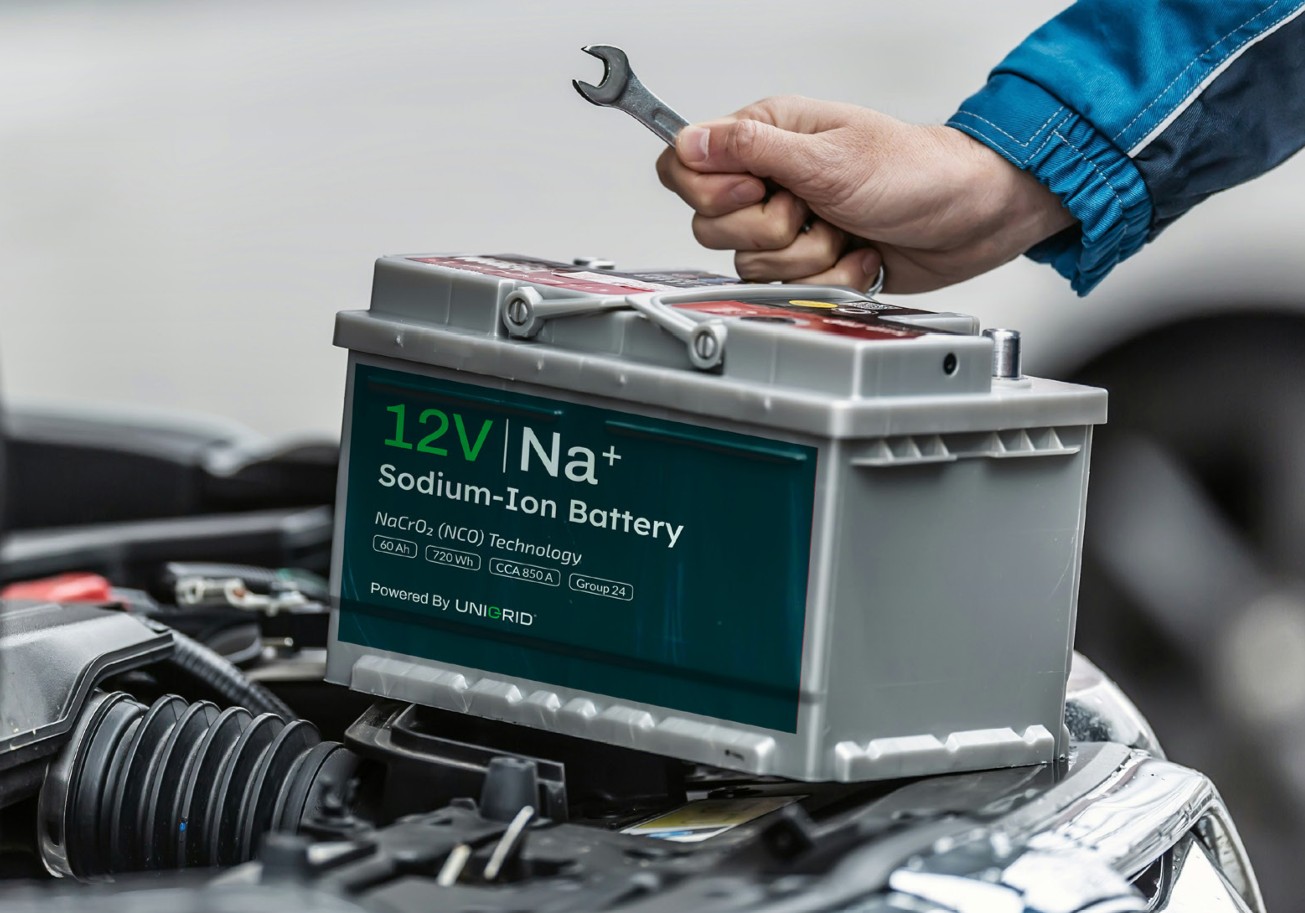
Unigrid has launched the Na+ Fleet 12V sodium-ion battery for automotive applications.
The Na+ Fleet is available in 30/60/90 group sizes with 500/850/1250 CCA (cold cranking amps) to distributors, integrators, and OEMs. They are a drop-in replacement for 12V lead-acid batteries, with an operating voltage of 8V to 14.4V, and do not require the addition of battery management hardware. The batteries come with a five-year warranty and are rated for over 5,000 charge cycles across their charging range of 0°C to 55°C and operating range of -40°C to 60°C.
In conventional lithium-ion batteries, whether the cathode is Lithium Cobalt Oxide (LiCoO2), Lithium Iron Phosphate (LiFePO4), or similar, a liquid electrolyte separates the carbon anode and lithium cathode layers. Electrons travel through the electrolyte from anode to cathode during discharge, and in the opposite direction during charging. Physical damage, overcharging, whisker formation, and other causes can cause lithium batteries to leak, and even spontaneously catch on fire, which is very difficult to put out.
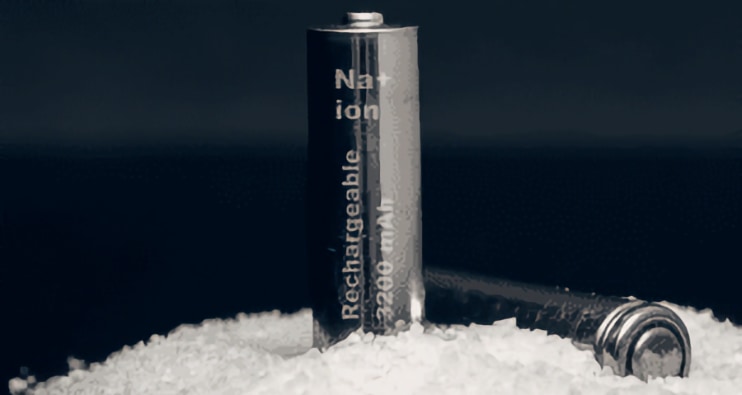
Unigrid has replaced the electrolyte with a solid sulfide electrolyte, the anode with tin impregnated with single-walled carbon nanotubes, and the cathode with sodium-chromium-oxide (NaCrO2). Unlike batteries that use lithium for the cathode, the Na+ Fleet does not use rare earths, is safer during storage and use, and is better for the environment at the end of its life, according to the company.
Unigrid CEO Darren Tan notes the sodium-ion batteries won't catch fire until temperatures exceed several hundred degrees Celsius, unlike lithium-ion batteries that can experience thermal runaways well below 100°C, as seen in numerous reports of Tesla and e-bike battery fires, some deadly.
This battery technology has a high specific energy of 178 Wh/kg and a volumetric energy density of 417 Wh/L, and has passed UN 38.3 and UL 9540A testing. The Na+ Fleet batteries are assembled from the company's 3270 or 32140 cylindrical sodium-ion cells, which have a 10,000 charge cycle (80% capacity) rating and can be deep-discharged.
Readers looking for a long-lasting battery for their vehicles that they can buy today can consider AGM lead-acid batteries, such as these Optimas on Amazon.
Source(s)
 Add as a preferred source on Google


