




Google's I/O AI conference might have an unexpected winner: DuckDuckGo
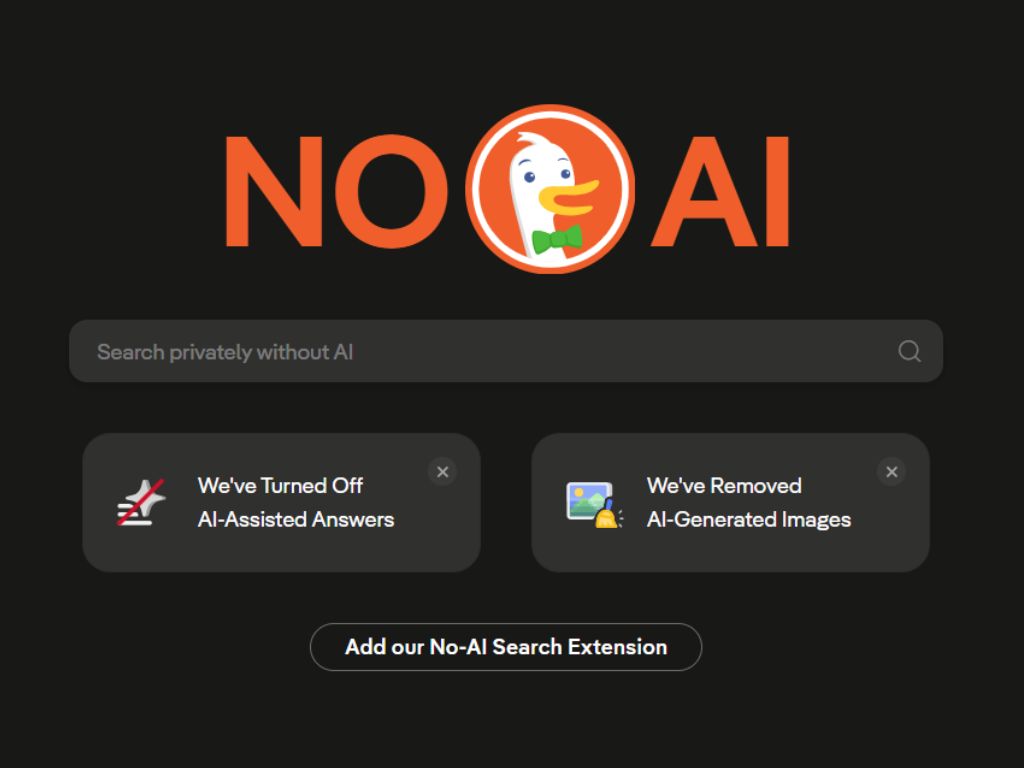
Privacy-oriented alternative search engine DuckDuckGo’s search page traffic has tripled since Google rolled out its biggest yet most controversial update in recent years. The Mountain View-based company revealed on May 19 that it was delving deeper into AI for search engine results at its I/O developer conference. The unasked-for result? DuckDuckGo’s traffic has spiked significantly.
DuckDuckGo has embraced AI in its search results to a similar extent as Google, but it still offers users the option to turn off AI-generated summaries or exclude AI-generated images via no-ai.duckduckgo.com. This means no more AI chat features and to-the-point search results without the extra AI enhancements.
Visitors to DuckDuckGo’s No AI search engine tripled on May 28 and are still climbing, averaging around 84% above the normal traffic since Google’s controversial I/O conference. The backlash stems from the fact that many users simply want an AI-free search experience, with direct results rather than being fed a pushy AI experience on the world’s most-used search engine.
Considering the commotion, DuckDuckGo’s founder and CEO, Gabriel Weinberg, stepped forward with his two cents and said, “Google is force-feeding AI with no way to opt out. As a result, their results are getting worse, not better. We want to be the place that puts users in charge and allows them to decide how much or how little AI they want.”
The chief communications and policy officer at DuckDuckGo, Kamyl BazBaz, summed it up in a single sentence: “People just want a choice.”
Many users are currently switching to DuckDuckGo (via TechCrunch), with an estimated 30% spike in the search engine’s mobile app downloads and an even sharper increase on iOS. Analytics firm Apptopia cited a 29% increase in daily app downloads in the U.S. in late May.
Google, on the other hand, has transformed its once-simple search box into something more “intelligent” and conversational. Its AI mode now offers longer answers to search queries and pulls in personal context from Gmail or even your Photos when deemed relevant.
While AI Overviews were being tested in recent years, AI mode now sits at the top and is pretty much hard to skip for most users, sometimes churning out inaccurate or hallucinated AI answers and thereby forcing people to look for alternatives elsewhere.
Source(s)
 Add as a preferred source on Google


