




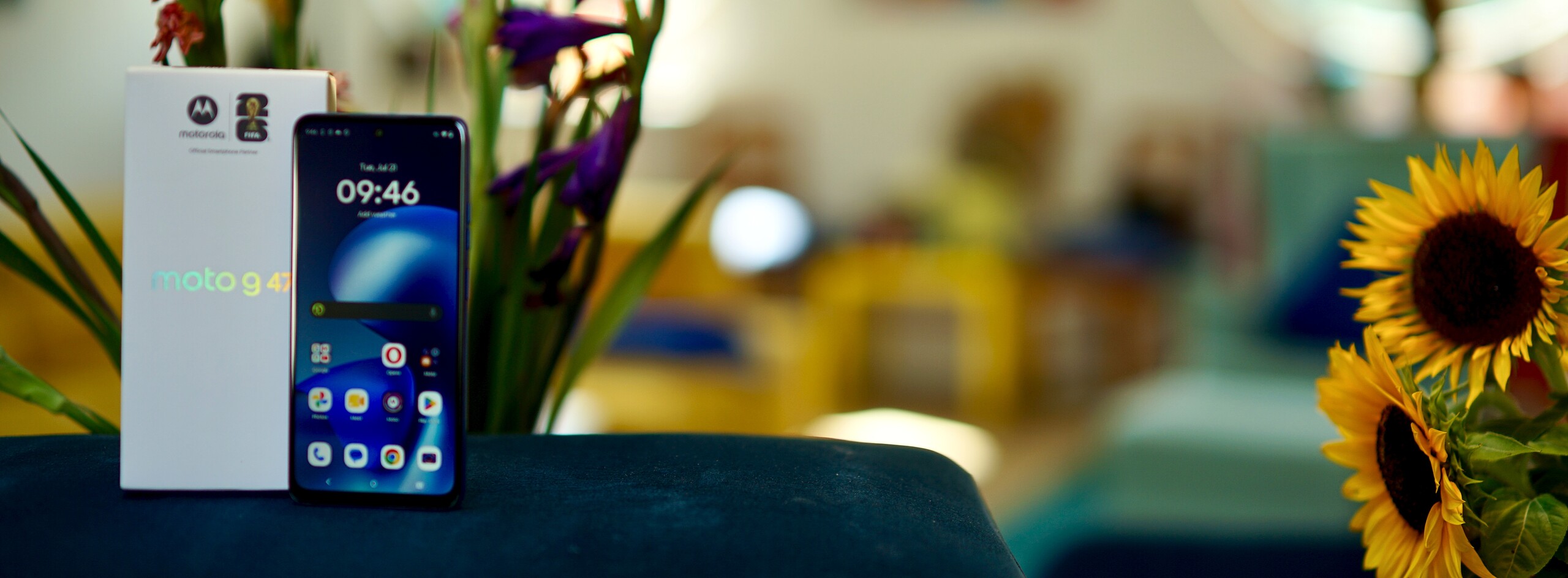
Verdict on the Motorola Moto G47
The Motorola Moto G47 has already dropped significantly in price online, and that’s really good news for the model: At full price it’s hardly competitive with last year’s models.
For example, the screen is less bright and has a lower resolution, and many other features—such as Wi-Fi speed, battery life, and speakers—are average at best.
Compared to the Moto G37, you get more RAM, faster storage, and a better camera system. The camera takes decent photos, but it lacks an ultra-wide-angle lens, and its zoom capabilities are very limited.
If you can get the Motorola Moto G47 at a good price, you can’t go wrong and will enjoy its stylish design. However, there are still strong competitors from last year that haven’t yet been affected by the cost-cutting measures triggered by the memory crisis.
Pros
Cons
Price and Availability

On amazon.com you can buy the phone for around US$ 200.

Table of Contents
- Verdict on the Motorola Moto G47
- Specifications
- Case and features – Attractive colors, good workmanship
- Communication and operation – Sufficiently fast Wi-Fi
- Software and Sustainability – Only Three Years of Security
- Cameras – Main camera with high pixel count
- Display – Motorola phone with IPS screen
- Performance, Emissions, and Battery Life – Lasts a Full Day
- Notebookcheck Overall Rating
- Comparison of Possible Alternatives
Specifications
Case and features – Attractive colors, good workmanship
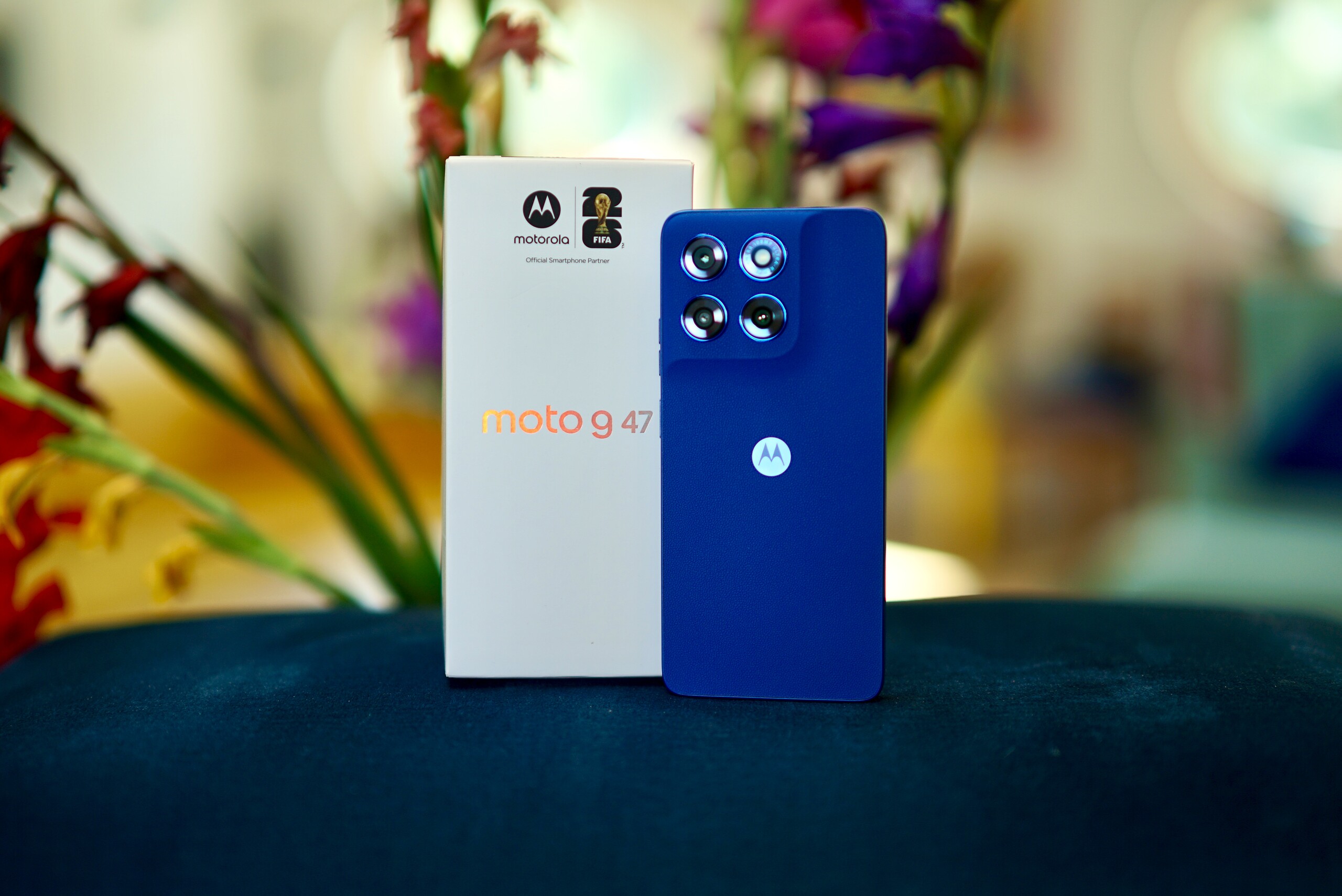
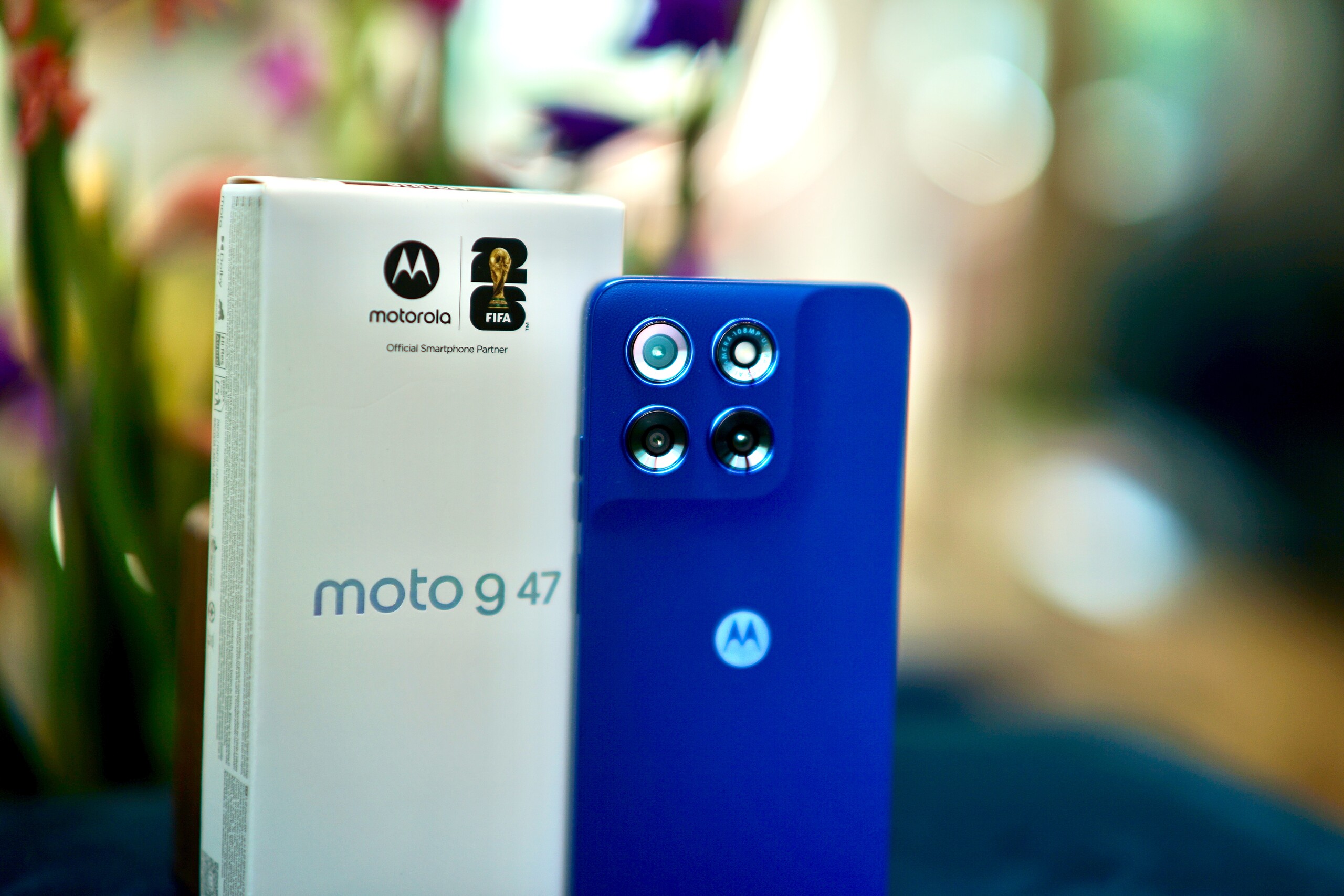
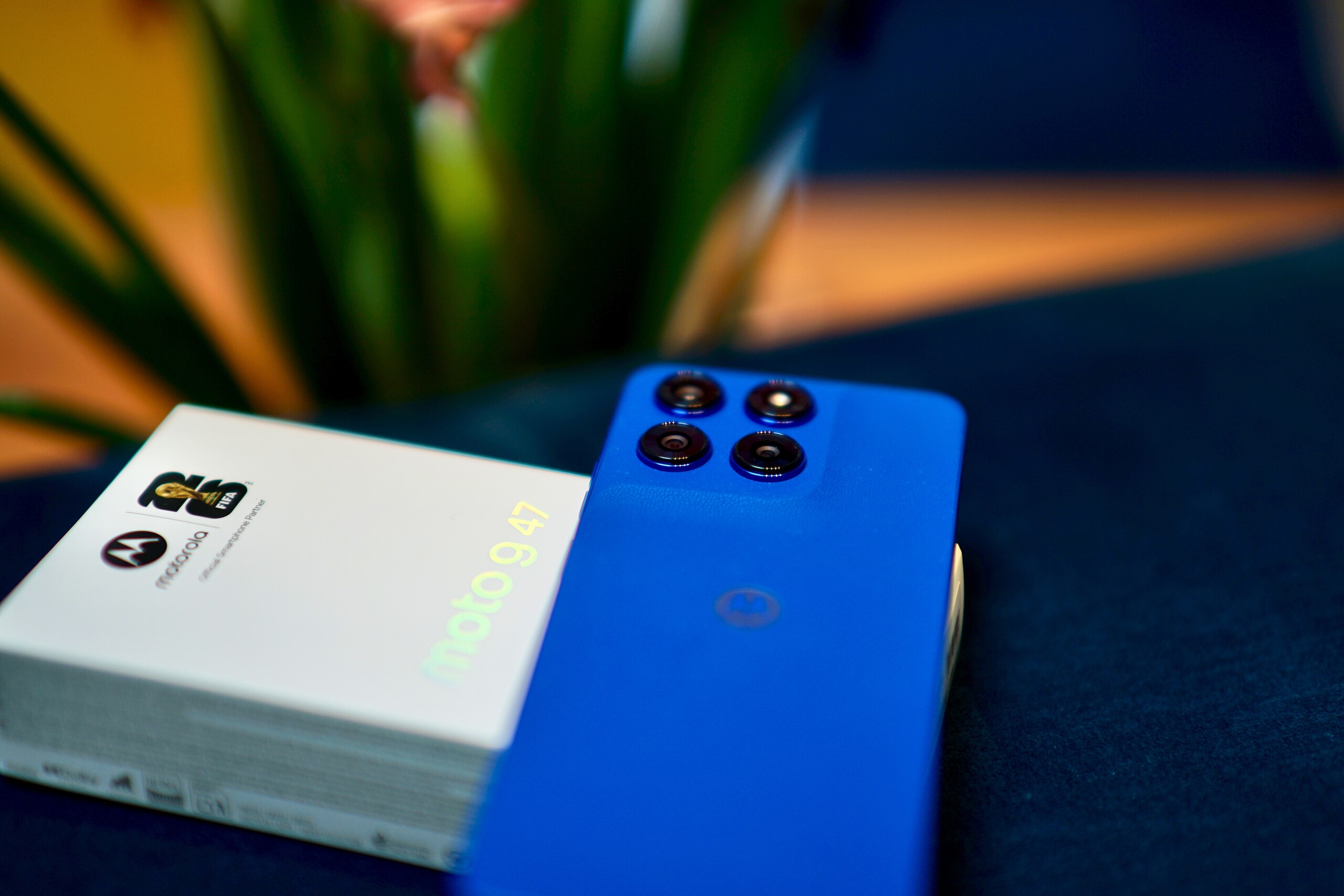
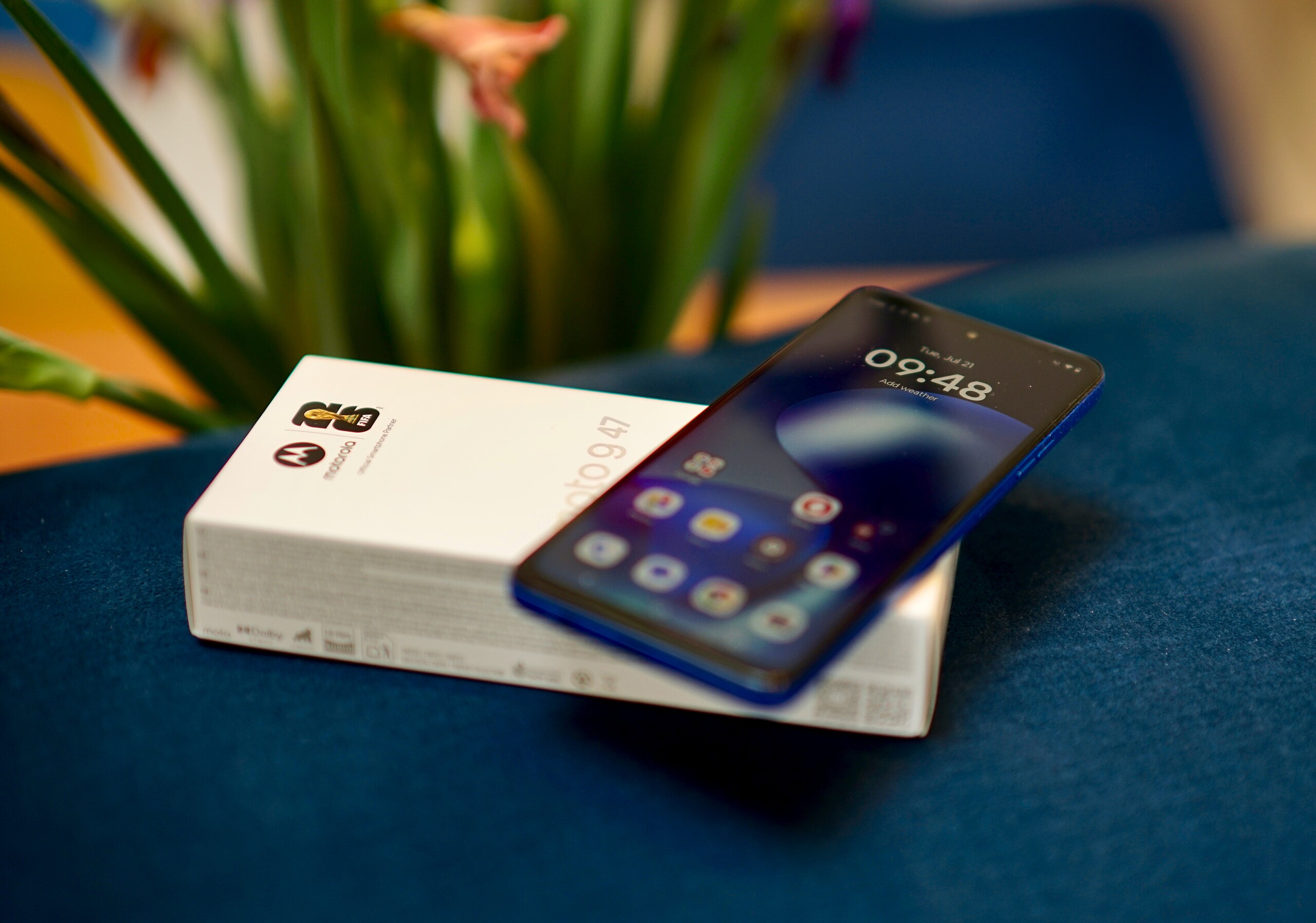
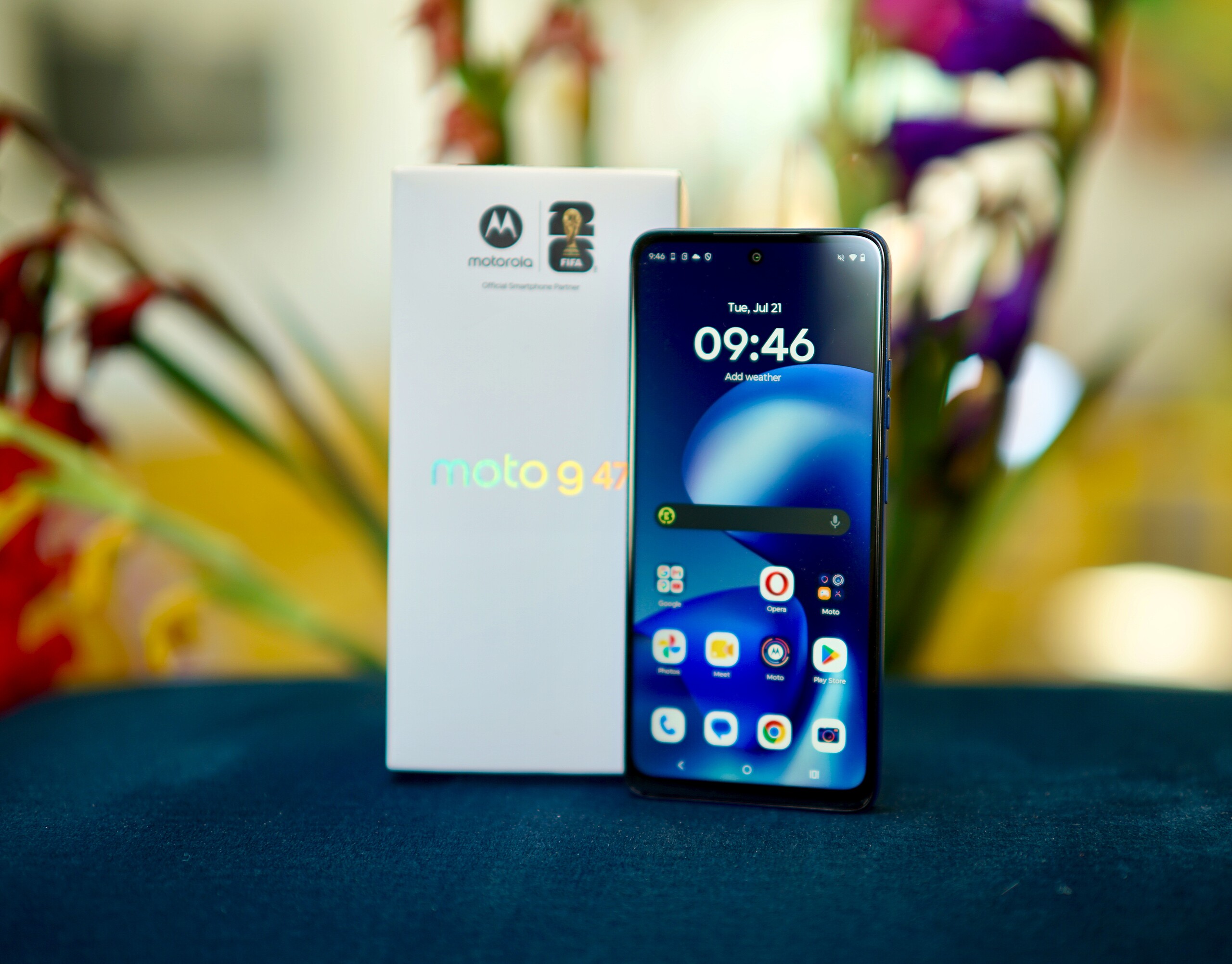
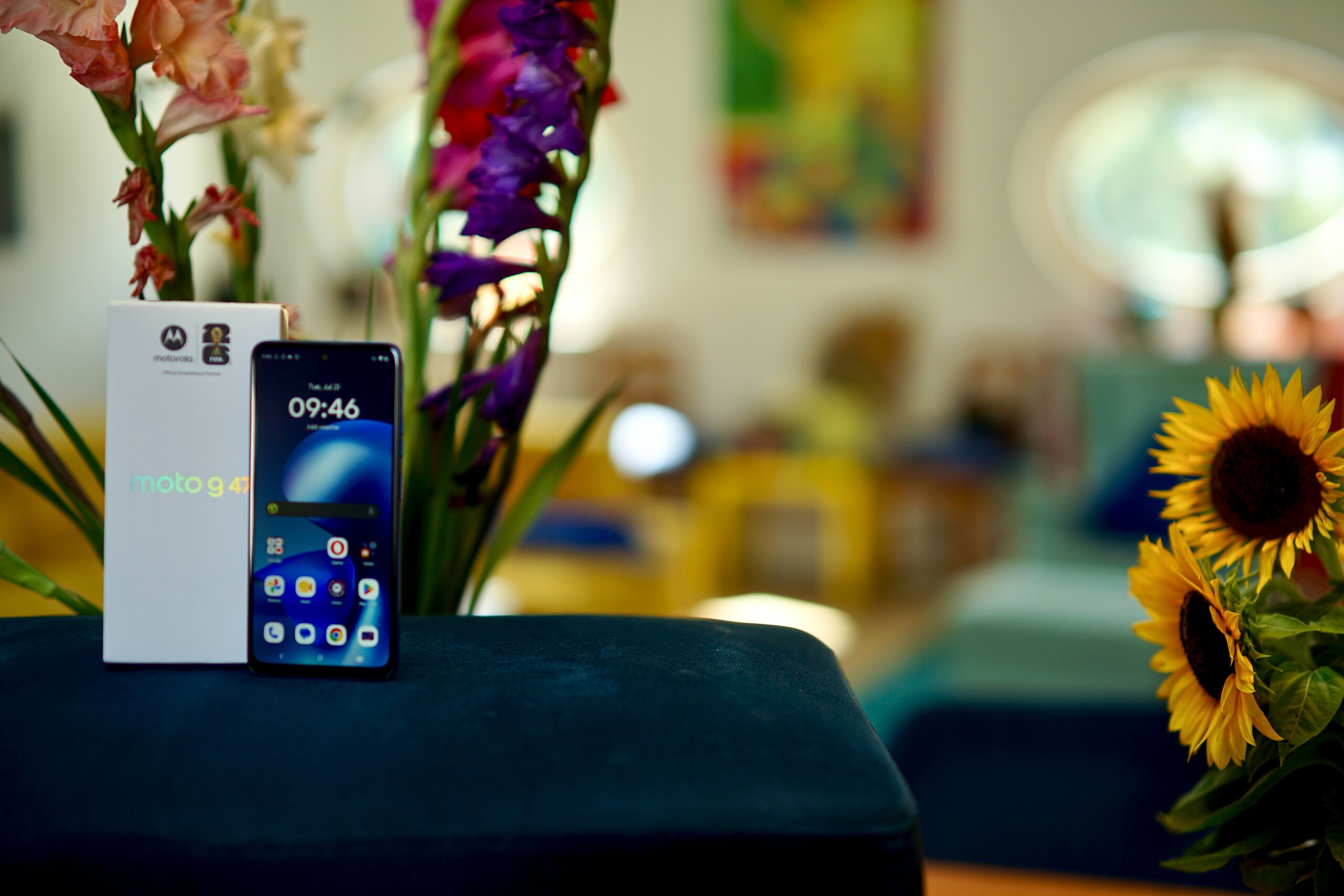
Even Motorola’s budget phones now come in stylish Pantone colors for their casings: Impenetrable, a dark gray; Nautical Blue, a medium blue; and Fuchsia Red, a shade of pink, are available for the Motorola Moto G47.
All feature a back cover made of a soft, faux-leather-like material. The phone is well-built overall, though the transition to the frame isn’t quite as smooth as on more expensive models.
It comes with 128 GB of storage and 8 GB of RAM. One standout feature—which is no longer a given even in budget smartphones—is the 3.5mm audio jack. NFC for contactless payments is also included. eSIM is not supported.
If you want to expand the storage, you can do so using a microSD card with up to 1 TB of capacity. In our tests, the card reader worked reasonably quickly.

| SD Card Reader - average JPG Copy Test (av. of 3 runs) | |
| Motorola Moto G37 (Angelbird V60) | |
| Motorola Moto G47 (Angelbird V60) | |
| Average of class Smartphone (5.72 - 58.9, n=53, last 2 years) | |
| Xiaomi Redmi Note 15 5G (Angelbird AV Pro V60) | |
Cross-Platform Disk Test (CPDT)
Communication and operation – Sufficiently fast Wi-Fi
You can expect speeds of around 320 Mbit/s from the Wi-Fi modem. This corresponds to the standard transmission rates of Wi-Fi 5 and should be sufficient for users without high demands.
There are many 4G and 5G frequencies available. However, the Moto G47 is not a world phone, so before traveling abroad, you should check whether the phone can connect to mobile data locally.
Reception was solid during our two-week testing period.
The screen can display up to 120 frames per second and responds very quickly to input. A fingerprint sensor is integrated into the power button on the right side. Once your fingerprints are registered, it unlocks the phone reliably and with minimal delay. Face recognition via the front camera is also available, but it’s not quite as secure.
| Networking | |
| Motorola Moto G47 | |
| iperf3 transmit Wi-Fi6/7 RT-BE96U | |
| iperf3 receive Wi-Fi6/7 RT-BE96U | |
| Motorola Moto G37 | |
| iperf3 transmit Wi-Fi6/7 RT-BE96U | |
| iperf3 receive Wi-Fi6/7 RT-BE96U | |
| Xiaomi Redmi Note 15 5G | |
| iperf3 transmit AXE11000 | |
| iperf3 receive AXE11000 | |
| Samsung Galaxy A37 5G | |
| iperf3 transmit Wi-Fi6/7 RT-BE96U | |
| iperf3 receive Wi-Fi6/7 RT-BE96U | |
| Average 802.11 a/b/g/n/ac | |
| iperf3 transmit AXE11000 | |
| iperf3 receive AXE11000 | |
| iperf3 transmit Wi-Fi6/7 RT-BE96U | |
| iperf3 receive Wi-Fi6/7 RT-BE96U | |
| Average of class Smartphone | |
| iperf3 transmit AXE11000 | |
| iperf3 receive AXE11000 | |
| iperf3 transmit Wi-Fi6/7 RT-BE96U | |
| iperf3 receive Wi-Fi6/7 RT-BE96U | |
Software and Sustainability – Only Three Years of Security
Motorola is known for leaving stock Android largely untouched and offloading additional features into its own apps, making them easier to update. Android 16 comes preinstalled; as of the time of testing, the security patches date from May 2026 and are therefore already somewhat outdated.
The manufacturer promises three years of updates. That’s not exactly generous; anyone who wants to keep their phone for a long time may eventually find themselves without up-to-date software.
The packaging is plastic-free, but unfortunately, there is no other information available regarding the device’s sustainability.
Cameras – Main camera with high pixel count

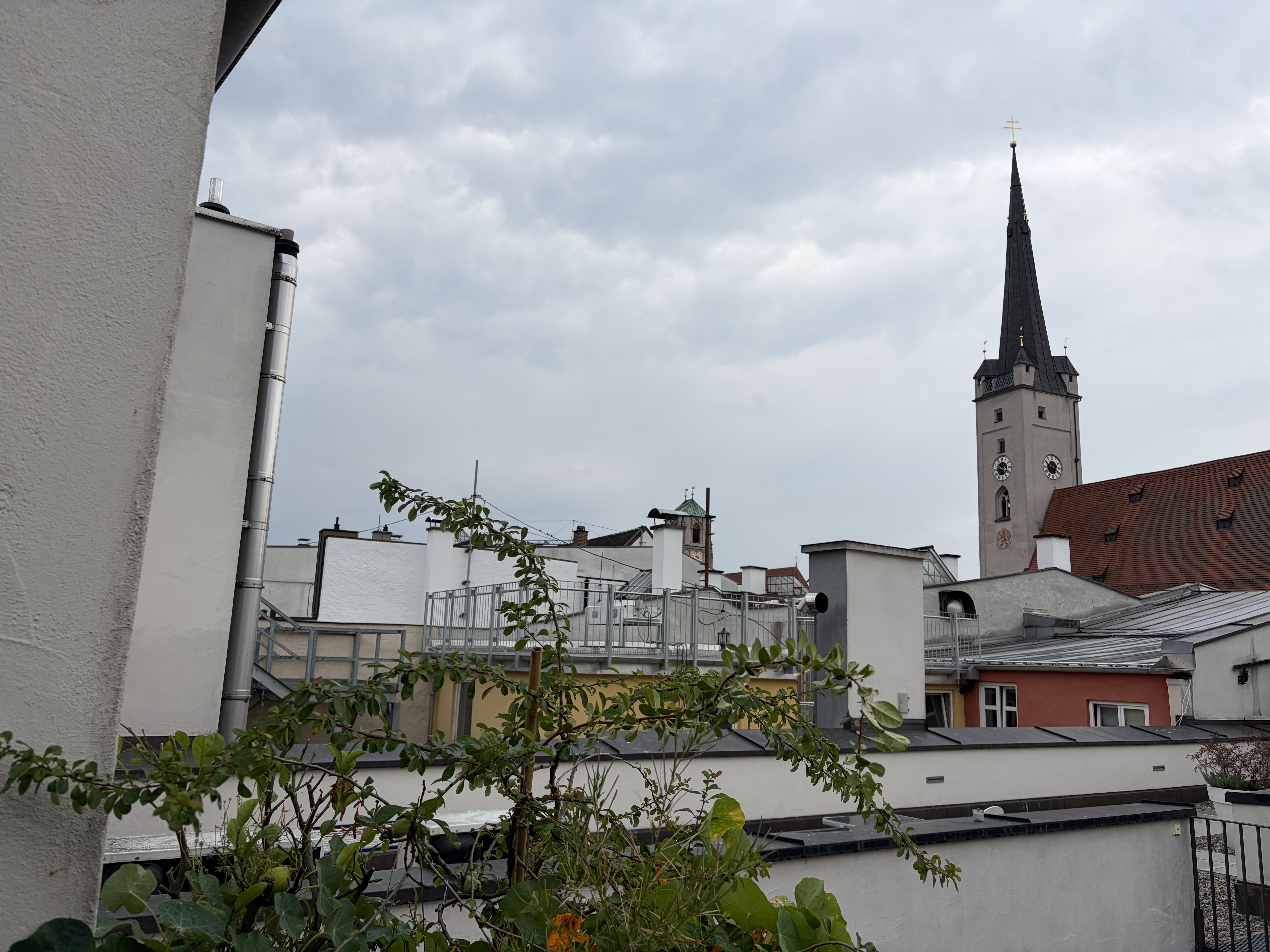
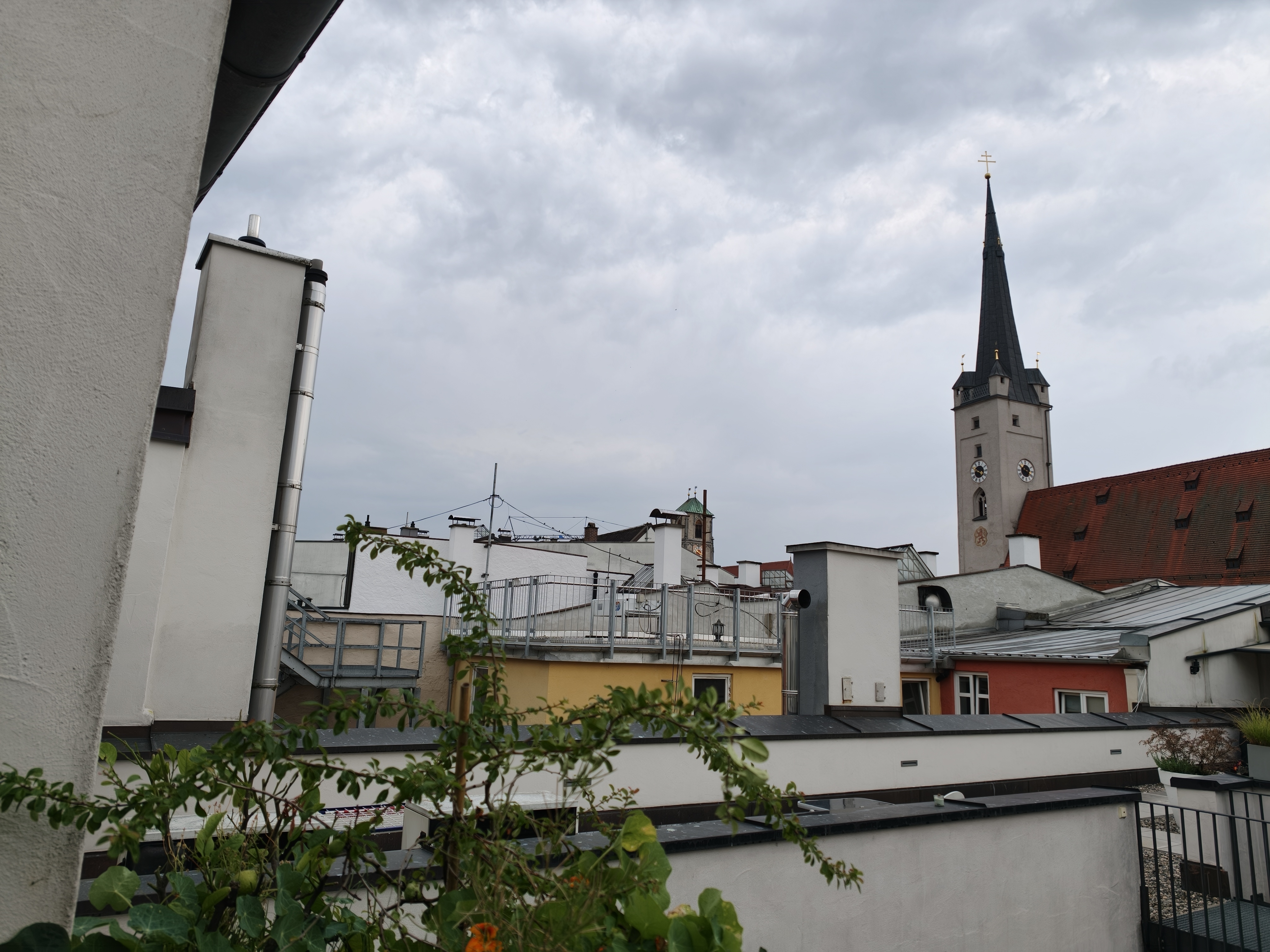
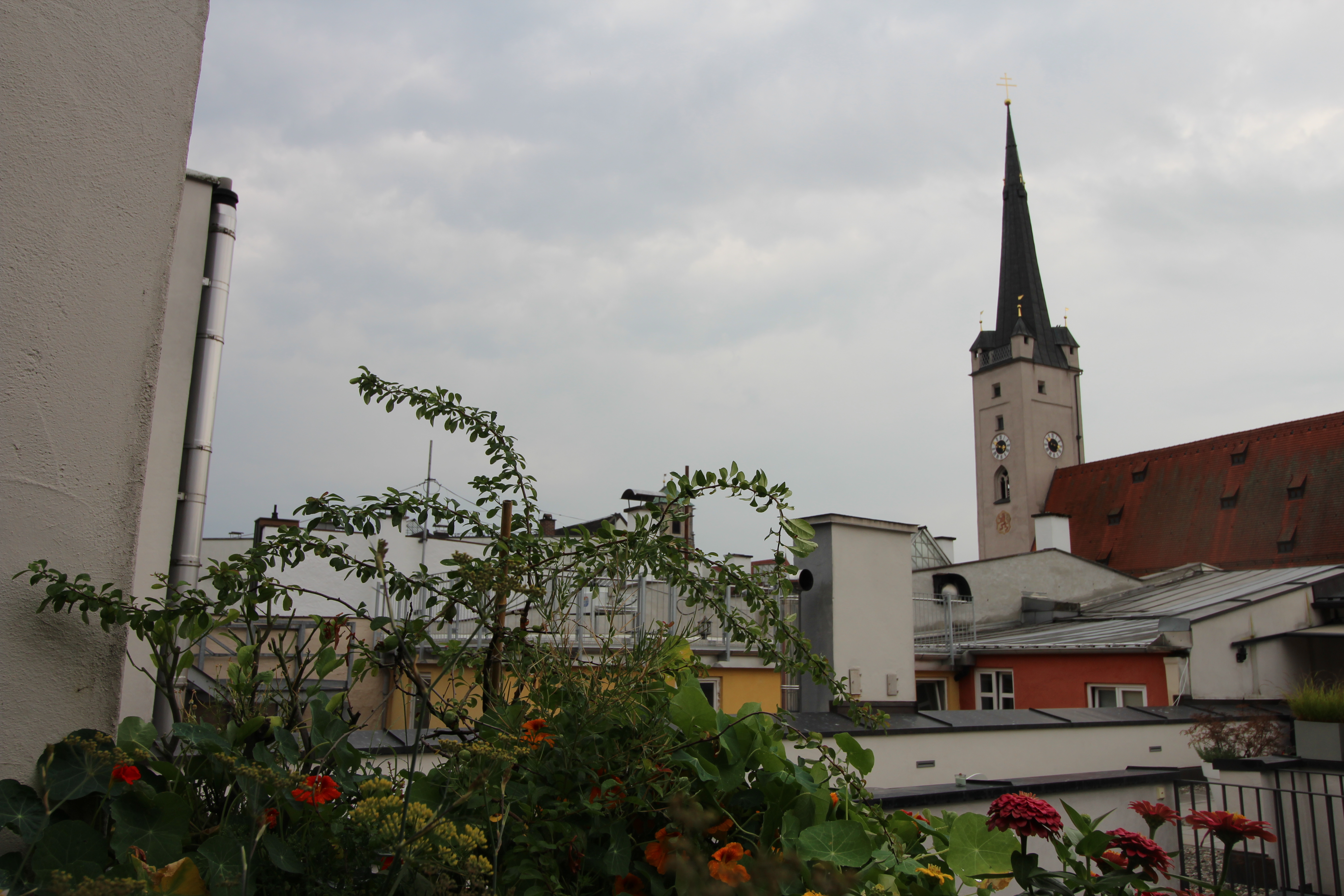
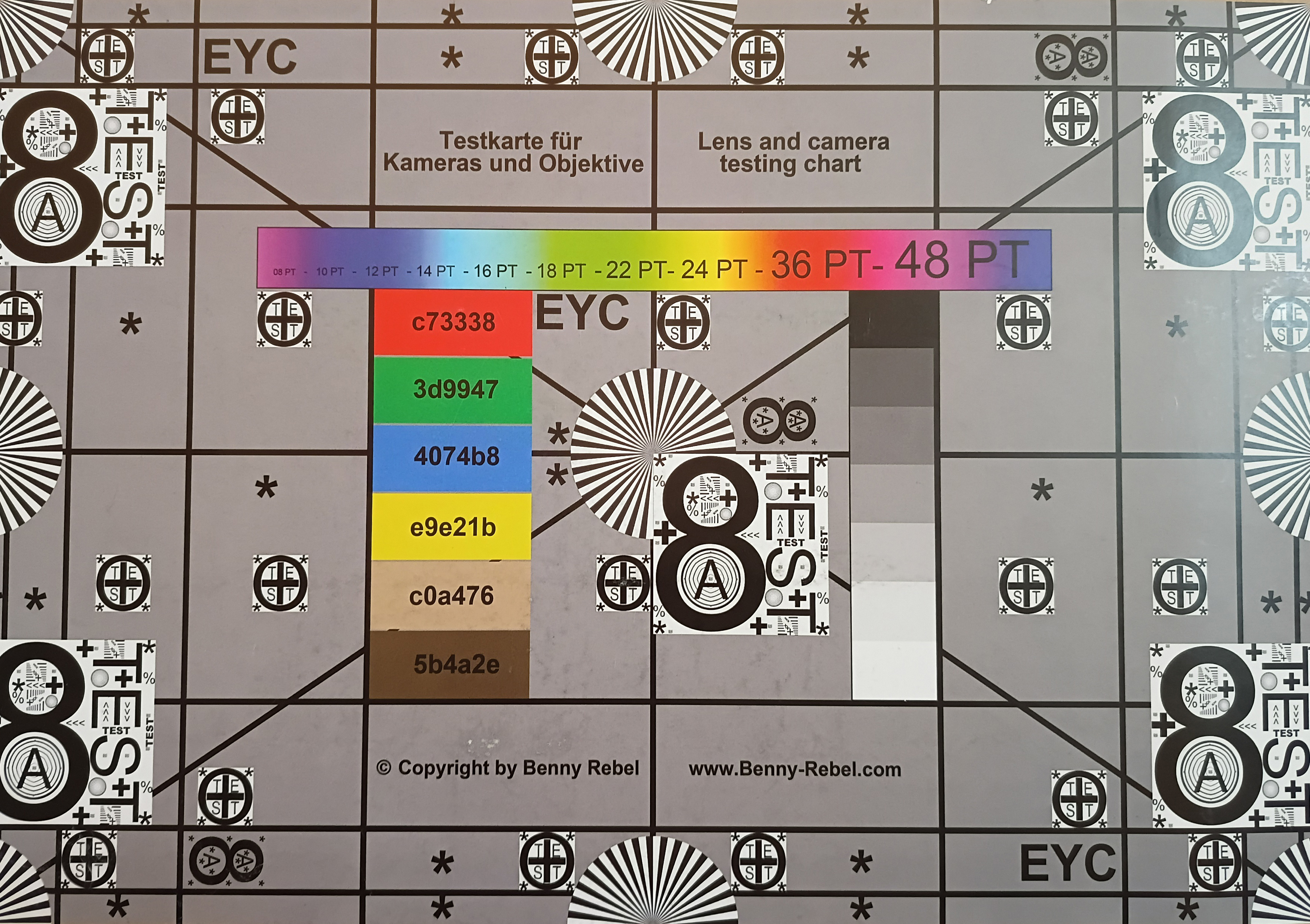
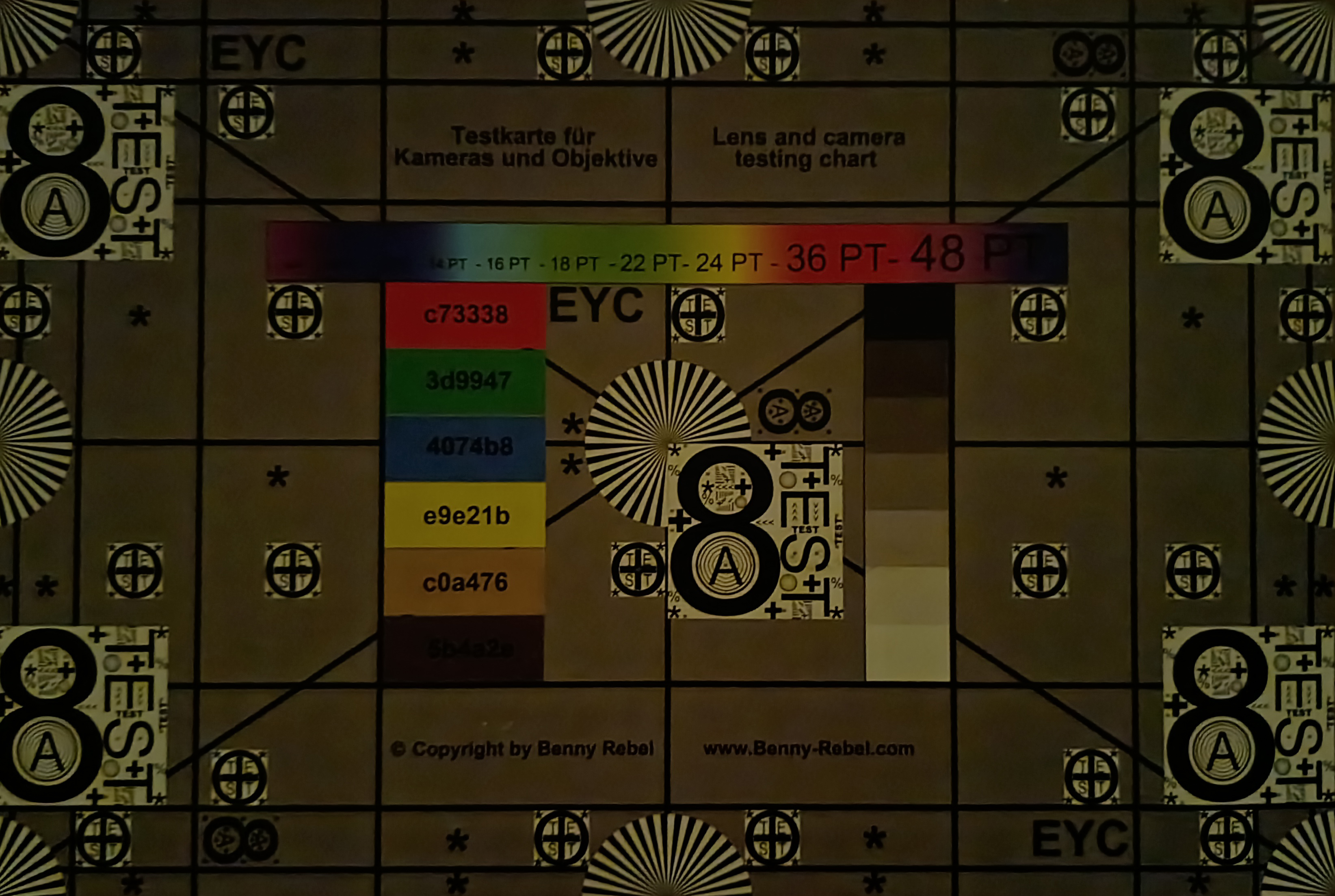
A 108-megapixel main camera is touted as the highlight of the Moto G47. But does it actually take good pictures? That depends on your personal expectations: Generally speaking, sharpness and exposure are only average, but sufficient for everyday use as long as you don’t zoom in too much on the photos.
A 2-megapixel telephoto lens rounds out the rear camera system, but due to its low resolution, it’s only suitable for snapshots.
On the front, there’s an 8-megapixel camera for selfies. These turn out quite well in bright conditions and can even be zoomed in on a little.
Image comparison
Choose a scene and navigate within the first image. One click changes the position on touchscreens. One click on the zoomed-in image opens the original in a new window. The first image shows the scaled photograph of the test device.
PlantSurroundingLow Light













Display – Motorola phone with IPS screen
Buyers will have to settle for less when it comes to the screen: A relatively low resolution of 1,604 x 720 pixels and a rather modest peak brightness of around 800 nits result in an image that is slightly blurry and not impressive in very bright environments.
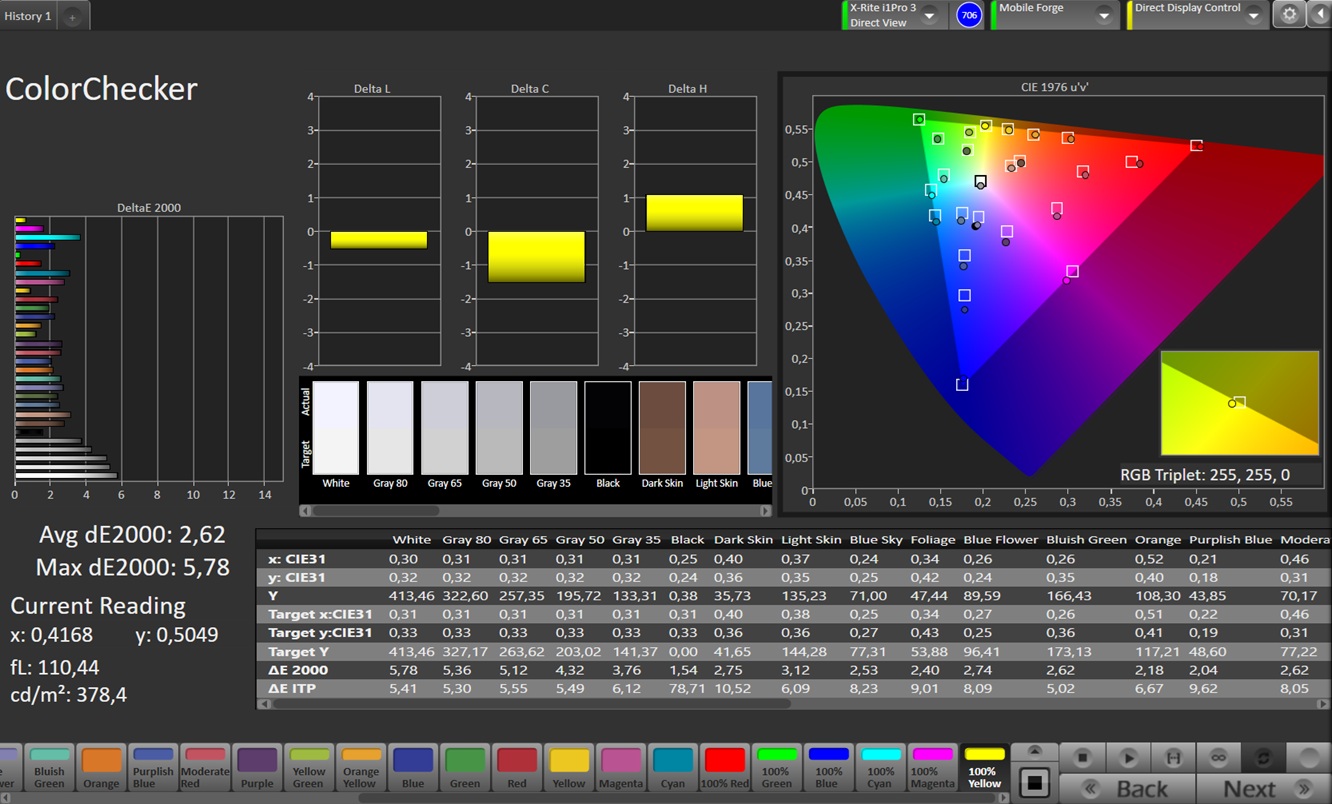
Color accuracy is also only average. However, thanks to the IPS panel, the screen at least does not suffer from PWM flicker.
| |||||||||||||||||||||||||
Center on Battery: 784 cd/m²
Contrast: 2376:1 (Black: 0.33 cd/m²)
ΔE ColorChecker Calman: 2.62 | ∀{0.5-29.43 Ø4.7}
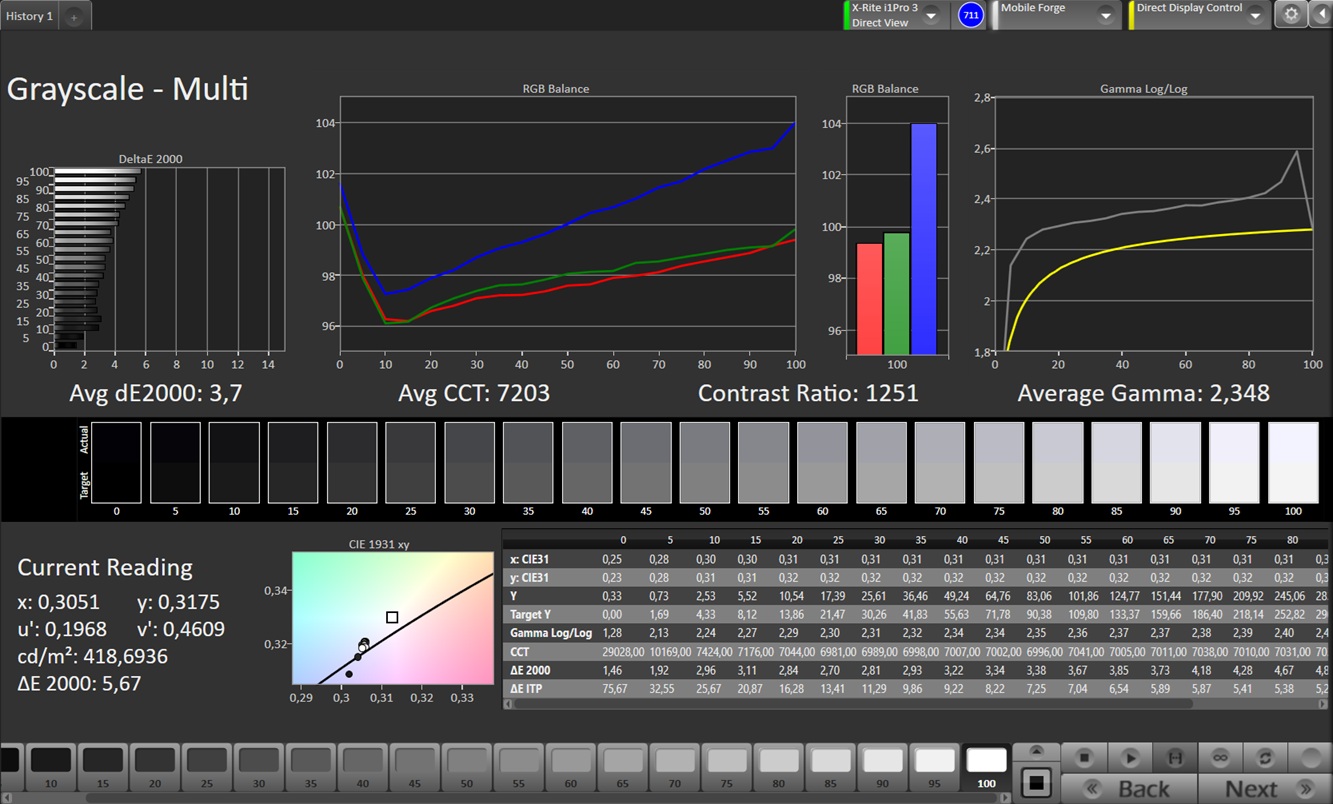
ΔE Greyscale Calman: 3.7 | ∀{0.09-98 Ø4.95}
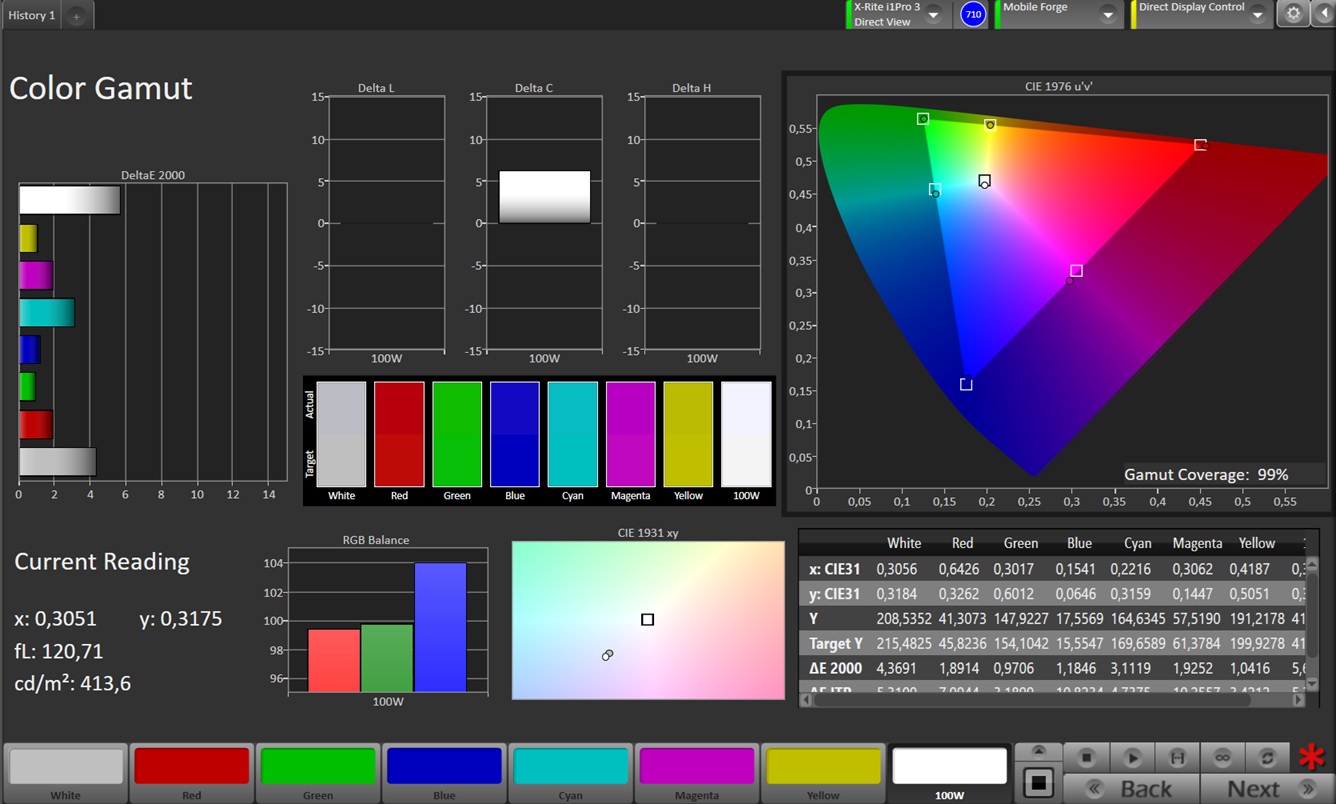
99% sRGB (Calman 2D)
Gamma: 2.348
CCT: 7203 K
| Motorola Moto G47 IPS, 1604x720, 6.7" | Motorola Moto G37 IPS, 1604x720, 6.7" | Xiaomi Redmi Note 15 5G AMOLED, 2392x1080, 6.8" | Samsung Galaxy A37 5G Super AMOLED, 2340x1080, 6.7" | |
|---|---|---|---|---|
| Display | -5% | 256% | 82% | |
| APL18 Peak Brightness (cd/m²) | 1002 | 943 -6% | 3430 242% | 1839 84% |
| HDR Peak Brightness (cd/m²) | 971 | 933 -4% | 3582 269% | 1752 80% |
| Response Times | 34% | 96% | 95% | |
| Response Time Grey 50% / Grey 80% * (ms) | 34.6 ? | 16.3 ? 53% | 0.99 ? 97% | 1.57 ? 95% |
| Response Time Black / White * (ms) | 22.9 ? | 19.6 ? 14% | 1.13 ? 95% | 1.39 ? 94% |
| PWM Frequency (Hz) | 60 | 240 | ||
| PWM Amplitude * (%) | 13.61 | 16.58 | ||
| Screen | 0% | 47% | 13% | |
| Brightness middle (cd/m²) | 784 | 876 12% | 979 25% | 1127 44% |
| Black Level * (cd/m²) | 0.33 | 0.53 -61% | ||
| Contrast (:1) | 2376 | 1653 -30% | ||
| Colorchecker dE 2000 * | 2.62 | 1.83 30% | 1.3 50% | 2.6 1% |
| Colorchecker dE 2000 max. * | 5.78 | 4.55 21% | 2.6 55% | 5.3 8% |
| Greyscale dE 2000 * | 3.7 | 2.6 30% | 1.6 57% | 3.7 -0% |
| Gamma | 2.348 94% | 2.209 100% | 2.23 99% | 2.06 107% |
| CCT | 7203 90% | 7094 92% | 6688 97% | 6496 100% |
| Brightness (cd/m²) | 969 | |||
| Brightness Distribution (%) | 95 | |||
| Total Average (Program / Settings) | 10% /
6% | 133% /
111% | 63% /
51% |
* ... smaller is better
Screen Flickering / PWM (Pulse-Width Modulation)
| Screen flickering / PWM not detected | 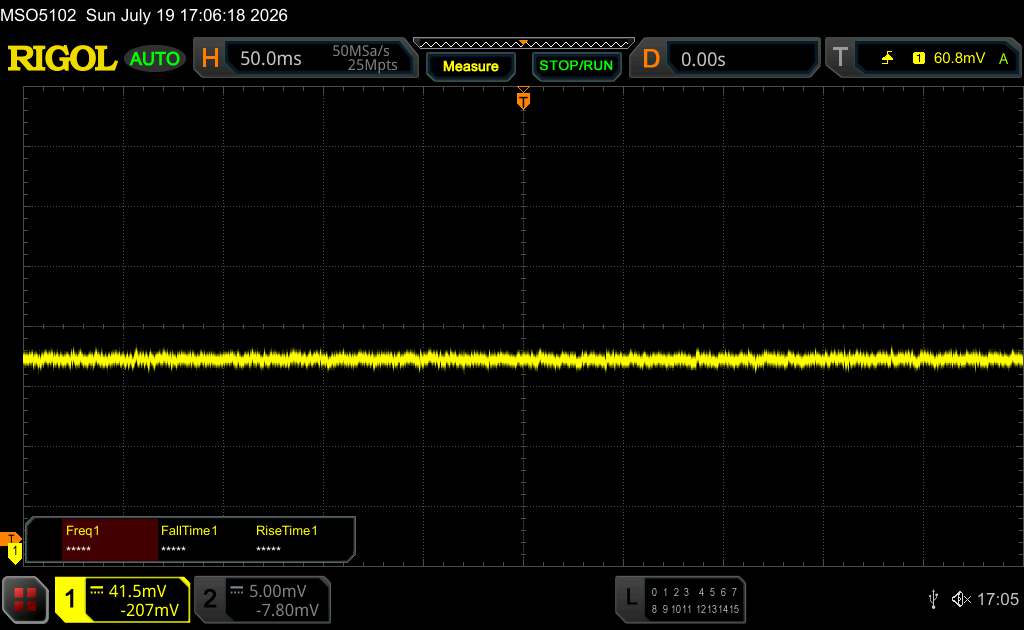 | ||
In comparison: 52 % of all tested devices do not use PWM to dim the display. If PWM was detected, an average of 7656 (minimum: 5 - maximum: 343500) Hz was measured. | |||
Display Response Times
| ↔ Response Time Black to White | ||
|---|---|---|
| 22.9 ms ... rise ↗ and fall ↘ combined | ↗ 11.9 ms rise | 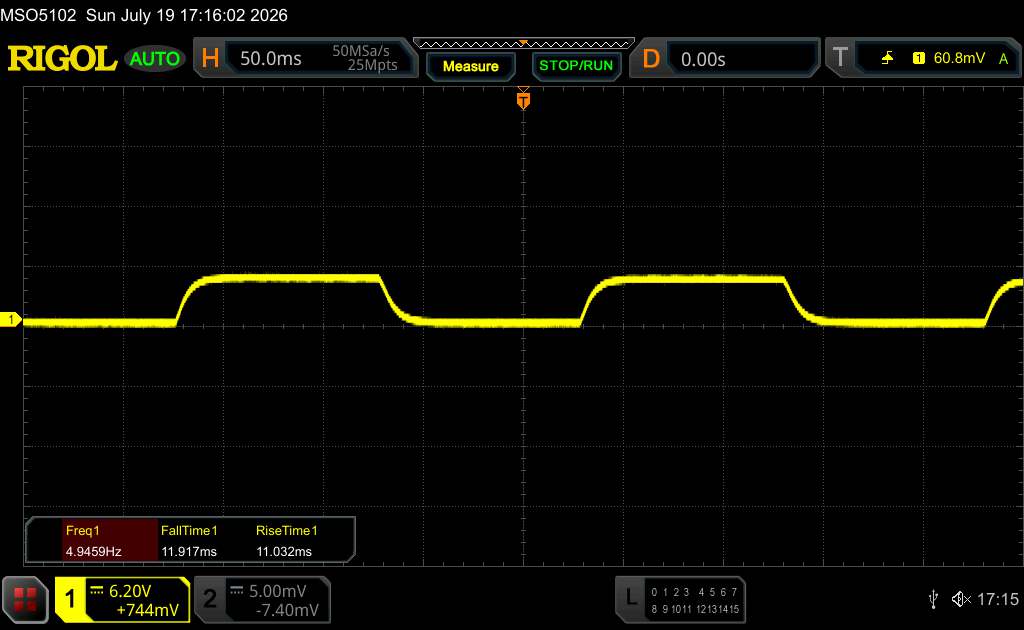 |
| ↘ 11 ms fall | ||
| The screen shows good response rates in our tests, but may be too slow for competitive gamers. In comparison, all tested devices range from 0.1 (minimum) to 240 (maximum) ms. » 52 % of all devices are better. This means that the measured response time is worse than the average of all tested devices (19.7 ms). | ||
| ↔ Response Time 50% Grey to 80% Grey | ||
| 34.6 ms ... rise ↗ and fall ↘ combined | ↗ 17.7 ms rise | 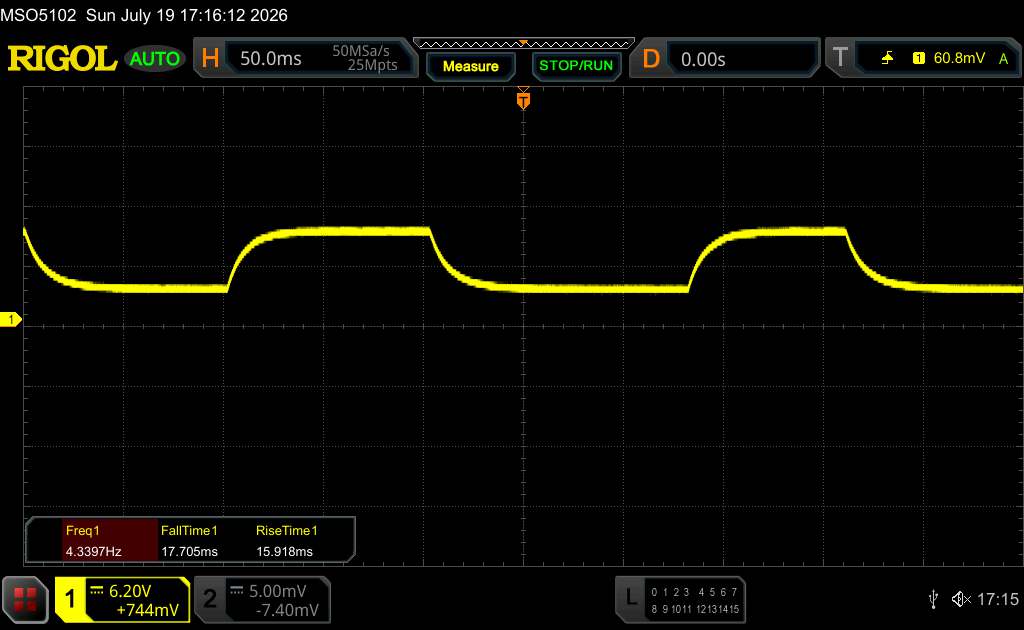 |
| ↘ 15.9 ms fall | ||
| The screen shows slow response rates in our tests and will be unsatisfactory for gamers. In comparison, all tested devices range from 0.13 (minimum) to 636 (maximum) ms. » 49 % of all devices are better. This means that the measured response time is worse than the average of all tested devices (30.8 ms). | ||
Performance, Emissions, and Battery Life – Lasts a Full Day
The MediaTek Dimensity 6300 is used as the processor. Even in this budget price range, it isn’t particularly fast and doesn’t always deliver smooth performance, even when simply scrolling through the menu.
The storage, which uses UFS 2.1 flash, is of average speed: there are certainly budget phones that offer faster load times.
The device gets noticeably warm, but this isn’t a problem at room temperature. We didn’t observe any throttling under prolonged load.
The speaker on the bottom edge is supplemented by the earpiece, allowing for stereo effects. While the sound can get quite loud if desired, the balance is only moderate and quite treble-heavy. This makes listening to music or movie soundtracks hardly enjoyable.
You can connect headphones and speakers via the 3.5mm jack or Bluetooth, and this works without any issues. The most important codecs are available for wireless audio transmission.
Power consumption tends to be on the high side under light load, but battery life with the 5,200 mAh battery is on par with others in its class: The phone lasted just under 18 hours in our Wi-Fi test. This should make it easy to get through a workday without a nearby outlet. Charging takes about 2 hours at most.
| Motorola Moto G47 | Motorola Moto G37 | Xiaomi Redmi Note 15 5G | Samsung Galaxy A37 5G | Average 128 GB UFS 2.1 Flash | Average of class Smartphone | |
|---|---|---|---|---|---|---|
| AndroBench 3-5 | -52% | 36% | 129% | -21% | 169% | |
| Sequential Read 256KB (MB/s) | 532.6 | 355.5 -33% | 911.87 71% | 1986.3 273% | 760 ? 43% | 2277 ? 328% |
| Sequential Write 256KB (MB/s) | 504.2 | 331.3 -34% | 867.34 72% | 1732.34 244% | 302 ? -40% | 1960 ? 289% |
| Random Read 4KB (MB/s) | 232.9 | 68.5 -71% | 222.77 -4% | 368.9 58% | 155.3 ? -33% | 315 ? 35% |
| Random Write 4KB (MB/s) | 291.3 | 93.8 -68% | 302.72 4% | 115.25 -60% | 132.5 ? -55% | 361 ? 24% |
(±) The maximum temperature on the upper side is 42.8 °C / 109 F, compared to the average of 35.3 °C / 96 F, ranging from 21.9 to 247 °C for the class Smartphone.
(±) The bottom heats up to a maximum of 42.2 °C / 108 F, compared to the average of 34.1 °C / 93 F
3DMark Stress Tests
| 3DMark | |
| Wild Life Stress Test Stability | |
| Xiaomi Redmi Note 15 5G | |
| Samsung Galaxy A37 5G | |
| Motorola Moto G47 | |
| Motorola Moto G37 | |
| Wild Life Extreme Stress Test | |
| Xiaomi Redmi Note 15 5G | |
| Motorola Moto G37 | |
| Samsung Galaxy A37 5G | |
| Motorola Moto G47 | |
| Steel Nomad Light Stress Test Stability | |
| Xiaomi Redmi Note 15 5G | |
| Samsung Galaxy A37 5G | |
| Motorola Moto G47 | |
Motorola Moto G47 audio analysis
(+) | speakers can play relatively loud (87.1 dB)
Bass 100 - 315 Hz
(-) | nearly no bass - on average 32% lower than median
(±) | linearity of bass is average (14.5% delta to prev. frequency)
Mids 400 - 2000 Hz
(±) | higher mids - on average 10.6% higher than median
(±) | linearity of mids is average (9% delta to prev. frequency)
Highs 2 - 16 kHz
(±) | higher highs - on average 5.9% higher than median
(+) | highs are linear (6.3% delta to prev. frequency)
Overall 100 - 16.000 Hz
(±) | linearity of overall sound is average (29.4% difference to median)
Compared to same class
» 77% of all tested devices in this class were better, 4% similar, 19% worse
» The best had a delta of 11%, average was 34%, worst was 136%
Compared to all devices tested
» 87% of all tested devices were better, 2% similar, 10% worse
» The best had a delta of 4%, average was 23%, worst was 136%
Xiaomi Redmi Note 15 5G audio analysis
(+) | speakers can play relatively loud (88.7 dB)
Bass 100 - 315 Hz
(-) | nearly no bass - on average 28.4% lower than median
(±) | linearity of bass is average (9.7% delta to prev. frequency)
Mids 400 - 2000 Hz
(±) | reduced mids - on average 10% lower than median
(±) | linearity of mids is average (7.4% delta to prev. frequency)
Highs 2 - 16 kHz
(+) | balanced highs - only 4.7% away from median
(+) | highs are linear (6.5% delta to prev. frequency)
Overall 100 - 16.000 Hz
(±) | linearity of overall sound is average (22.1% difference to median)
Compared to same class
» 47% of all tested devices in this class were better, 7% similar, 46% worse
» The best had a delta of 11%, average was 34%, worst was 136%
Compared to all devices tested
» 64% of all tested devices were better, 6% similar, 30% worse
» The best had a delta of 4%, average was 23%, worst was 136%
| Off / Standby |   0.1 / 0.2 Watt 0.1 / 0.2 Watt |
| Idle |  1 / 1.3 / 1.6 Watt 1 / 1.3 / 1.6 Watt |
    
| |
Key:
min: ,
med: ,
max: Metrahit Energy | |
| Motorola Moto G47 5200 mAh | Motorola Moto G37 5200 mAh | Xiaomi Redmi Note 15 5G 5520 mAh | Samsung Galaxy A37 5G 5000 mAh | Average Mediatek Dimensity 6300 | Average of class Smartphone | |
|---|---|---|---|---|---|---|
| Power Consumption | 10% | 3% | -16% | -17% | -1% | |
| Idle Minimum * (Watt) | 1 | 0.9 10% | 1.04 -4% | 0.85 15% | 1.086 ? -9% | 0.881 ? 12% |
| Idle Average * (Watt) | 1.3 | 1.2 8% | 1.33 -2% | 1.86 -43% | 1.616 ? -24% | 1.457 ? -12% |
| Idle Maximum * (Watt) | 1.6 | 1.4 13% | 1.38 14% | 1.94 -21% | 1.884 ? -18% | 1.655 ? -3% |
| Load Average * (Watt) | 4.05 | 5.55 ? | 6.82 ? | |||
| Load Maximum * (Watt) | 8.98 | 7.75 ? | 11.1 ? |
* ... smaller is better
| Motorola Moto G47 5200 mAh | Motorola Moto G37 5200 mAh | Xiaomi Redmi Note 15 5G 5520 mAh | Samsung Galaxy A37 5G 5000 mAh | |
|---|---|---|---|---|
| Battery runtime | -2% | 3% | 4% | |
| Reader / Idle (h) | 36.2 | 34.9 -4% | 36.6 1% | |
| WiFi v1.3 (h) | 17.9 | 17.7 -1% | 19 6% | 18.6 4% |
| Load (h) | 4.1 | 4.1 0% | 4.2 2% | |
| H.264 (h) | 21.1 |
Notebookcheck Overall Rating
Ultimately, with the Motorola Moto G47, it all comes down to how cheaply you can get it:
If you manage to snag a decent discount, you’re buying a solid budget phone. But if you pay full price, you’re getting less than you have in recent years.

Motorola Moto G47
- 08/06/2026 v8
Florian Schmitt
 Total Sustainability Score:
 Comparison of Possible Alternatives
Image | Model / Review | Price | Weight | Drive | Display |
|---|---|---|---|---|---|
1. 73%  | Motorola Moto G47 Mediatek Dimensity 6300 ⎘ ARM Mali-G57 MP2 ⎘ 8 GB Memory, 128 GB UFS 2.1 | List Price: 319€ | 191 g | 128 GB UFS 2.1 Flash | 6.67" 1604x720 264 PPI IPS |
2. 72.7%  | Motorola Moto G37 Mediatek Dimensity 6300 ⎘ ARM Mali-G57 MP2 ⎘ 4 GB Memory, 128 GB eMMC | List Price: 250€ | 191 g | 128 GB eMMC Flash | 6.72" 1604x720 262 PPI IPS |
3. 76.5%  | Xiaomi Redmi Note 15 5G Qualcomm Snapdragon 6 Gen 3 ⎘ Qualcomm Adreno 710 ⎘ 8 GB Memory, 256 GB UFS 2.2 | Amazon: $279.50 List Price: 300€ | 178 g | 256 GB UFS 2.2 Flash | 6.77" 2392x1080 388 PPI AMOLED |
4. 79%  | Samsung Galaxy A37 5G Samsung Exynos 1480 ⎘ Samsung Xclipse 530 ⎘ 8 GB Memory, 256 GB UFS 3.1 | List Price: 519€ | 196 g | 256 GB UFS 3.1 Flash | 6.70" 2340x1080 385 PPI Super AMOLED |
Transparency
The selection of devices to be reviewed is made by our editorial team. The test sample was provided to the author as a loan by the manufacturer or retailer for the purpose of this review. The lender had no influence on this review, nor did the manufacturer receive a copy of this review before publication. There was no obligation to publish this review. As an independent media company, Notebookcheck is not subjected to the authority of manufacturers, retailers or publishers.
This is how Notebookcheck is testing
Every year, Notebookcheck independently reviews hundreds of laptops and smartphones using standardized procedures to ensure that all results are comparable. We have continuously developed our test methods for around 20 years and set industry standards in the process. In our test labs, high-quality measuring equipment is utilized by experienced technicians and editors. These tests involve a multi-stage validation process. Our complex rating system is based on hundreds of well-founded measurements and benchmarks, which maintains objectivity. Further information on our test methods can be found here.
 Add as a preferred source on Google


