




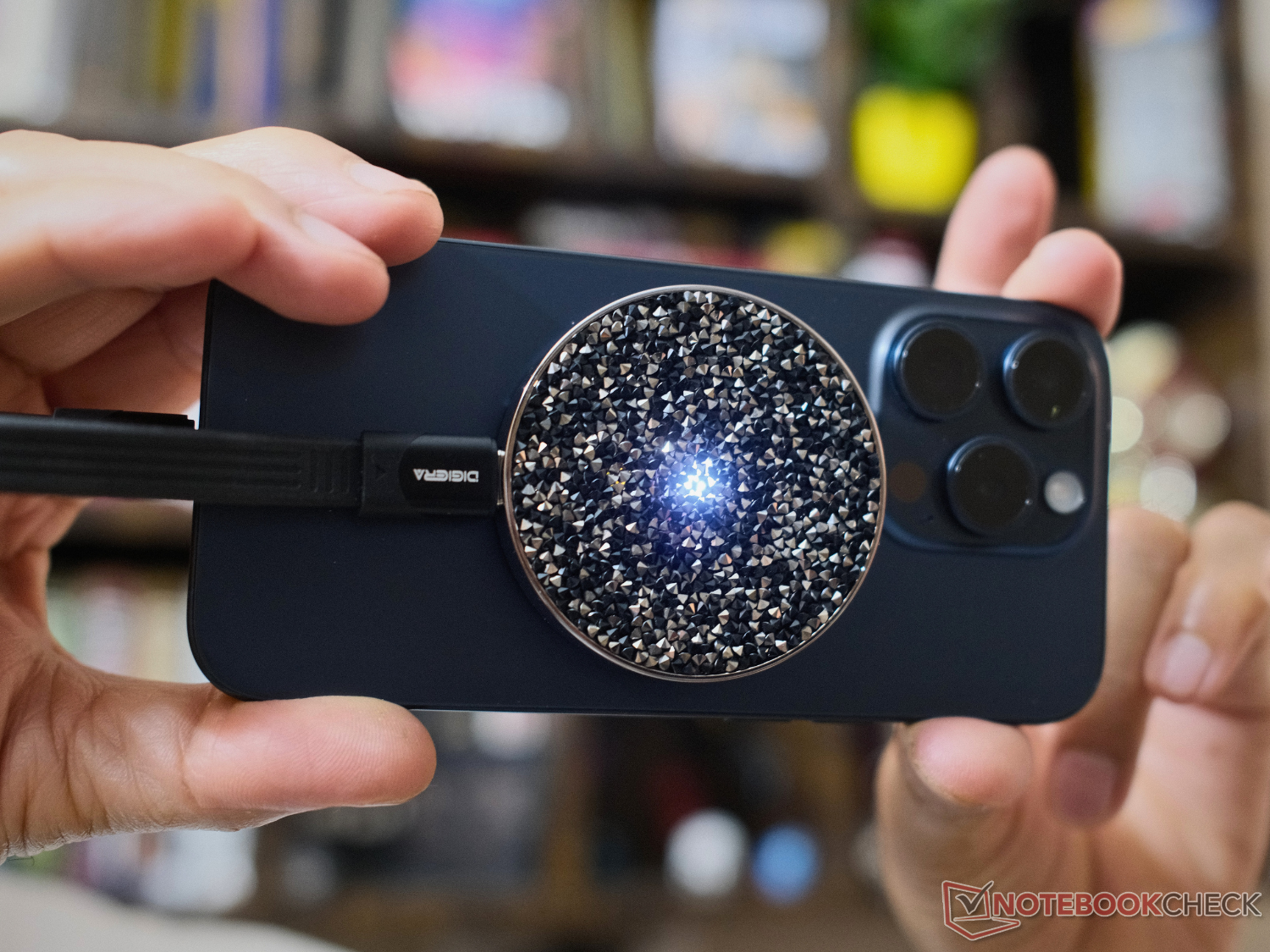
Digiera 1 TB Magnetic SSD hands-on review: $105 is enough for 4K ProRes
Affordable 1 TB video storage backpack
The Digiera LPS2000M MagSafe-enabled SSD acts as a solid storage backpack for the iPhone. It does away with pretty much every issue that complicates filming on smartphones. Granted, general hardware limits cap its advertised 2000 MB/s claim to 10 Gbps , but the $105 drive still handles 4K ProRes 60fps with ease.Anubhav Sharma Published
Verdict - A neat tool for filmmakers with a strong value proposition
The Digiera LPS2000M is a neat example of a "purpose-built" gadget. It's not the fastest drive for every user; instead, it focuses on solving the more specific ergonomic headache of mobile filmmaking/recording.
The primary compromise comes down to marketing vs. reality. While the "2000 MB/s" branding undoubtedly pops on a spec sheet, the reality for most buyers - especially the iPhone creators this is marketed toward - will be a steady 1000 MB/s due to hardware bottlenecks. However, since 1000 MB/s is more than enough to handle the 4K ProRes 60 fps bitrate without a hiccup, this limitation doesn't exactly hurt the user experience - but false advertising is false advertising.
However, the LPS2000M is still difficult to beat for value. It is more affordable than modular systems from Lexar or rugged options from SanDisk, yet it delivers the same essential performance for direct-to-drive recording. If you can look past the confusing "USB 3.0" labels and handle the heat that a compact metal puck inevitably generates, this is an excellent, budget-friendly addition to any mobile creator’s kit.
Pros
Cons
Price and availability
The tested 1 TB version of the Digiera Magnetic Portable SSD is currently available on the official Digiera website for $157.49, marked down from a price of $304.49. Digiera offers several other capacity variants, including a 512 GB model for $104.99, a 2 TB version for $293.99, and a high-capacity 4 TB model priced at $524.99. While standard color options are generally available through the manufacturer's store and Amazon, the Diamond Black variant (our test unit) is currently out of stock on the official site and can only be sourced through select third-party retailers such as DesertKart.

As mobile cameras improve, file sizes for professional formats like Apple ProRes are pretty much unmanageable for internal storage. The Digiera LPS2000M addresses this by snapping directly onto the back of an iPhone via MagSafe. Launched with an MSRP of $199.49 but frequently found for $104.99 (for the base 512 GB variant), this SSD is less about being a general-purpose drive and more about acting as a "backpack" for professional mobile videography.
Specifications
| Feature | Details | ||
| Interface | USB 3.2 Gen 2x2 (20 Gbps) | ||
| Connector | USB-C | ||
| Capacity | 1 TB (tested); 512 GB, 2 TB, 4 TB available | ||
| Read Speed | Up to 2000 MB/s (Advertised) | ||
| Write Speed | Up to 1800 MB/s (Advertised) | ||
| Dimensions | 58 x 58 x 11.8 mm | ||
| Weight | 46 g | ||
| Material | Metal casing | ||
| Attachment | MagSafe-compatible magnetic ring | ||
| Colors | Black, Pink, White, Gray, Diamond Black | ||
| Warranty | 3 years |
Design and build quality
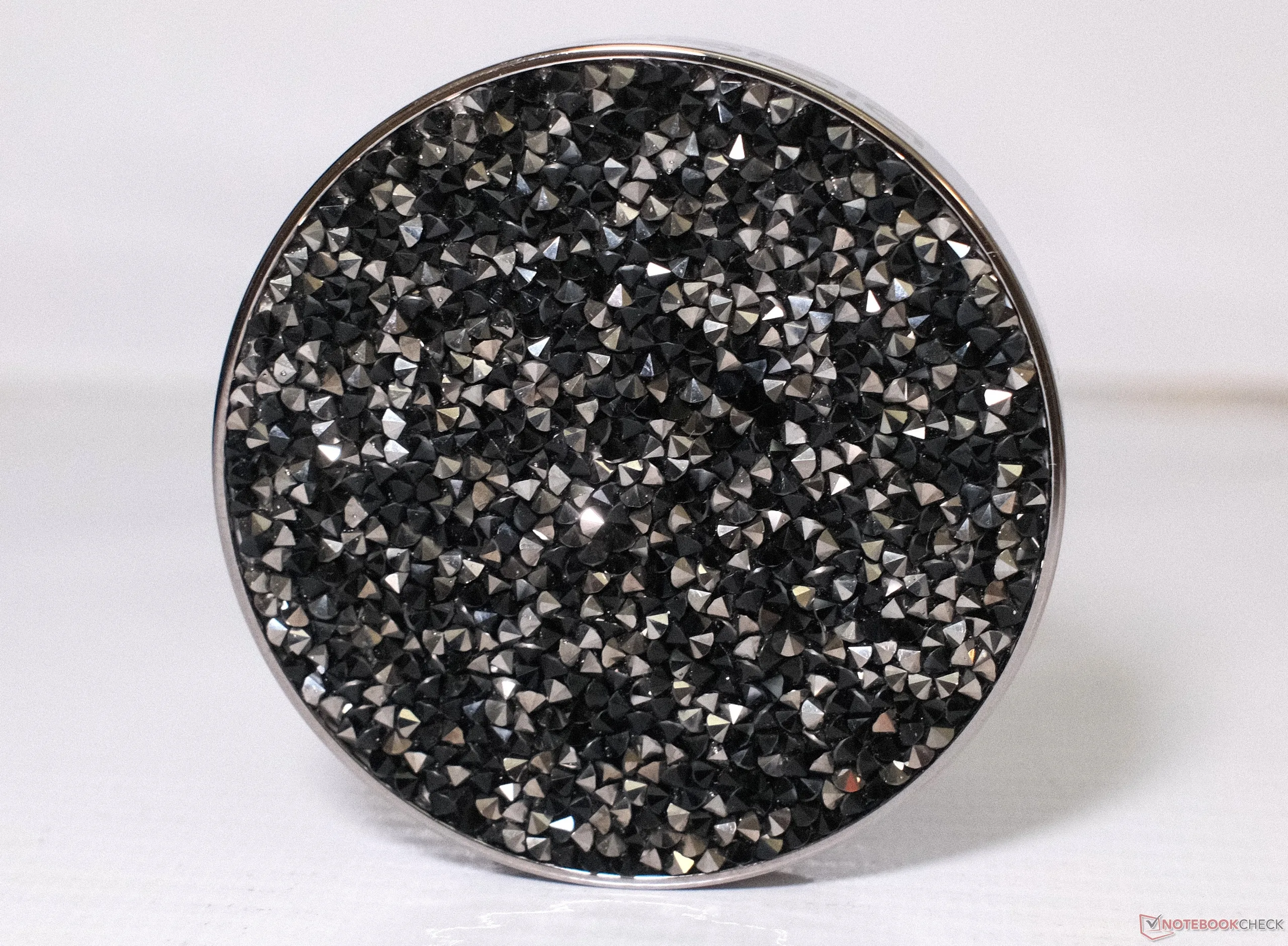
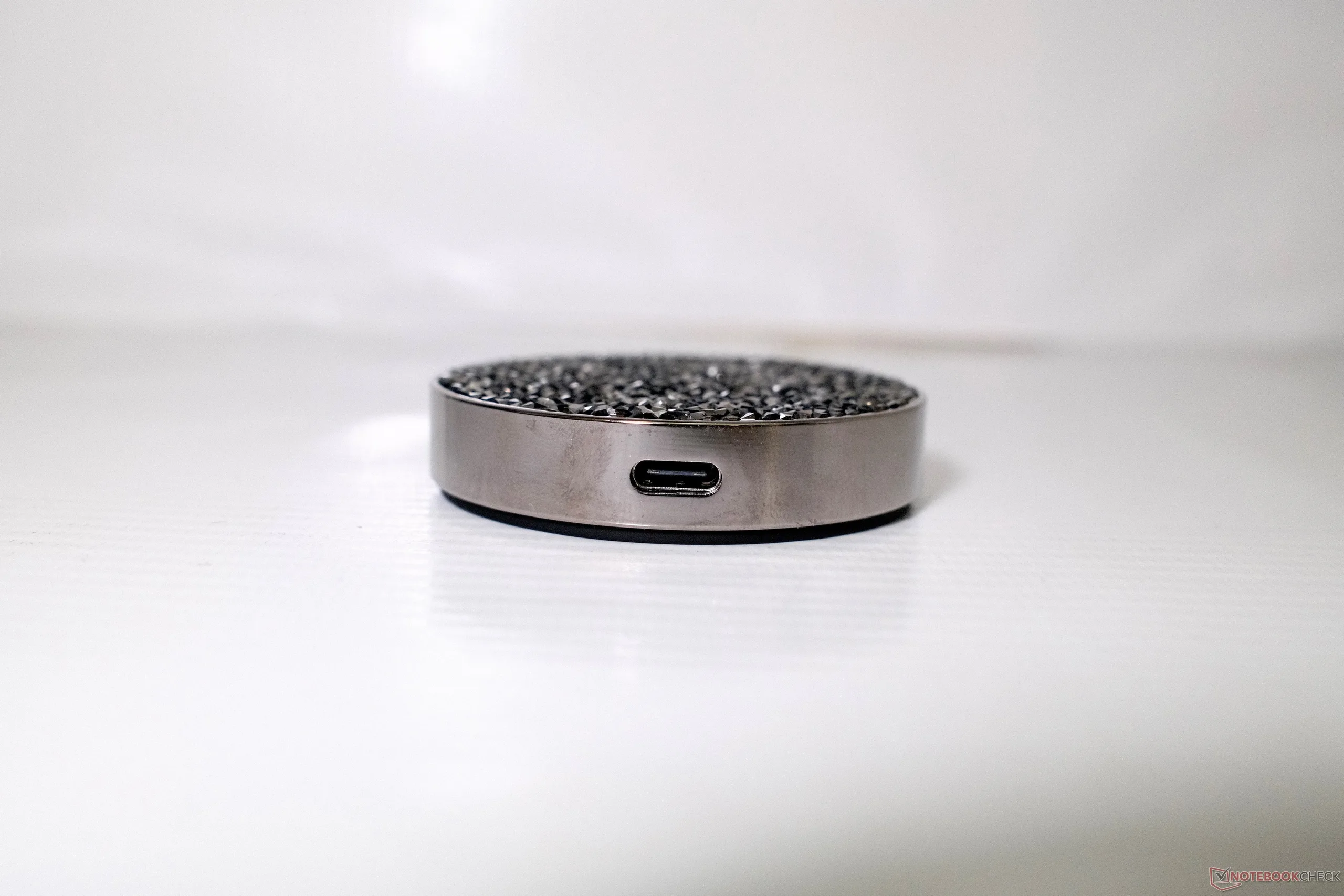
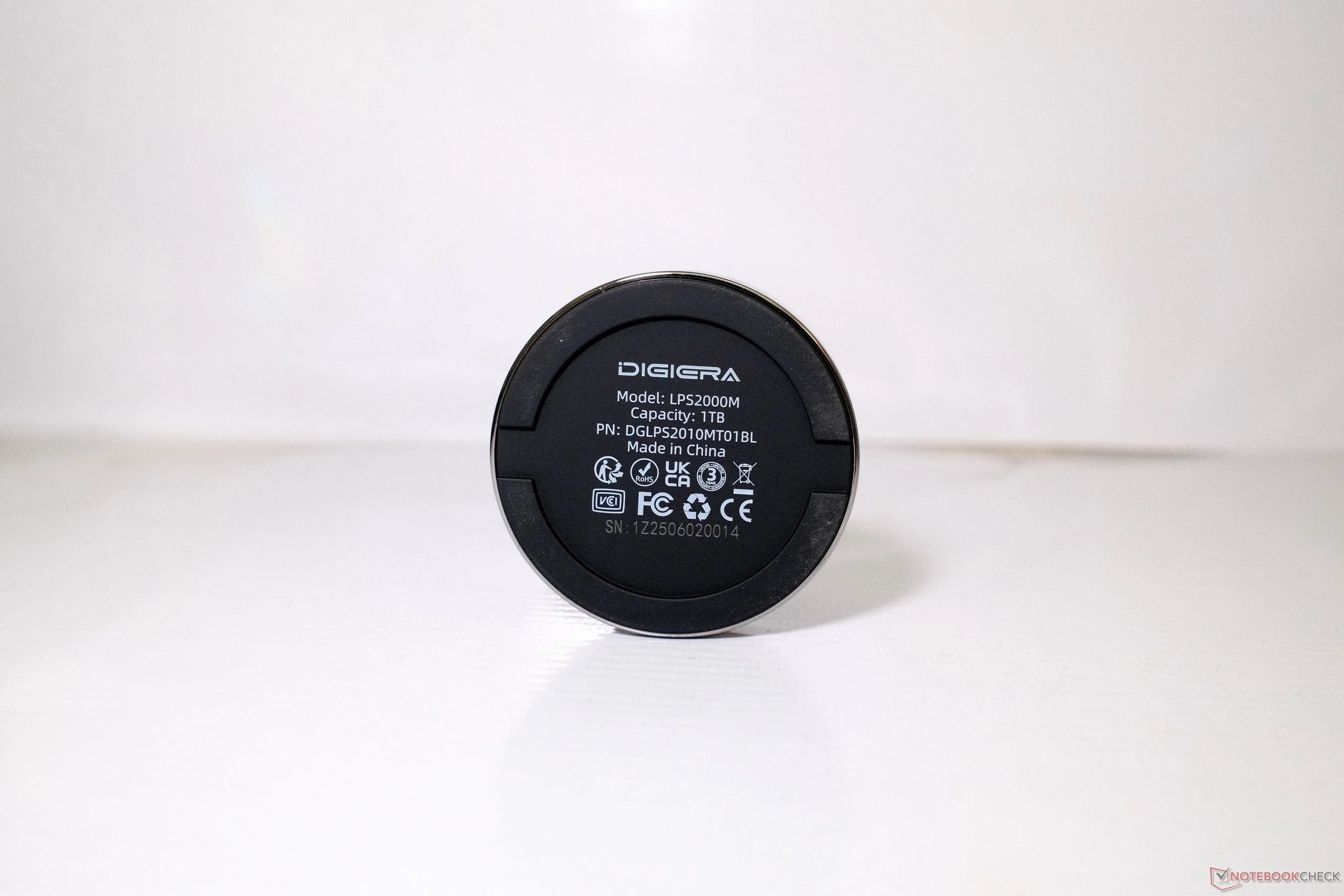
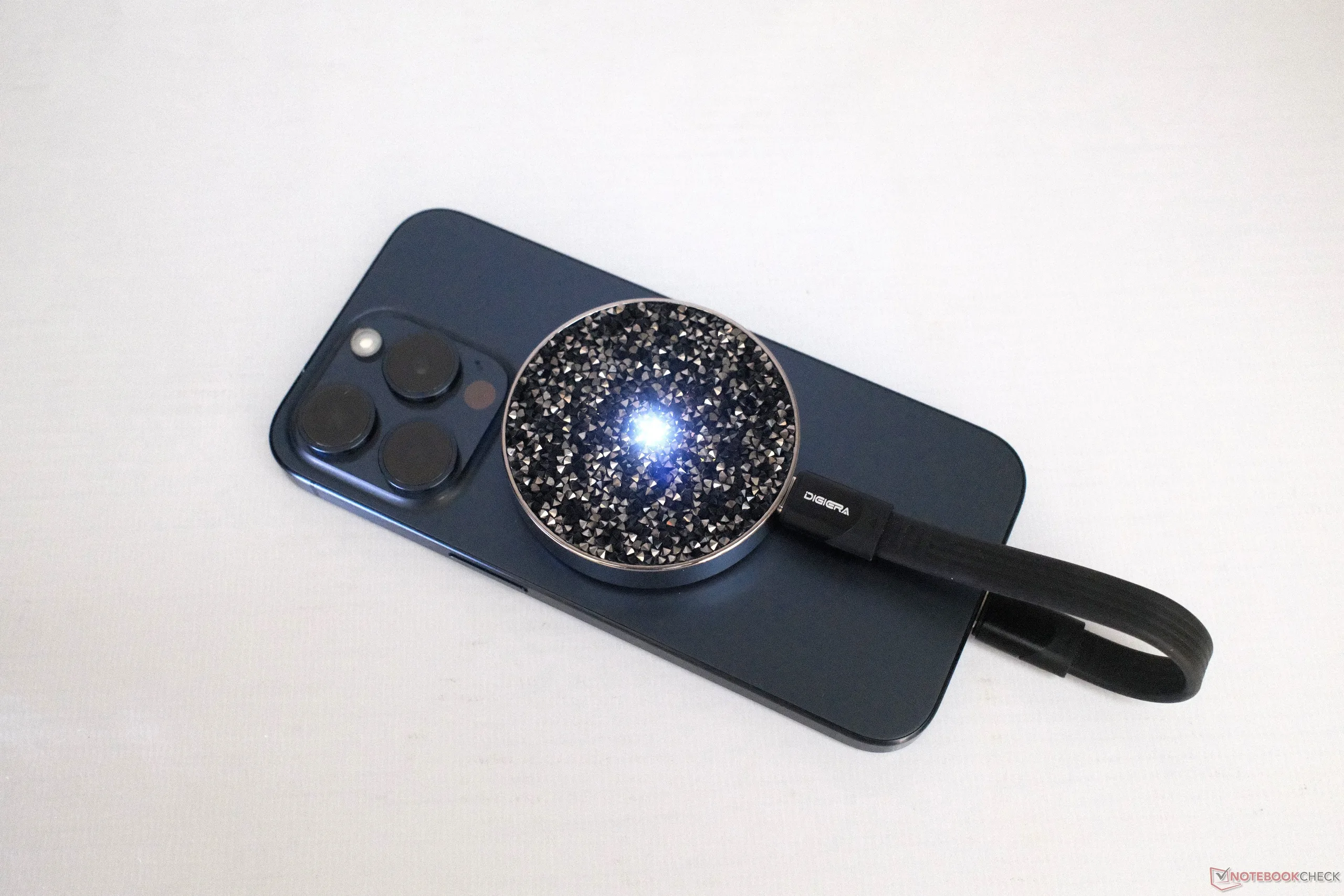
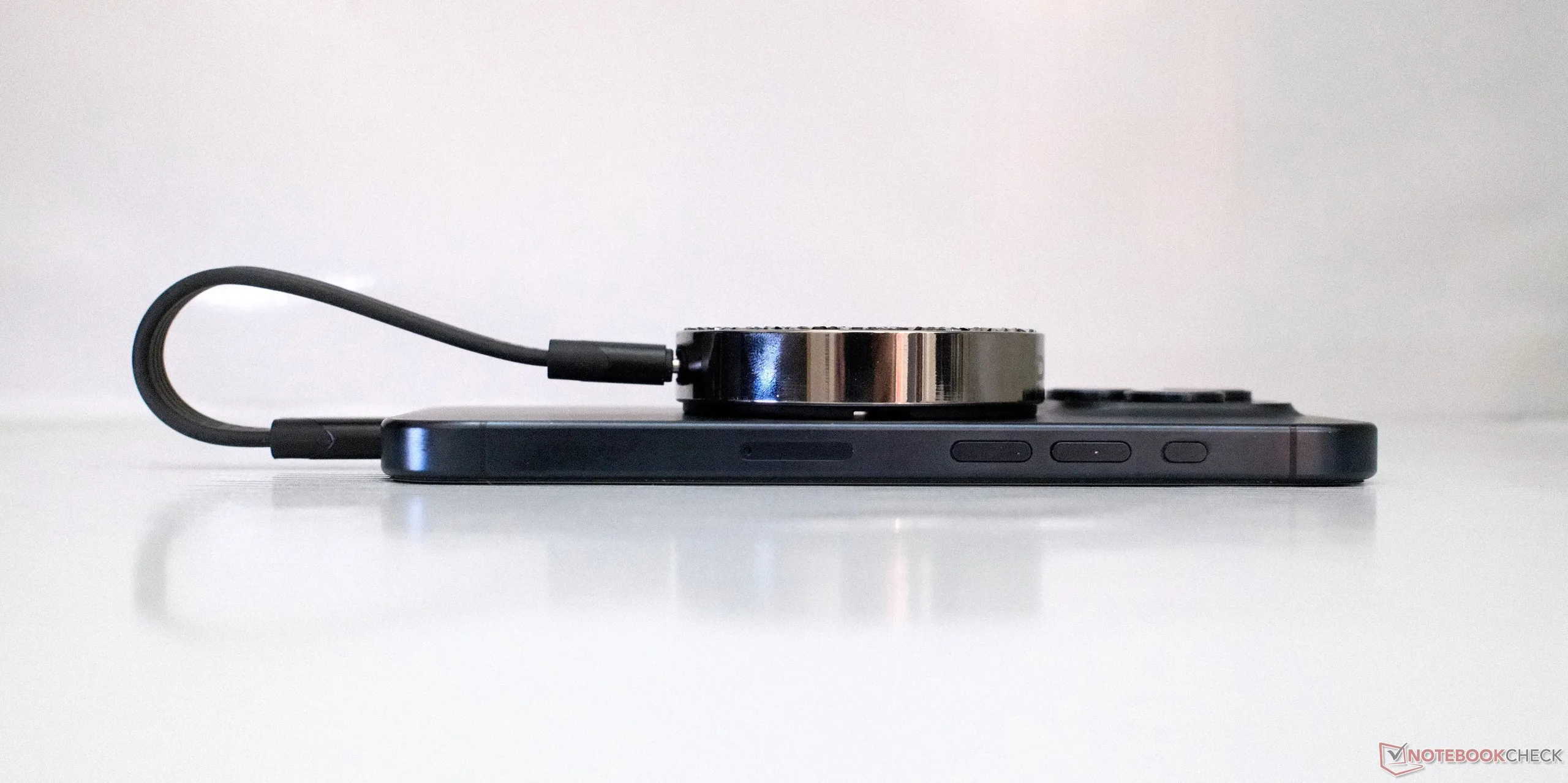
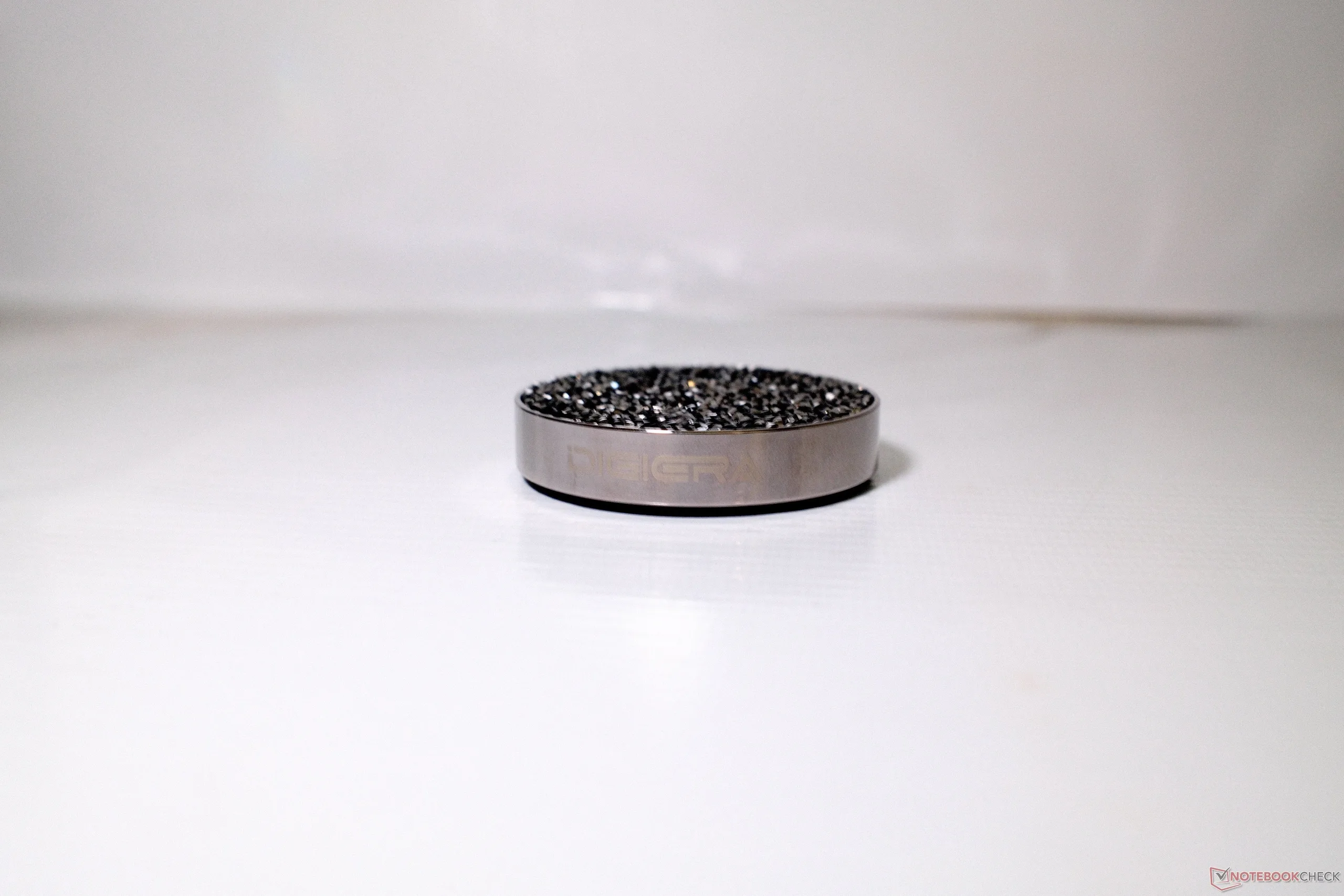
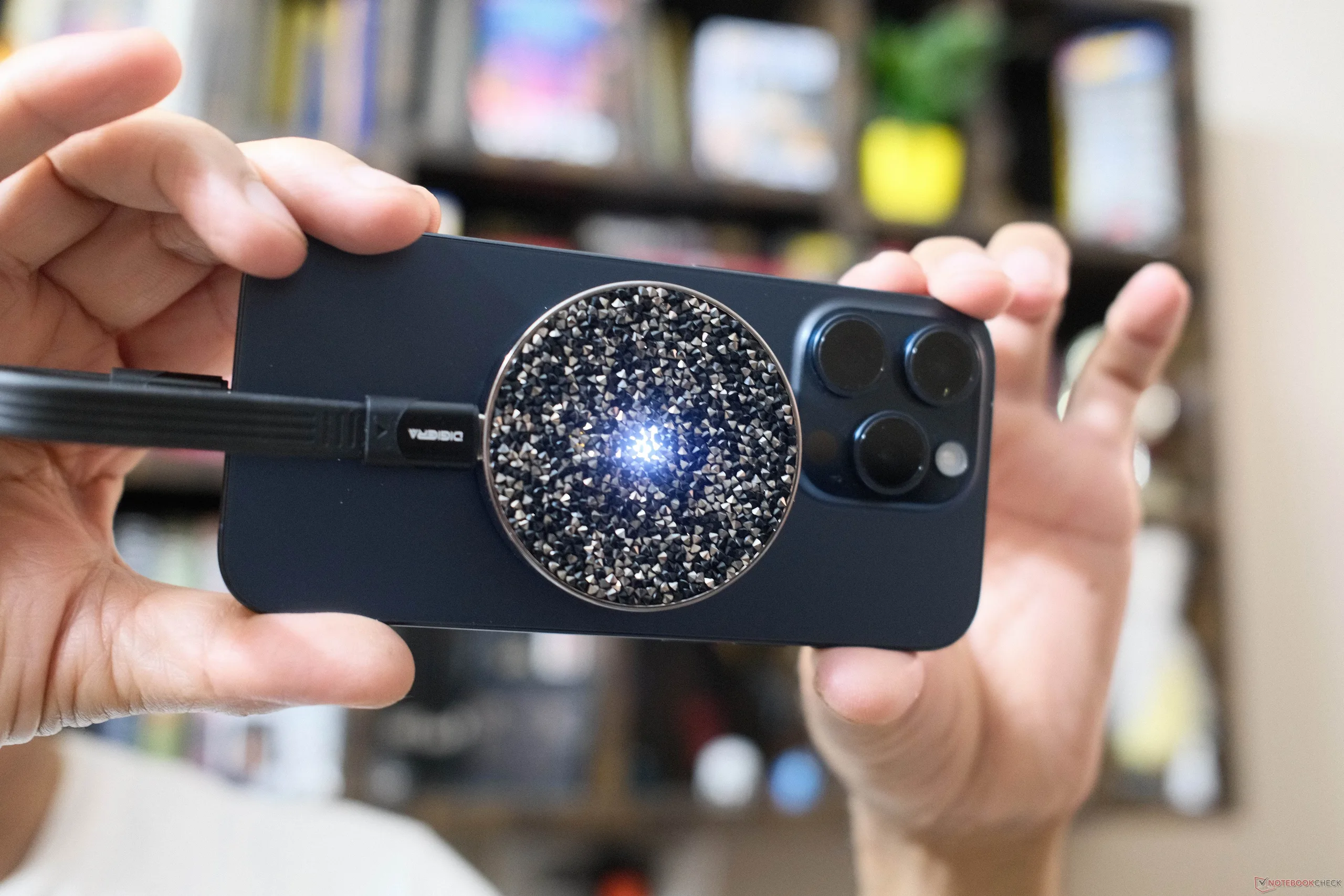
The LPS2000M features a circular, puck-like design with a metal casing that doubles as a heat sink. It is quite compact, measuring 58 mm in diameter and roughly 11.8 mm thick. Despite its small footprint, the magnetic attachment is strong enough to snap securely into place and remains very stable during handheld use without really shifting or detaching.
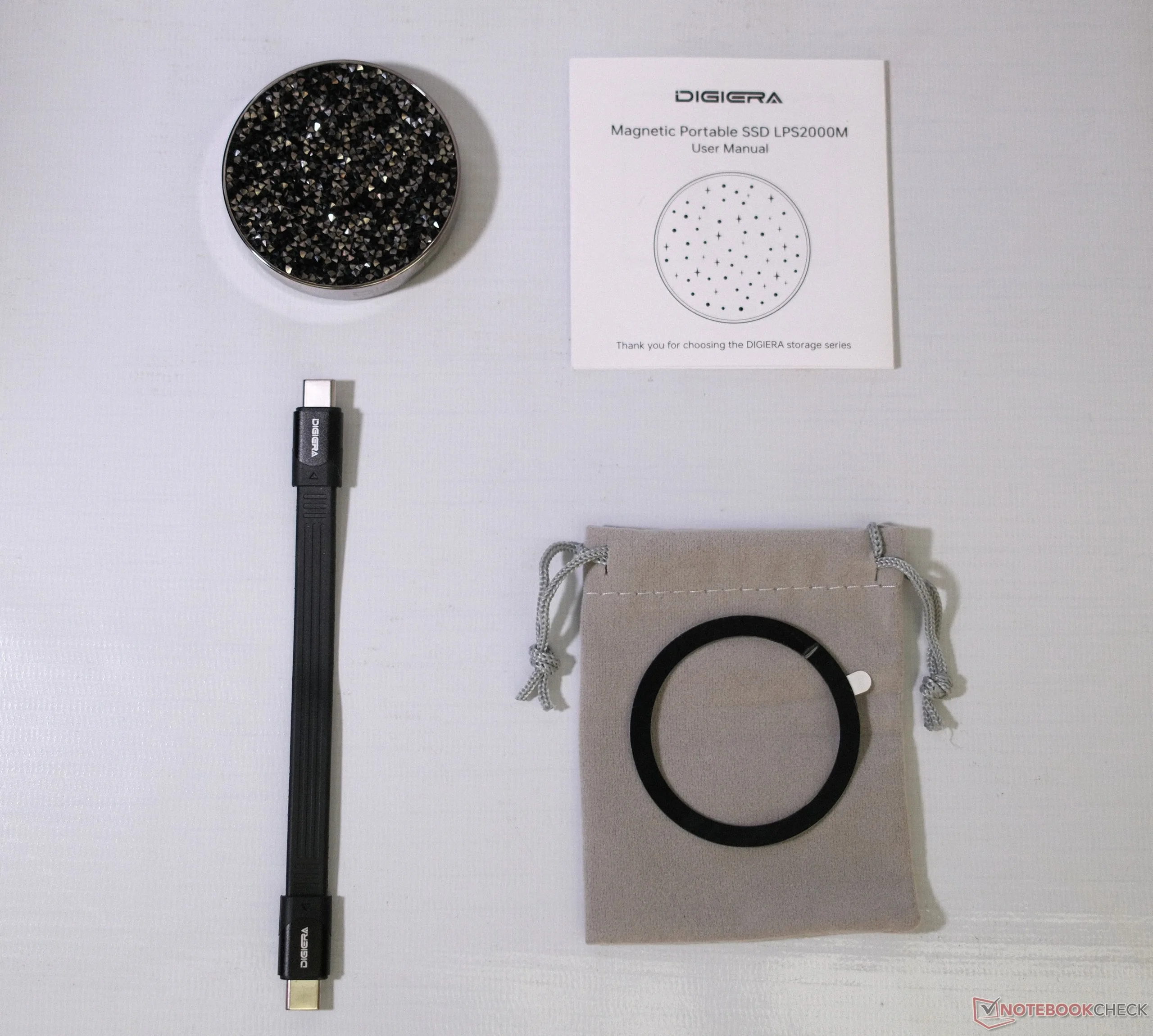
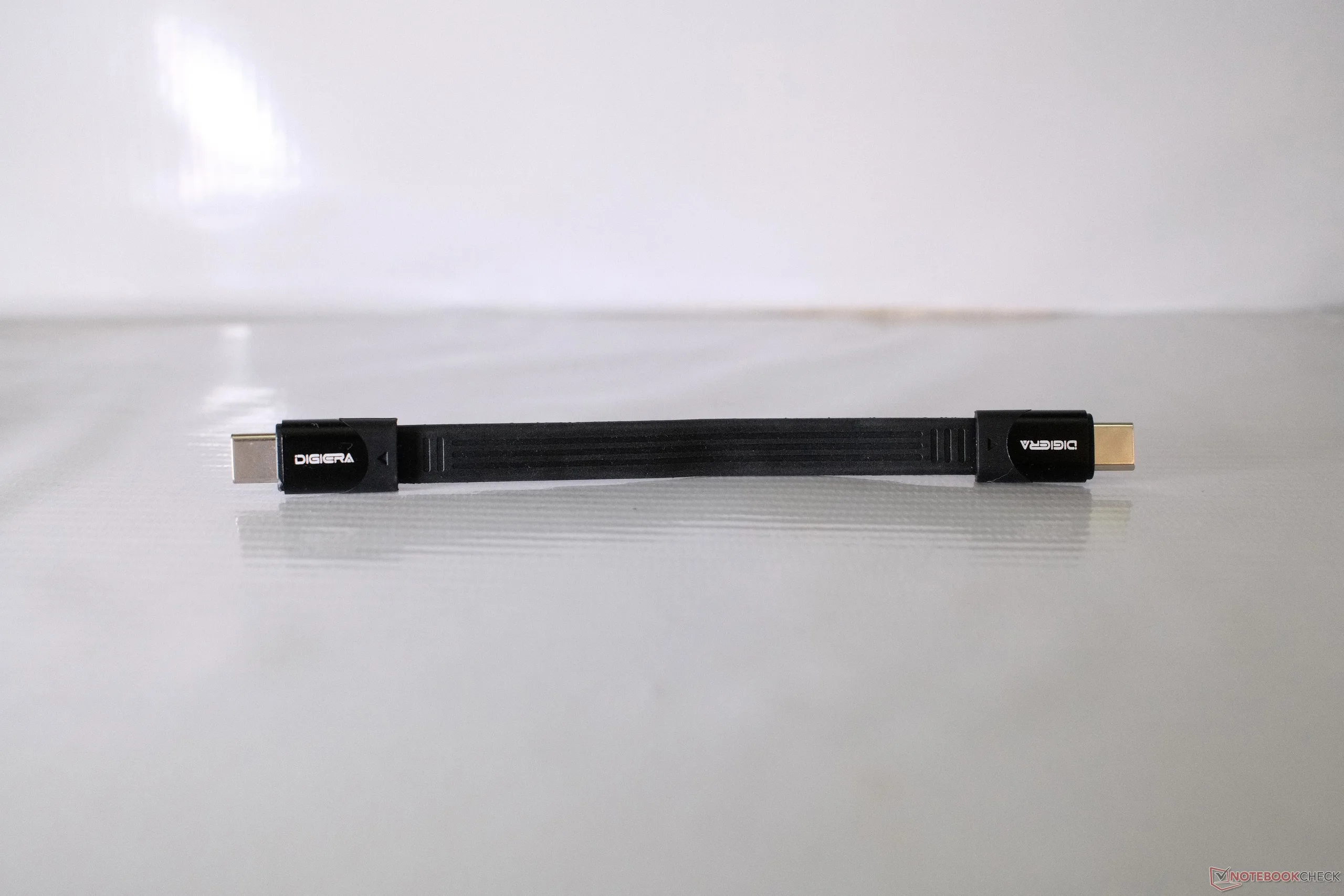
The unit ships with a short, flexible USB-C ribbon cable, alongside documentation and an additional magnetic ring. This design choice is key for mobile work, as it keeps the connection flush against the phone and prevents the drive from swinging and potentially damaging the iPhone’s USB-C port during a shoot.
Performance and USB standards
Digiera markets the drive with a big performance claim of 2000 MB/s Read and 1800 MB/s Write. However, there is a labeling discrepancy in the product documentation that lists the interface as "USB 3.0". For context, USB 3.0 (now 3.2 Gen 1) caps out at roughly 500 MB/s.
To actually hit the 2000 MB/s ceiling, the host device must support the USB 3.2 Gen 2x2 (20 Gbps) protocol. Since the iPhone 15 Pro (and onwards), plus most standard docking stations - like the Baseus Spacemate RD1 Pro - are capped at 10 Gbps, most users will likely see a real-world performance ceiling of around 1000 MB/s.
Benchmarks
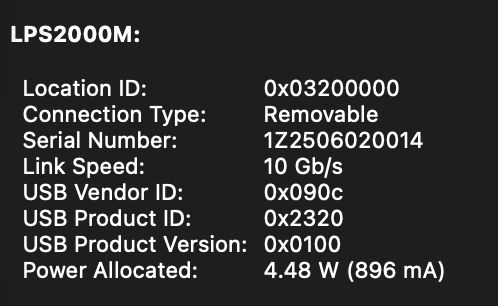
A closer look at the SSD reveals the Silicon Motion SM2320 controller (VID: 0x090c, PID: 0x2320) inside. This high-end, "Native USB" chip - found in the Kingston XS2000 - does away with bridge-chip bottlenecks, which means the drive can hit its theoretical transfer speed ceiling on 20 Gbps hardware.
To test the Digiera LPS2000M, we used two separate configurations to measure the "dock tax" and establish a performance baseline of sorts. Please note that USB 3.2 Gen 2x2 ports - required to hit speeds of 2000 MB/s - were not available on both the iPhone 15 Pro and the MacBook Pro M5 we used.
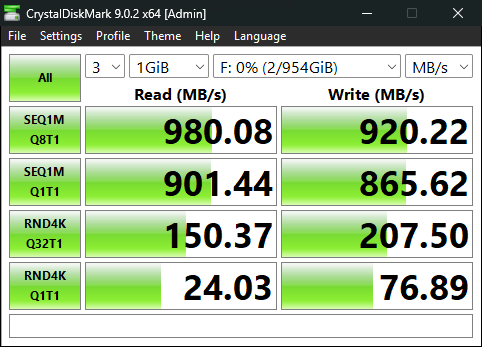
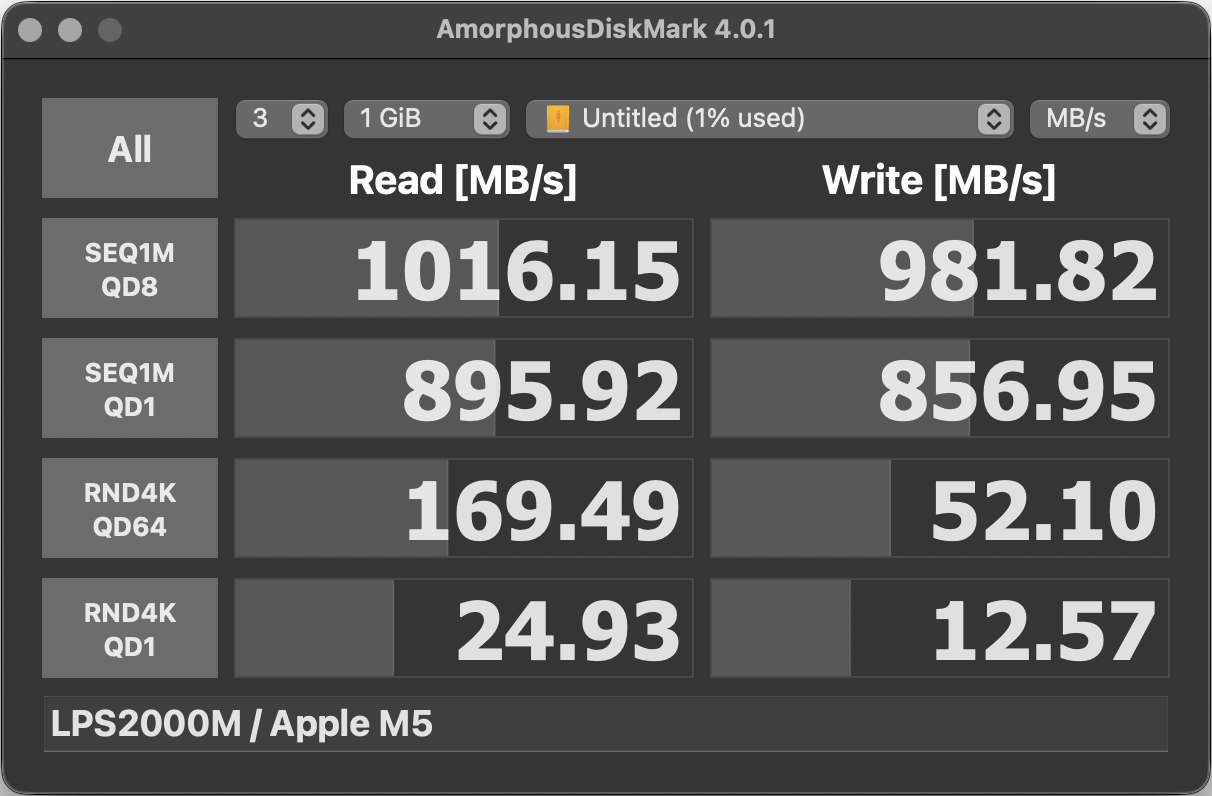
When connected directly to the MacBook, the drive achieved sequential speeds of 1,016 MB/s Read and 981 MB/s Write. These results are excellent, effectively saturating the 10 Gbps interface and proving that the internal controller is high-quality and not a bottleneck for high-bitrate video work.
Testing through the Baseus dock showed only a minor performance dip, with the drive hitting 980 MB/s Read and 920 MB/s Write. This implies a negligible loss in speed, and confirms that the Digiera SSD is a viable option for those who also want to use it as a desktop backup drive between filming sessions.
ProRes testing and thermals
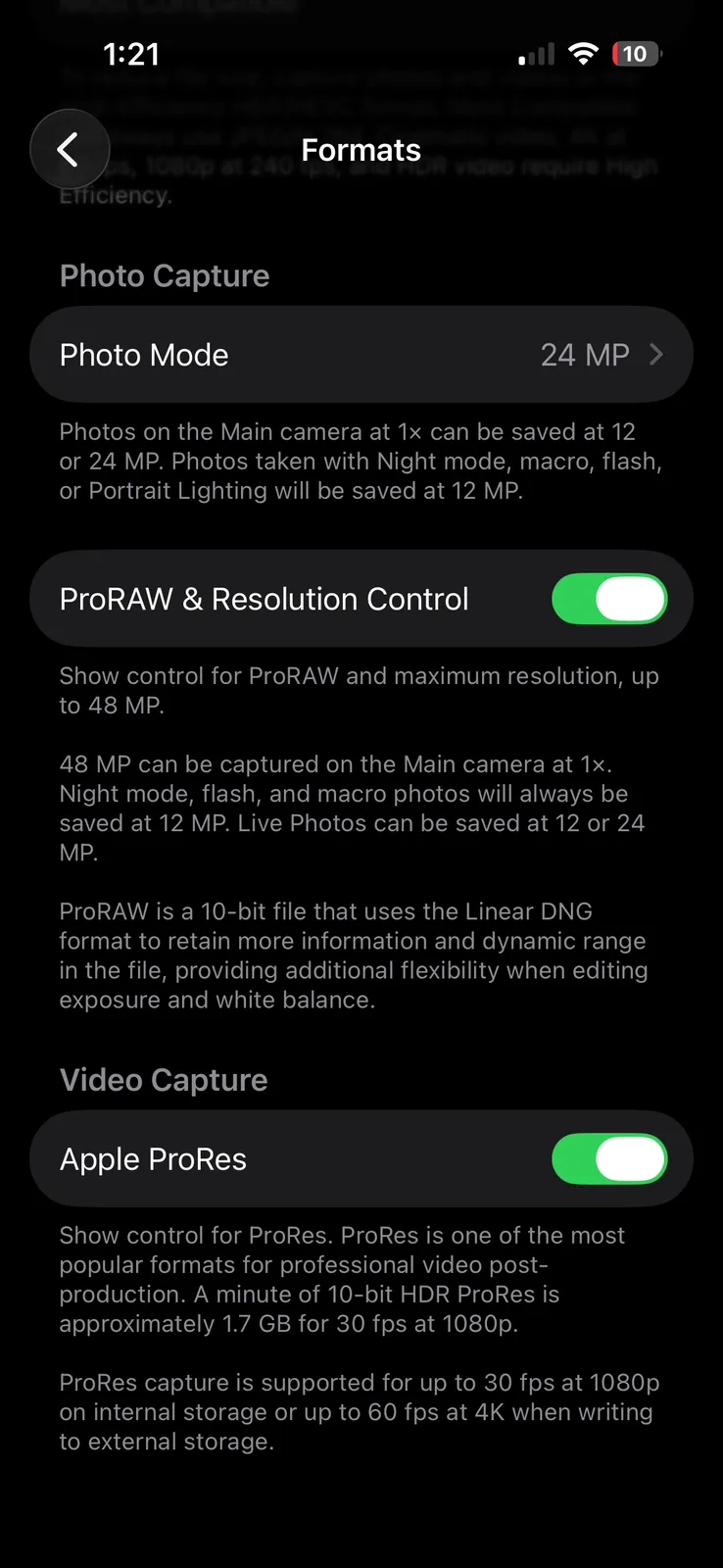
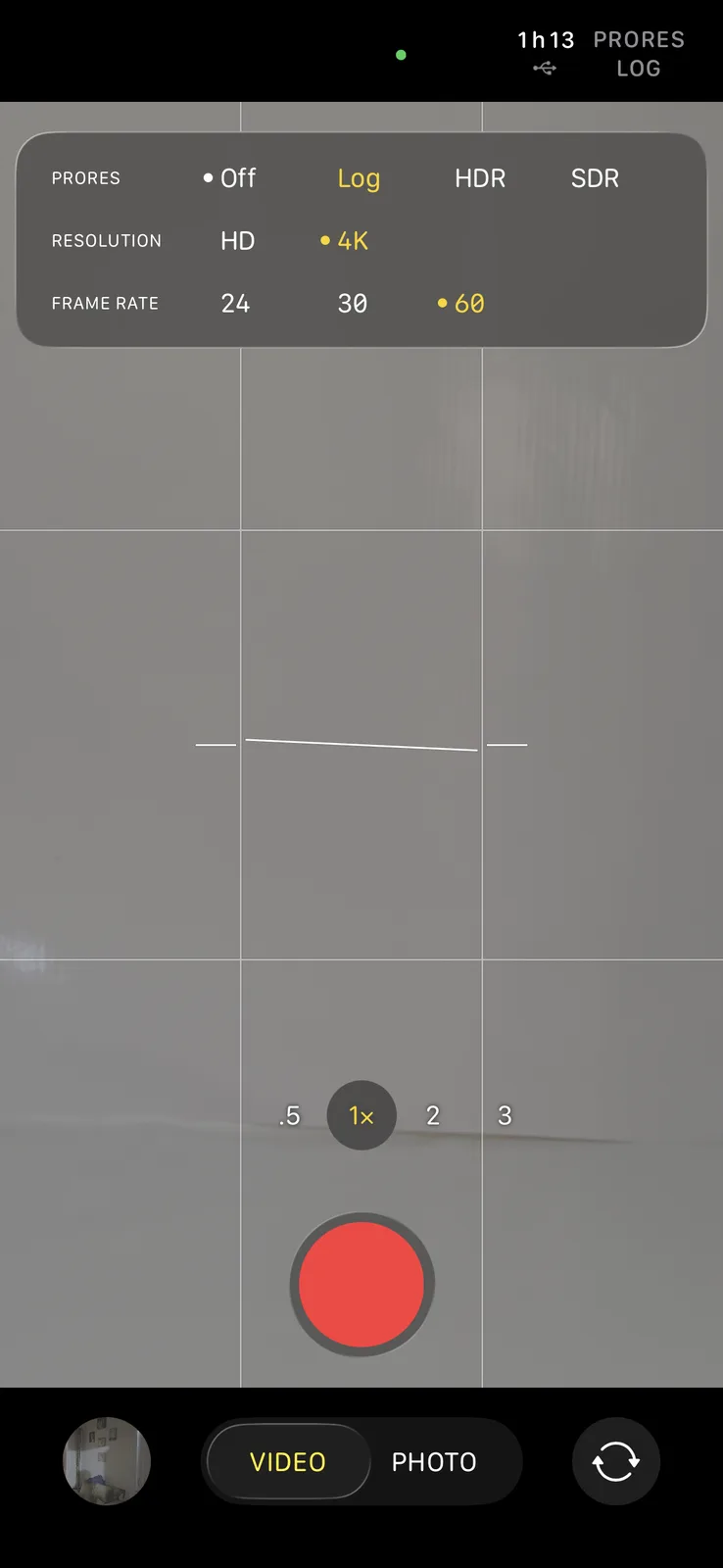
Testing with an iPhone 15 Pro confirmed that the drive is fully compatible with Apple’s ProRes 4K 60fps recording (see above). The system recognizes the drive as external storage immediately, so you can enable direct-to-drive recording without dropped frames or write errors.
Thermal management is a factor here. The metal casing gets noticeably warm during continuous recording sessions. While the metal does assist in dissipating heat from the 3D NAND TLC chips, the temperature is likely compounded by the heat generated by the iPhone’s own camera system during 4K capture.
Competing products
The Digiera LPS2000M does face some competition from established brands:
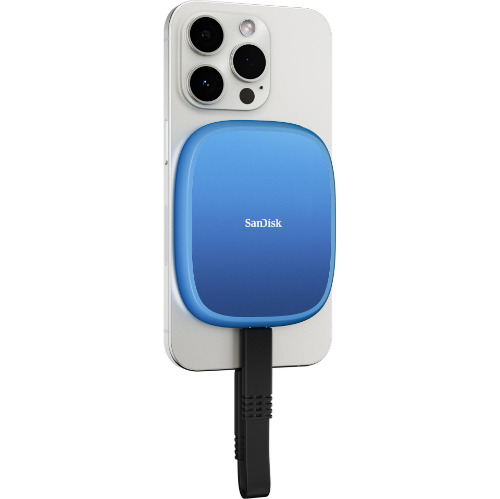
SanDisk Creator Phone SSD: Retailing for ~$130, this gets you similar 1000 MB/s real-world speeds but adds a tough shell with a 3-meter drop rating.
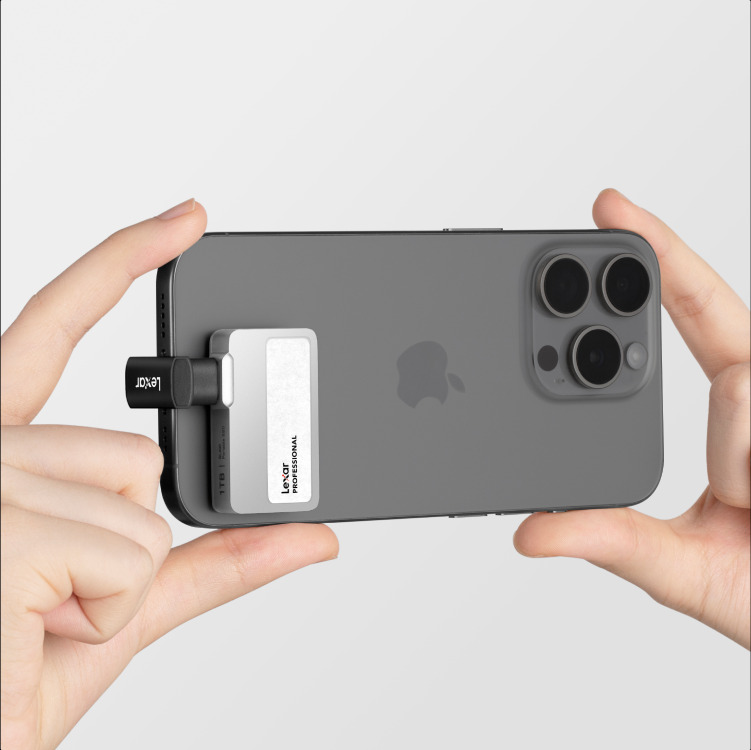
Lexar Professional Go: At ~$230, this modular system is a bit more expensive, but includes a hub for simultaneous charging and recording.
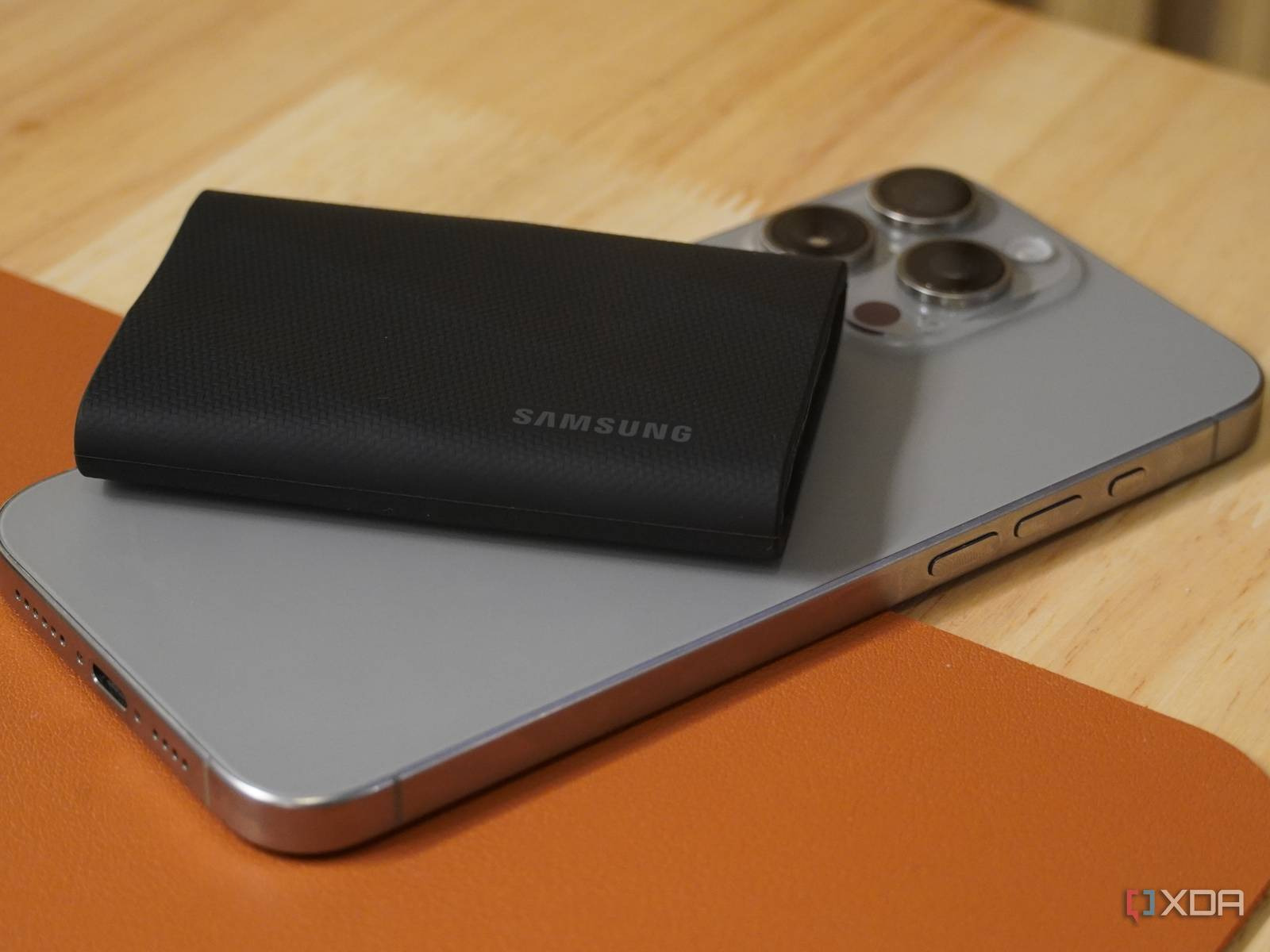
Samsung T9 / Crucial X10 Pro: Priced between $140 and $230, these drives hit the advertised 2000MB/s more consistently but lack MagSafe, requiring a separate cage or mount to stay attached to your phone.
Conclusion
The Digiera LPS2000M is less of a standard storage drive and more of a permanent "ProRes backpack" for the iPhone. Sure, the 2000 MB/s branding will hit a hard 10 Gbps ceiling on most mobile hardware, but the rock-solid MagSafe grip and the design of the Diamond Black edition get you both function and personality. Even established brands currently lack some of these traits at a price point this low.
Transparency
The selection of devices to be reviewed is made by our editorial team. The test sample was given to the author by the manufacturer free of charge for the purposes of review. There was no third-party influence on this review, nor did the manufacturer receive a copy of this review before publication. There was no obligation to publish this review. As an independent media company, Notebookcheck is not subjected to the authority of manufacturers, retailers or publishers.
 Add as a preferred source on Google


