




DR DOS keeps the MS-DOS legacy alive with a new update
Back in the 1970s, the operating systems market was far less intriguing than today. Back then, there was no Android, no Windows, and no Linux. CP/M arrived in 1974 and, by the end of 1981, had sold over 250,000 licenses. In 1981, Microsoft entered the market with MS-DOS, which it initially developed alongside IBM's licensed version, PC DOS. In 1988, DR DOS joined the market, and it remained active until today, when the tech landscape is all about AI, crypto, advanced graphics interfaces, and much more.
The first DR DOS release was labeled 3.31, to match the MS-DOS version available at that time. In 1990, DR DOS became the first to be sold in retail with version 5.0, which proved to be successful enough to make it the main competitor to MS-DOS. After being sold a few times, it ended up with Whitehorn Ltd. Co. in 2022, and it received regular updates ever since.
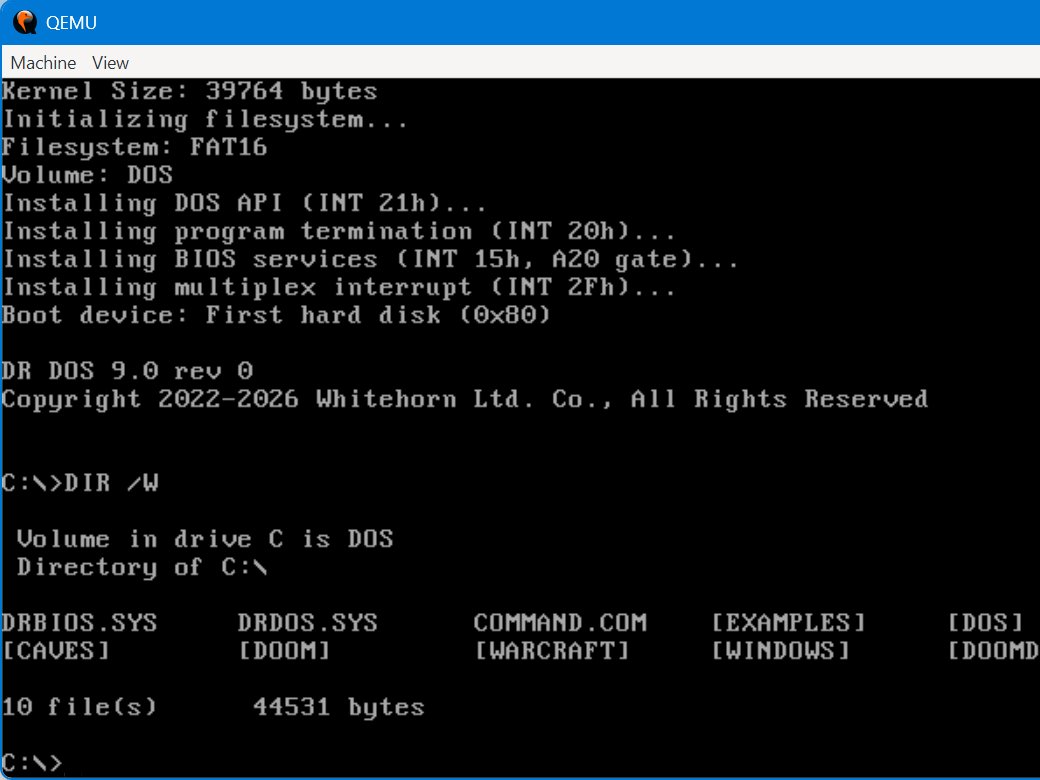
The latest version, labeled 9.0 Revision 648, arrived last Saturday. The first 9.0 release of DR DOS came with a "from scratch" rebuild with a few unique features that make it a perfect choice for hackers and developers alongside fans of retro computing. The system uses no legacy code and was rebuilt entirely in assembly language.
In addition to the old-school commands like DIR, CD, COPY, MOVE, and so on, DR DOS 9.0 also comes with a full-featured editor with colored display, keyboard shortcuts, and clipboard support; HEXDUMP for debugging, as well as PEEK, POKE, and JMP, three commands that can be used for direct memory manipulation and code execution. Microsoft's DOS implementation didn't offer anything similar.
DR DOS is not open source, although it can be downloaded for free. It requires an Intel 386 processor or higher, 2 MB of memory, a VGA-compatible display adapter, FAT 12/16 media, and a BIOS with LBA/CHS disk addressing capability. Obviously, it also runs on virtual machines such as QEMU, VirtualBox, VMware, and so on.
However, those who need a cheap computer that can also run Windows 11 and maybe tinkle with DR DOS in a virtual machine as well can grab the renewed Lenovo ThinkCentre M910q off Amazon for just $162.08. This mini PC comes with 8/256 GB of memory/storage and is powered by the Intel Core i5-6500T processor.
Source(s)
 Add as a preferred source on Google


