




Cybercab launch signals the end of human drivers as Tesla opens fleet purchases for 'safest car on the road'
Tesla has finally launched the Cybercab, its revolutionary robotaxi that doesn't even have a steering wheel or pedals but has a built-in Starlink dish, to the general public. Rides started at 5 PM in Austin, Texas, and cover all the current Tesla Robotaxi platform area with "competitive pricing." This includes both the fee per mile and the Cybercab price itself, as Tesla has opened an order form for bulk fleet purchase requests.
Cybercab safety
At the launch event, Tesla executives called Cybercab the safest car on the road, pointing to the one million unsupervised robotaxi miles that the platform just clocked as evidence. The company frames its bet on an AI camera driving stack, arguing that predicting what happens next on the road isn't something any sensor alone can do. One presenter described the car smoothly yielding to an elderly pedestrian crossing a busy road as an example of that behavior.
Airbags include front, knee, seat-mounted side, inner side, and curtain, and both doors have mechanical emergency releases as a backup. A radar module above the dome lights forms the Occupant Classification System, reading seat status as empty, child seat types, larger child, or adult to set front airbag behavior; there are no ISOFIX anchors, so child seats route through the seatbelts.
Ride comfort and cargo
The cabin dimensions include a 16.5-inch height for stepping into the vehicle, 43.4 inches of legroom, 38.3 inches of headroom, and 50.1 inches of hip room in a vehicle that is 55.4 inches tall and 69 inches wide with decent 5.7 inches of ground clearance. The trunk holds 20.2 cu ft (572 L) and is rated for 220 lb (100 kg), which should be enough for two checked suitcases and two smaller bags, or one folded stroller and one folded wheelchair. Seats recline independently but move front and back together as Tesla recommends to stay belted and with a seat recline under 35 degrees.
Sensing hardware includes eight exterior cameras plus a ninth cabin unit that checks for cleanliness and lost items between rides, shown by a green touchscreen indicator when active. On pickup, the car restores cabin temperature, seat position, and media accounts from the rider's cloud profile automatically. The Robotaxi app doubles as a remote extension of the car over the local network, letting riders start media before boarding, while a matching light color on the front lightbar and the app compass help identify the right vehicle.
Tesla positions the cabin as a "second living room" for entertainment or work. Voice assistant Grok, invoked by "hey Grok," is integrated with vehicle and ride functions. The UI itself runs on Epic's Unreal Engine, each seat gets a USB-C port and independent airflow control, and personal media accounts are wiped once a trip ends. Dynamic pricing is meant to balance supply and demand, with wait times expected to fall as the fleet grows.
Cybercab efficiency specs and charging
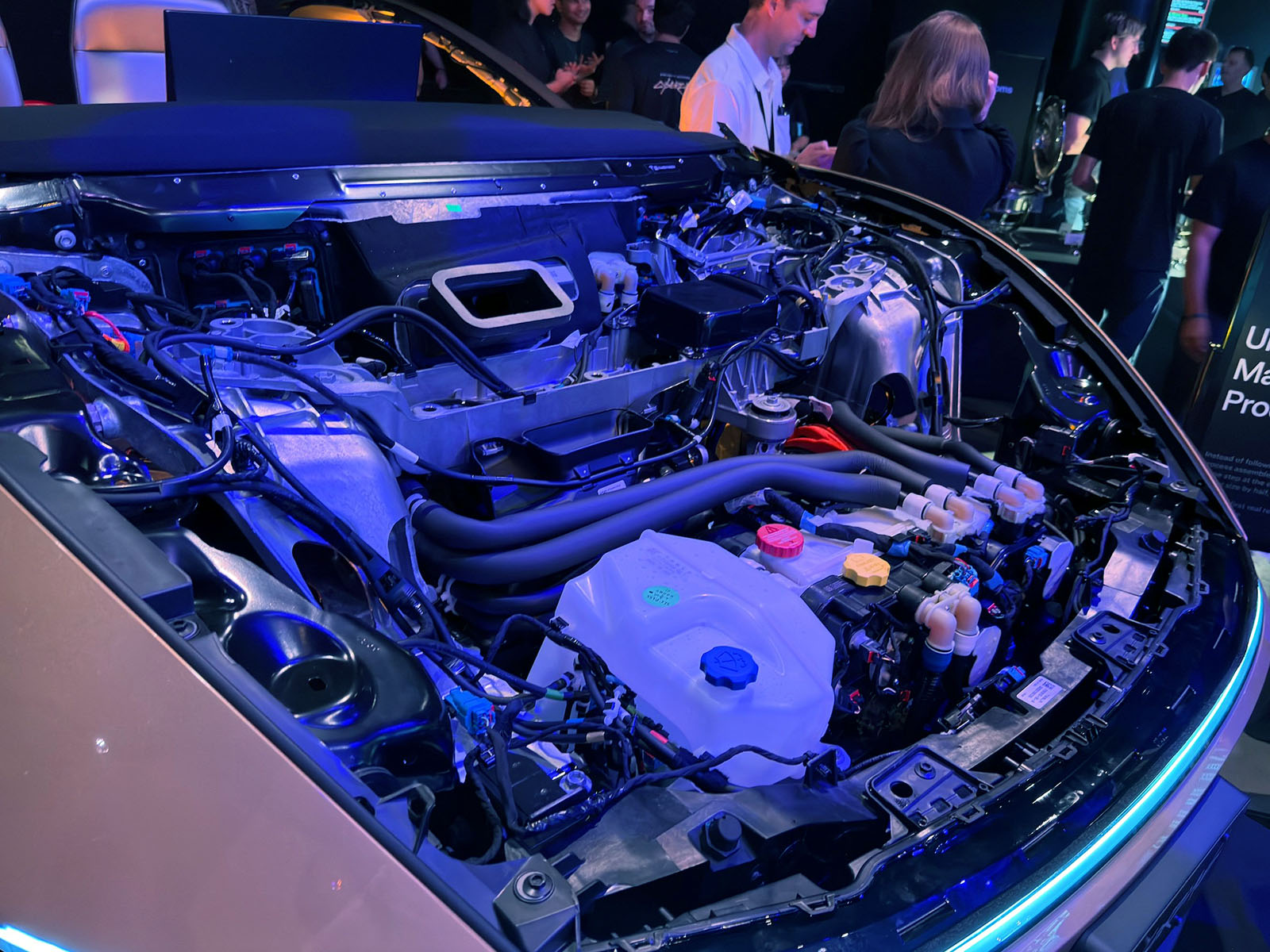
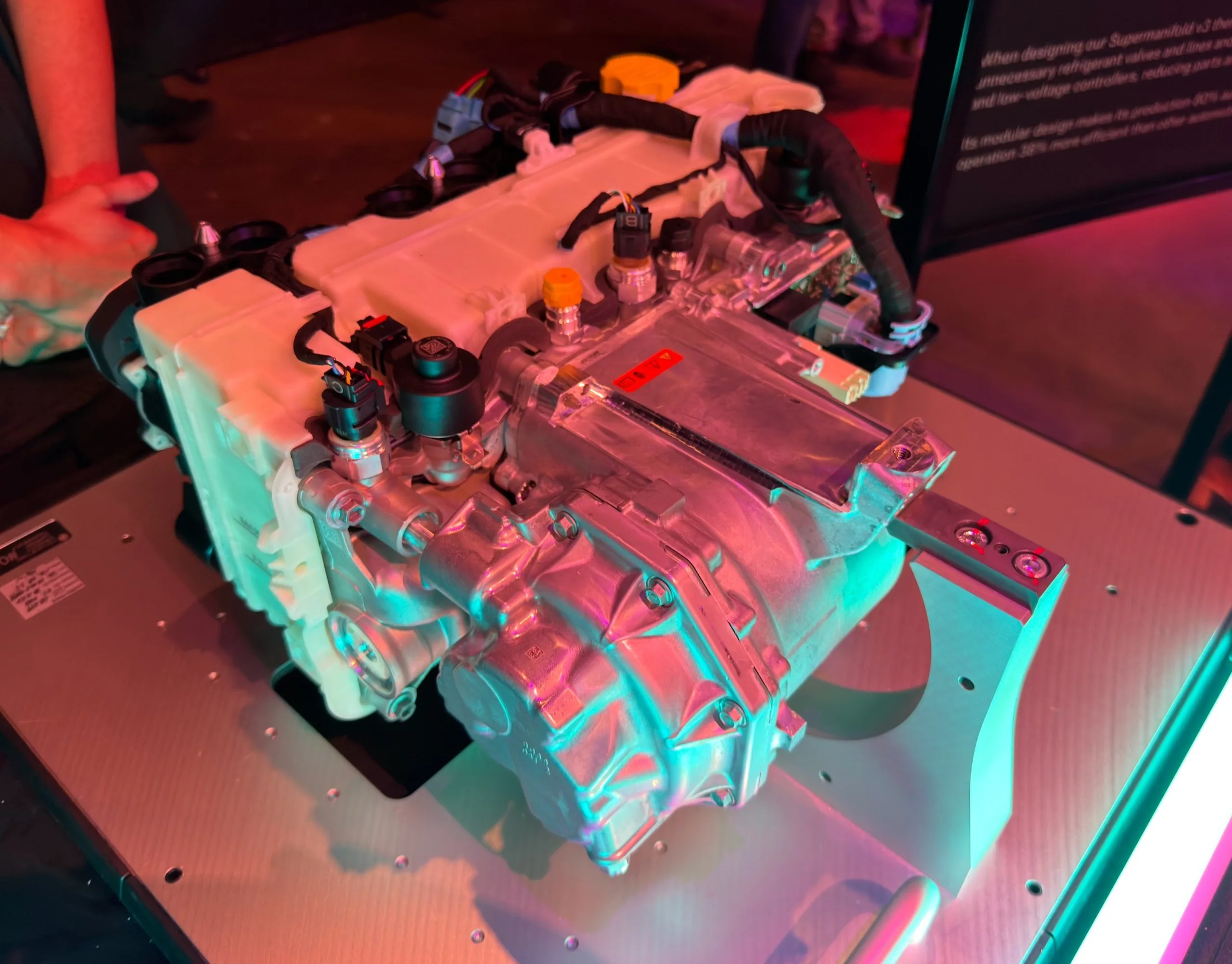
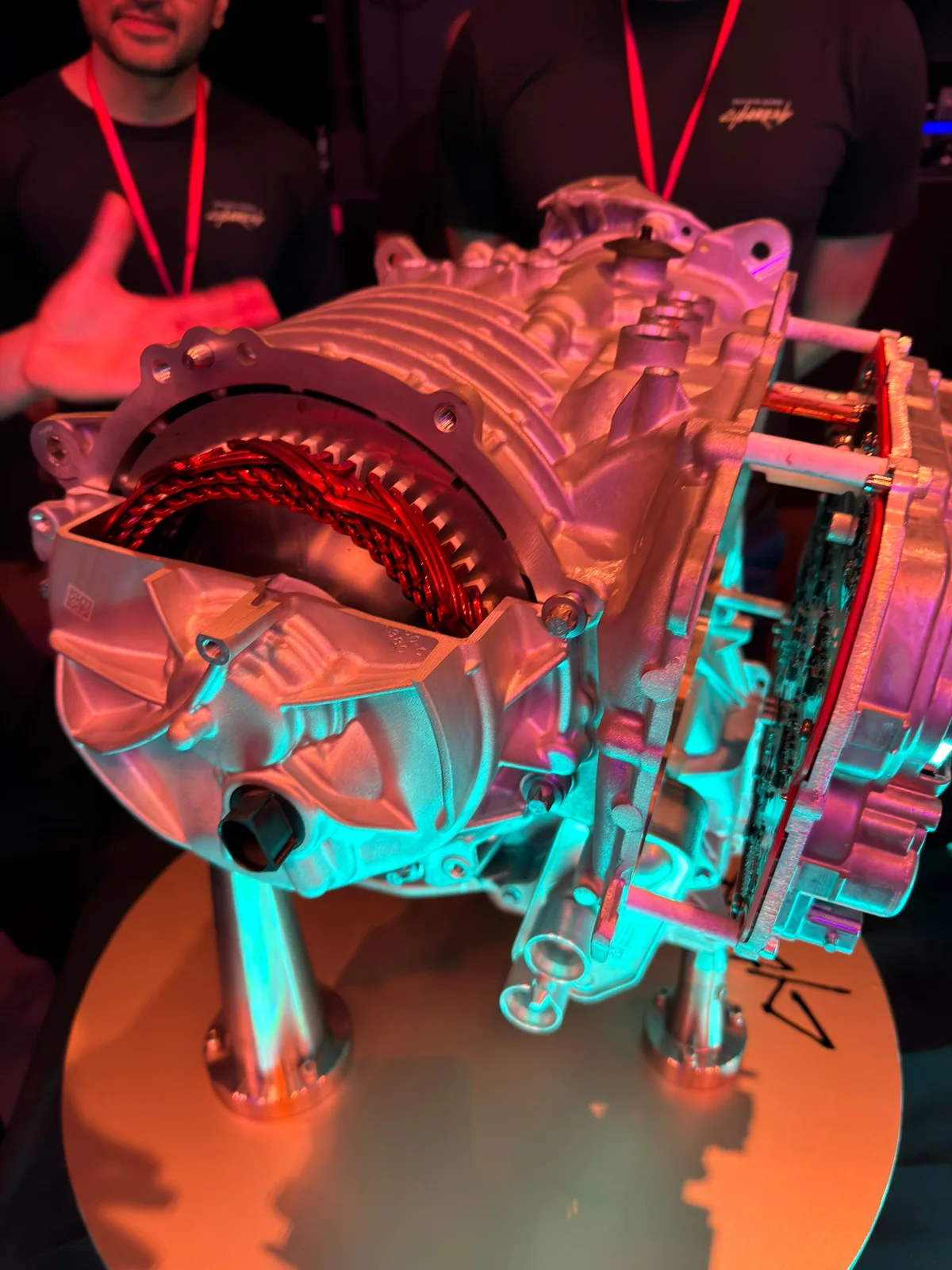
Cybercab is the first Tesla with brake-by-wire and no brake fluid and the first with Tesla's Supermanifold V3 thermal system, which consolidates high- and low-voltage controllers, cuts redundant refrigerant lines, and is claimed to be 38% more efficient and 80% automatable to build. The drive unit is built for two-passenger rides, which Tesla says make up over 80% of trips, and uses a simplified bar-wound stator for a unit 18% smaller and 25% lighter than top competing EV drive units, engineered for sub-10-second automated assembly. The claimed drag coefficient is under 0.2, explaining the Cybercab's shape.
Manufacturing uses Tesla's so-called "unboxed" process, a glorified parallel modular assembly that replaces a single conveyor belt. The line's footprint is thus cut by roughly 50% while raising output and shortening cycle times, but, of course, the barebones Cybercab has a rather simpler assembly. Exterior panels use a reaction injection molding process with recycled material, skipping a traditional paint shop.
Charging is the one area that remained a relative mystery during the Cybercab launch, though. Tesla's end goal is using inductive pads with ultra-wideband alignment, but with such infrastructure not yet widespread, current Cybercabs use a conventional NACS port to run on the existing Supercharger network that could eventually be equipped with wireless charging pads, too.
Get the Tesla Universal Wall Connector EV Charger with Dual Plug on Amazon
Source(s)
 Add as a preferred source on Google


