




BMW asked students to build a car that makes more energy than it uses — two years later they pulled it off
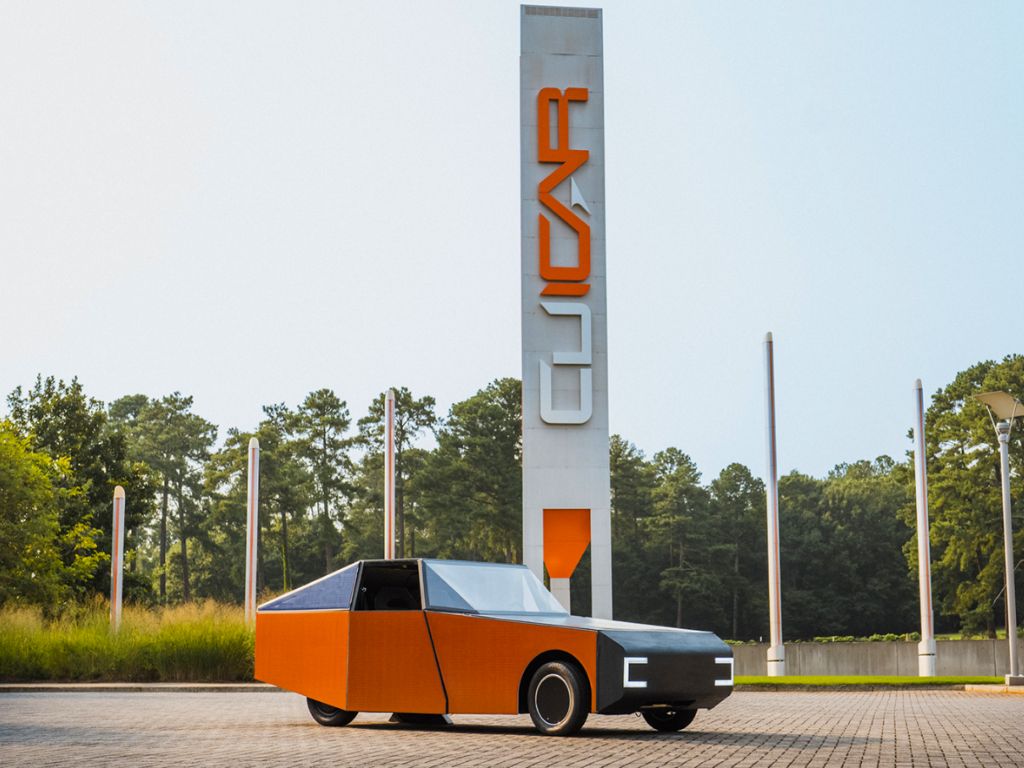
In fall 2024, BMW set students at Clemson University an unusual challenge. They were asked to build an electric car that generates more energy than it uses during a daily city commute. Nearly two years later, the students revealed a strange-looking prototype. The Clemson team officially called it the Deep Orange 17 and nicknamed it the Luminetta, a name meant to evoke both its solar capability and its retro-modern styling. The two-door coupe looks like a shoebox. However, underneath its goofy exterior lies some ingenious engineering.
BMW sponsored the project through Clemson's Deep Orange program, and the company was just as eager to see it come to fruition. Stephan Augustin, BMW's project manager for research and new technologies, said it was rewarding to watch the students "overcome so many technical challenges and constraints" throughout the build and bring an energy-positive vehicle to life.
Anshul Karn, the graduate student who served as project manager, noted how unusual that scope is at the master's level, pointing out that many engineering programs teach digital modeling or marketing as coursework, but very few hand students a vision and ask them to carry it through to a working prototype.
An EV with plenty of interesting design choices
As for the technical aspects, the Luminetta weighs just 1,212 pounds, roughly a quarter of the weight of a comparable production car. That comes down to its multi-material chassis, which pairs structural steel for passenger safety with aluminum components, carbon fiber structural members, and 3D-printed metal joints.
The body borrows the shape of a boxfish for aerodynamic reasons. Regenerative braking, intelligent torque distribution, and optimized drivetrain controls all work in sync to squeeze as much extra range as possible from every charge. Clemson has not published horsepower or torque figures for the motor, and the university's materials emphasize efficiency over raw output.
The real star of the show is the exterior skin, which carries more than 1,700 photovoltaic cells integrated directly into the vehicle's outer surfaces, harvesting energy both parked and in motion. These cells were developed in collaboration with the Fraunhofer Institute for Solar Energy Systems ISE. Their construction allows them to continue generating power even when portions of the panel are shaded.
The students modeled sunlight and climate conditions in Greenville, South Carolina; Frankfurt, Germany; Madrid, Spain; and Mumbai, India, and found that over a 12-mile daily commute, surplus solar energy added an average of 31 miles of driving range across the four locations, roughly two and a half times the length of the commute itself.
Inside, a custom human-machine interface serves up real-time vehicle telemetry alongside Apple CarPlay and Android Auto. The 16 students behind the project graduated on August 7 with master's degrees in automotive engineering, but the car isn't disappearing. It stays at the Clemson University International Center for Automotive Research in Greenville as a platform for further work, and it is scheduled to appear at CES 2027.
 Add as a preferred source on Google


