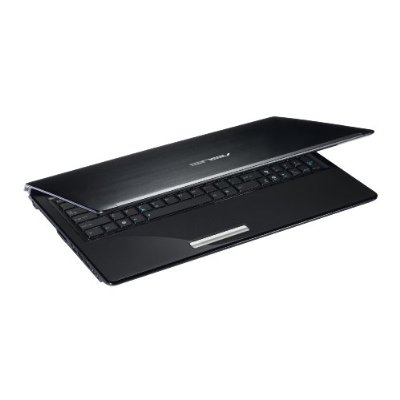
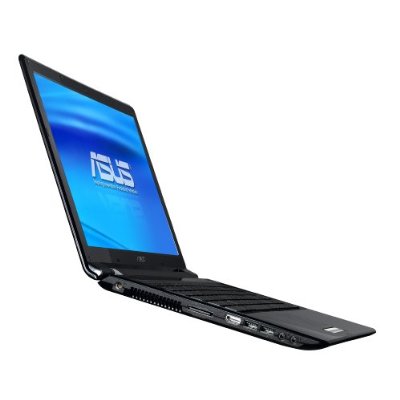
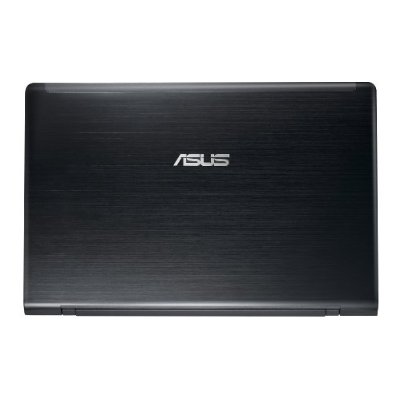
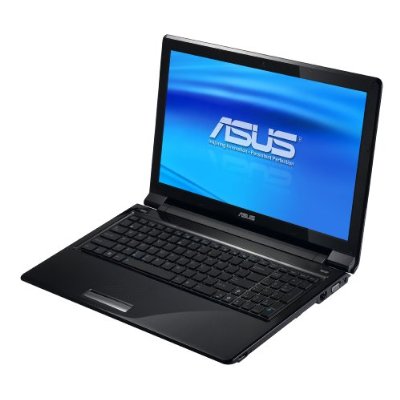
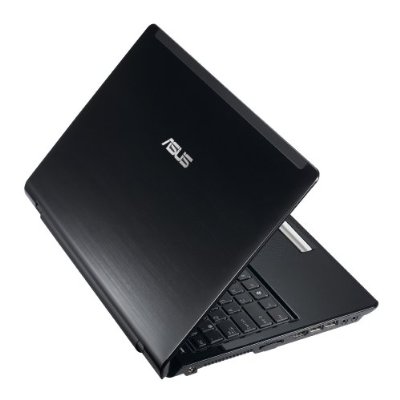
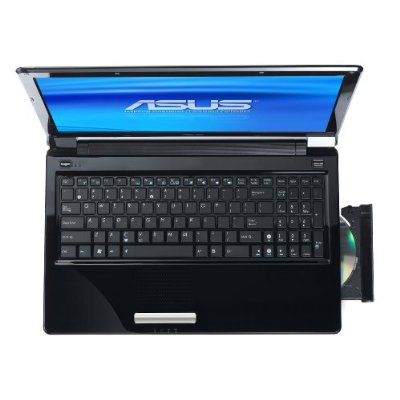
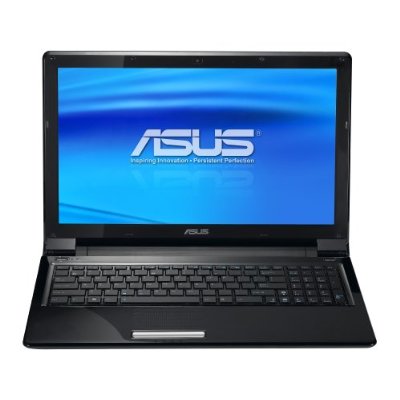
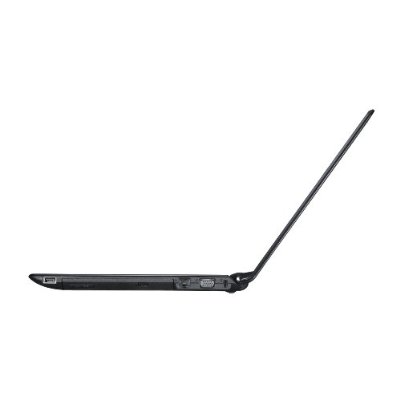
Asus UL50VG
Specifications
Price comparison
Average of 4 scores (from 4 reviews)
Reviews for the Asus UL50VG
Source: Trusted Reviews
 Archive.org version
Naturally, one of the biggest considerations of any CULV laptop is its battery life. Unfortunately the manufacturer’s claims usually need to be taken with hefty pinch of salt, and as ever that proves to be the case here despite the high-capacity eight-cell (5,600mAh, 84Wh) battery. With its UL50Vg, Asus has created an impressive laptop that uses a range of technologies to offer a rare combination of power and portability for a very reasonable price. This makes it even more of a pity that some ill-considered design choices hold it back from a recommendation.
Single Review, online available, Long, Date: 12/10/2009
Rating: Total score: 70% price: 80% performance: 90% features: 90% mobility: 80%
Foreign Reviews
Source: Chip.de
 DE→EN Archive.org version
Single Review, online available, Medium, Date: 11/03/2009
Rating: Total score: 79% price: 100% performance: 56% features: 100% display: 83% workmanship: 100% ergonomy: 64%
Source: Notebookjournal
DE→EN Archive.org versionSingle Review, online available, Long, Date: 10/26/2009
Rating: Total score: 90% price: 80% performance: 60% features: 50% display: 30% mobility: 70% workmanship: 30% ergonomy: 70%
Source: Techno Zoom
 IT→EN Archive.org version
Single Review, online available, Very Short, Date: 01/22/2010
Rating: Total score: 80% price: 80% performance: 80% mobility: 75% workmanship: 70%
Comment
NVIDIA GeForce G210M: The GeForce G210M is the successor of the G110M and also possesses 16 shader cores. Because of the 40nm process, the chip is clocked much higher but is still staying in the same power envelope.
Only some 3D games with very low demands are playable with these cards.
» Further information can be found in our Comparison of Mobile Graphics Cards and the corresponding Benchmark List.
Intel Core 2 Duo: This is the Core Duo and Core Solo successor with a longer pipeline and 5-20% more speed without more power consumption. As an addition to the Core Duo design there exists a fourth decoder, an amplified SSE-unit and an additional arithmetical logical unit (ALU).
The Core 2 Duo for laptops is identical to the desktop Core 2 Duo processors but the notebook-processors work with lower voltages (0.95 to 1188 Volt) and a lower Frontside bus clock (1066 vs 667 MHz). The performance of equally clocked notebooks is 20-25% lower than Desktop PCs because of the lower Frontside bus clock and the slower hard disks.
SU7300: Slow clocked dual core processor with a low TDP of 10 Watt.» Further information can be found in our Comparison of Mobile Processsors.
 Add as a preferred source on Google