




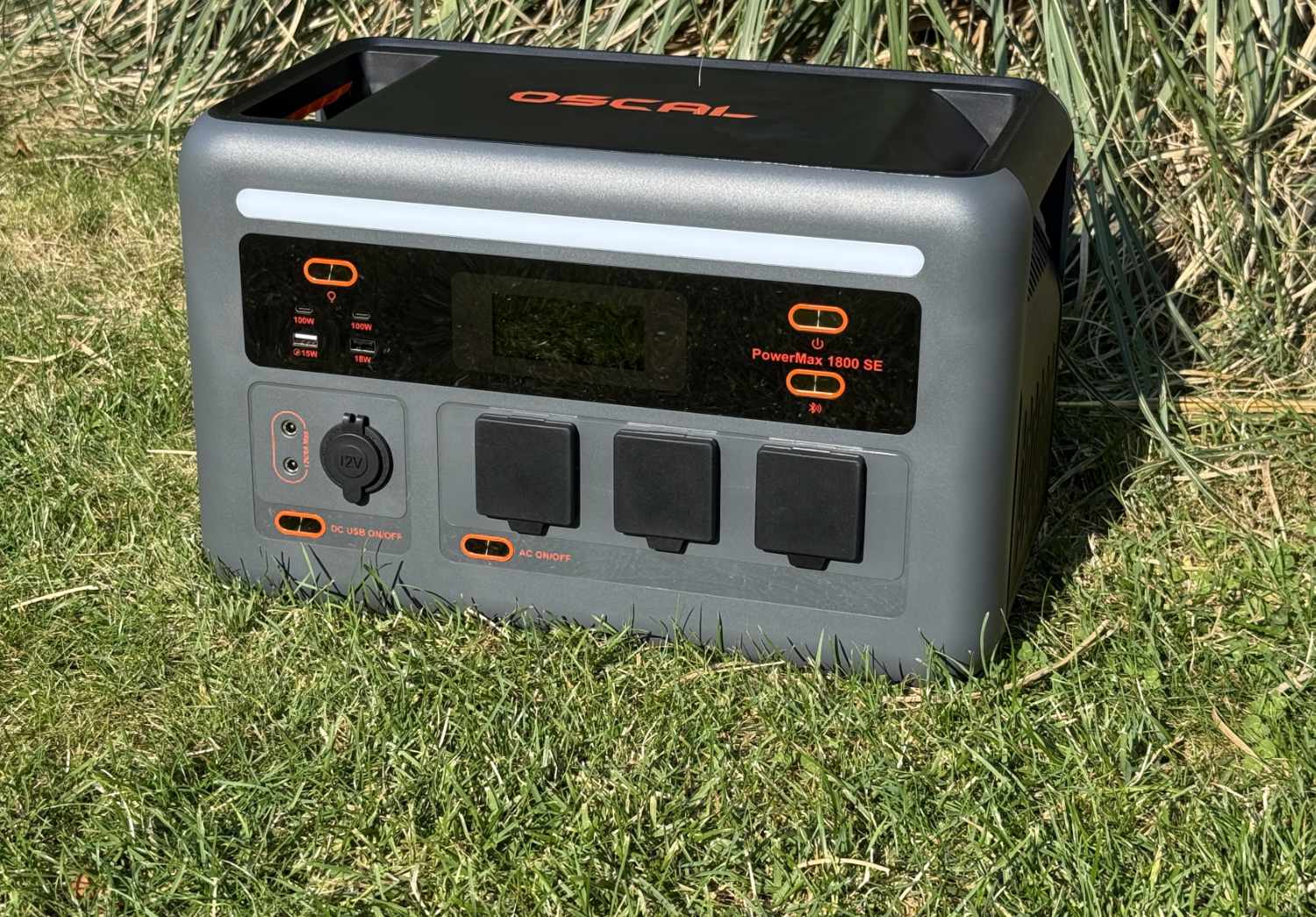
Affordable power station for camping, emergency power, and more: Oscal PowerMax 1800 SE review
1 kWh & 1,800 W.
The Oscal PowerMax 1800 SE is a 1 kWh power station in a compact, portable design at an attractive price. Our review reveals what this solar generator offers and can do—and what it cannot.Marcus Schwarten (translated by Marcus Schwarten (translation supported by DeepL)) Published 🇩🇪
Oscal PowerMax 1800 SE test conclusion: A handy power station
Overall, the Oscal PowerMax 1800 SE made a solid impression in our test. It is relatively compact, offers decent output power, and can be controlled remotely via its rather rudimentary app. Unfortunately, we did encounter a few issues in practice, including the annoying beep that cannot be turned off.
Compared with other models, such as the Anker Solix C1000 Gen 2, which sometimes costs barely more at retail, it falls short in a few areas, including power output and weight. However, if you find the PowerMax 1800 SE at an attractive price, you can confidently go for it—as long as you can live with the criticisms mentioned in this review.
Pros
Cons
Price and availability
The manufacturer’s suggested retail price for the Oscal PowerMax 1800 SE is $699.99. However, it is usually available for significantly less directly from the manufacturer and on Amazon.
Important note: Our review is based on the European version with 230 V.
With the boom in power stations over the past few years, more and more manufacturers have jumped on the bandwagon. In addition to well-known brands such as Anker Solix, Bluetti, EcoFlow, and Zendure, there are many other manufacturers. These include Oscal, which also offers a range of solar generators with varying capacities.
The Oscal PowerMax 1800 SE is one of the more compact models. It falls into the 1-kWh class and is offered at a relatively affordable price. We put it through its paces to see what this power station has to offer and how well it performs.
Oscal PowerMax 1800 SE data sheet
| Feature/Model | Oscal PowerMax 1800 SE |
| Capacity | 1,024 Wh (LiFePO₄) |
| Expandable | no |
| Continuous/Peak Power | 1,800 W / 3,600 W |
| Outputs | 3xAC, 2xUSB-C, 2xUSB-A, 1x car outlet, 2xDC5521 |
| AC Charging Power | 800 W |
| DC Charging Power (Solar) | 800 W |
| Inputs | 1xAC, 1xXT60 |
| Light | yes |
| App | yes |
| Weight | approx. 15 kg |
| Dimensions | 39 x 23 x 25.4 cm |
| MSRP | $699.99 |
Features: Compact power station with 1 kWh
The solidly built Oscal PowerMax 1800 SE does not deliver 1.8 kWh, as its name might suggest. Instead, it delivers 1,024 Wh, with the manufacturer relying on the standard, long-lasting LiFePO4 battery technology. The “1800” in the name refers to the output power, which is 1,800 W. For short periods, it can even reach up to 3,600 W (peak power).
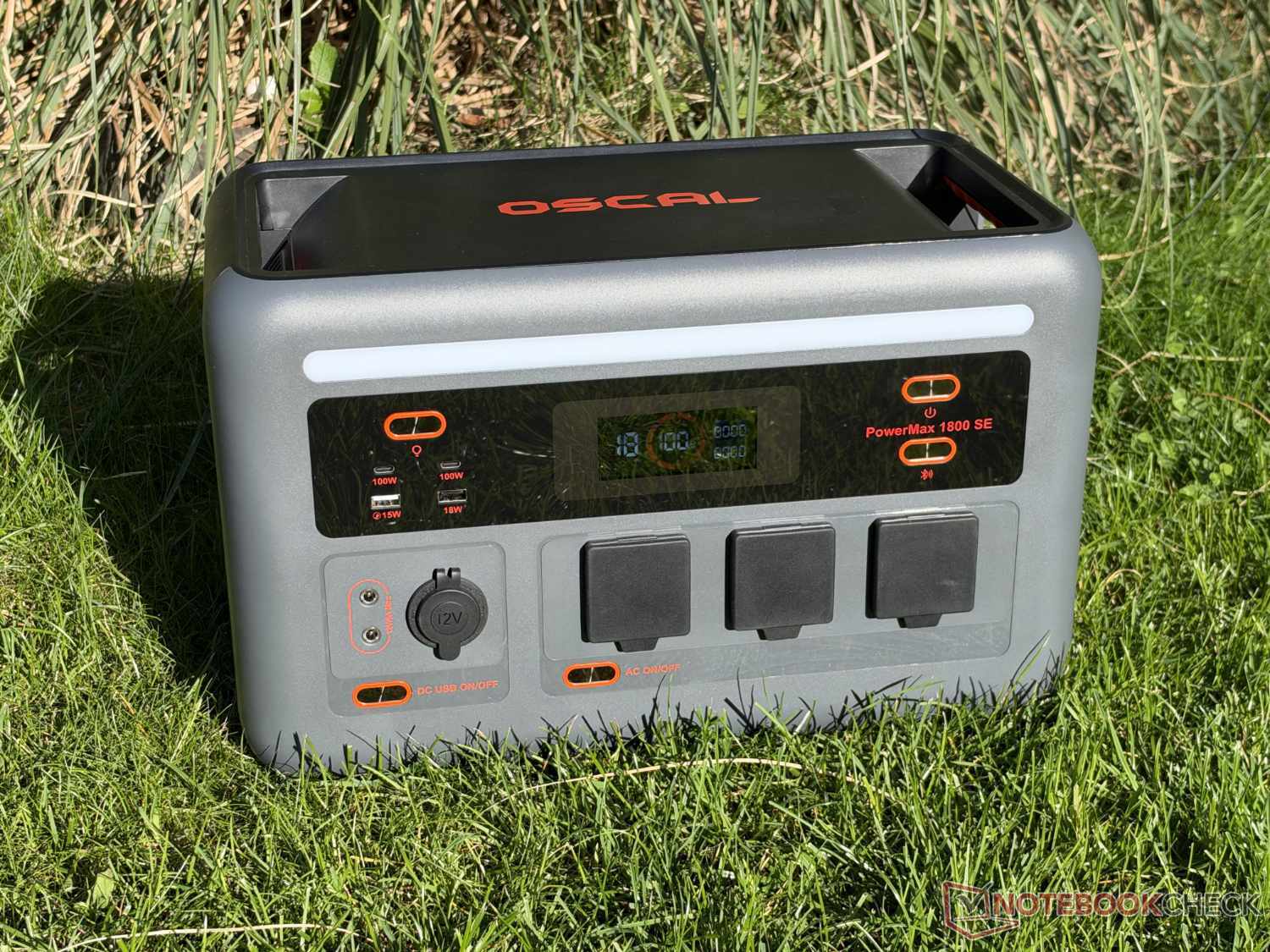
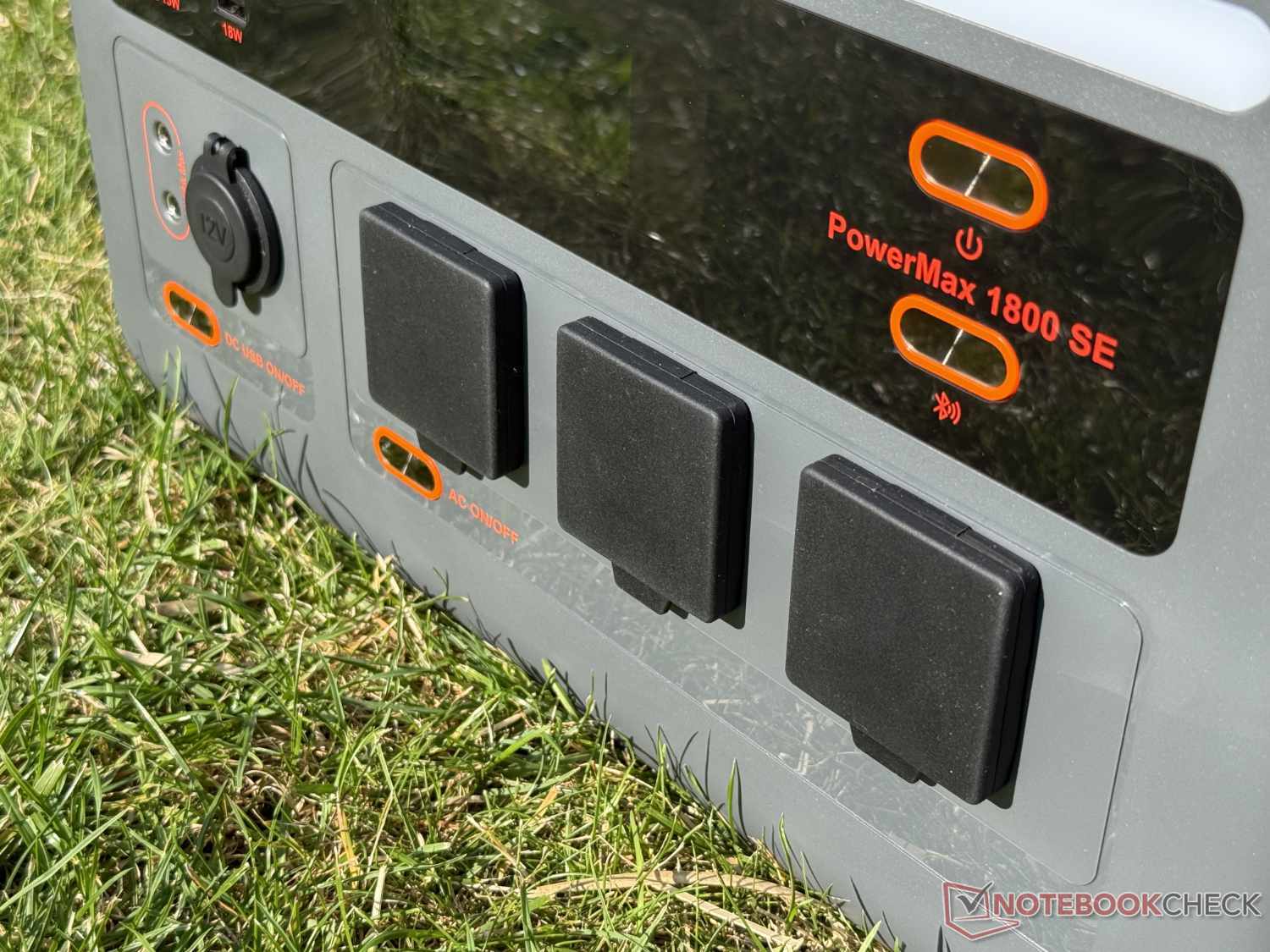
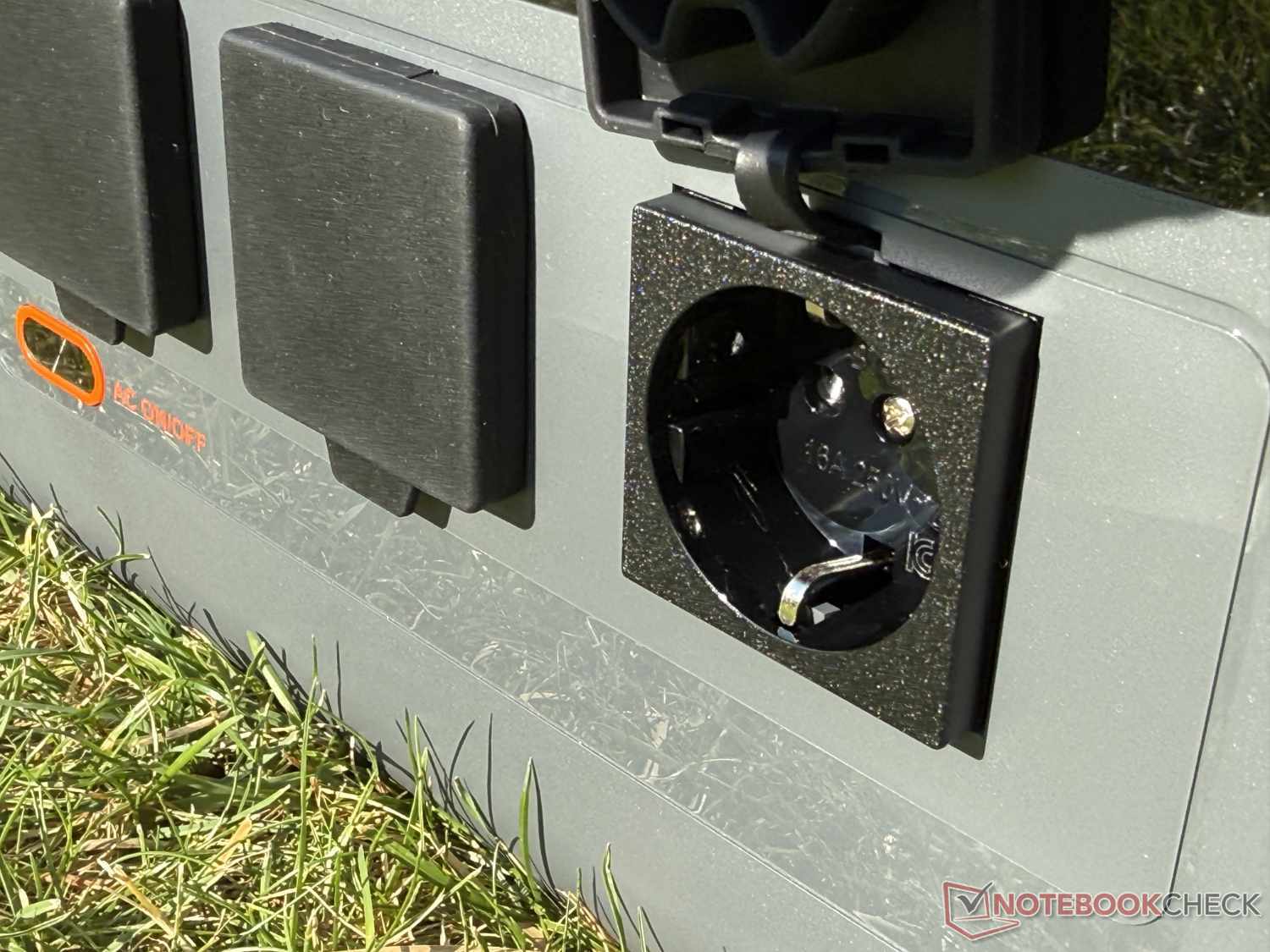
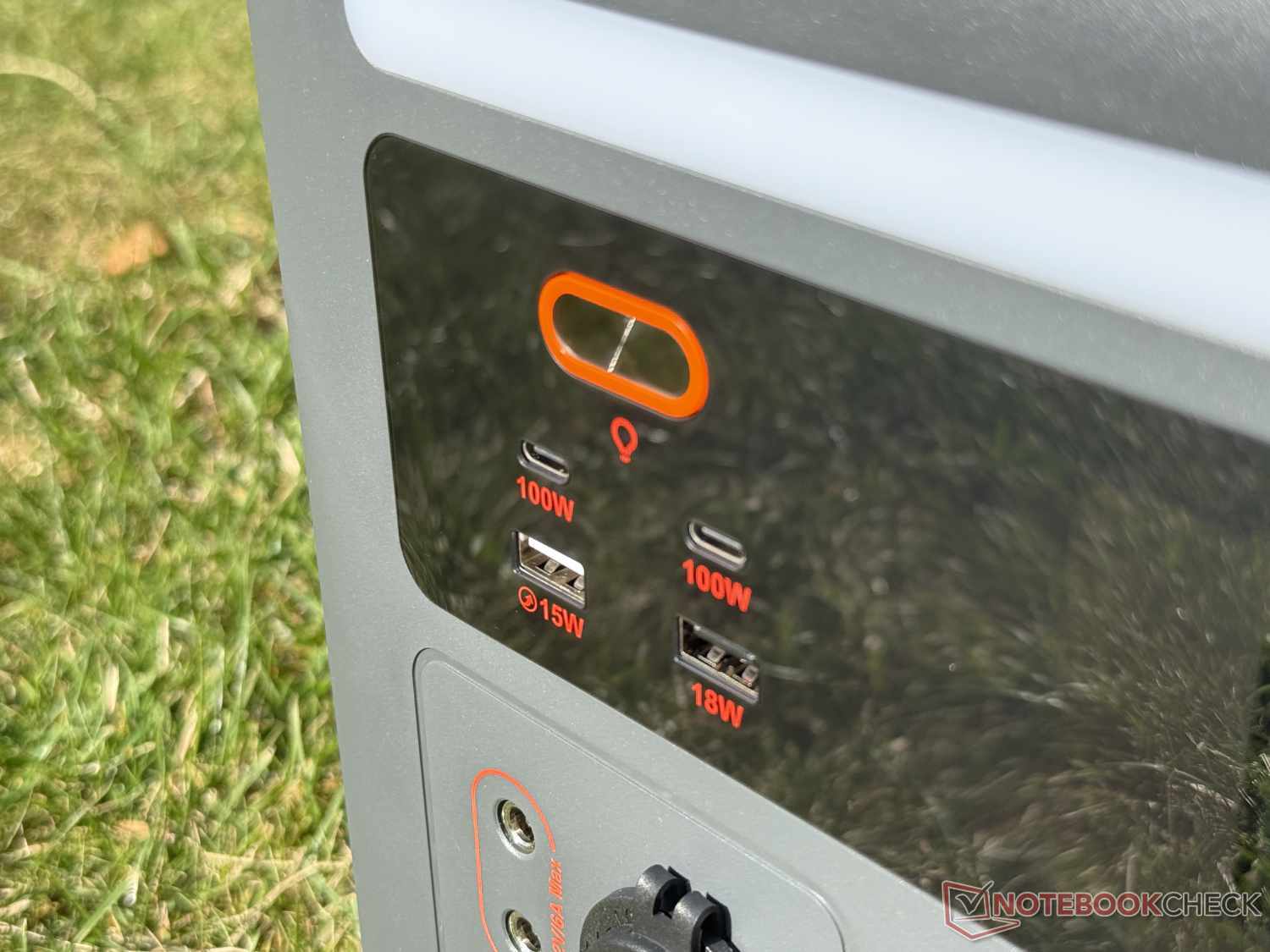
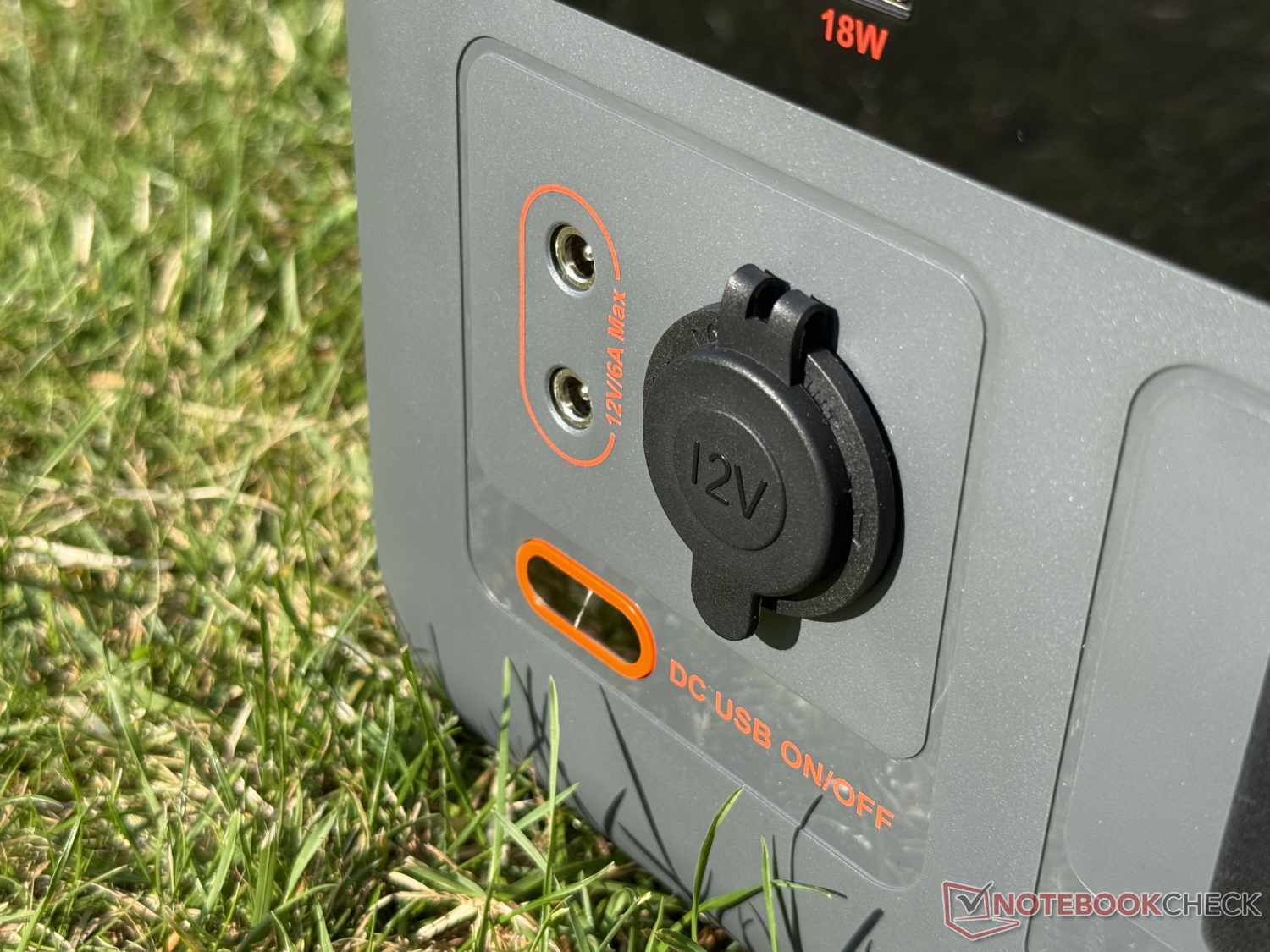
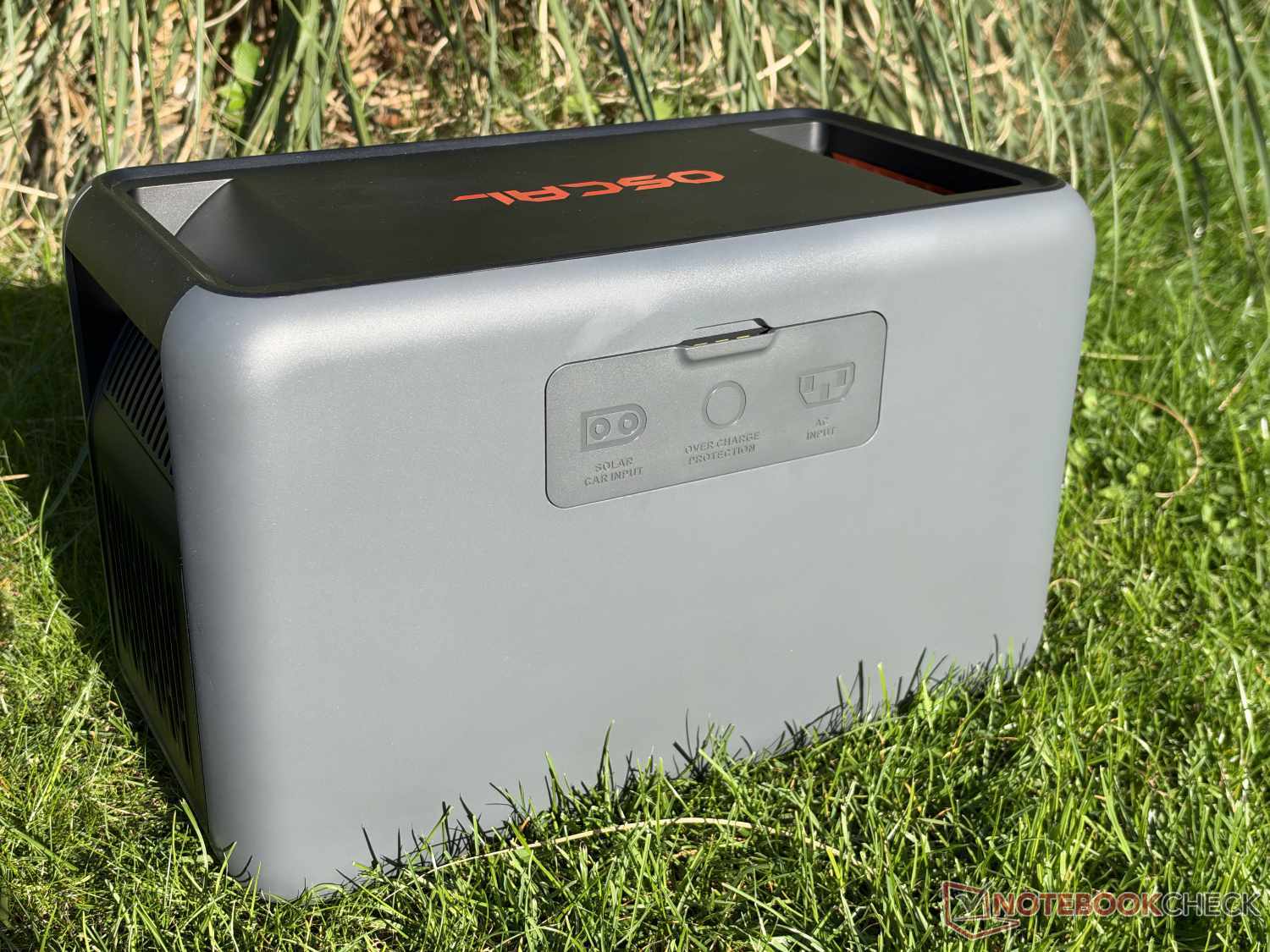
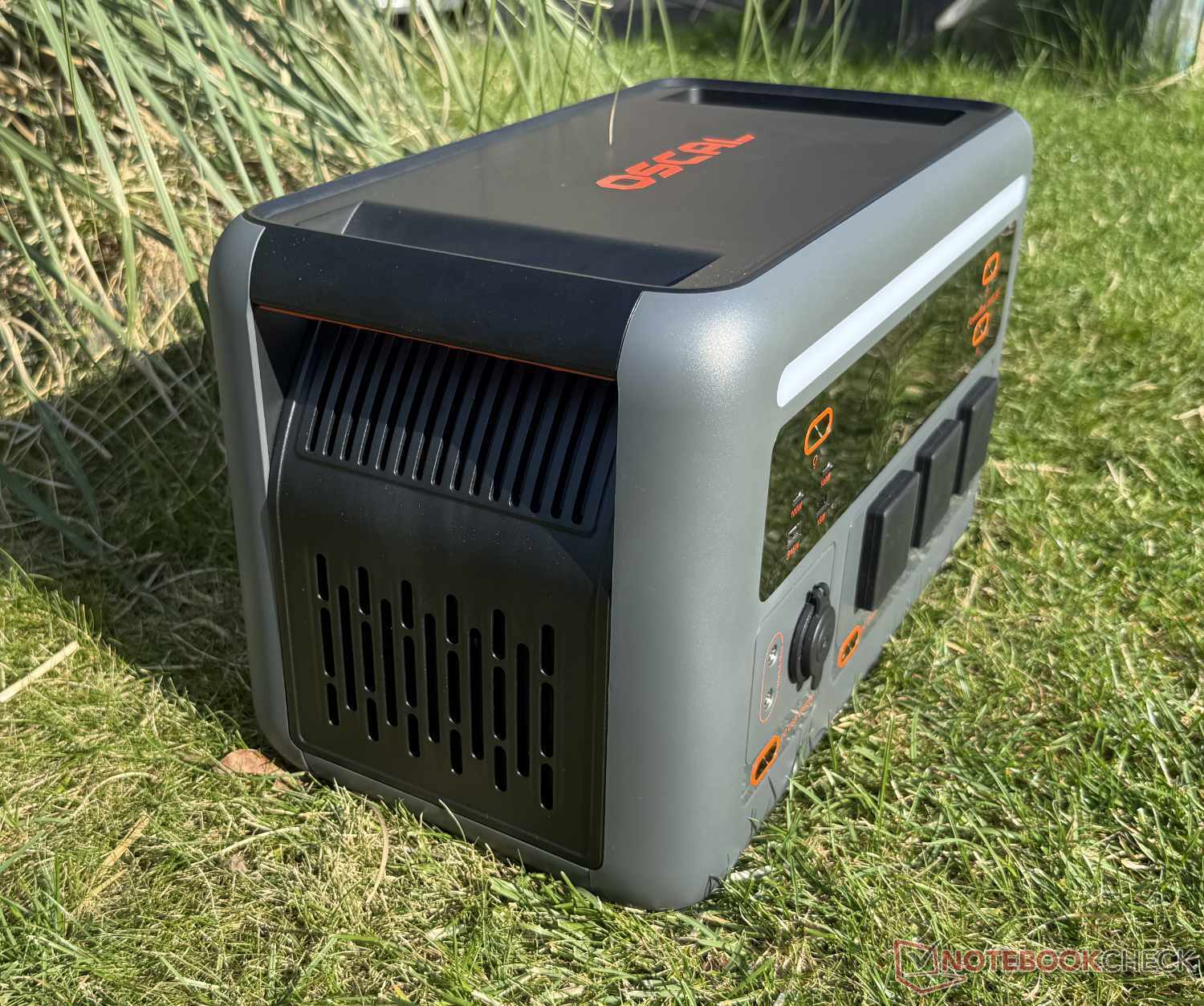
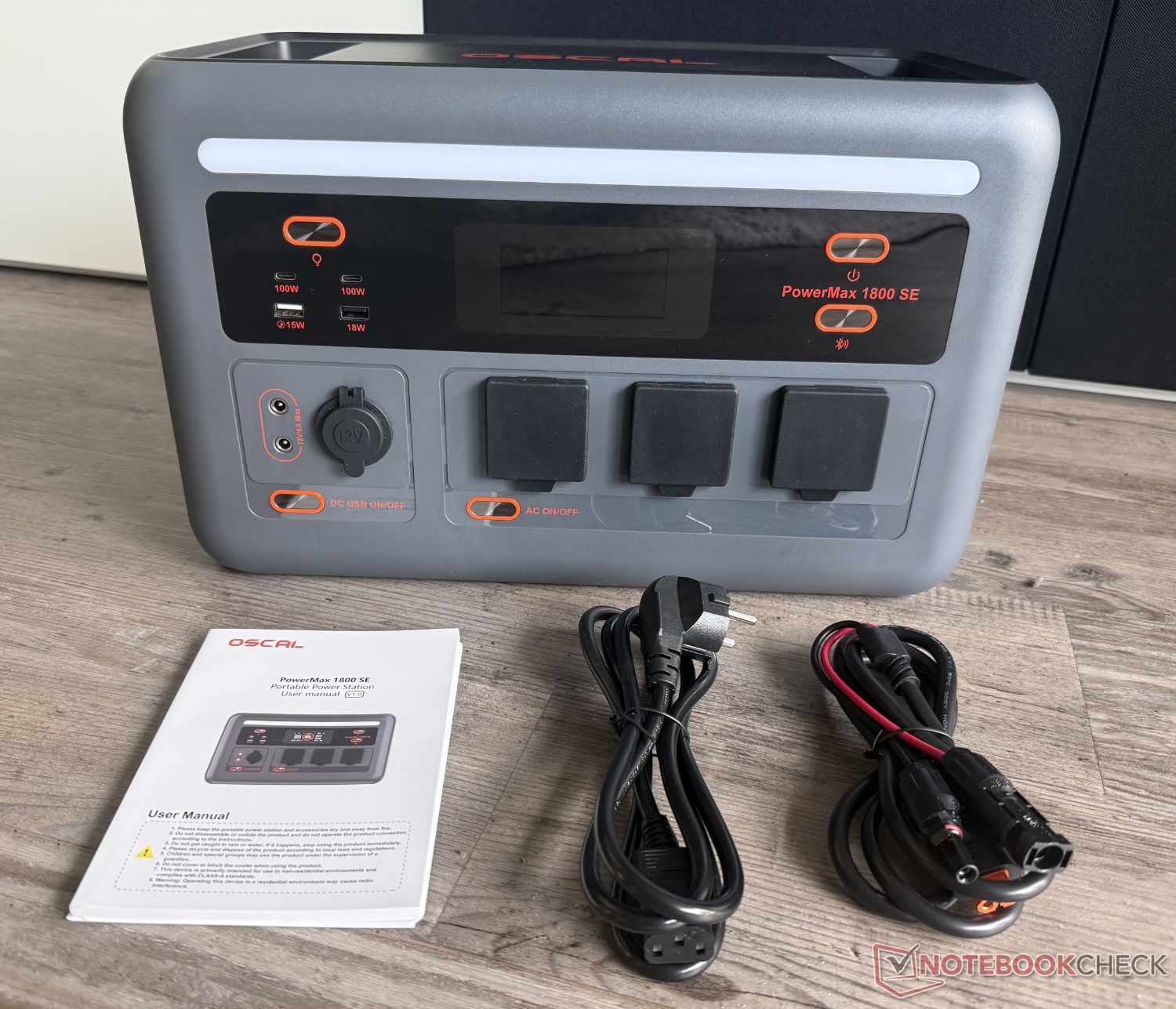
Power is primarily delivered through three AC outlets, which are hidden behind rubber covers on the front. In addition, there is a whole range of DC connections. Up to 100 W can be drawn from two USB-C ports, while the two USB-A ports provide 18 W and 15 W, respectively. There is also the standard 12 V car outlet with 120 W (cigarette lighter), as well as two DC5521 ports—which are less common in Germany—each rated at 60 W.
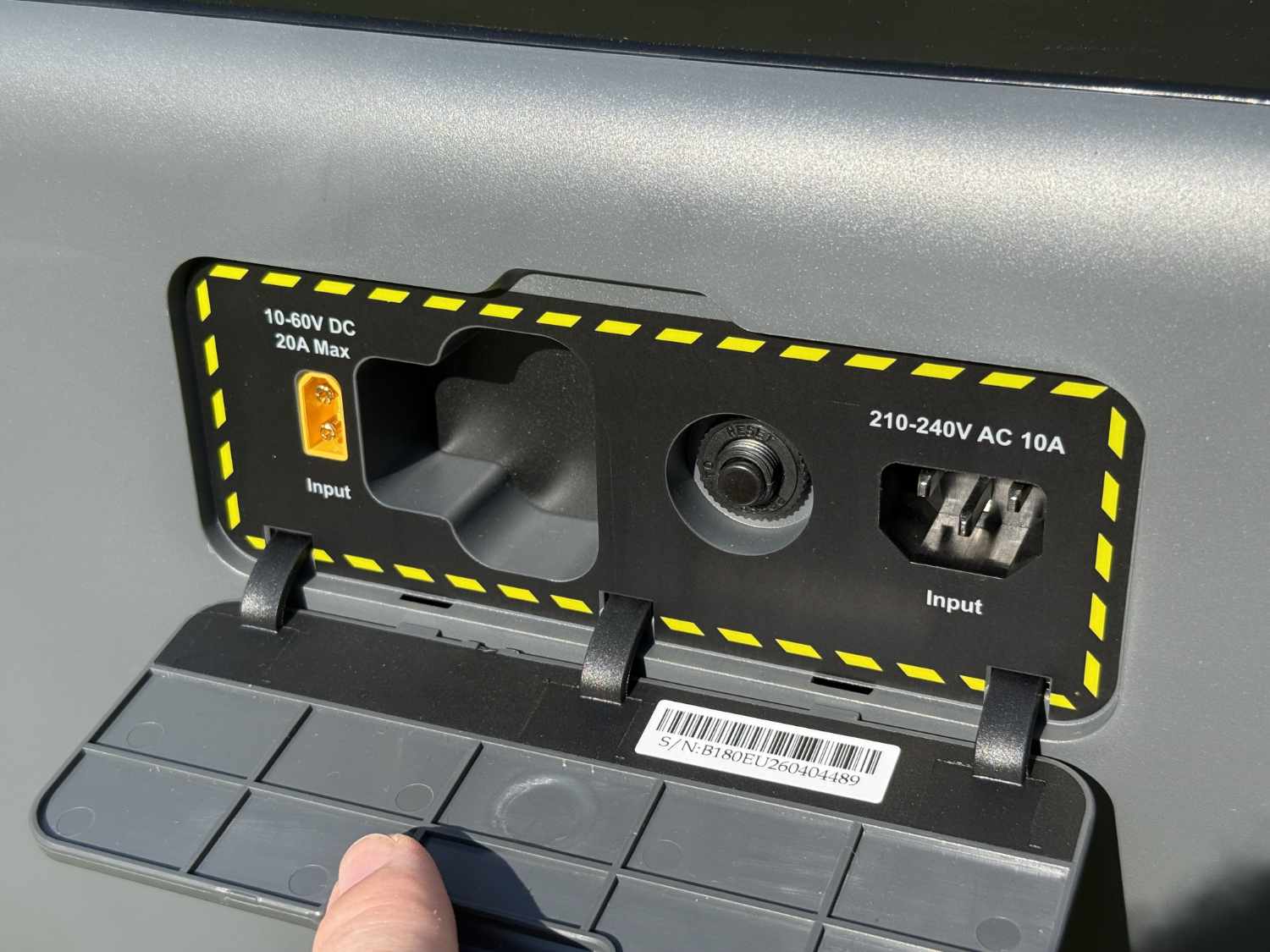
On the input side, up to 800 W is possible, with this charging power available via the utility grid, solar panels, or a combination of both. A UPS (uninterruptible power supply) function, a large display, and a wide LED light round out the features. All of this is housed in a unit weighing just over 15 kg and measuring approximately 39 x 23 x 25 cm.
App & usability: Basic app
The Oscal PowerMax 1800 SE supports Wi-Fi and Bluetooth, allowing it to be controlled both locally and remotely via a smartphone. However, Oscal does not offer its own app; instead, it relies on the SmartLife app used by many manufacturers. This app is available for free on iOS and Android but requires registration before use.
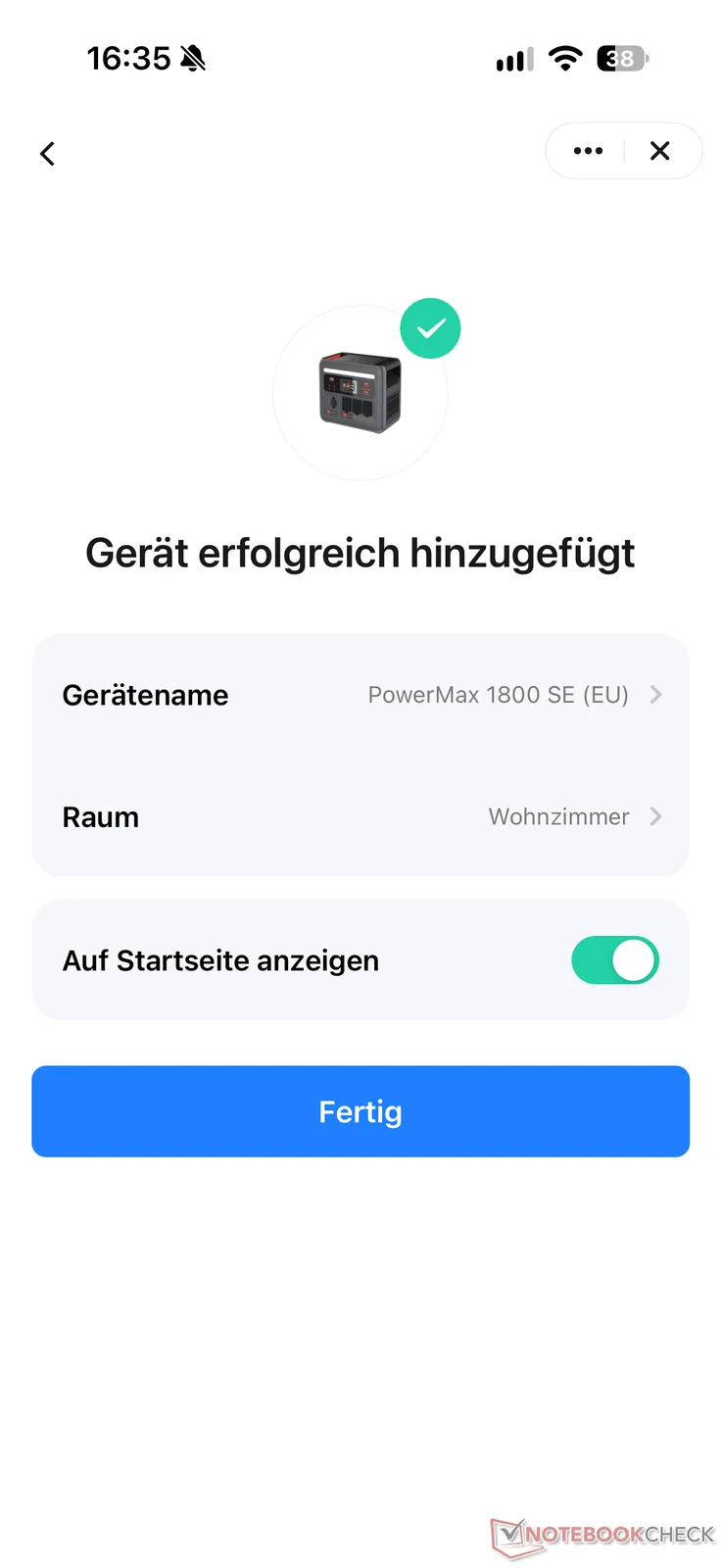
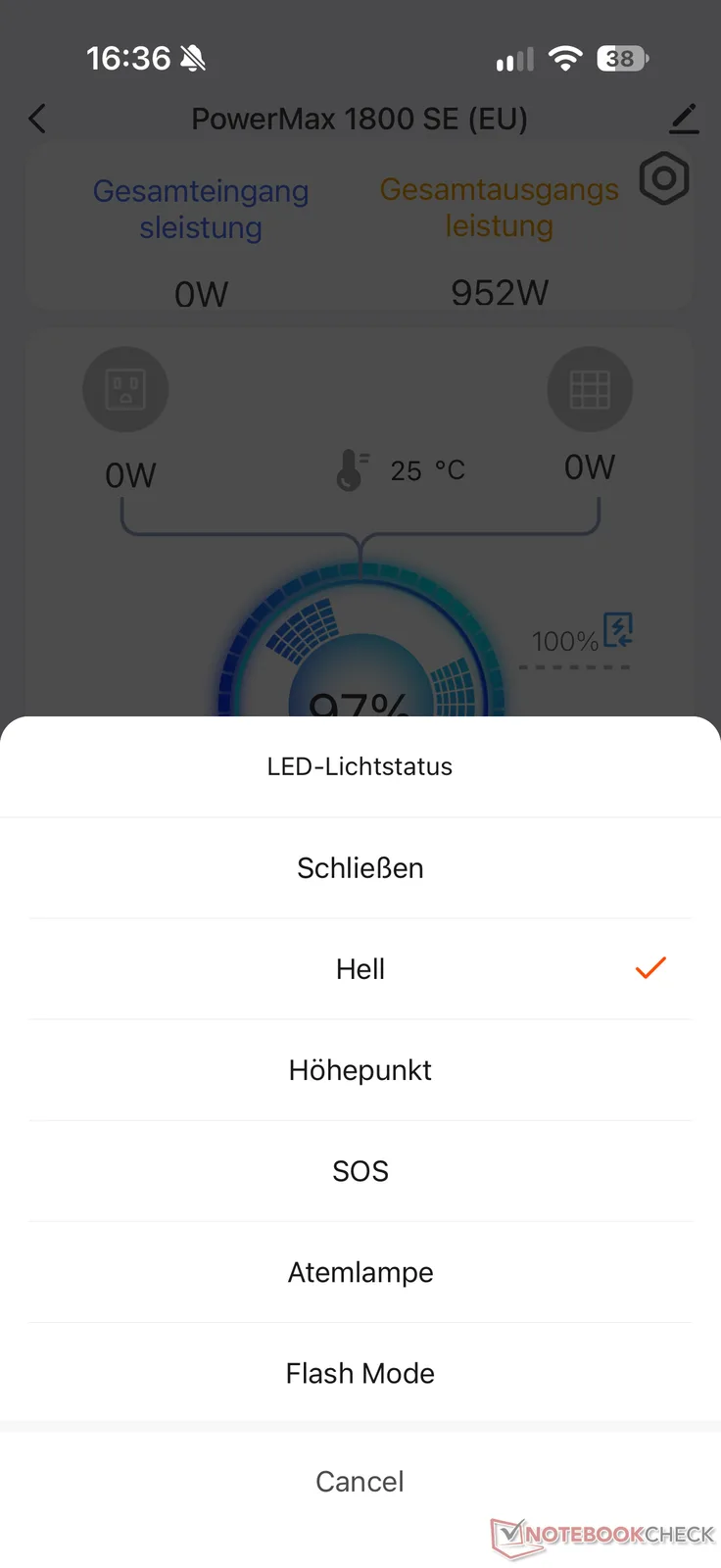
Establishing a connection worked without any issues during testing. Once connected, the app not only displays the current energy flows during discharging and charging, but also allows you to turn the AC and DC outputs—as well as the light with its various brightness levels and flashing modes—on and off via your smartphone.
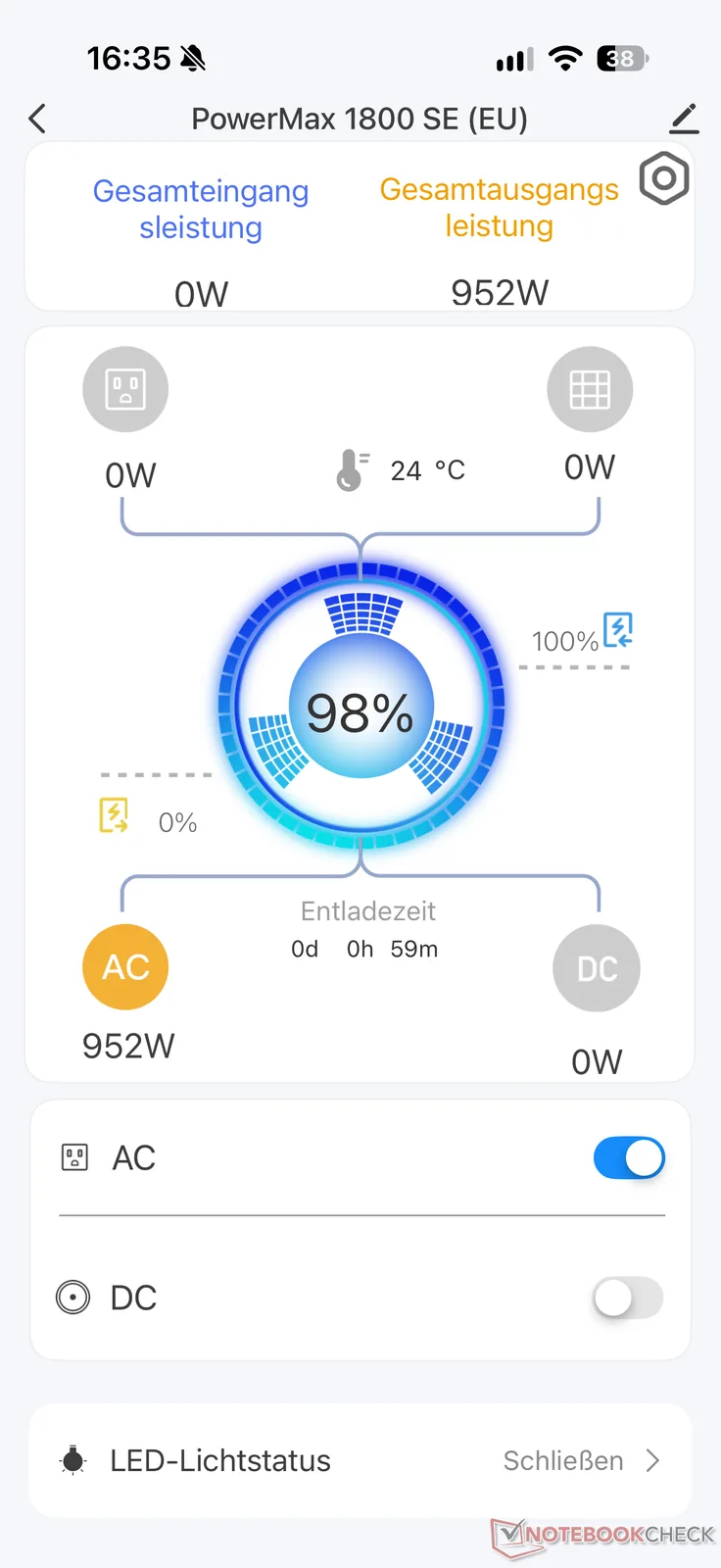
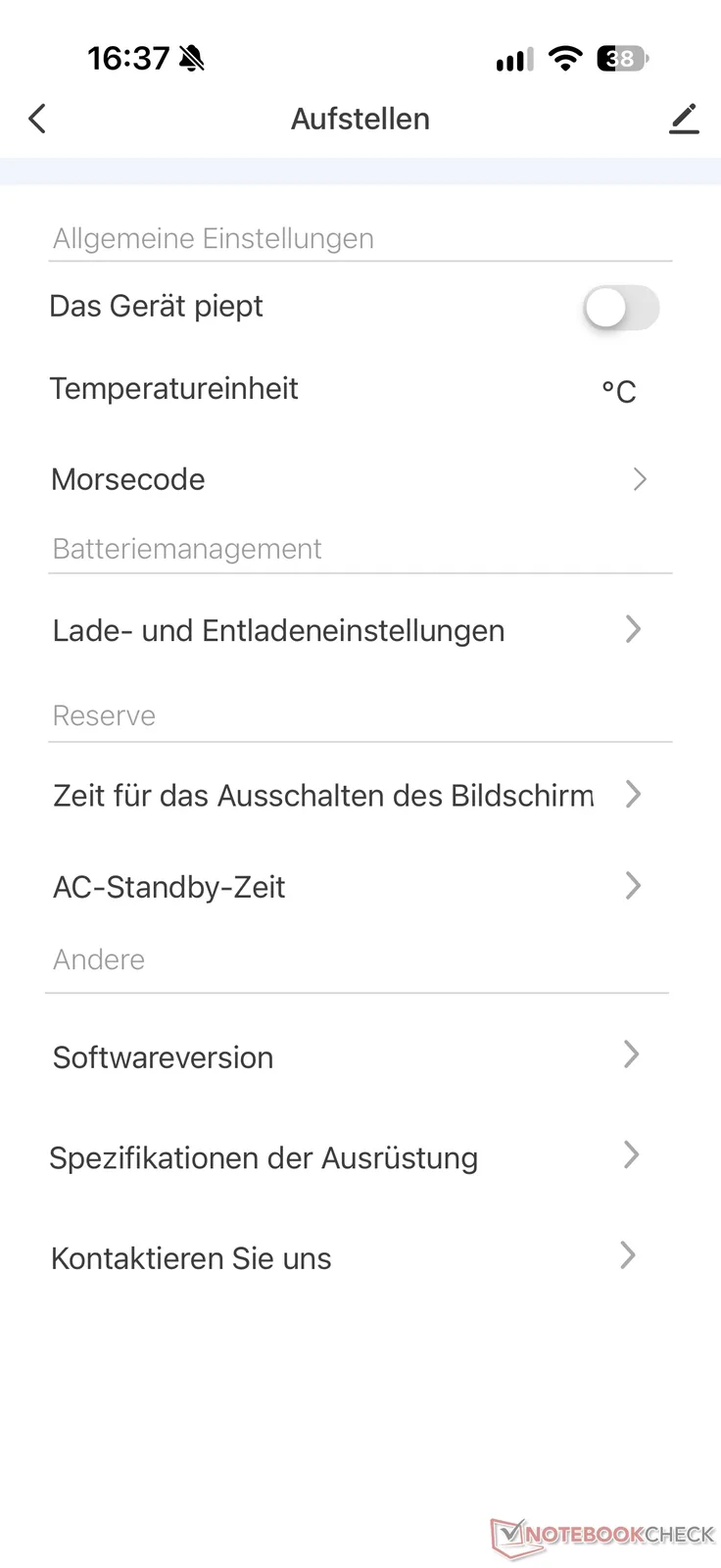
Otherwise, the options are relatively limited. In the settings, you can adjust the charging and discharging limits as well as the automatic shutdown of the AC output and display. But there’s one thing in particular we missed: the power station emits a relatively loud and unpleasant beep with every action, when it is close to the discharge limit, and when it is overloaded. Unfortunately, this cannot be turned off in the app. There is only an option for a continuous beep to help locate the power station. The German localization also leaves something to be desired in some places.
In addition to using the rudimentary app, the device can, of course, be operated directly. Besides the on/off switch and a button to enable or disable Wi-Fi and Bluetooth, there are also switches for the AC and DC outputs and the light. Each press is acknowledged by the aforementioned beep, which cannot be disabled. The centrally located display also provides information about the current status as an alternative to the app.
It’s important to turn off the AC inverter, connectivity, and—ideally—the entire power station when it is not in use. With AC enabled, the PowerMax 1800 SE occasionally produces rather loud fan noise even when no devices are connected. The battery also drains quite quickly in this state: with AC and Wi-Fi enabled and not a single device drawing power, the power station completely drained itself in about a day and a half. Some other models are more efficient in this regard.
In practice: PowerMax 1800 SE shows strengths and weaknesses
In practice, the PowerMax 1800 SE reliably powered many common devices during testing. However, it cannot power multiple high-power devices simultaneously—partly due to its output power and partly due to its limited capacity. In this case, larger and more powerful models such as the Anker Solix C2000 Gen 2 or the Bluetti Elite 300 are recommended.
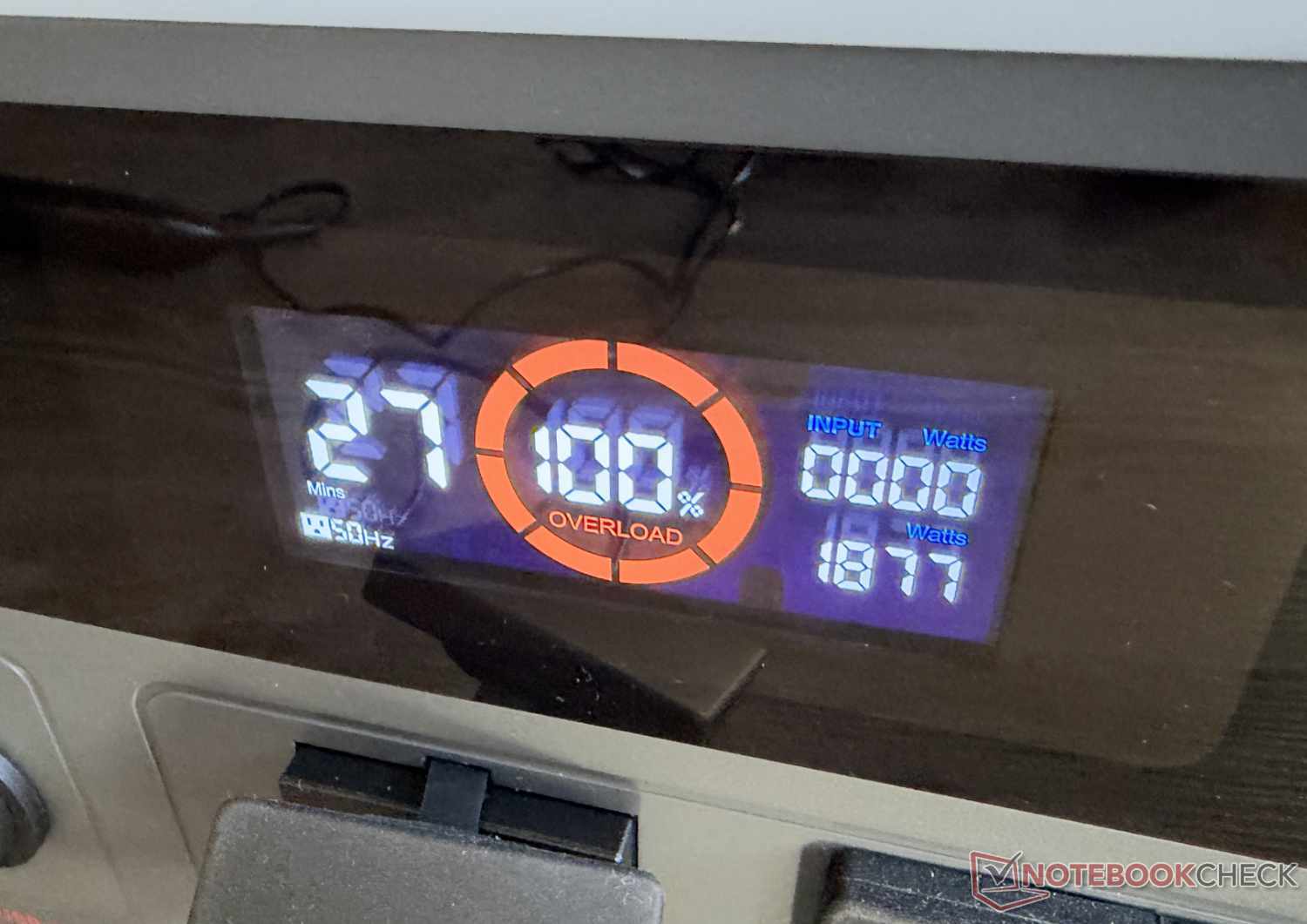
Even a high-powered hair dryer, for example, can quickly approach—or even exceed—the 1,800-W mark. Thanks to its short-term peak power, the device can still be used for a while, though accompanied by a constant beeping sound indicating that it is overloaded. Anyone considering the PowerMax 1800 SE should therefore think carefully beforehand about what types of devices they want to connect and power with it. It is designed more for camping and mobile charging of smartphones, laptops, or coolers, and less for power tools and other energy-hungry devices.
When using it on the go, weight also plays a decisive role. While its dimensions are comparable to those of the competition, its weight—at around 15 kg—is somewhat higher than that of some competitors. For example, the comparable Anker Solix C1000 Gen 2 weighs about 4 kg less. However, the Oscal PowerMax 1800 SE isn’t exactly a heavyweight, especially since its two sturdy handles make it easy to carry. It also features a built-in LED light, which comes in handy when camping or during a power outage. The light can be set to multiple brightness levels and flash in various modes, such as SOS.
Another key factor in determining how “far” the capacity will take you is efficiency. To test this, we ran the power station down from 100% to 0% with a constant load of about 250 W connected to one of the AC outlets. We were able to draw just under 920 Wh, which equates to an efficiency of just under 90 percent. That is an absolutely solid result. Conversely, when charging via AC at up to 800 W, just over 1,160 Wh flowed into the device, meaning that a little over 88 percent of the supplied energy reached the battery.
However, the slow charging speed is noticeable. A maximum of 800 W—even when combining AC and DC—is relatively slow. It takes a good hour and a half for the power station to fully recharge despite its modest capacity. Some other models can do this faster, such as the Anker Solix C1000 Gen 2 mentioned earlier. During charging, the PowerMax 1800 SE produces around 44 dB of noise. When discharging under full load, the noise level can sometimes exceed 50 dB, depending on the load (both measurements were taken from a distance of 1 m).
Another negative aspect we noticed during testing was that the AC output shown on the display was higher than the reading from our measuring device. During the efficiency test, we drew only about 250 W, but the display showed 350 W. This does not exactly inspire confidence and also makes the displayed remaining-runtime estimate inaccurate.
Transparency
The selection of devices to be reviewed is made by our editorial team. The test sample was provided to the author as a loan by the manufacturer or retailer for the purpose of this review. The lender had no influence on this review, nor did the manufacturer receive a copy of this review before publication. There was no obligation to publish this review. As an independent media company, Notebookcheck is not subjected to the authority of manufacturers, retailers or publishers.
 Add as a preferred source on Google


