




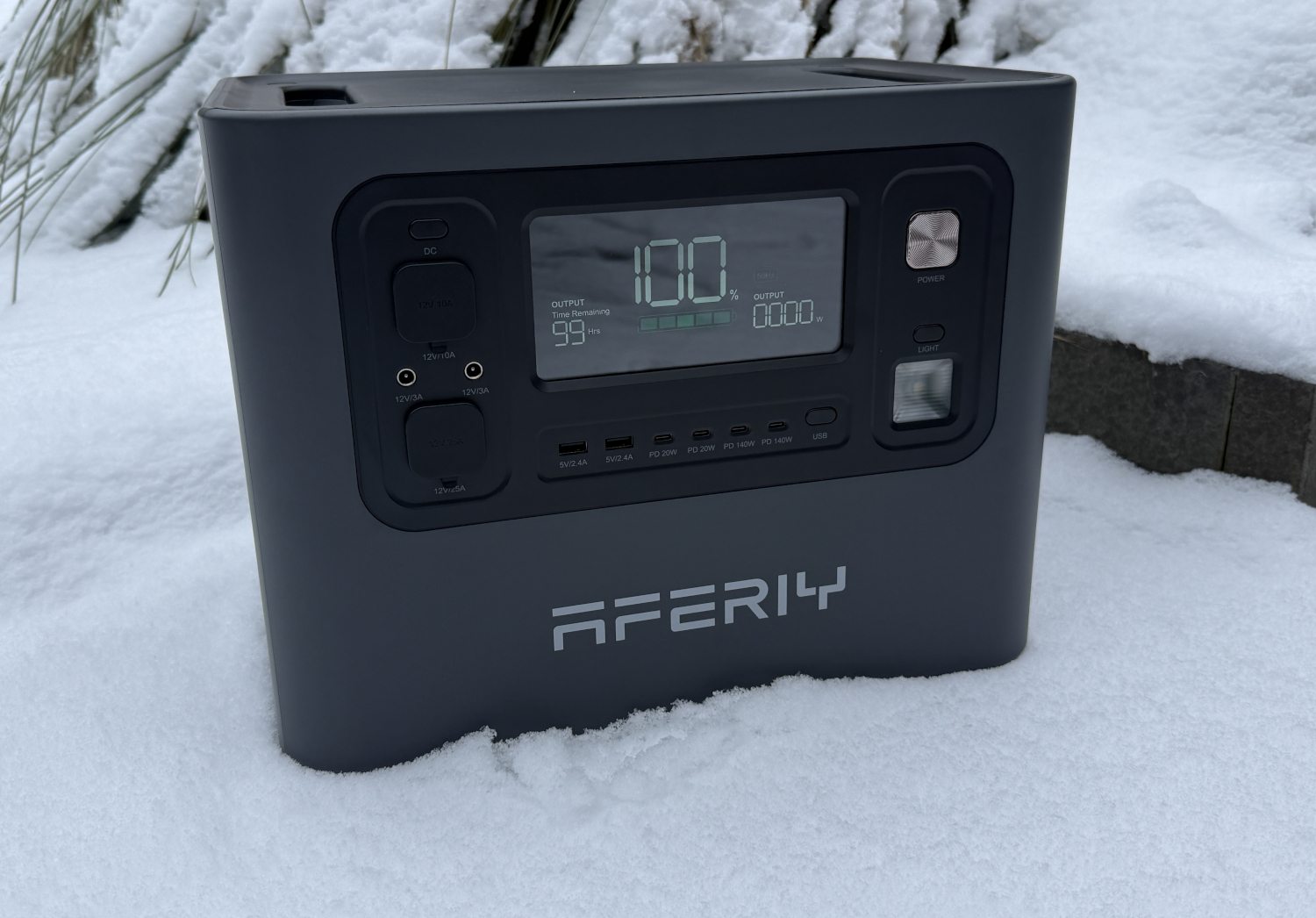
Affordable 2 kWh power station with 2,800 W and UPS: Aferiy P280 in practical test
Improvements and savings.
With a market price of less than $800, the Aferiy P280 is definitely a bargain in the 2 kWh power station class. Our review of the Aferiy P280 explains what this affordable solar generator offers and what it can do.Marcus Schwarten (translated by DeepL / Marcus Schwarten) Published 🇩🇪 🇫🇷 ...
Aferiy P280 test conclusion: Solid, but not free of faults
The Aferiy P280 Powerstation only had a few weaknesses in the test - apart from the massive problems with the iOS app. If you can do without this nowadays common feature of remote control via iPhone or only use Android devices anyway (which worked okay in the test), you get a solid portable energy storage device.
If you are looking for a solar generator for camping and the like, the Aferiy P280 is a classic representative of its kind, which is neither particularly light nor noticeably heavy with its weight of 22 kg. At 2,800 W, the power station provides a considerable continuous output power, outperforming many competitors in the 2 kWh class.
The capacity can be increased fivefold if required, although mobility naturally suffers as a result. If it is to be used primarily at home, for example as a UPS or backup for power failures, this feature is certainly practical and interesting, but ultimately also expensive due to up to four additional batteries.
According to the MSRP, the cost of the Powerstation alone is just under $1,100, although the market price of the Aferiy P280 is usually below the $800 mark. At this price, the model is quite attractive in terms of the performance it offers. Comparable models from well-known manufacturers are generally priced significantly higher.
Pros
Cons
Price and availability
The recommended retail price of the Aferiy P280 is $1.099. However, it is often available for less, for example directly from the manufacturer or on Amazon.

Aferiy is one of the lesser-known manufacturers of power stations. The company is positioning itself on the market with attractive prices in relation to the respective performance and is thus trying to make a name for itself.
The latest model in the growing portfolio is the Powerstation P280. This is a model in the 2 kWh class, which therefore includes the new Anker Solix C2000 Gen 2 or the FossiBot F2400 for example. Our Aferiy P280 review reveals how well it does this.
Data sheet Aferiy P280
| Capacity | 2,048 Wh |
| expandable | yes (up to 10,240 Wh) |
| Continuous power | 2,800 W |
| Outputs | 3xAC, 1xXT60, 4xUSB-C, 2xUSB-A, 1x12V-Auto |
| Charging power AC | 1,800 W |
| Charging power DC (solar) | 1,200 W |
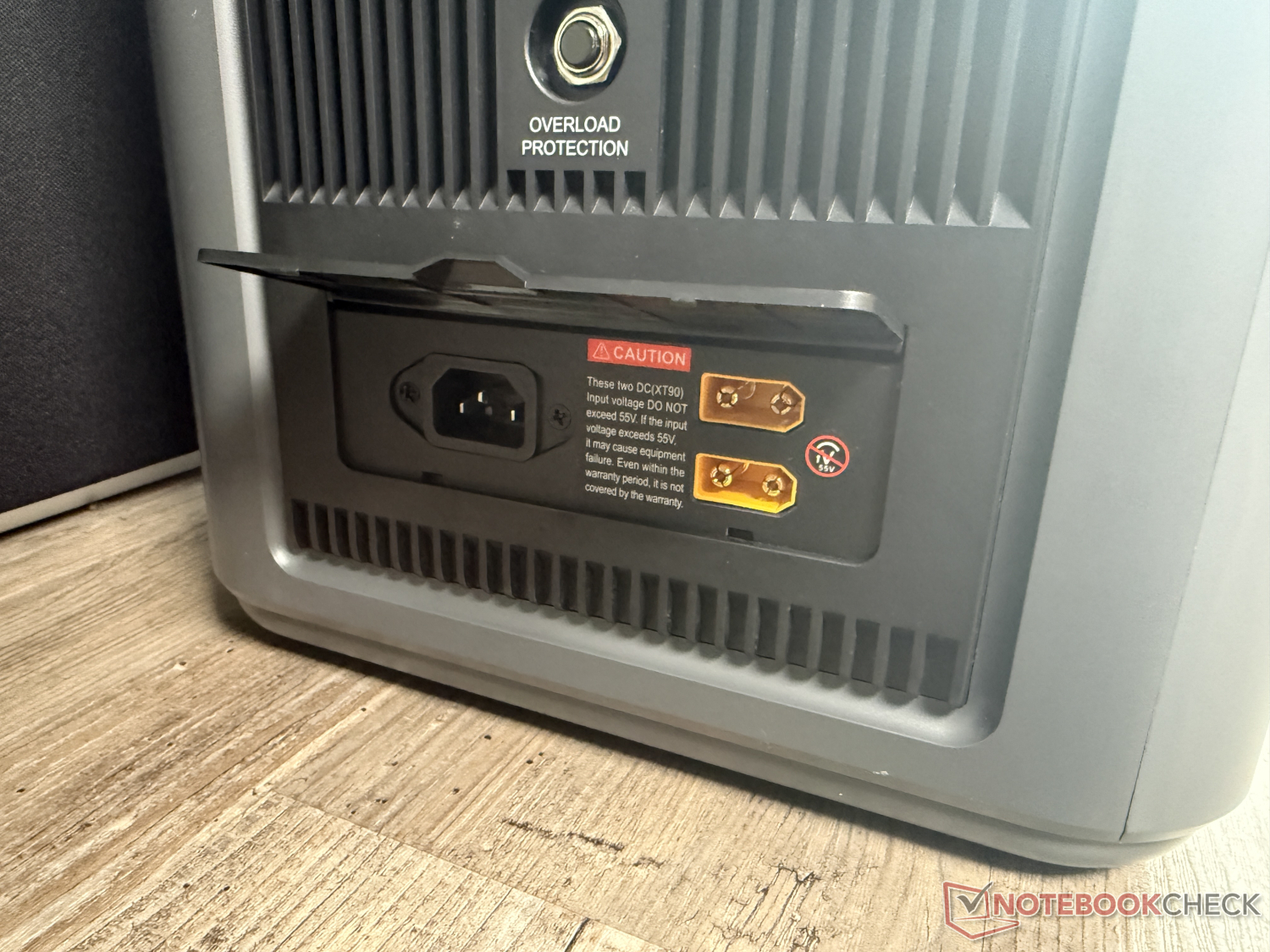
| Inputs | 1xAC, 2xXT90 |
| Light | yes |
| App | yes |
| Weight | 21.6 kg |
| Dimensions | 39.8 x 28.0 x 31.5 cm |
| MSRP | $1,099 |
| available at | Amazon |
AFERIY P280 Powerstation for $599 thanks to voucher
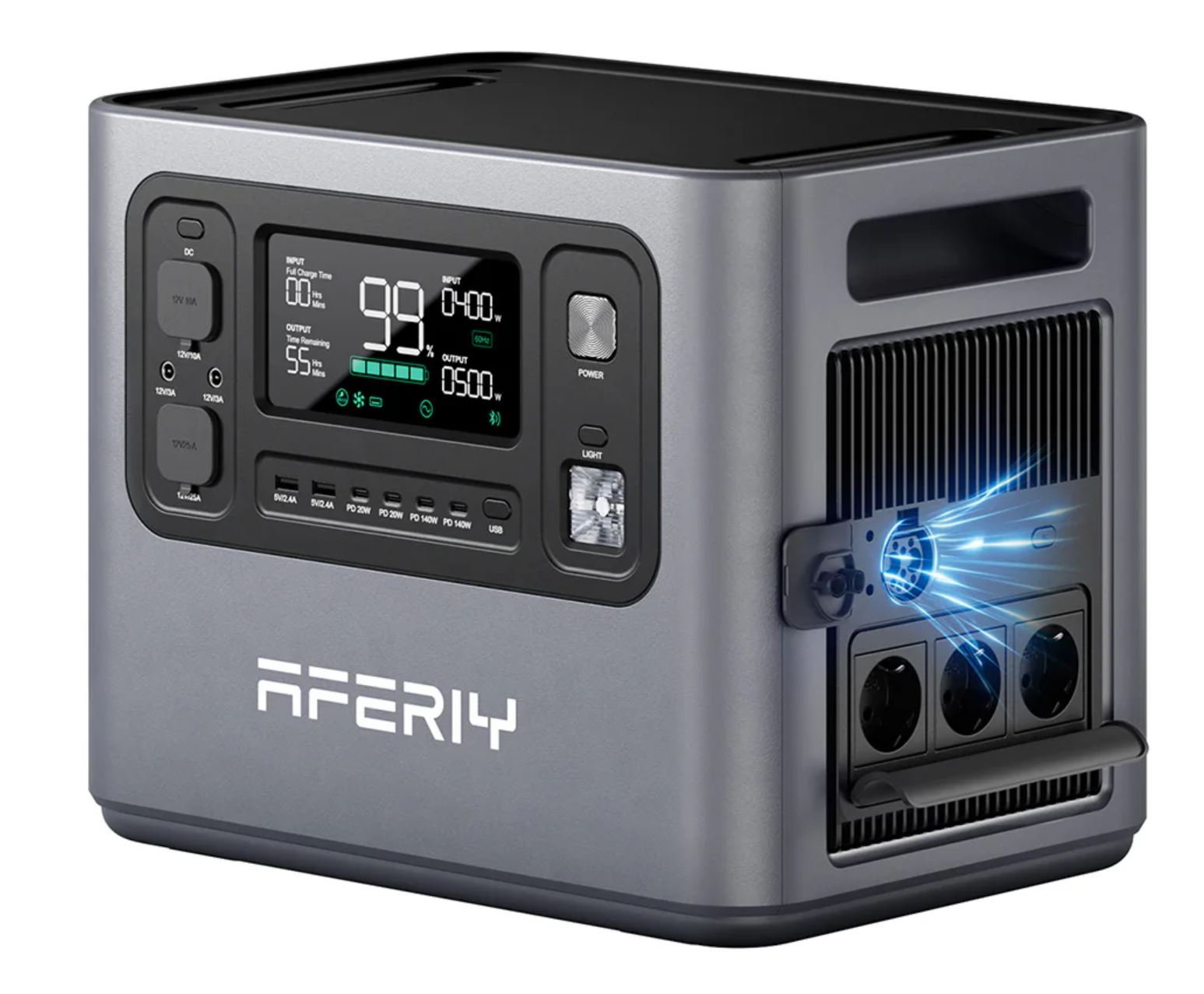
The AFERIY P280 is currently available at a particularly low price thanks to two voucher codes. If you order the Powerstation solo from the manufacturer's official online store and redeem the voucher code P280NBCHECK, you pay just $599. Alternatively, it is available at a massive discount as a set with an extension battery.
And if you want to charge the solar generator independently of the power grid, you can opt for the bundle with a 400 W solar panel. This is currently available from just $1,049 thanks to the discount code P280PVNBCHECK.
Equipment: 2 kWh power station with 2,800 W continuous output
The Aferiy P280 is a power station in the 2 kWh class. It has a capacity of 2,048 Wh and uses long-life LiFePO4 battery cells with over 4,000 cycles (up to 80 percent) according to the manufacturer. This cannot be verified in a short practical test.
If required, the storage can be increased to up to 10,240 Wh (10 kWH) in 2 kWh increments using the additional P280-B battery. The batteries and power station can be stacked and are each connected to each other with a cable.
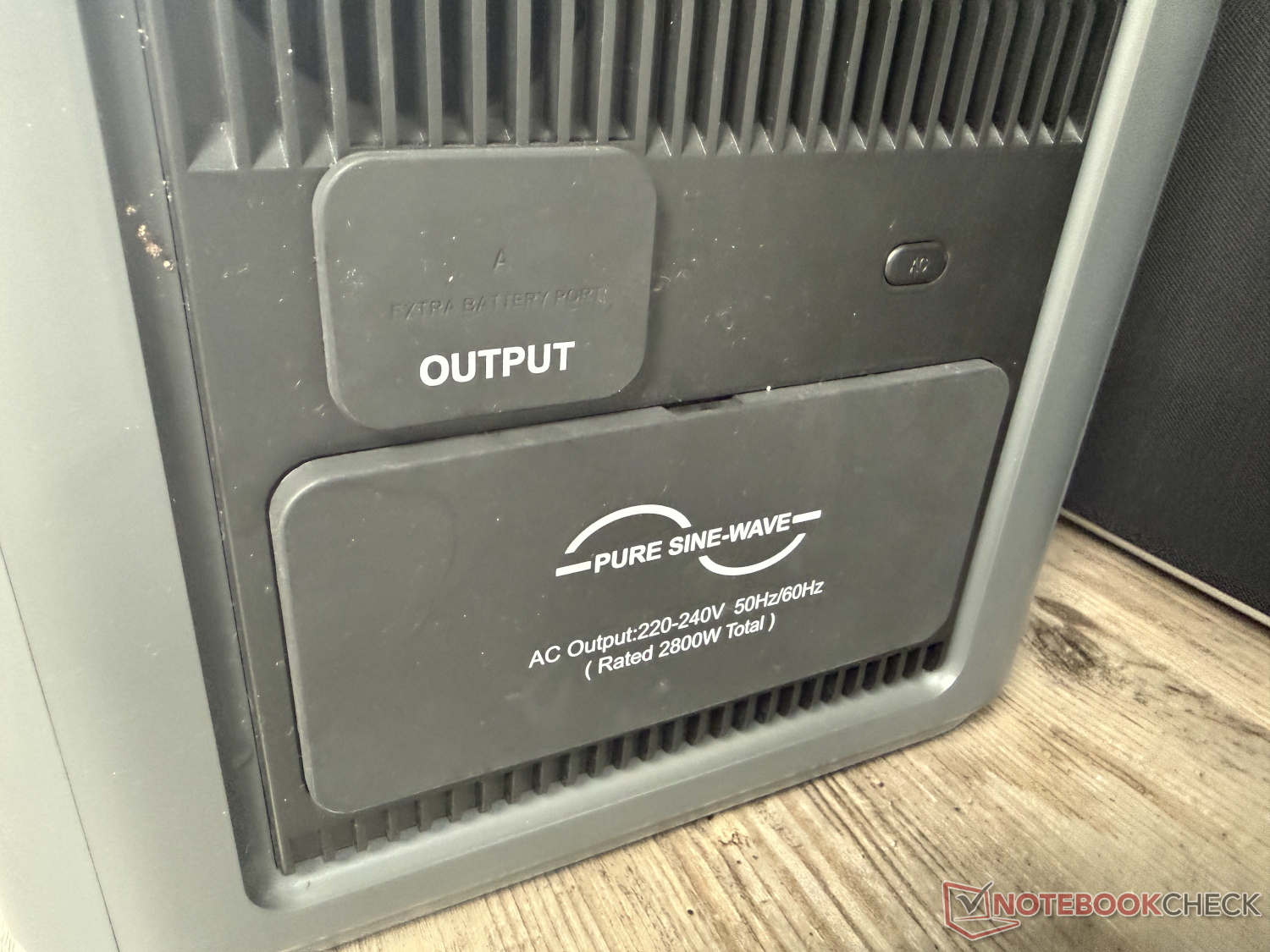
The device owes its model number P280 to its output power. The solar generator provides up to 2,800 W continuously. The AC output via its three sockets can be switched from 50 to 60 Hz if required.
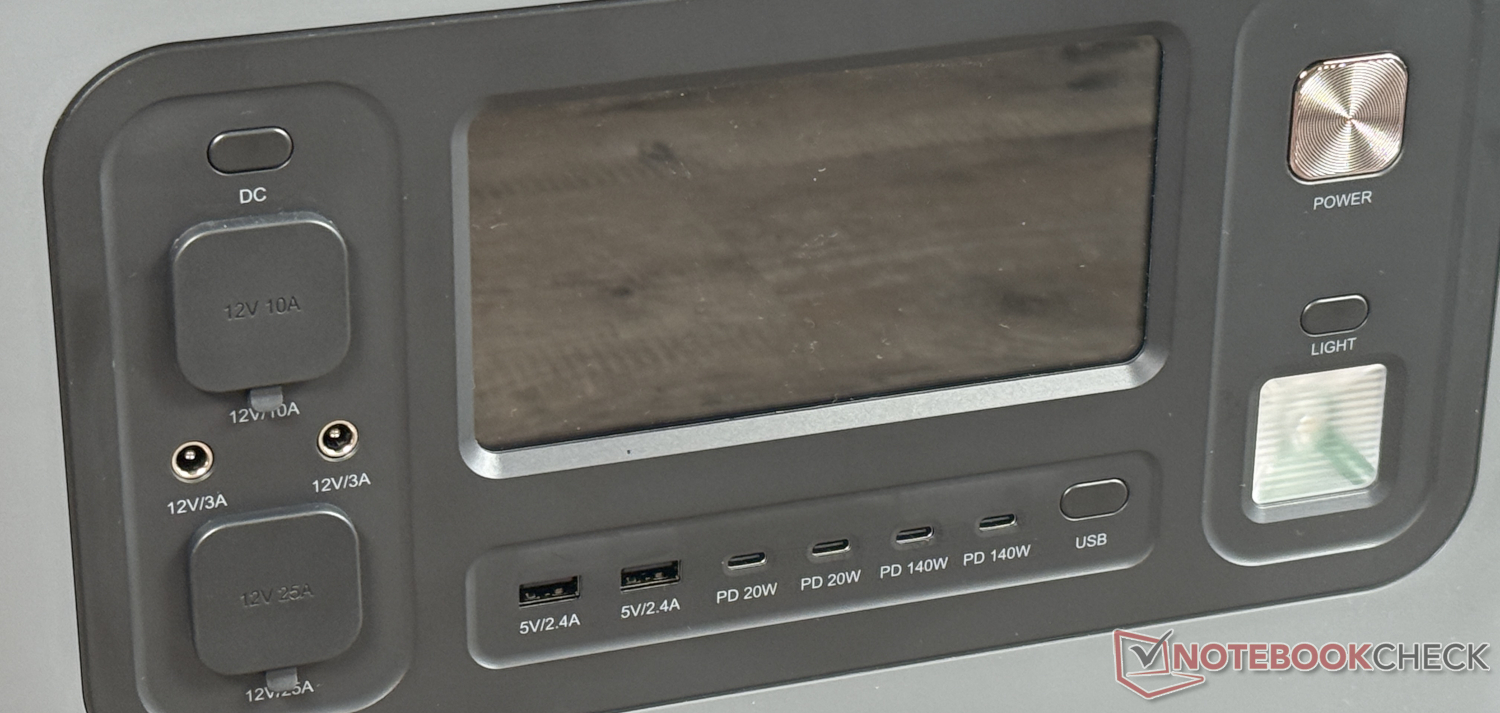
The Aferiy P280 has a total of 13 outputs. In addition to various DC connections (see data sheet above) such as a 12 V car socket (max. 120 W), the generously dimensioned USB connections should also be of interest to users. Up to 140 W is available via two USB-C ports. There are also two further USB-C ports with a maximum of 20 W and two USB-A ports with 12 W.
The Aferiy P280 can be charged in the usual ways for solar generators. In addition to up to 1,800 W via the mains, there are also two XT90 connections to which solar panels with an input power of up to 600 W can be connected, for example. A large display, an integrated LED light with SOS and flashing function in the front, a UPS function and app control round off the features of the Aferiy P280.
In addition to the power station, the scope of delivery includes an AC charging cable and a cable for connecting solar panels (MC4 to XT90), which are packed in a small zippered bag. A protective cover for the power station and a user manual (incl. German language) are also included in the box.
App: No connection possible
Aferiy offers its own app that can be used to operate the power station via smartphone. For iOS this is called "AFERIY", for Android "BrightEMS". We initially opted for the iOS app for the test. The connection is established via Bluetooth, so the app control only works in the immediate vicinity of the device.
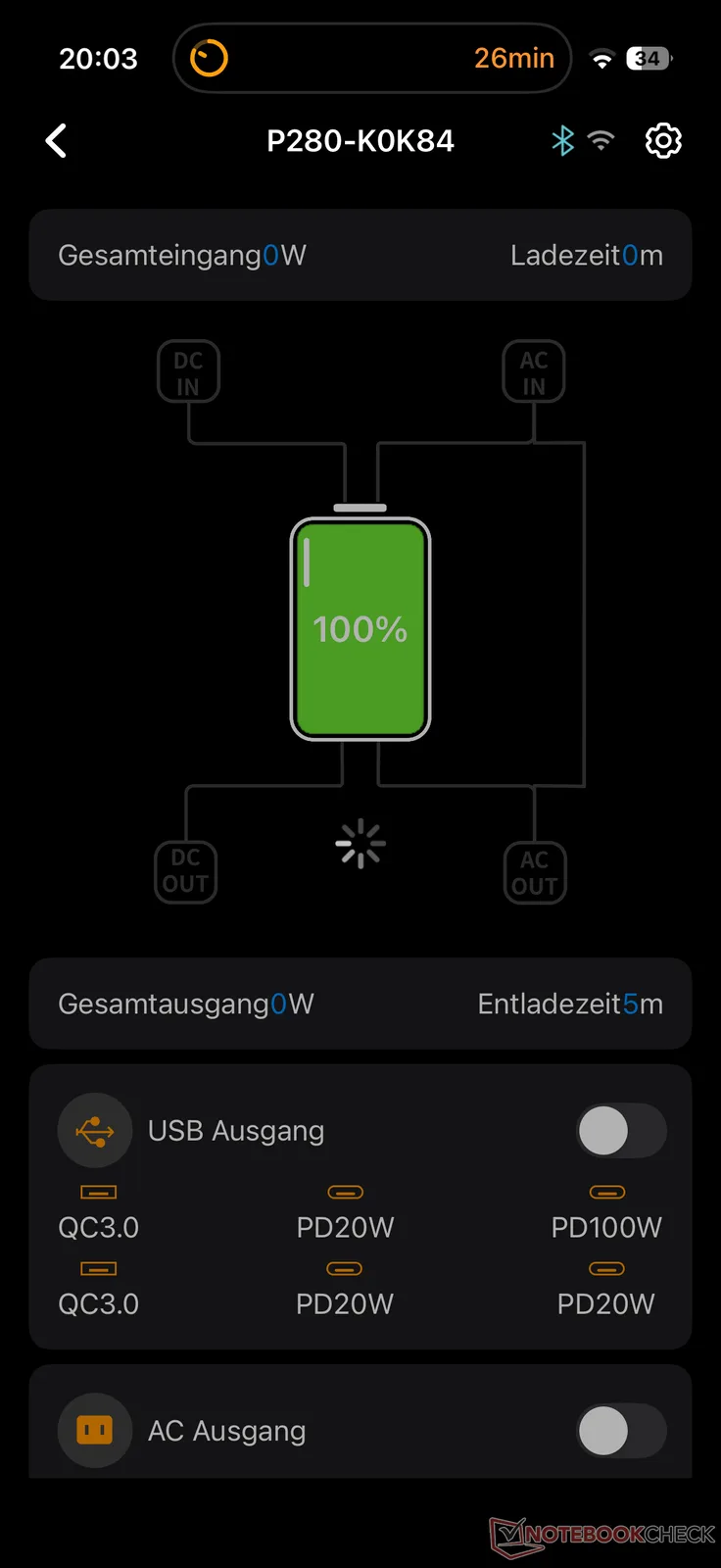
Before this is possible, new users must first register in the app, either by e-mail or cell phone number. After logging in, the connection between the power station and the app is established. In our test of the Aferiy P280, the test device then also appeared, as did the Bluetooth icon on the device's display. However, the connection setup did not work after several attempts.
The app's user interface loads and reveals that the current performance values can be viewed and the various connections can be switched on and off via the app. Unfortunately, we were unable to do this in practice with the iOS app; only a small cogwheel rotated and at some point an error message appeared.
Since the iPhone 16 Pro and the Powerstation were only a few centimeters apart and the problem occurred several times and in different places, there seems to be a larger problem. Especially as we are obviously not an isolated case, as the consistently poor ratings in the Apple App Store show.
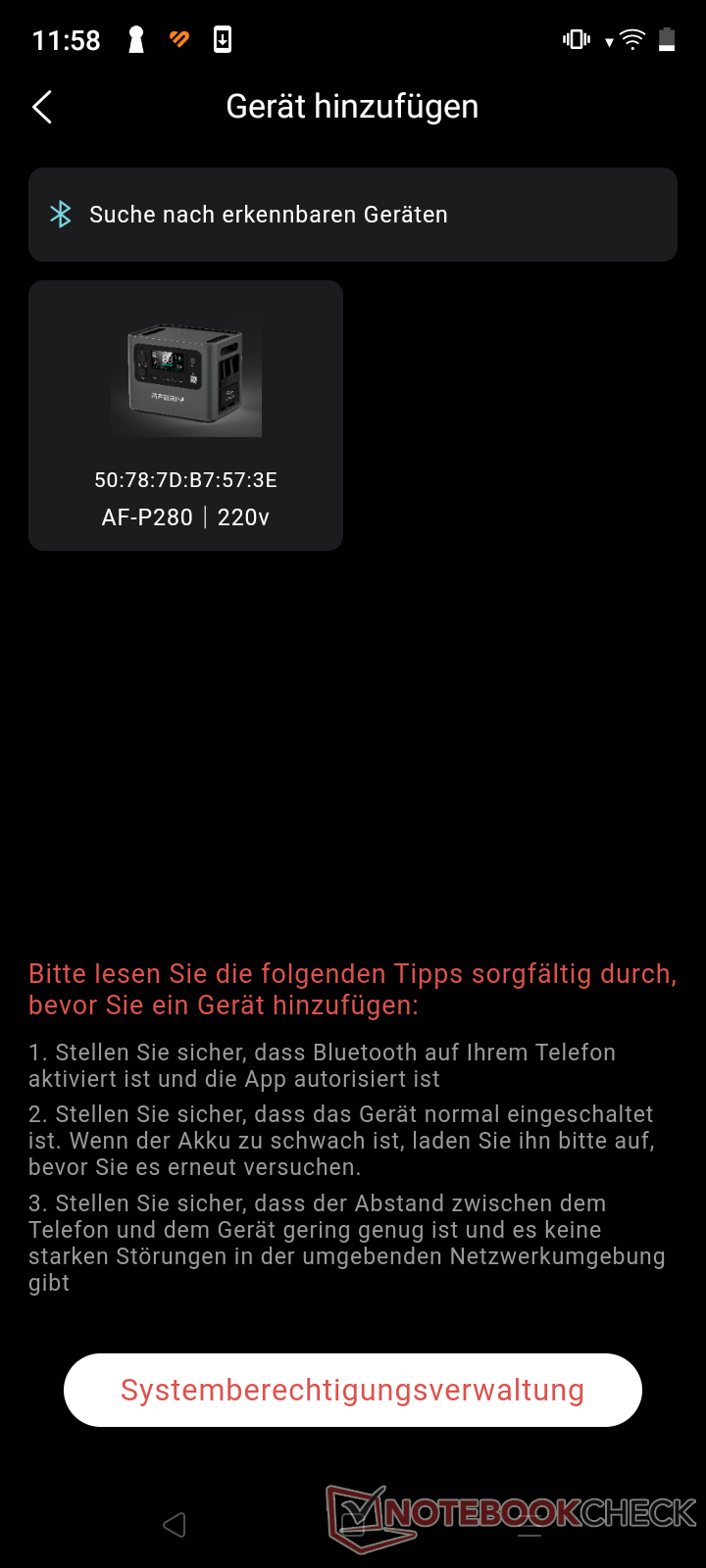
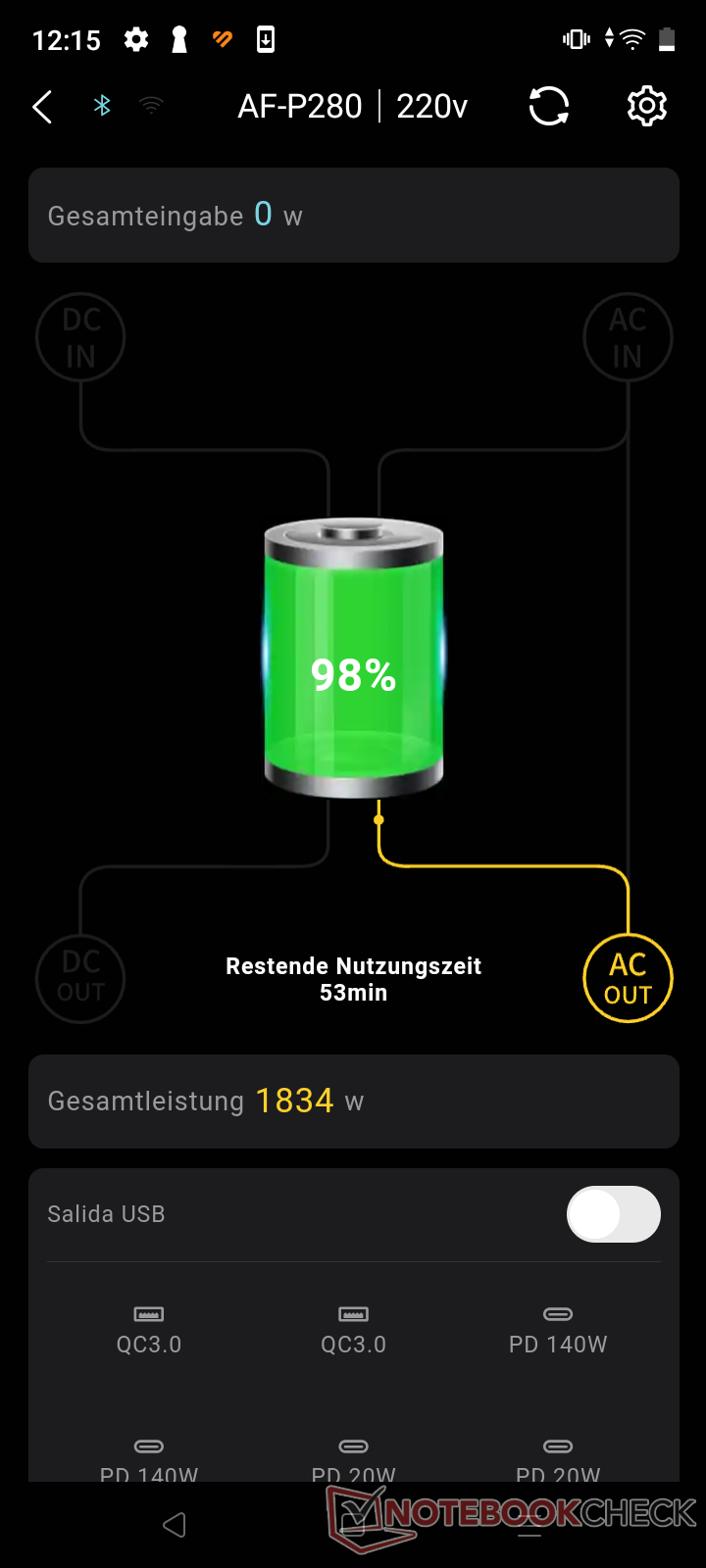
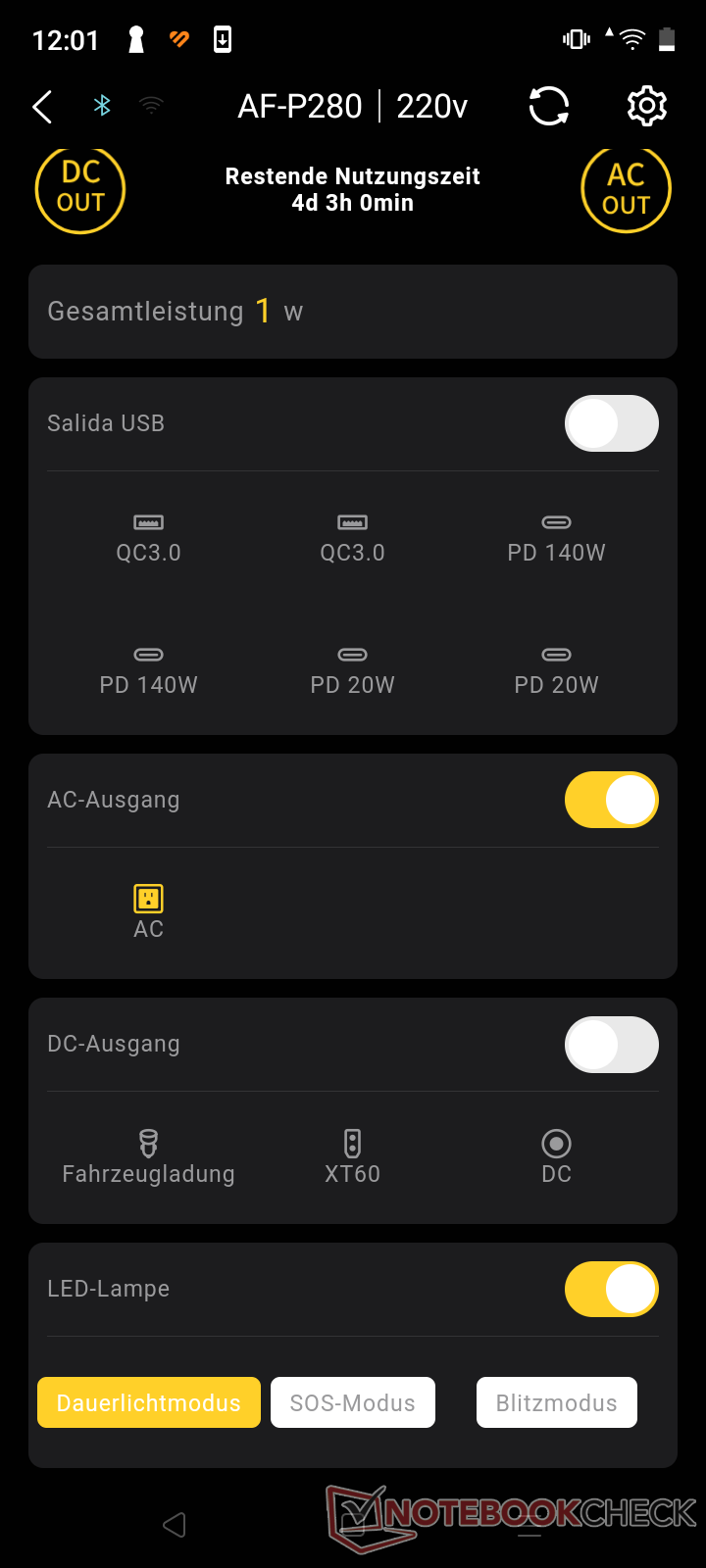
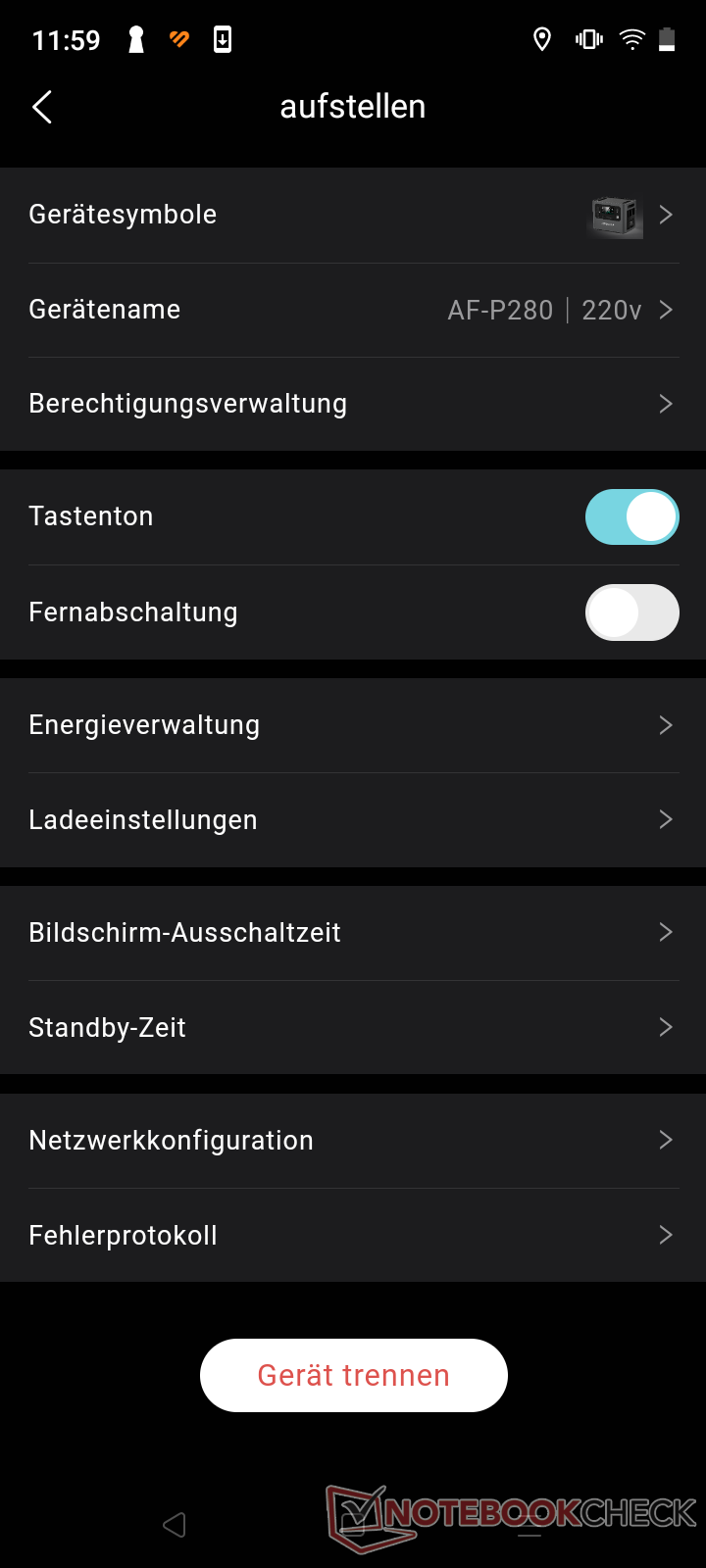
Switching to a Android device improved the situation and the connection was established (after new registration). It was also possible to read out and operate the Powerstation at Android. However, we were not really convinced by this app either, partly due to poor German localization and sometimes longer response times.
Practice: 1,800 W fast charging and solid efficiency
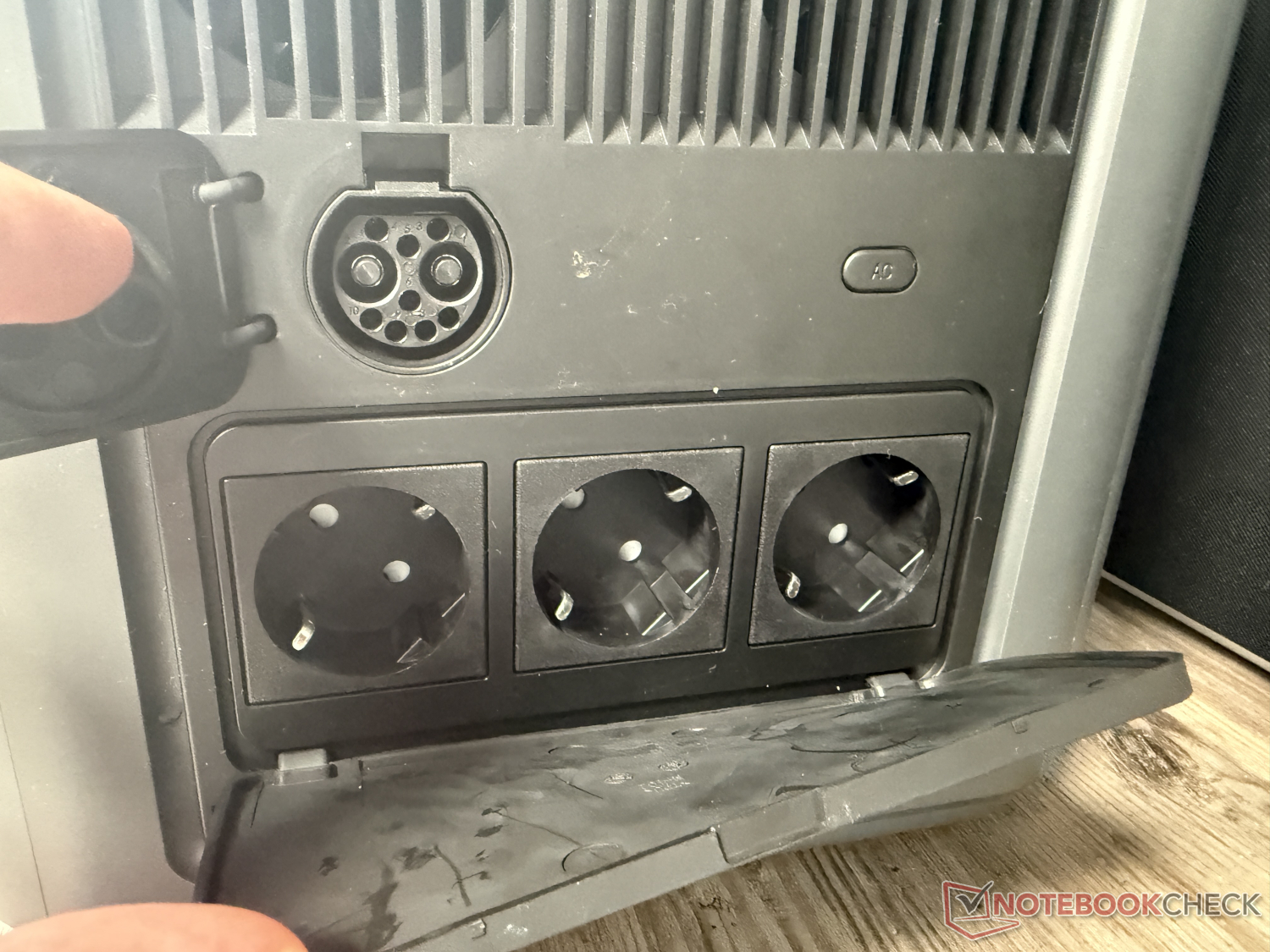
While the app theme is a disaster, the hardware itself makes a solid impression. The workmanship is decent. It is practical that the AC connections, for example, are located on the side behind a rubber flap. This protects them against splashing water, even if the flap itself makes access to the sockets somewhat more difficult.
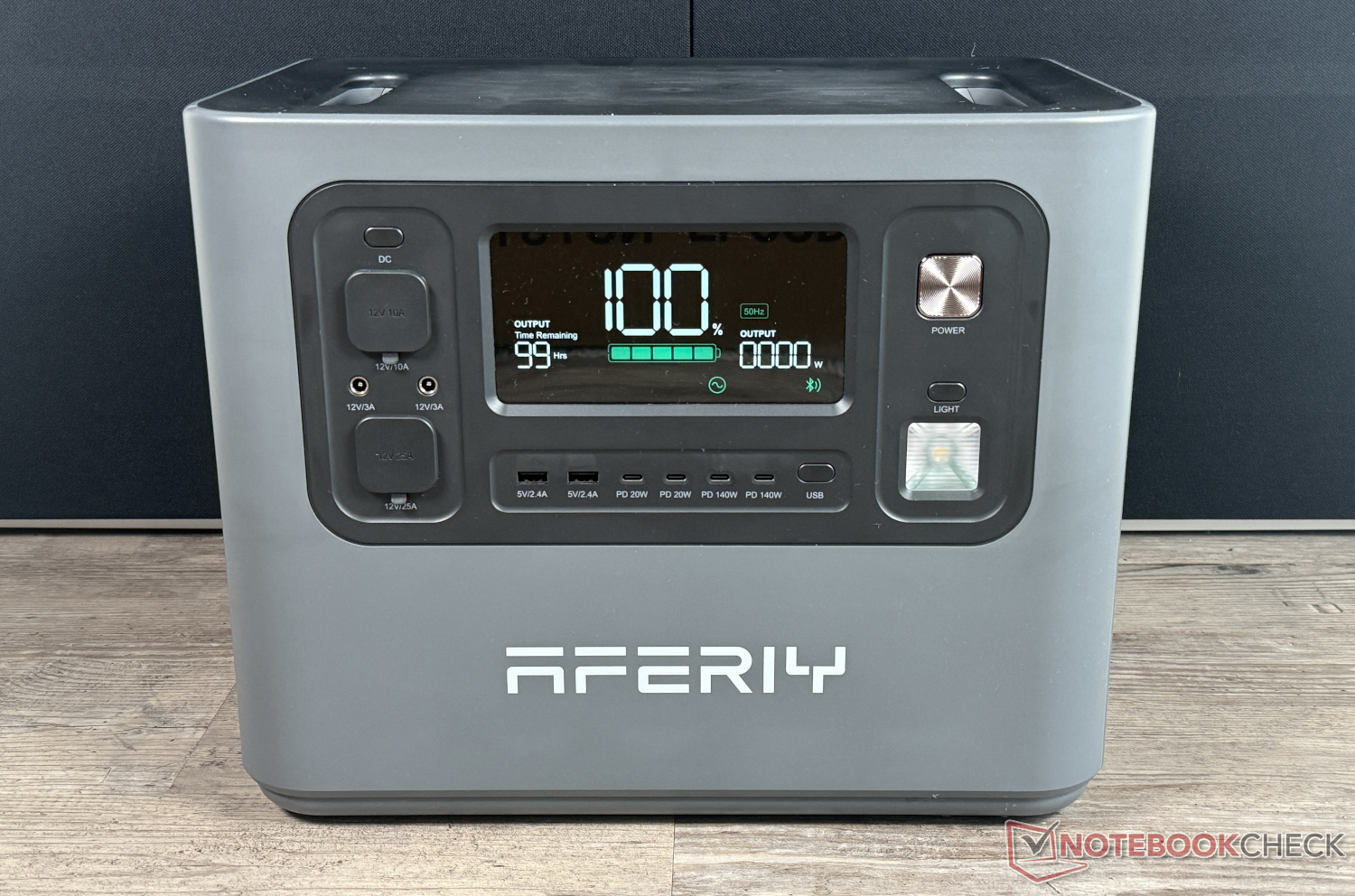
Some other connections are also "hidden", but not the USB ports under the display. This provides information on all important data such as the current input and output power as well as which connections are in use or switched on. The remaining time according to the current load status is also displayed, although this deviated significantly towards the end. The iOS app should actually do the same - but let's not go there again...
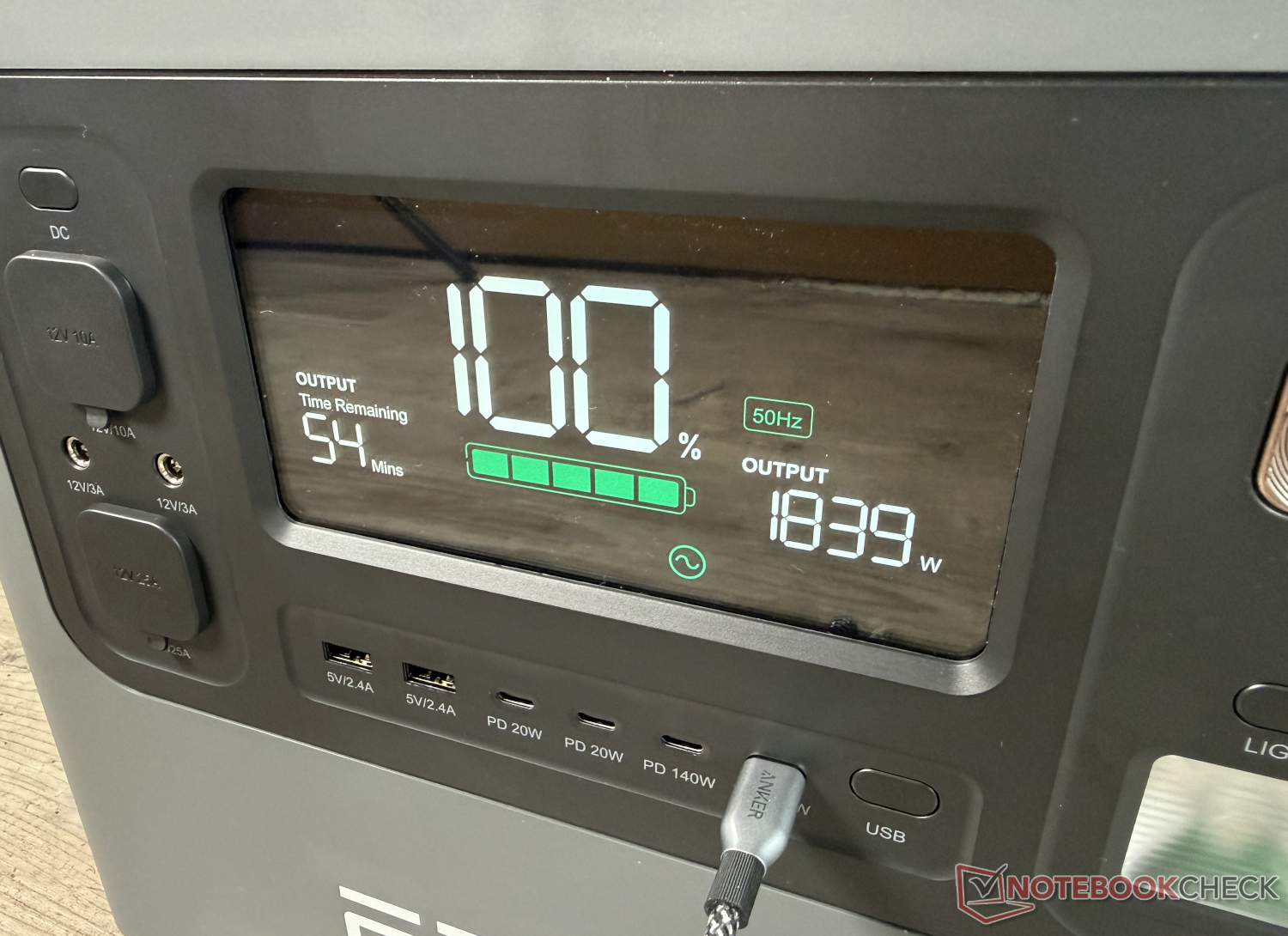
Let's take a closer look at the efficiency of the Aferiy P280. The manufacturer states a capacity of 2,048 Wh. In practice, we were able to extract around 1,740 Wh with a continuous output of a good 200 W AC during our test. This results in an efficiency of 85 percent (depending on the usage scenario). The rest is lost through the conversion from direct to alternating current (DC to AC).
In the other direction, i.e. when charging via the power grid, 2,250 Wh flowed into the completely empty power station, which corresponds to approx. 110 percent of the capacity and therefore an efficiency of a good 90 percent. This means that a total of 77 percent of the energy used can be used on the move (AC) in this scenario, which is a solid value.
During AC charging, the Powerstation achieved the promised 1,800 W from the start and up to a good 60 percent. After around 65 minutes, 80 percent was charged and after a further 50 minutes the charging process was complete.
DC charging and discharging (direct current) is generally much more efficient because it eliminates conversion losses to alternating current. Due to the lack of sunshine during Hamburg's recent winter, charging via solar panel could only be tested to a limited extent. Aferiy offers various foldable and therefore portable solar panels up to 400 W in its online shop. However, models from other manufacturers can also be connected to the power station via the XT90 connectors.
We measured the volume when supplying external devices and charging the power station at a maximum of 46 dB (from a distance of 1 m). This means that the Aferiy P280 is clearly audible at full fan speed, but not unpleasantly loud. However, when the AC outputs were switched on, the test device emitted slightly ticking noises, which presumably originated from the integrated inverter. This was quite annoying in quiet environments.
Powerstations are primarily intended for mobile use. With a weight of 21.6 kg and the two solid handles on the left and right, the P280 is still portable. Compared to other models in the 2 kWh class, the brand new Anker Solix C2000 Gen 2 is somewhat lighter at just under 19 kg, while the FossiBot F2400 is the same weight. There are also no major differences in terms of dimensions. The small LED light on the front is practical when camping and can also flash as an SOS signal in an emergency. The UPS function responded quickly in a short practical test.
Transparency
The selection of devices to be reviewed is made by our editorial team. The test sample was given to the author by the manufacturer free of charge for the purposes of review. There was no third-party influence on this review, nor did the manufacturer receive a copy of this review before publication. There was no obligation to publish this review. As an independent media company, Notebookcheck is not subjected to the authority of manufacturers, retailers or publishers.
 Add as a preferred source on Google


