




AI bots like ChatGPT or Google Gemini are changing how humans speak
The words that AI-powered large language model bots like ChatGPT or Google Gemini choose to express themselves have now seeped into the spoken human language.
Researchers have already shown that the sterile and algorithmic AI chatbot writing style has become pervasive in written communication, but spoken words are now apparently being affected as well.
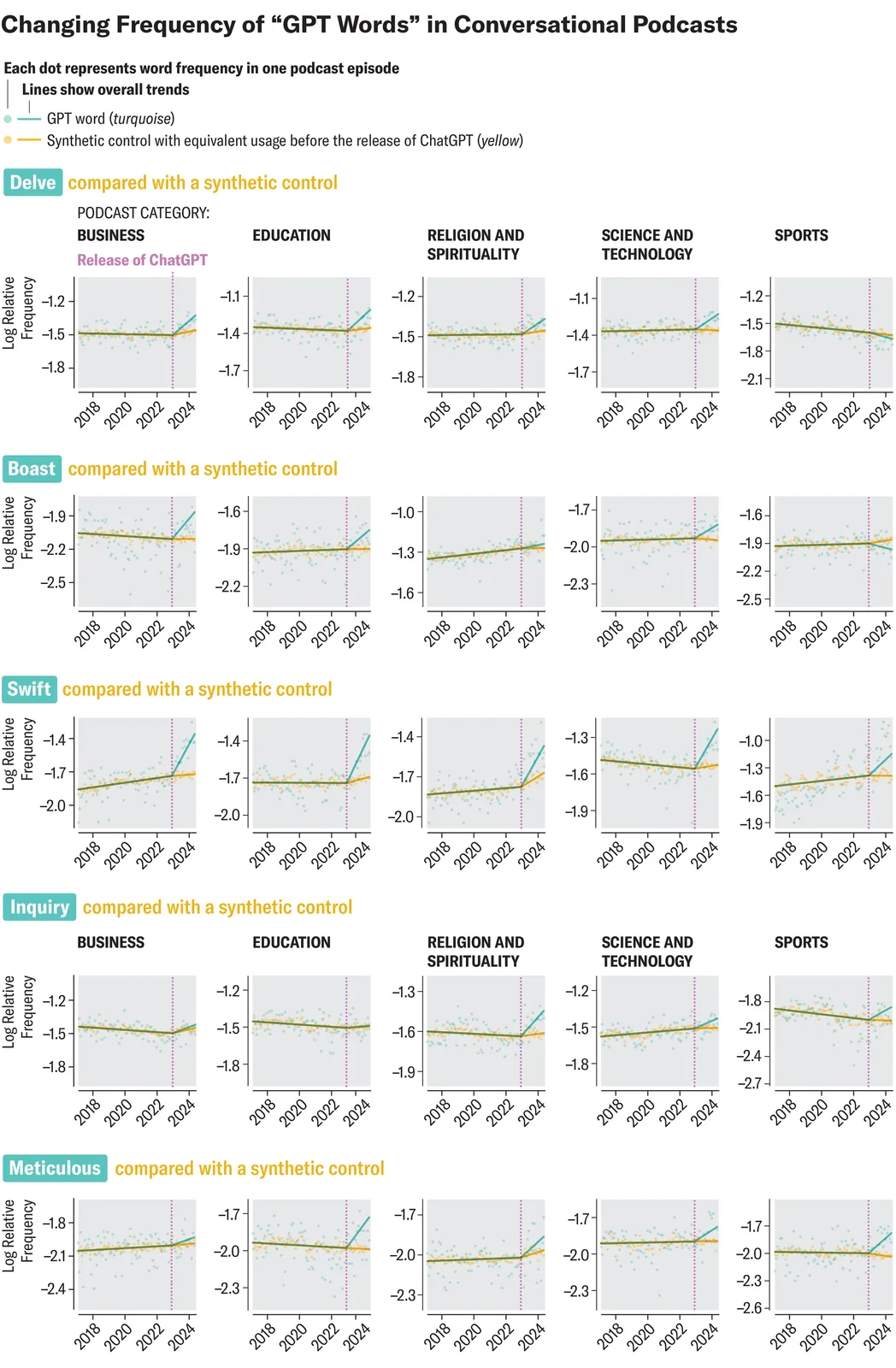
According to Max-Planck Institute's Hiromu Yakura, a postdoc, the words that ChatGPT uses most often have also become more frequently used by humans. The team sifted through hundreds of thousands of YouTube videos, podcasts, or random conversations, and compared words that ChatGPT typically polishes written communication with when asked, to their synonym alternatives. "We detect a measurable and abrupt increase in the use of words preferentially generated by ChatGPT, such as delve, comprehend, boast, swift, and meticulous" after ChatGPT's launch, says the study.
These findings suggest a scenario where machines, originally trained on human data and subsequently exhibiting their own cultural traits, can, in turn, measurably reshape human culture. This marks the beginning of a closed cultural feedback loop in which cultural traits circulate bidirectionally between humans and machines. Our results motivate further research into the evolution of human-machine culture, and raise concerns over the erosion of linguistic and cultural diversity, and the risks of scalable manipulation.
The moral of the story is that it will be hard to fight scale, says Yakura, and the richness of human expression could eventually be lost or smoothed out by the ubiquitous use of bots like ChatGPT or Gemini that are predominantly being trained in certain languages and certain preferred styles of expression they have been taught to consider of higher quality.
"LLMs often amplify dominant patterns or ideas in a way that distorts their original proportions," tips another research, and they are also influenced by the worldview of their creators. As such, indigenous knowledge passed down in underrepresented languages may be inexorably lost despite its usefulness, all the while the rather limiting AI-speak starts to permeate human conversations as well.
Source(s)
Hiromu Yakura (Arxiv) via SciAm
 Add as a preferred source on Google


