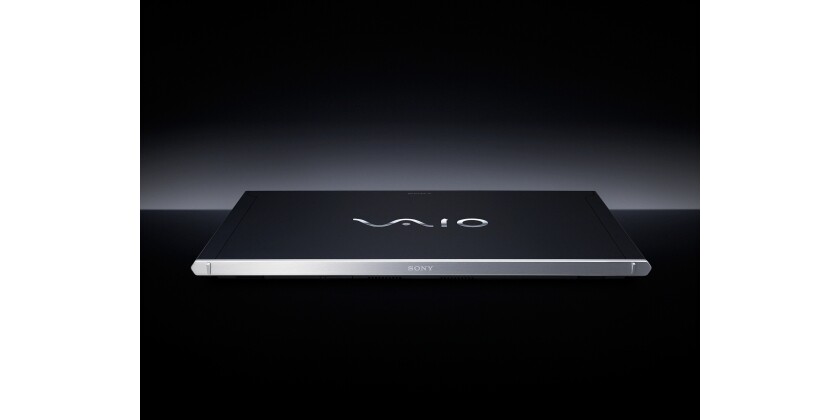
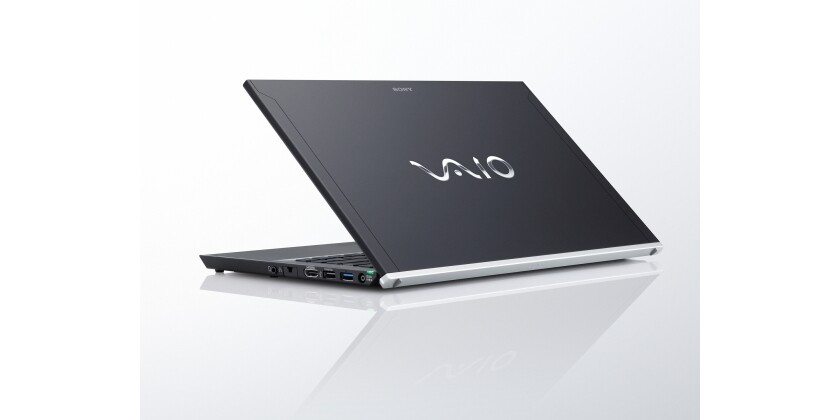
Sony Vaio VPC-Z21M9E
Specifications
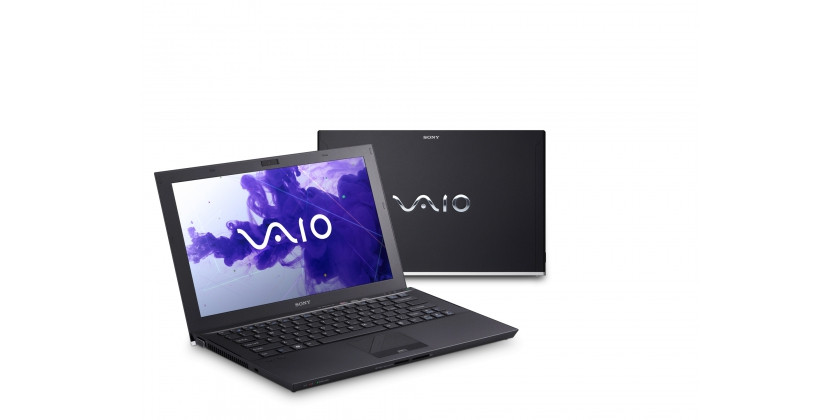
Sony Vaio VPC-Z21M9E (Vaio VPC-Z Series)
Processor
Intel Core i5-2410M 2c/4t 2 x 2.3 - 2.9 GHz, Sandy Bridge
Graphics adapter
Display
13.10 inch 16:9, 1600 x 900 pixel, glossy: no
Weight
1.5 kg ( = 52.91 oz / 3.31 pounds)
Price
2300 Euro
Price comparison
Average Score:
Average of 6 scores (from 9 reviews)
Average of 6 scores (from 9 reviews)
price: 52%, performance: 80%, features: 80%, display: 92% mobility: 70%, workmanship: 70%, ergonomy: 74%, emissions: - %
Reviews for the Sony Vaio VPC-Z21M9E
Sony Vaio Z Review
Source: Digital Trends Archive.org version
Judged by its technical achievements, the Sony Vaio Z is easily a 10/10 laptop. Sony has managed to pack a number of high-quality components into a very small space, achieving things that most ultrabooks shown at CES could only hope for. Better still, the Z isn’t particularly hot or noisy, nor is the battery life disappointing.
Single Review, online available, Long, Date: 02/09/2012
Rating: Total score: 80%
Source: Digital Trends
Archive.org versionJudged by its technical achievements, the Sony Vaio Z is easily a 10/10 laptop. Sony has managed to pack a number of high-quality components into a very small space, achieving things that most ultrabooks shown at CES could only hope for. Better still, the Z isn’t particularly hot or noisy, nor is the battery life disappointing.
Single Review, online available, Long, Date: 02/09/2012
Rating: Total score: 80%
Sony VAIO Z (2011) review
Source: Trusted Reviews Archive.org version
Sony's carbon-fibre VAIO Z is the lightest, most powerful and most versatile ultraportable available. With highlights like an optional Full HD screen and up to a 512GB SSD, and with its optional dock offering dedicated graphics and Blu-ray playback, its rivals don't even come close – especially since battery life is also good. As a package, it has no competitors, though for many users the Z won't justify its extra cost over either its S-series cousin or other rivals like the MacBook Air. However, while it's not without its faults, if you can afford it this is a stunning machine.
Single Review, online available, Very Long, Date: 08/30/2011
Rating: Total score: 80% price: 60% performance: 90% features: 100% mobility: 80% ergonomy: 90%
Source: Trusted Reviews
Archive.org versionSony's carbon-fibre VAIO Z is the lightest, most powerful and most versatile ultraportable available. With highlights like an optional Full HD screen and up to a 512GB SSD, and with its optional dock offering dedicated graphics and Blu-ray playback, its rivals don't even come close – especially since battery life is also good. As a package, it has no competitors, though for many users the Z won't justify its extra cost over either its S-series cousin or other rivals like the MacBook Air. However, while it's not without its faults, if you can afford it this is a stunning machine.
Single Review, online available, Very Long, Date: 08/30/2011
Rating: Total score: 80% price: 60% performance: 90% features: 100% mobility: 80% ergonomy: 90%
Sony Vaio Z (2011) VPCZ21M9E review
Source: It Pro Archive.org version
It is possible to get a Vaio Z for £1,195 ex VAT by removing features such as the Power Media Dock, the 3G modem and opting for Windows 7 Home Premium instead of Professional. Even so, design issues such as the keyboard, concerns about sturdiness and the heat means it’s still a plaything for status-conscious C-level executives rather than an ultraportable workhorse for wide or even limited deployment. There's nothing quite like it at the moment, but more practical alternatives include the Apple MacBook Air, the Toshiba Portégé R830 or Sony’s own Vaio SB1V9E.
Single Review, online available, Medium, Date: 07/08/2011
Rating: Total score: 67%
Source: It Pro
Archive.org versionIt is possible to get a Vaio Z for £1,195 ex VAT by removing features such as the Power Media Dock, the 3G modem and opting for Windows 7 Home Premium instead of Professional. Even so, design issues such as the keyboard, concerns about sturdiness and the heat means it’s still a plaything for status-conscious C-level executives rather than an ultraportable workhorse for wide or even limited deployment. There's nothing quite like it at the moment, but more practical alternatives include the Apple MacBook Air, the Toshiba Portégé R830 or Sony’s own Vaio SB1V9E.
Single Review, online available, Medium, Date: 07/08/2011
Rating: Total score: 67%
Sony VAIO Z Series (2011) review
Source: PC Pro Archive.org version
Gram for gram, however, there’s simply nothing that can match the all-round performance of the Sony VAIO Z series. Yes, the ergonomics have suffered a little, and yes it’s brutally expensive, but as a notebook that takes the concept of a full-sized, high-powered ultraportable and pushes to its outer extremities, it’s untouchable; a laptop everyone should aspire to own.
Single Review, online available, Medium, Date: 07/01/2011
Rating: Total score: 83% price: 50% performance: 83% features: 83% ergonomy: 83%
Source: PC Pro
Archive.org versionGram for gram, however, there’s simply nothing that can match the all-round performance of the Sony VAIO Z series. Yes, the ergonomics have suffered a little, and yes it’s brutally expensive, but as a notebook that takes the concept of a full-sized, high-powered ultraportable and pushes to its outer extremities, it’s untouchable; a laptop everyone should aspire to own.
Single Review, online available, Medium, Date: 07/01/2011
Rating: Total score: 83% price: 50% performance: 83% features: 83% ergonomy: 83%
Foreign Reviews
Leichtes Notebook für unterwegs und daheim
Source: Chip.de - 5/12
Single Review, , Medium, Date: 04/01/2012
Rating: Total score: 77% performance: 84% features: 83% display: 98% mobility: 65% ergonomy: 74%
Source: Chip.de - 5/12
Single Review, , Medium, Date: 04/01/2012
Rating: Total score: 77% performance: 84% features: 83% display: 98% mobility: 65% ergonomy: 74%
Test: Sony Vaio VPC-Z21M9E/B (Notebook)
Source: Chip.de DE→EN Archive.org version
Single Review, online available, Medium, Date: 02/07/2012
Rating: Total score: 77% price: 45% performance: 84% features: 83% display: 98% mobility: 65% ergonomy: 74%
Source: Chip.de
DE→EN Archive.org versionSingle Review, online available, Medium, Date: 02/07/2012
Rating: Total score: 77% price: 45% performance: 84% features: 83% display: 98% mobility: 65% ergonomy: 74%
Sony Vaio VPC-Z21M9E/B
Source: Notebookjournal DE→EN Archive.org version
Single Review, online available, Medium, Date: 09/23/2011
Rating: performance: 60% features: 50% display: 80% mobility: 70% workmanship: 70% ergonomy: 50%
Source: Notebookjournal
DE→EN Archive.org versionSingle Review, online available, Medium, Date: 09/23/2011
Rating: performance: 60% features: 50% display: 80% mobility: 70% workmanship: 70% ergonomy: 50%
Lichtgestalt
Source: c't - 20/11
light, compact, good performance, expensive
Single Review, , Medium, Date: 10/01/2011
Source: c't - 20/11
light, compact, good performance, expensive
Single Review, , Medium, Date: 10/01/2011
SONY VAIO Z の実機レビュー
Source: The Hikaku JA→EN Archive.org version
Single Review, online available, Medium, Date: 08/25/2011
Source: The Hikaku
JA→EN Archive.org versionSingle Review, online available, Medium, Date: 08/25/2011
Comment
Intel HD Graphics 3000: Integrated graphics card in the Intel Sandy Bridge processors (Core ix-2xxx). The HD 3000 is the faster (internally GT2 called) version with 12 Execution Units (EUs).
Only some 3D games with very low demands are playable with these cards.
» Further information can be found in our Comparison of Mobile Graphics Cards and the corresponding Benchmark List.
2410M:
Dual-core processor based on the Sandy Bridge architecture with an integrated graphics card and dual-channel DDR3 memory controller. The CPU is clocked at 2.3 GHz (Turbo Boost 2.6-2.9 GHz) and the GPU at 650 (1200 MHz Turbo).
» Further information can be found in our Comparison of Mobile Processsors.
 Add as a preferred source on Google