Two US states introduce legislation to prevent production of guns on 3D printers
3D printing is booming, having reached a global market value of $24-29 billion in 2025, with projections estimating growth to $89-135 billion by 2030-2034. This translates to an annual growth rate of roughly 18-24%. 3D printers from a wide variety of manufacturers are often covered here at Notebookcheck, ranging from models worth as little as several hundred dollars to high-end printers with four digit price tags.
3D printers are something of a technological marvel, allowing individuals without any engineering expertise whatsoever to manufacture an enormous variety of objects in the comfort of their own home. These include toys, household items, medical devices, fashion accessories and even airplane parts. They can also produce firearms, or the parts needed for assembly. Since these usually lack serial numbers, this effectively makes them "ghost guns" in the eyes of law enforcement agencies, who are often unable to track their origin.
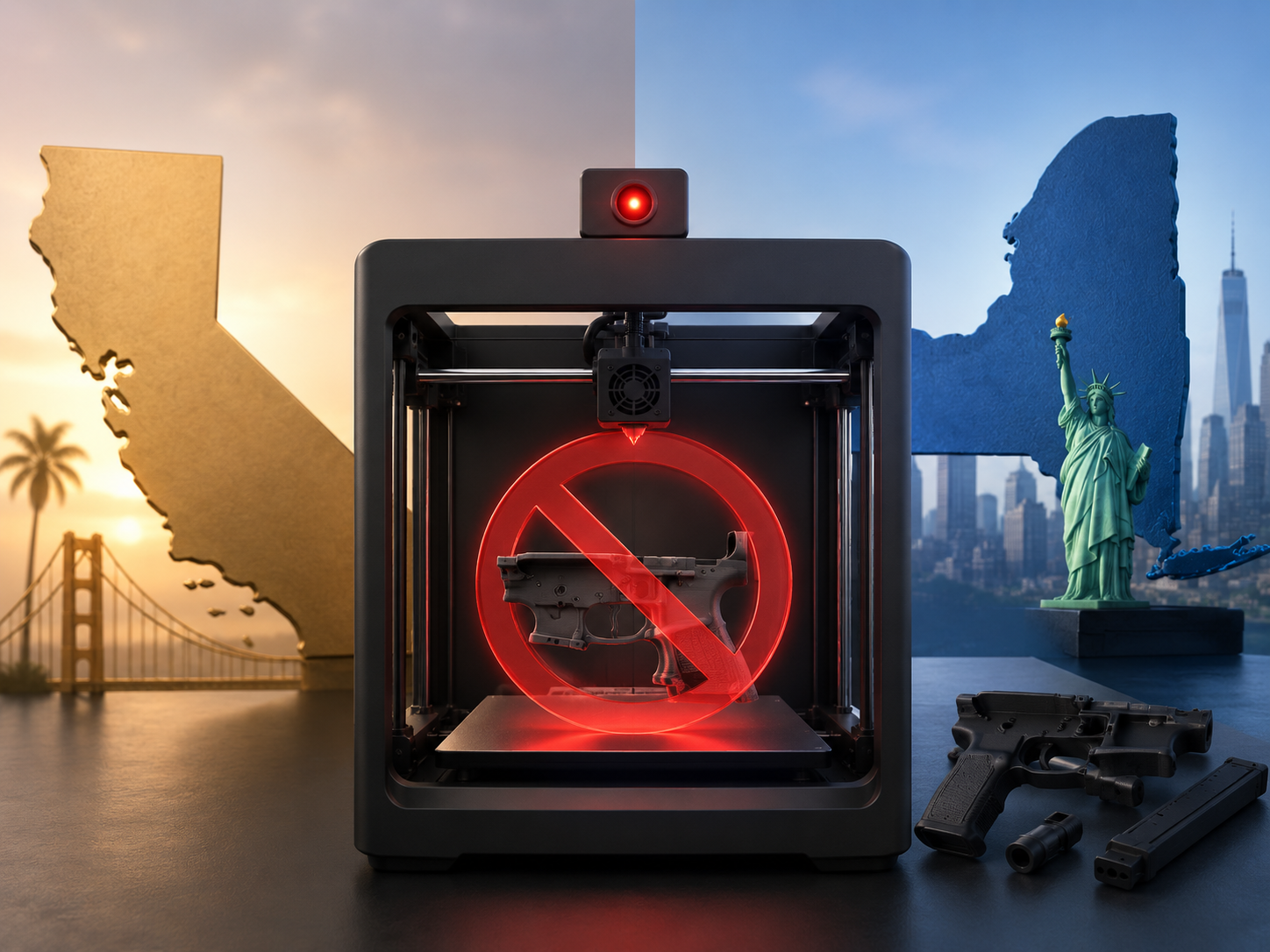
Against this backdrop, the nation's two most populous states are currently enacting legislation — California's AB 2047 and New York's 3D printer blocking technology mandate — that would force 3D printers to come with blocking technology that detects and prevents the production of firearm components. The technology would examine each design submitted for 3D printing, compare it against a digital database of firearm components, and reject any design that closely matches those parts. If successfully enacted, the blocking technology could be installed on 3D printers from 2029.
However, some critics argue that the proposed measures go too far, comparing it to censorship algorithms. The technology could block harmless or unintended items that look like gun parts, while others claim that print instructions submitted for an AI-based analysis could put people’s artistic and proprietary creations at risk. Another criticism is that the technology is mere political lip service, that tech-savvy criminals will manage to somehow circumvent the technology, alter the designs of guns or print the parts in less restrictive parts of the country.
 Add as a preferred source on Google