




The one that always laughs: Joyroom Podix 140W Charger tested
Andrea Grüblinger (translated by J. Simon Leitner) Published 🇩🇪 🇫🇷 ...
Conclusion - Many power supplies can charge, but they don't smile while doing so!
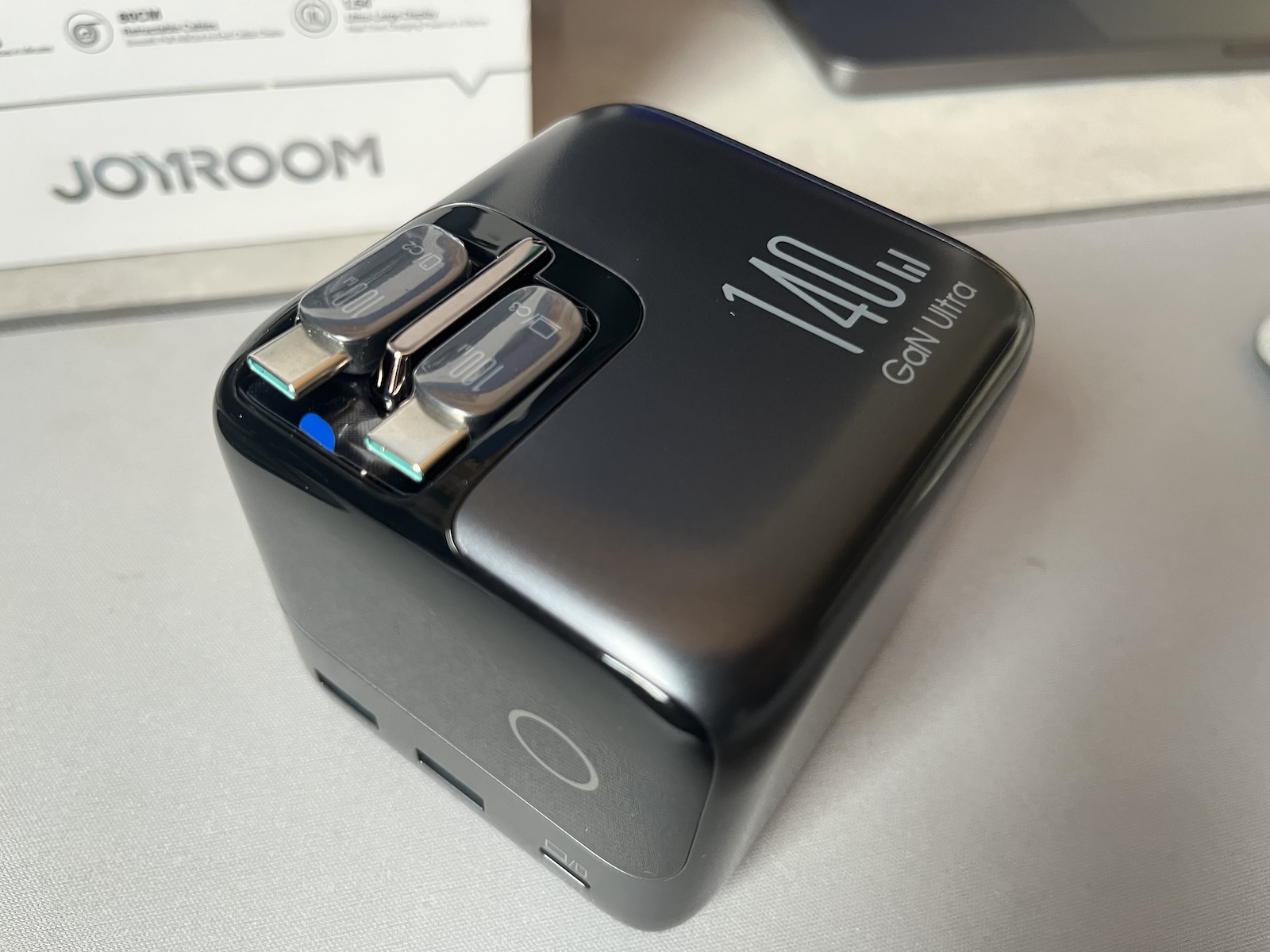
The Joyroom Podix 140W Charger offers many ports and can therefore replace several separate chargers and cables. The output of up to 140 watts is easily enough to supply even laptops (in office use) with sufficient power and charge various small gadgets at the same time. Care should be taken when allocating the ports, as the output power of individual ports is severely limited when multiple ports are used. The highlight is the two Type-C cables, which are stored rolled up in the device and can be extended up to around 75 centimeters if required. This means that cell phone charging cables lying around are finally a thing of the past.
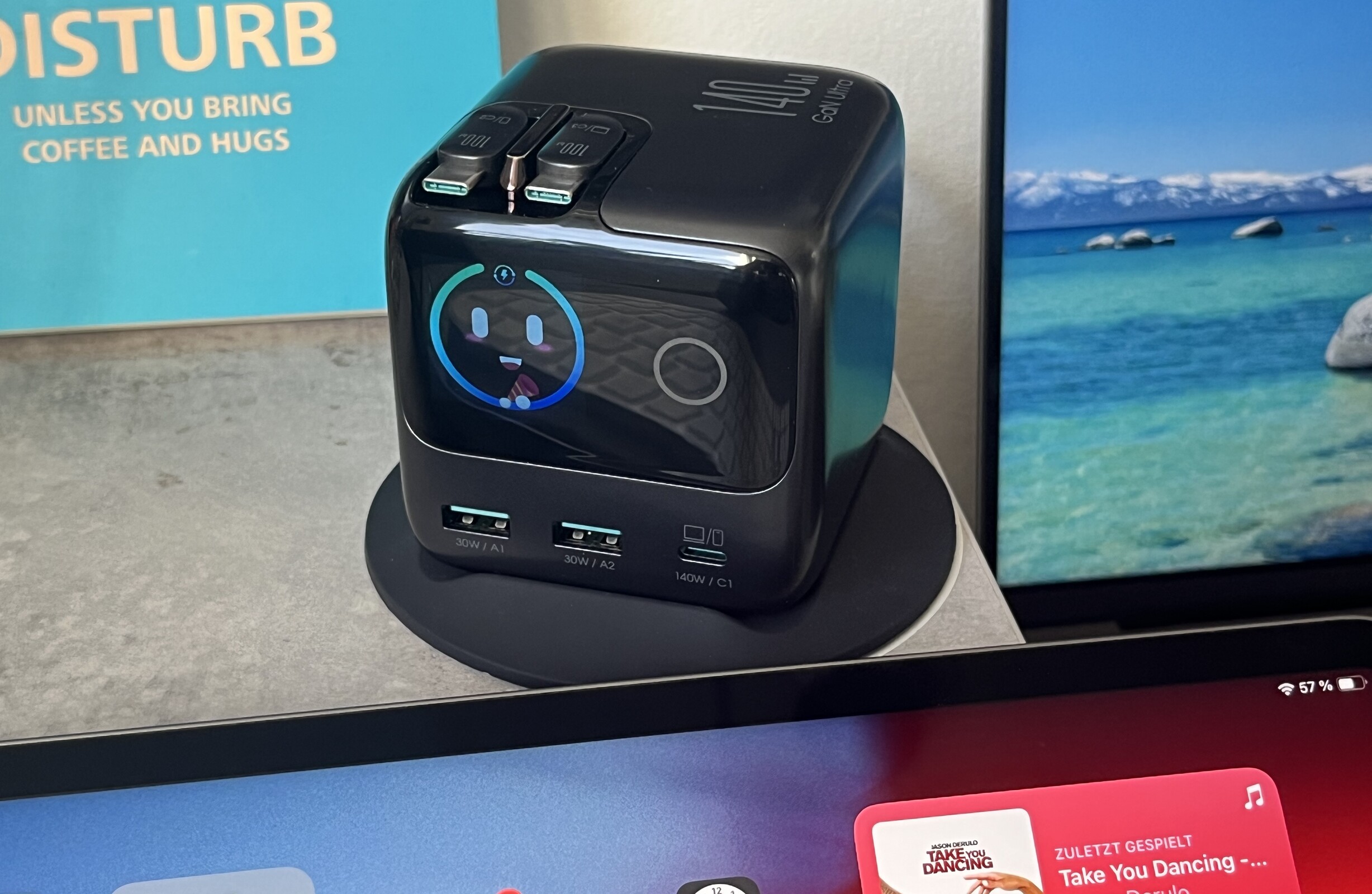
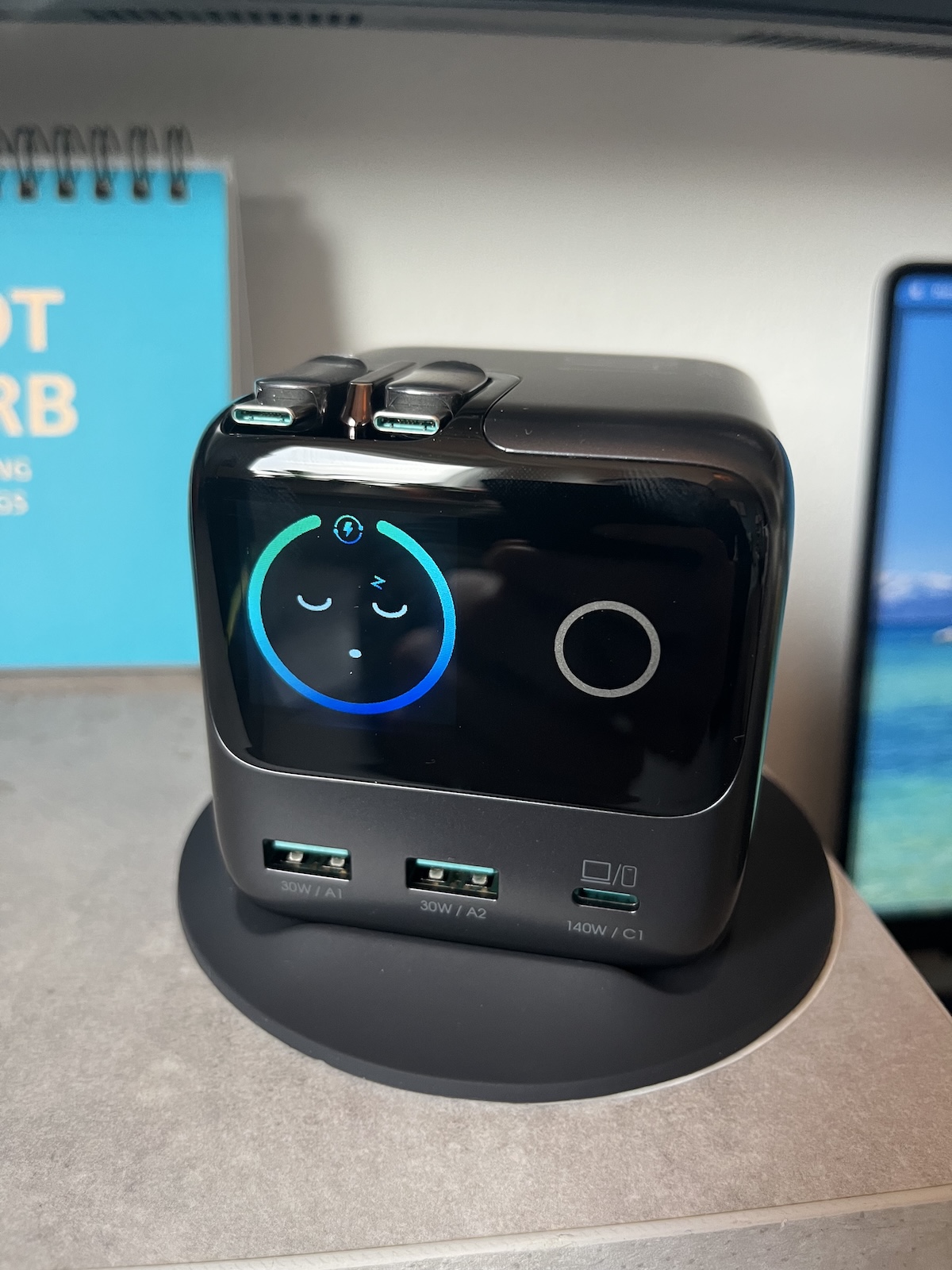
And what is the smiley face on the display all about? After our test, we couldn't find any profound meaning to the visualization. The animated emoji can be customized by double-tapping on the display. The friendly face is holding a small pinwheel in its hands at one point and blowing bubbles at another. Isn't that nice?
Pros
Cons
Price and availability
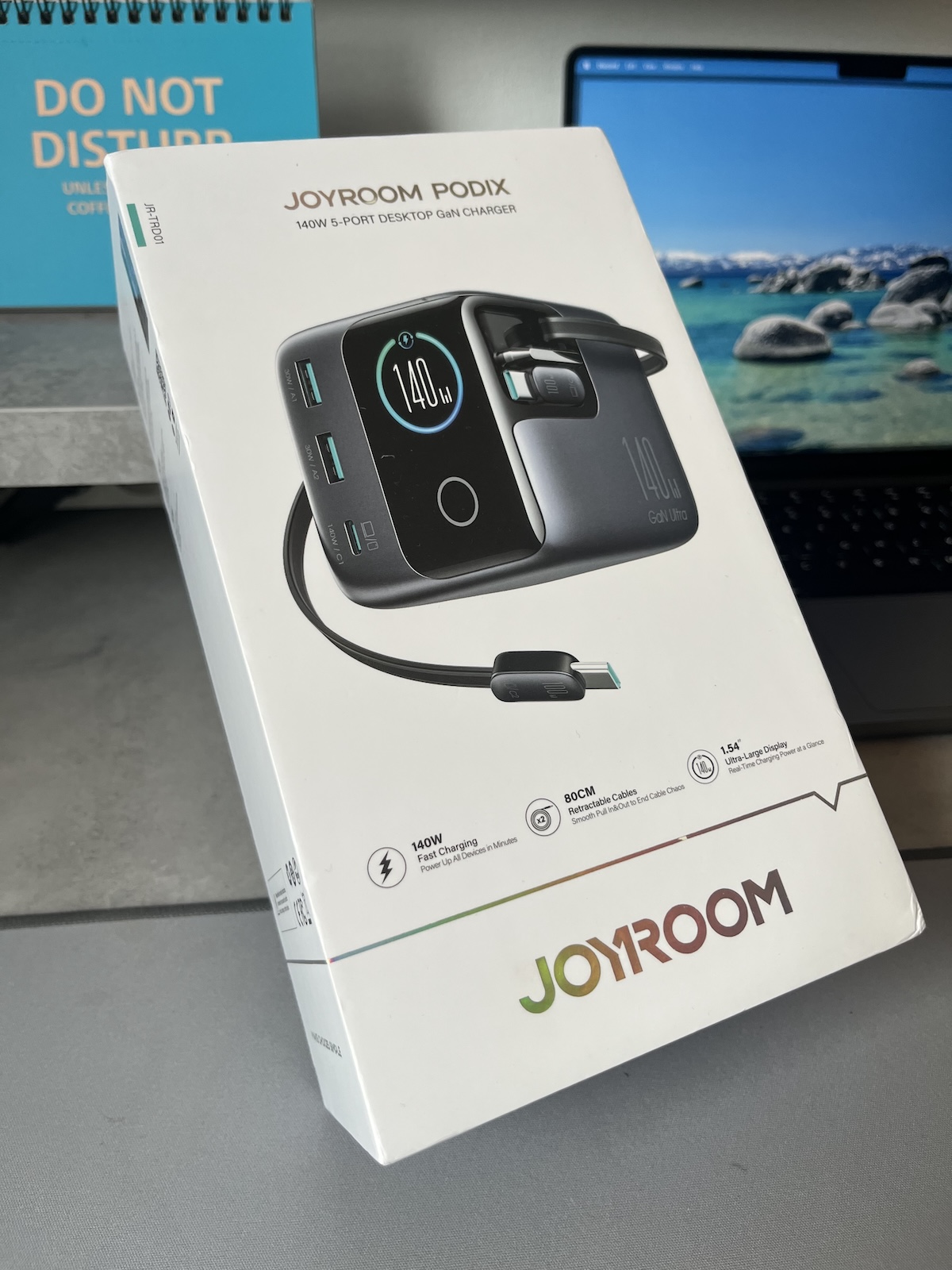
The Joyroom Podix 140W Charger is available on Amazon for around 90 USD. Get 15% off with the discount code 5P83FVBV (valid till 2026/4/30).

There is no end to the flood of electrical devices that need to be charged regularly. Recently, many smartphones have even been sold without a charger included. The same applies to many gadgets such as smartwatches, power banks, flashlights, headphones, etc. A charger that is as versatile as possible is therefore needed to supply all these devices with the required energy. With the introduction of GaN technology (gallium nitride) a few years ago, power supply units suddenly became significantly smaller, lighter and more efficient. Today, almost all mobile power supply units use this technology, including the Joyroom Podix, which we take a closer look at below.
Specifications
| Model | JR-TRD01 |
| Charger Size | 75.00 × 75.50 × 82.50 mm (2.95 × 2.97 × 3.25 in) |
| Charger Net Weight | 466 g |
| Retractable Cable Length | Max 80 cm (31.50 in) |
| Magnetic Silicone Pad Size | Φ110 mm (4.33 in) |
| Screen Type | LCD |
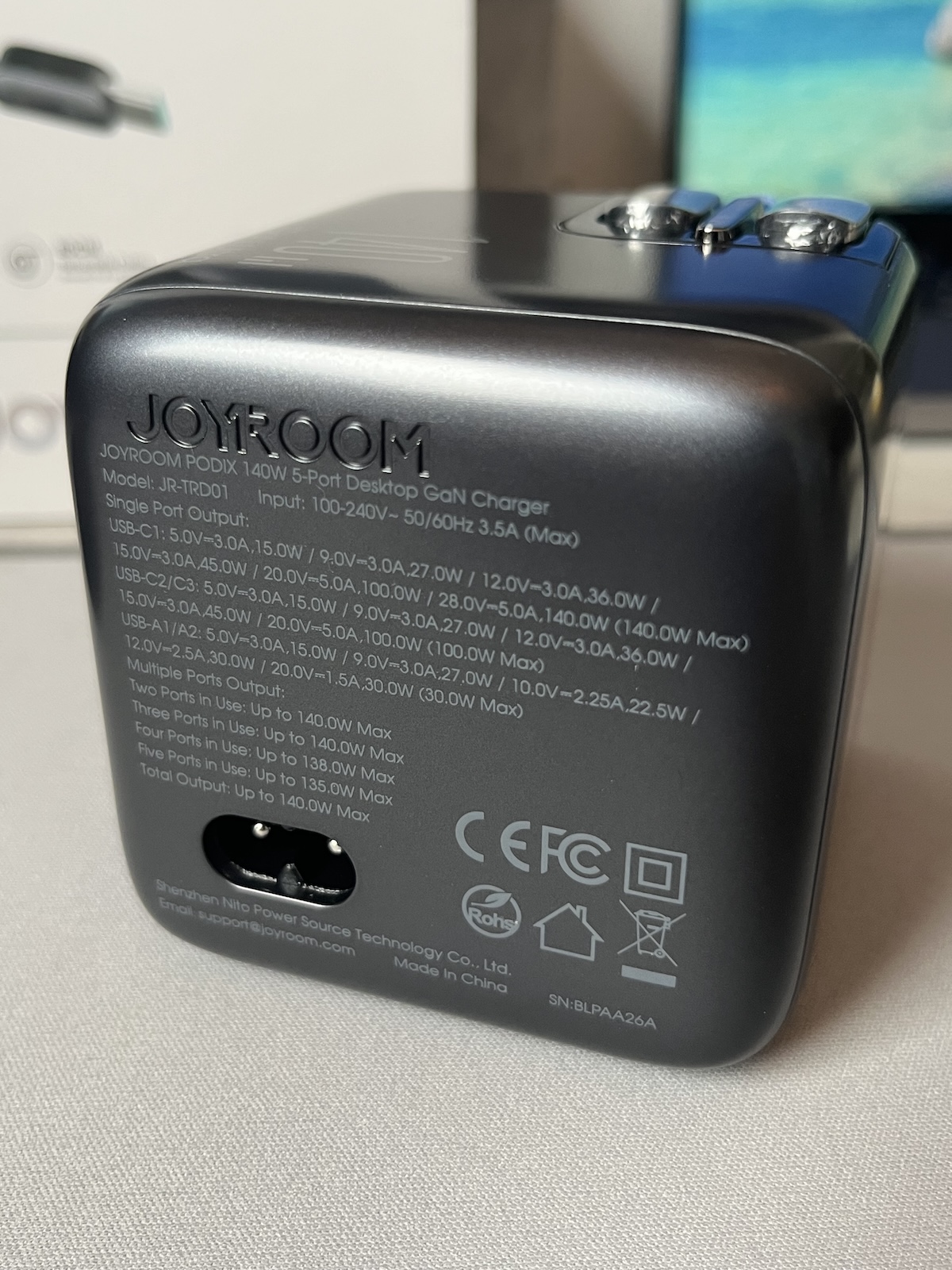
| Input | 100-240V~ 50/60Hz 3.5A (Max) |
| Output | See Charging Guide on the next page |
| Output Types | 1 × USB-C port; 2 × USB-C retractable cables; 2 × USB-A ports |
| Supported Charging Protocols | PD3.1, PPS, QC3.0, AFC, UFCS, SCP, FCP, Apple 2.4A |
Numerous connections and plenty of power for a tidy desk
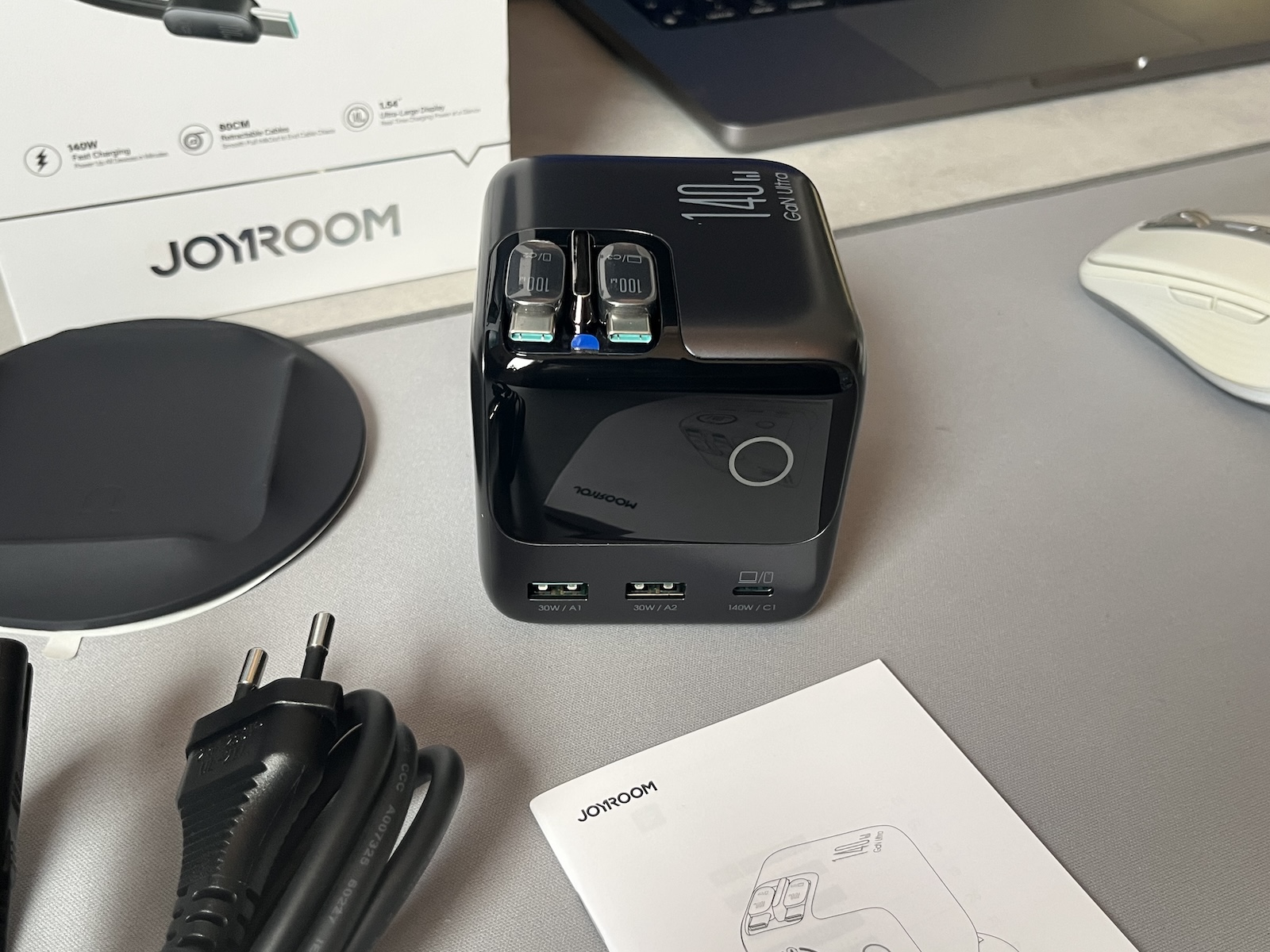
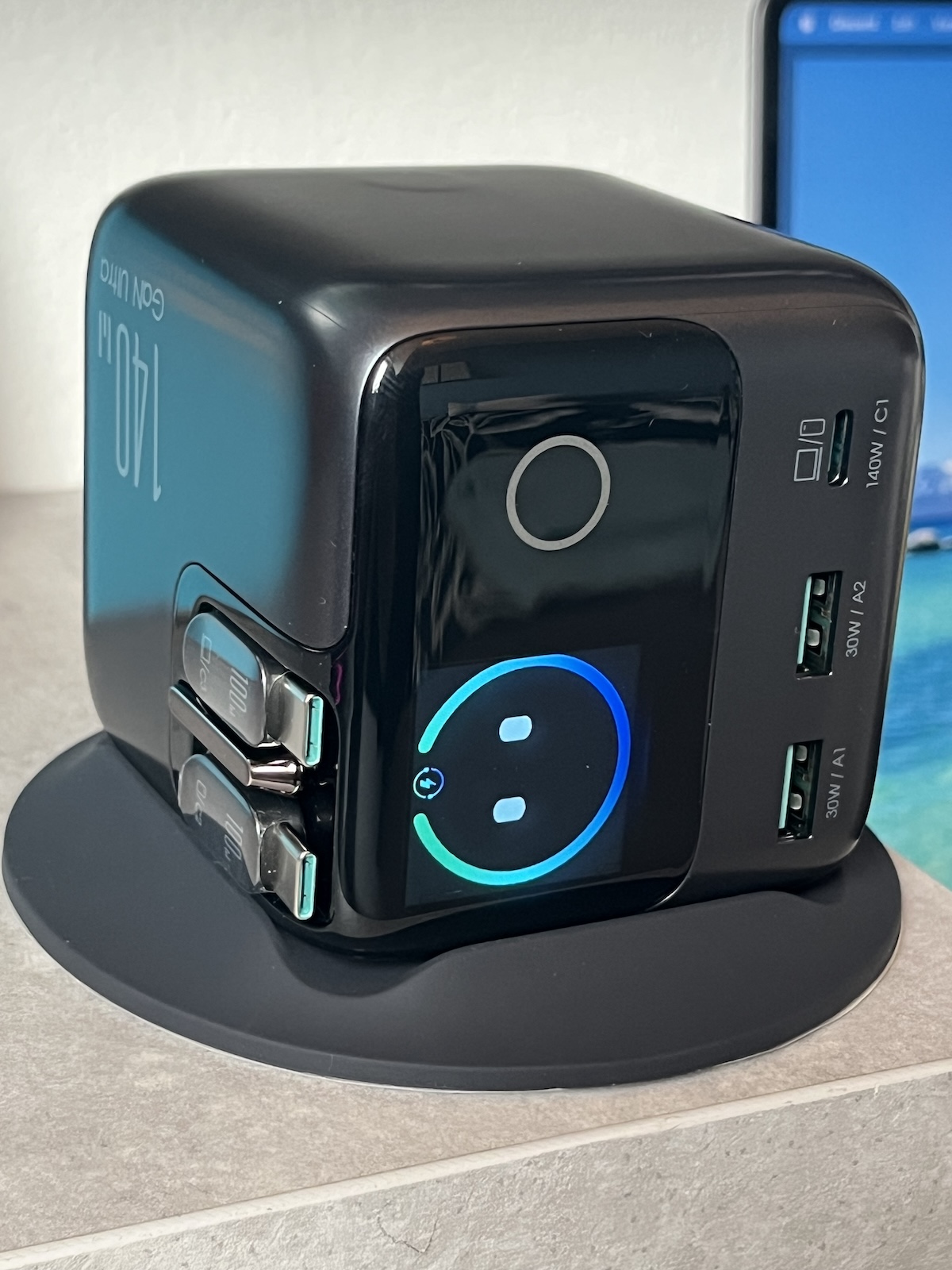
The Joyroom Podix 140W Charger originally came from a crowdfunding project. It is not designed as a mobile power supply unit, but rather as a universal charging station for the home and office. Our scales read 464 grams, clearly too much to take with you regularly. The stationary use is underlined by the rubber stand supplied, which has an adhesive (and washable) silicone coating on the underside. The charger itself is held in position magnetically. In principle, the stand can be dispensed with, but it must then be held in place with the other hand when using the self-locking Type-C cables. More on this later. It is also possible to tilt it onto a side surface; a triple tap on the display adjusts its orientation.
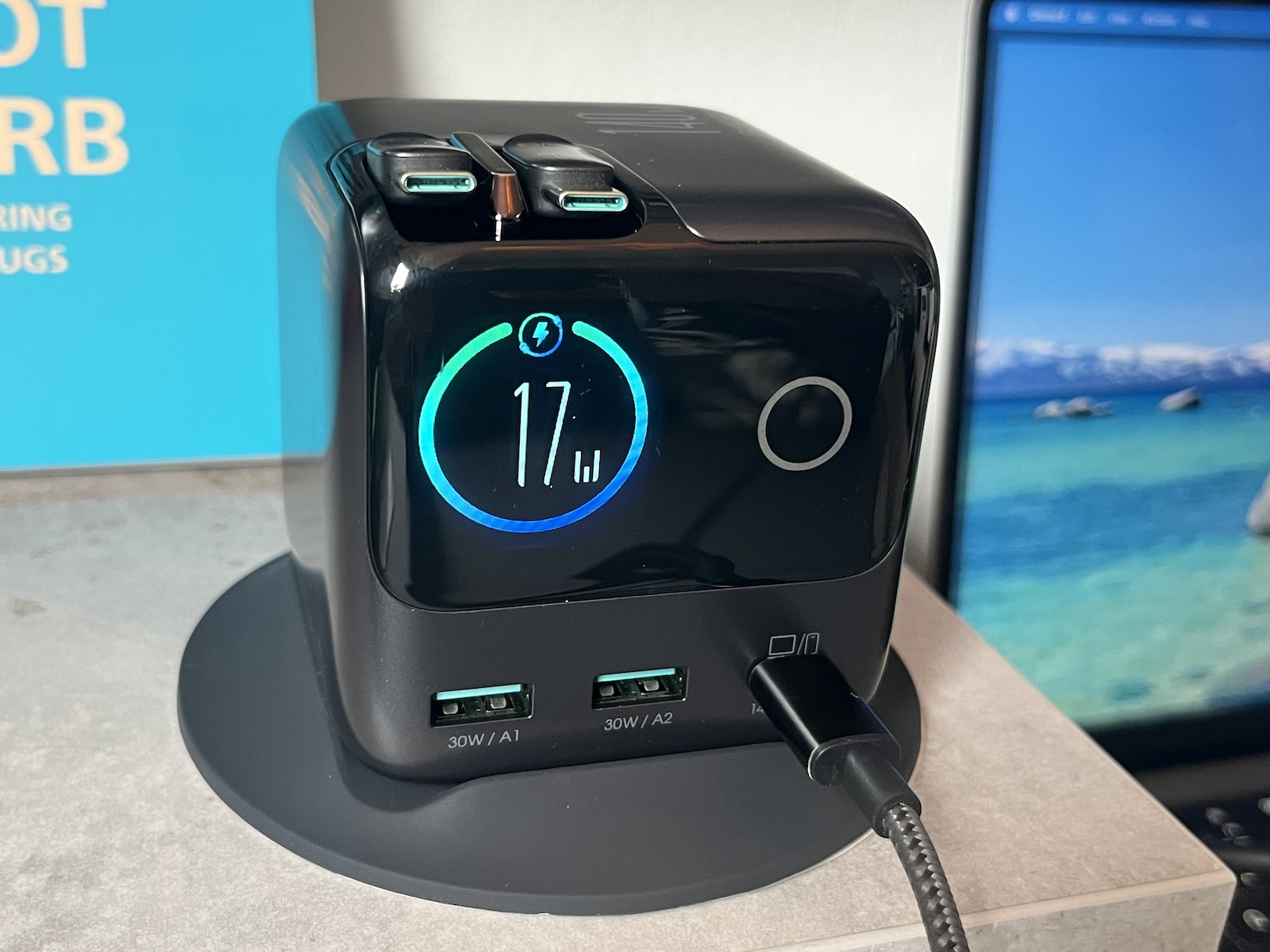
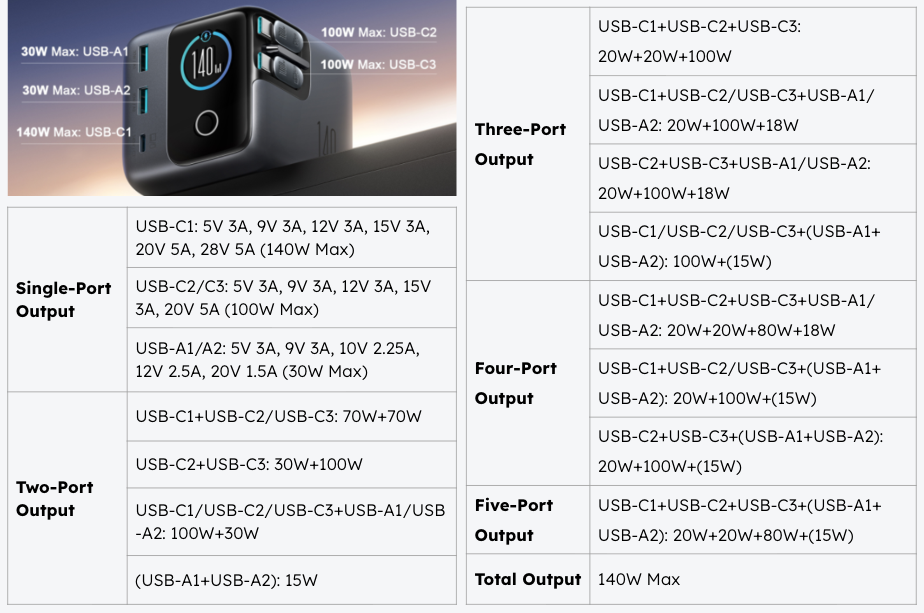
The charger offers a total of 5 connection options: a USB Type-C socket with a maximum power output of 140 watts - ideal for connecting a laptop, for example, two USB Type-A sockets with a maximum output of 30 watts each and two USB Type-C connectors, which can be extended by around 75 cm if required and are therefore perfect for charging smartphones or mobile devices. The maximum power output at each of these ports is 100 watts. Both cables are equipped with a locking function, meaning they remain in position after the cable is pulled out. After briefly tightening them again, they are retracted back into the housing.
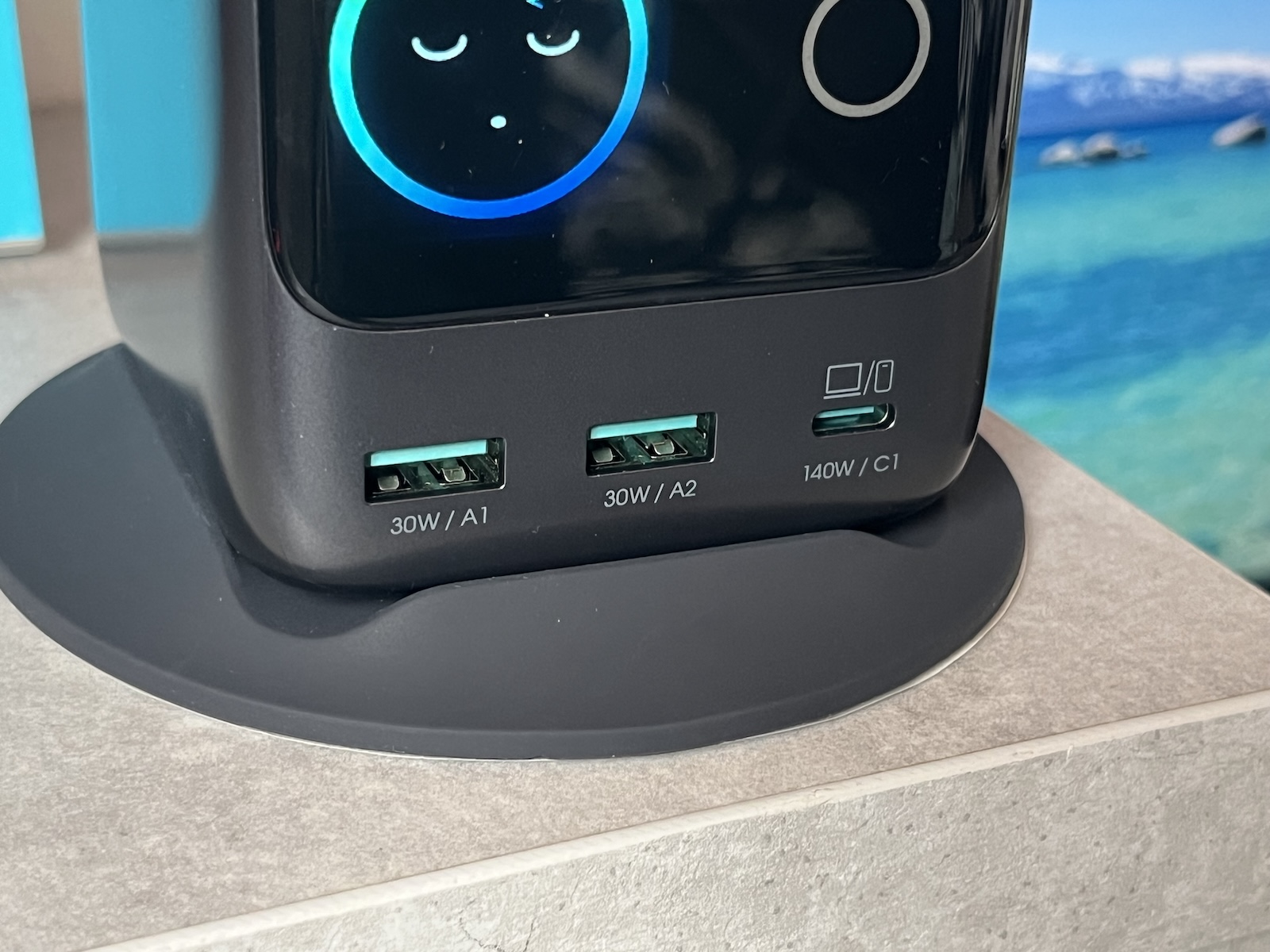
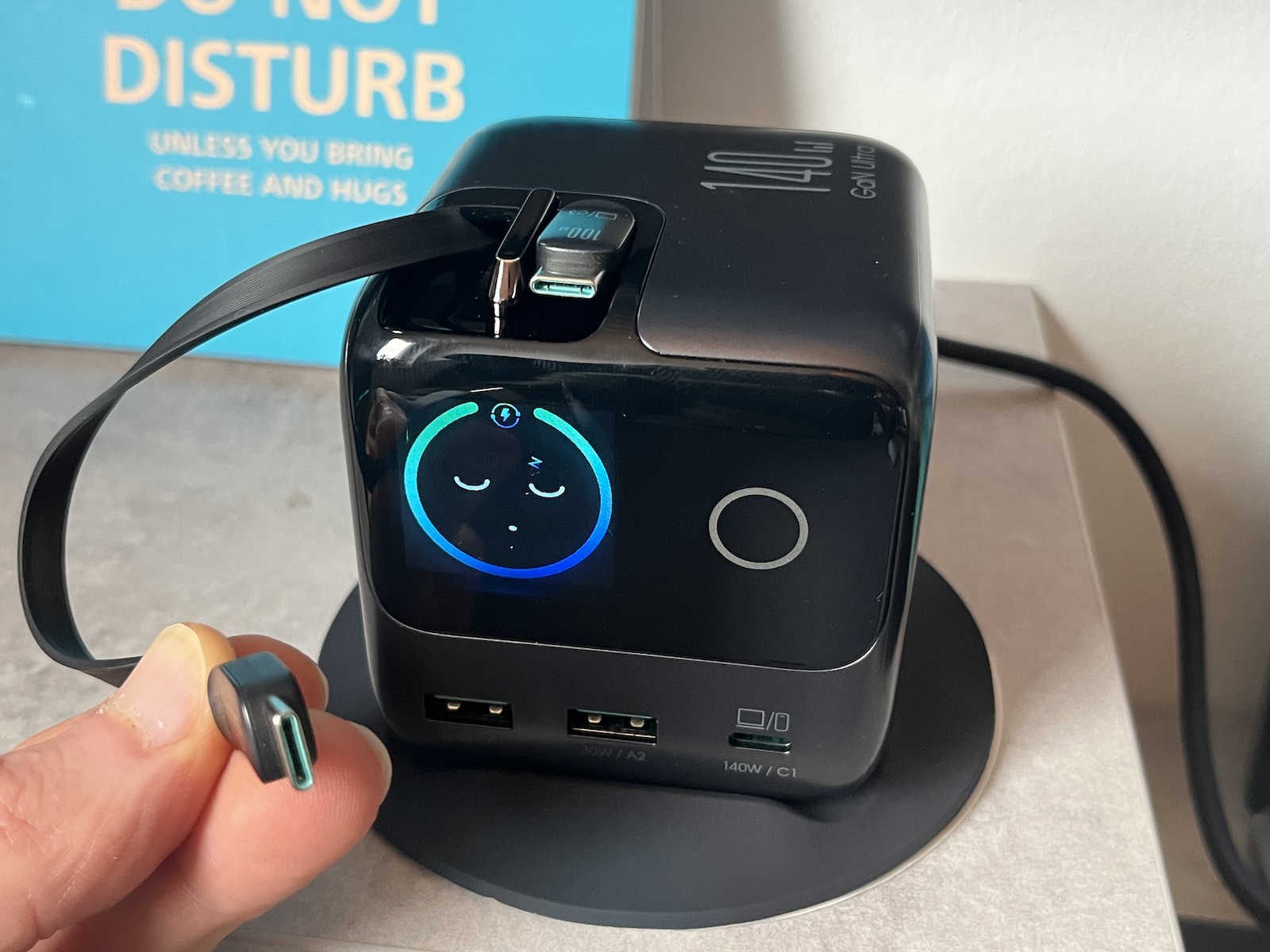
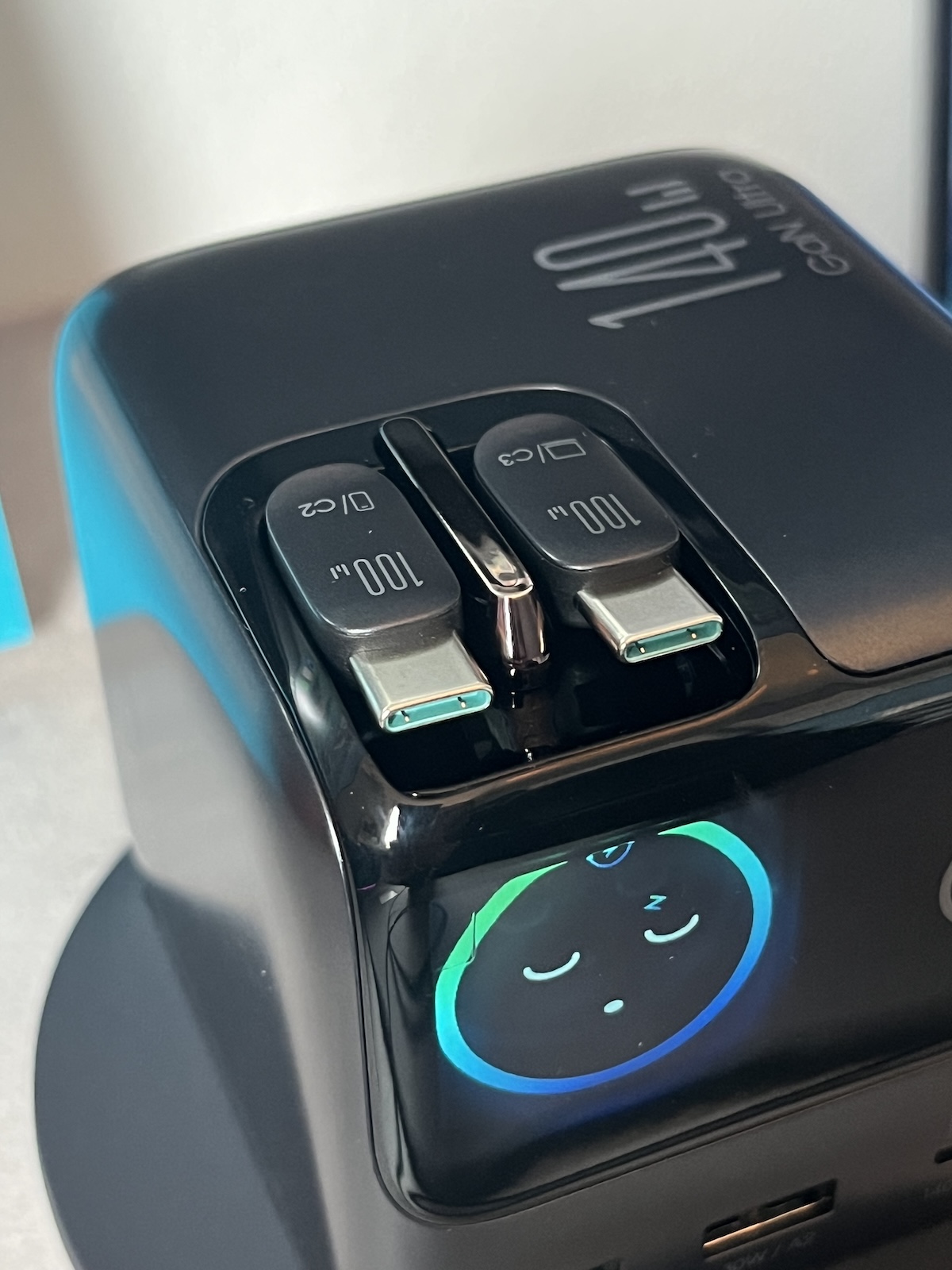
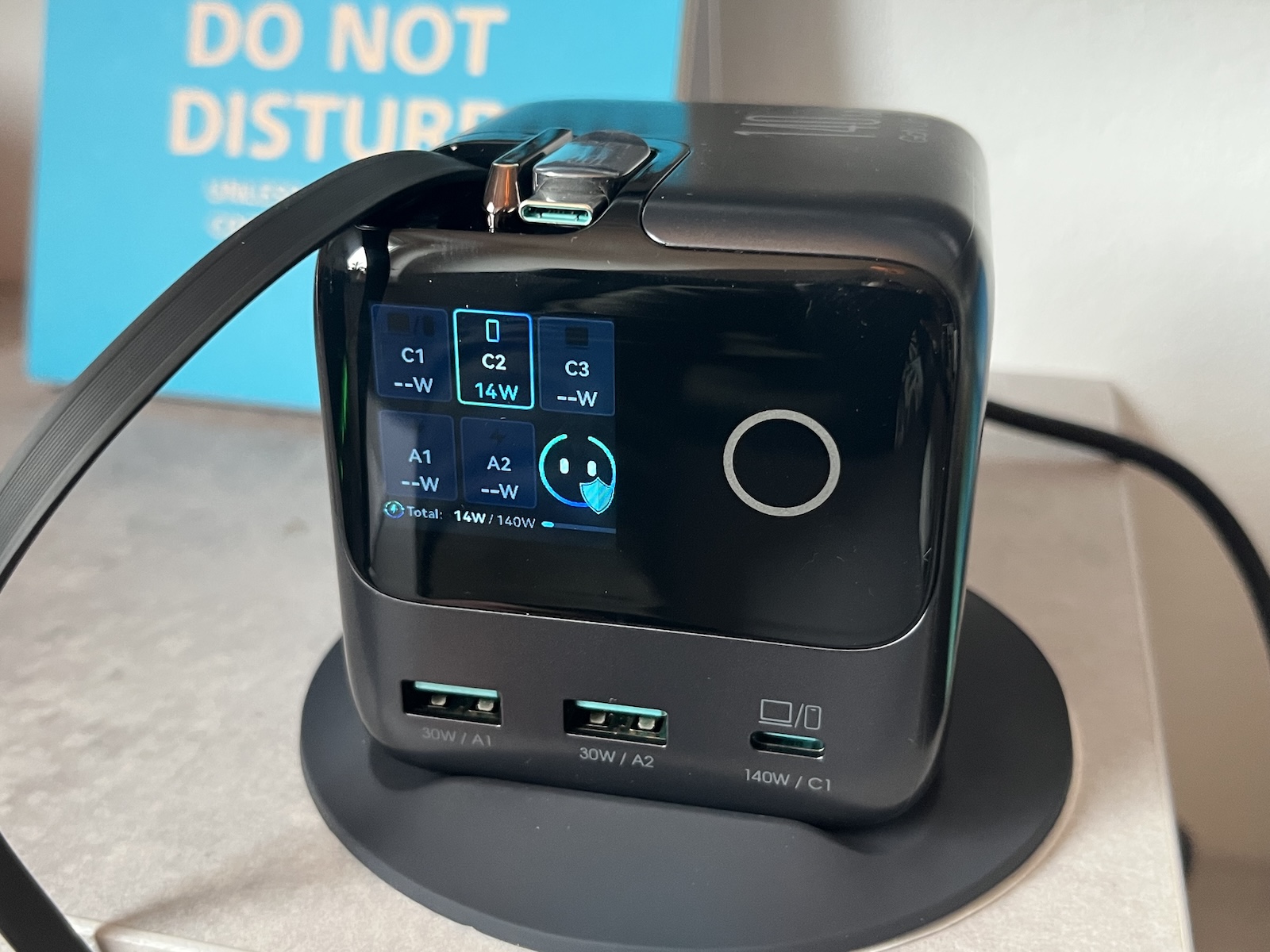
As far as the delivered power is concerned, the above values are to be understood as the maximum output when only one device is connected (140W maximum power of the charger). If, for example, two devices are connected to the C1 and C2 ports (Type-C), which can absorb a correspondingly high power, then they share the maximum available power and each deliver 70 watts.
Many ports - many possibilities, but also potential confusion
Theoretically, it is therefore possible that only one particularly power-hungry device, such as a laptop on port C1, uses a large part of the available power and the other ports are restricted accordingly. However, the problem is more likely to arise that if devices are connected to several ports simultaneously, they automatically reduce their maximum power, regardless of the actual power consumed. Here, for example, just one connected adapter in the test, a Type-C to Lightning adapter, can be enough to significantly reduce the power output on the other ports. In this case, it is important to connect the devices to be powered to the optimum port. The device with the highest power consumption should be connected to port C3 (the right-hand one of the two extendable cables), as this port provides the highest possible power with multiple connections. If only one device is connected, this would be the Type-C socket C1.
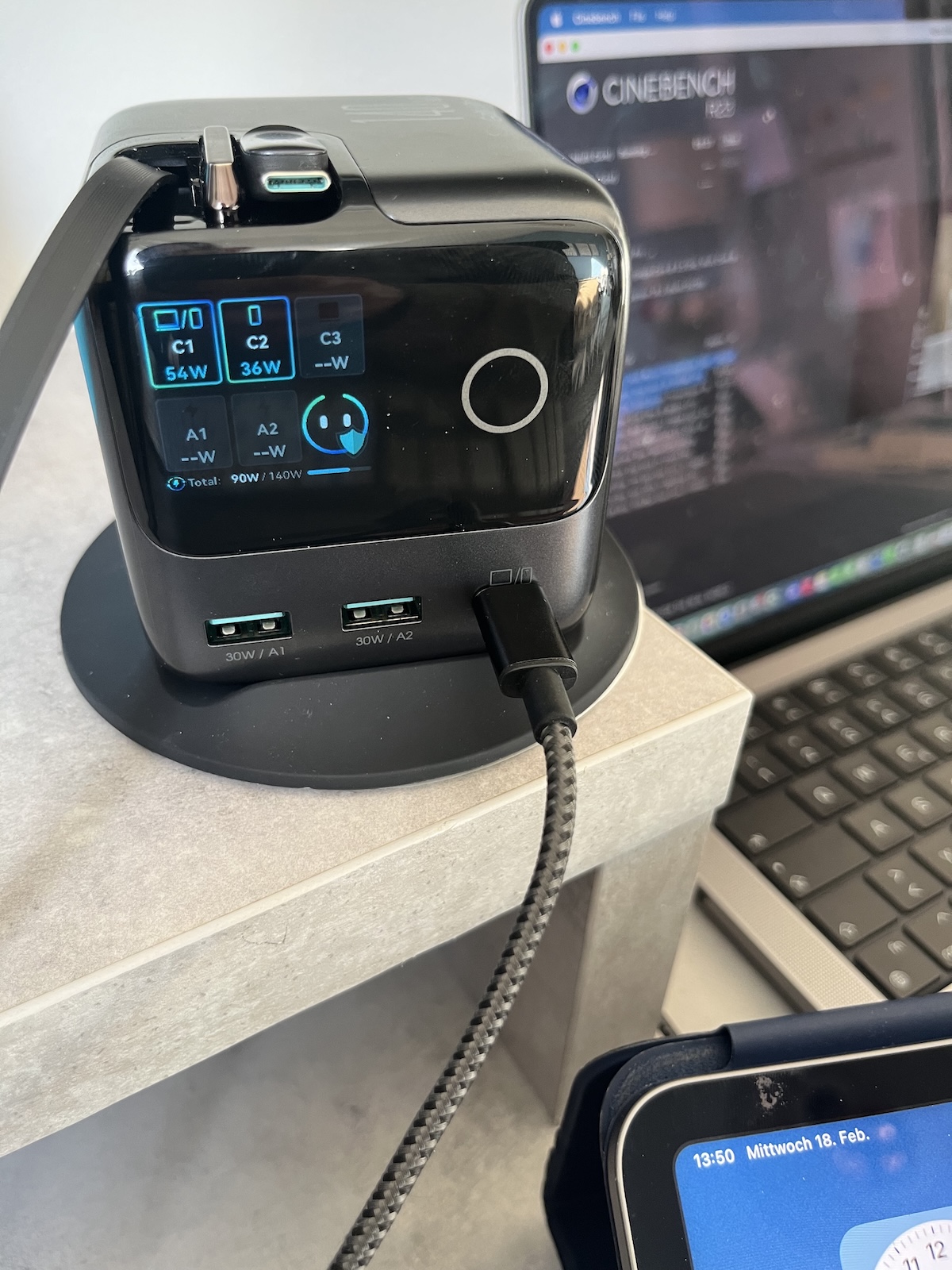
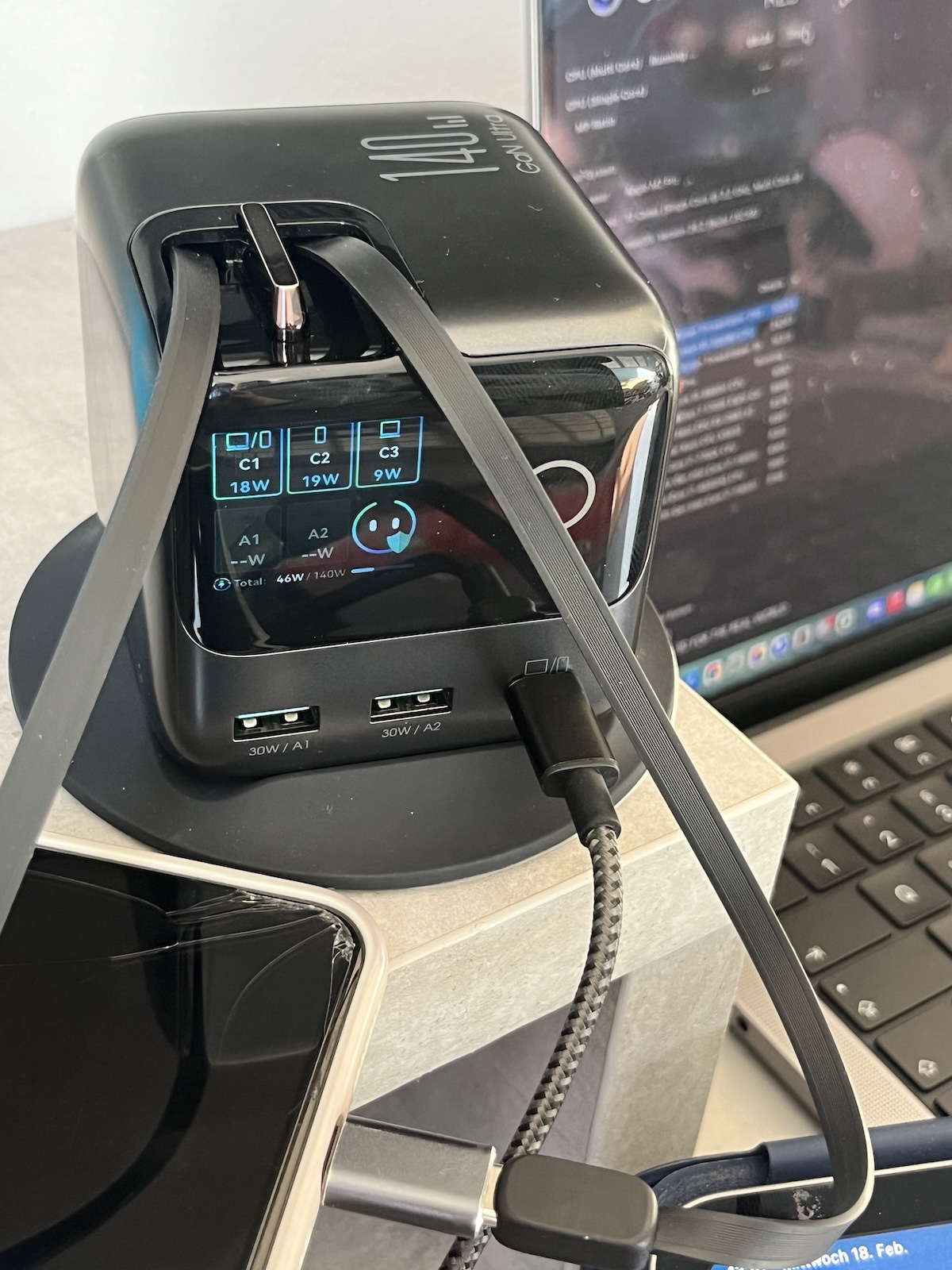
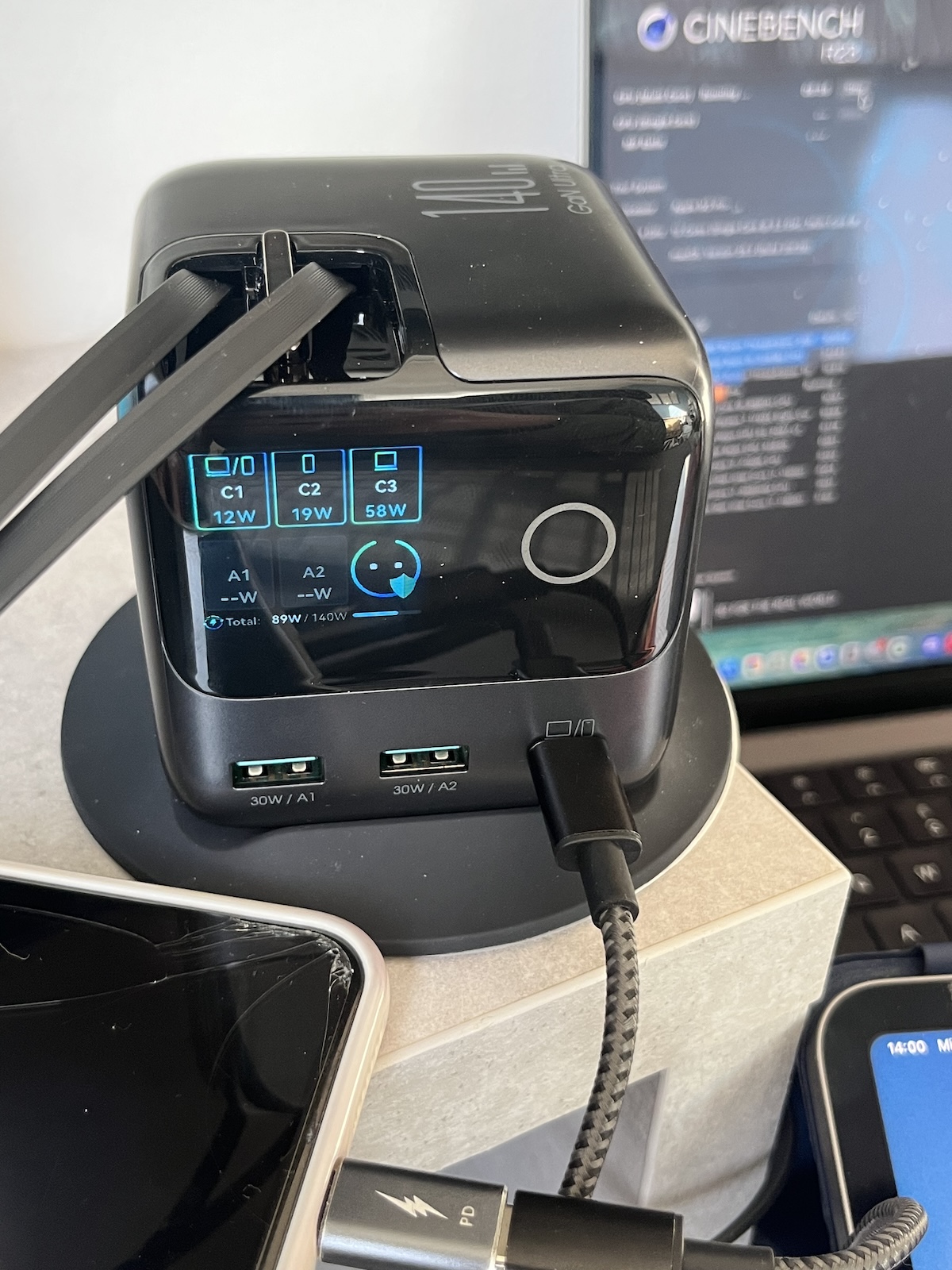
This is definitely an issue that can occur in practical use and that you should be aware of, even if this does not only affect the charger in question. The big advantage of the Joyroom Podix Charger over other solutions: the built-in display always provides information about the power available at the individual ports and allows you to quickly see whether the assignment should be changed in favor of higher power. The following table (printed on the packaging) shows the power distribution of the ports with single and multiple assignments:
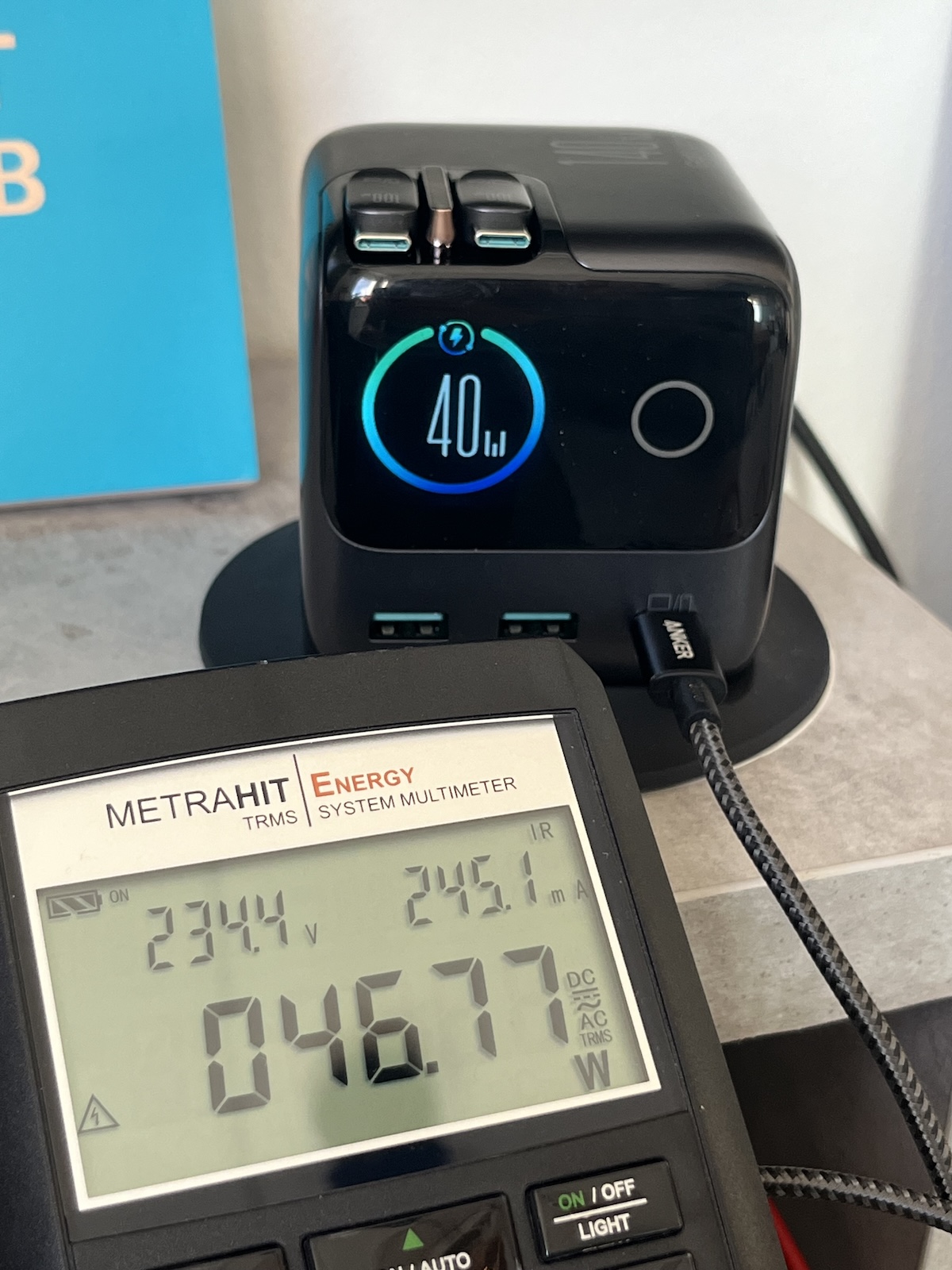
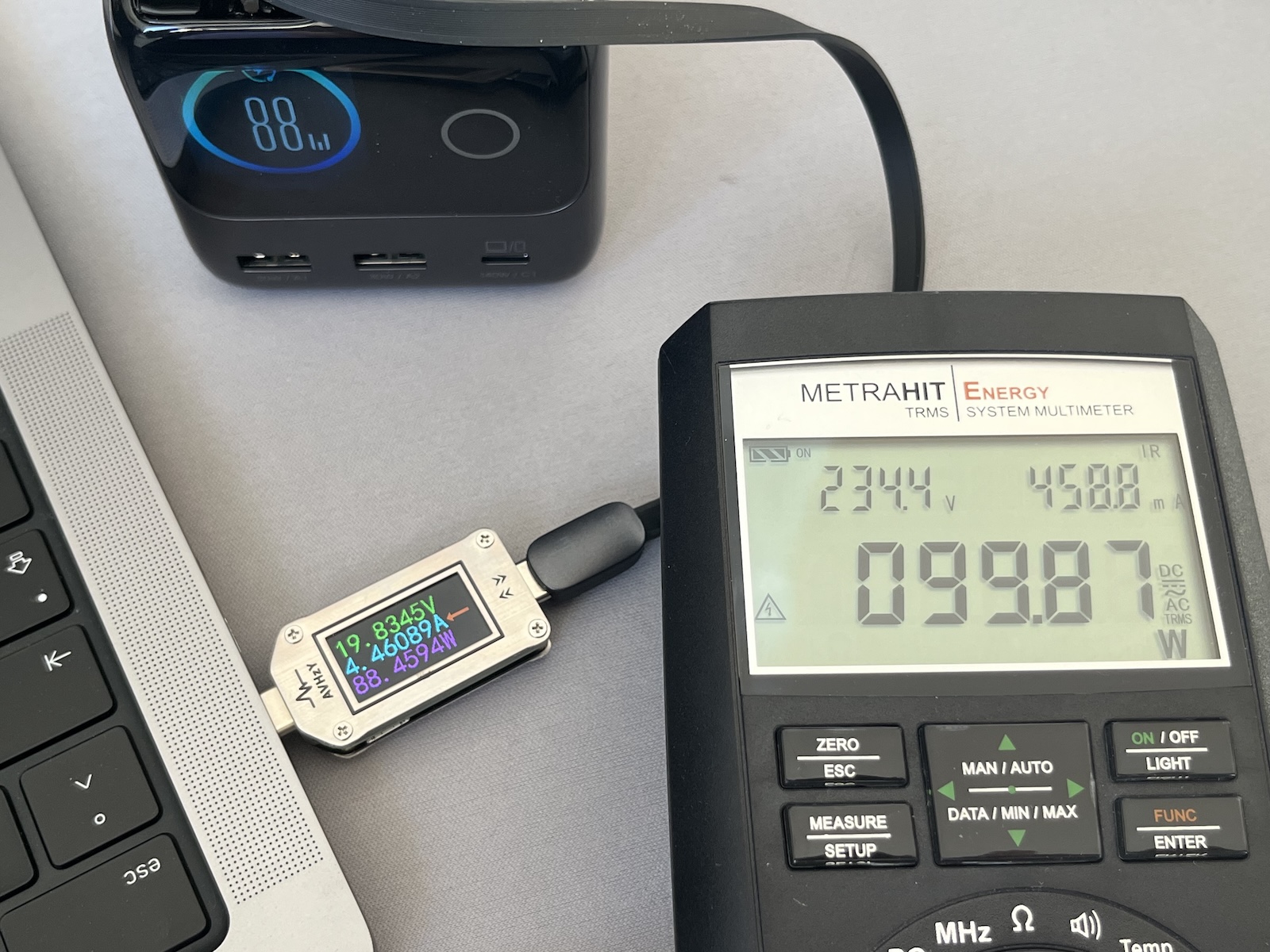
We also took a closer look at the efficiency and accuracy of the specified power values. We used a high-quality Gossen Metrawatt multimeter and a USB power meter from AVHzY for this purpose. According to our comparisons, the power values of the connected consumers shown on the display match within a range of 0-5% deviation.
The power delivered by the charger to consumers differs somewhat more clearly compared to the power drawn from the mains. Here we observe a difference of up to 15%.
With an Anker 737 GaN Charger (120W) measured for comparison purposes, we see a similar level of efficiency.
Without a connected load, the Joyroom Podix 140W charger consumes around 0.3 watts. Permanently connected adapters can increase the standby consumption, as we observed with a Type-C to Lightning adapter (0.6 watts standby), and should therefore be unplugged when not needed.
Transparency
The selection of devices to be reviewed is made by our editorial team. The test sample was given to the author by the manufacturer free of charge for the purposes of review. There was no third-party influence on this review, nor did the manufacturer receive a copy of this review before publication. There was no obligation to publish this review. As an independent media company, Notebookcheck is not subjected to the authority of manufacturers, retailers or publishers.
 Add as a preferred source on Google


