




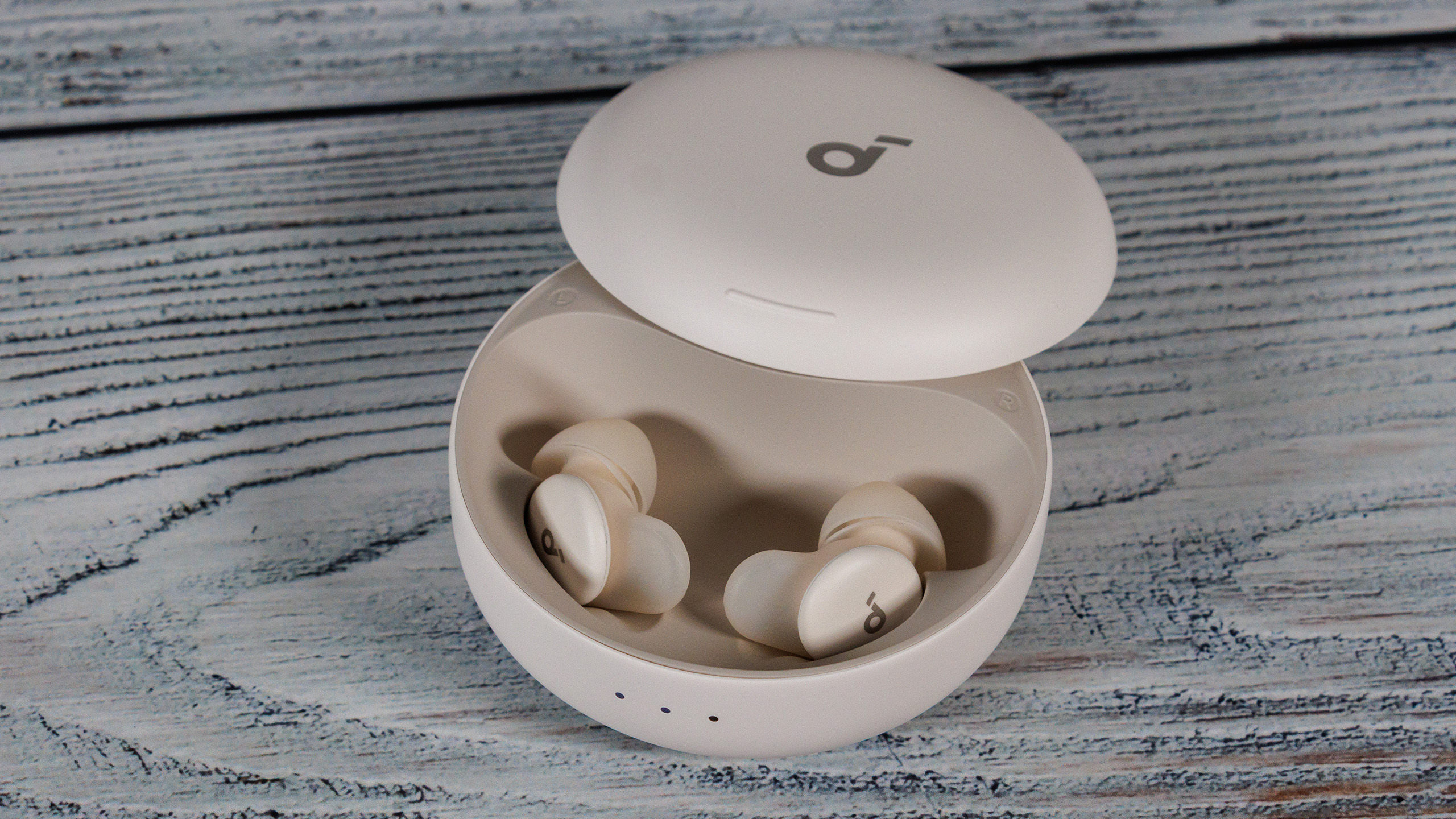
Verdict - Impressive sleep headphones
The Soundcore Sleep A30 impresses above all with its excellent comfort for side sleepers, its quiet and pleasant sound signature, and its solid noise cancellation. The app is feature-rich, and the ability to store sleep sounds locally on the earbuds makes it particularly flexible.
If you're looking for high-quality all-round headphones, this isn't the right choice, but as specialised sleep in-ears, the A30 are currently one of the most impressive solutions on the market. Ideal for anyone who wants to fall asleep more easily or reduce distracting background noise. However, despite their flat construction and compact design, the in-ear headphones can still put pressure on your ears when sleeping on your side. The only way to find out is to try them out.
Price and availability
The Sleep A3 can be ordered directly from Soundcore's online shop, but is also available on Amazon.

Table of Contents
Specifications: Soundcore Sleep A30 by Anker
| Wearing style | In-ear |
| Connectivity | Bluetooth 5.4 |
| Range | 10 m |
| Speakers | 4.6 mm, 20–20,000 Hz, 13.5 ohms |
| Audio codecs | SBC, AAC |
| Battery capacity | 38 mAh (buds), 800 mAh (case) |
| Charging port | USB-C |
| Wireless charging | Not supported |
| Weight | 3 g (buds), 60 g (case) |
| Firmware version | 1.88 (earbuds), 1.68 (case) |
| Scope of delivery | Buds, case, 3 pairs of Air Wings, 3 pairs of memory foam ear tips, 4 pairs of silicone ear tips, USB cable (Type-A to Type-C) |
| Price (RRP) | $230 |
With the Soundcore Sleep A30, Anker is launching the next generation of its in-ear headphones specially designed for sleeping. They are designed to play music, podcasts or soothing sounds while muffling ambient noise and being comfortable enough to wear all night long, even for side sleepers. Our test reveals whether Soundcore has made the right adjustments and whether the A30 represents a worthwhile advancement.
Case and features - Sleep headphones are IPX4 certified
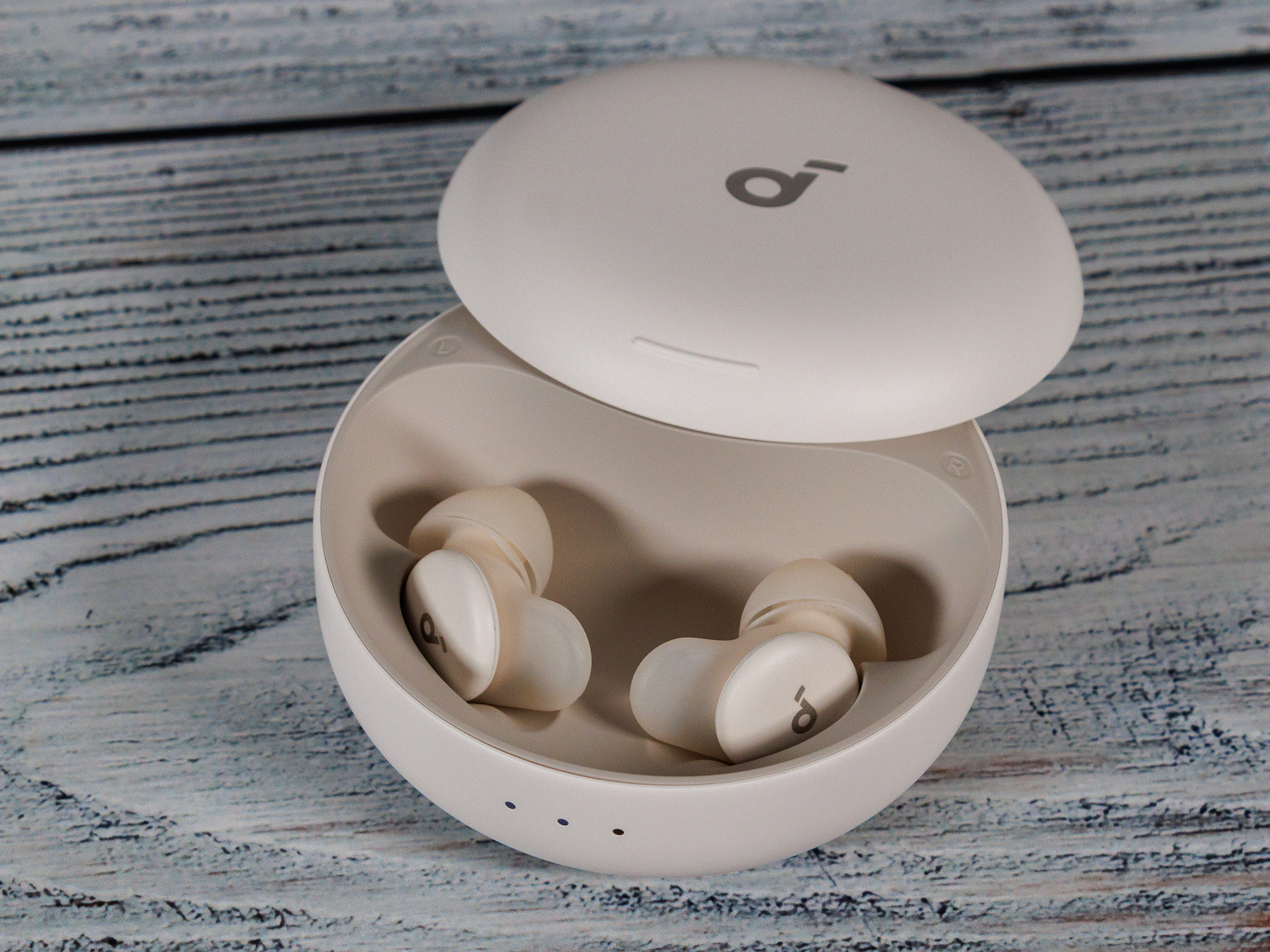
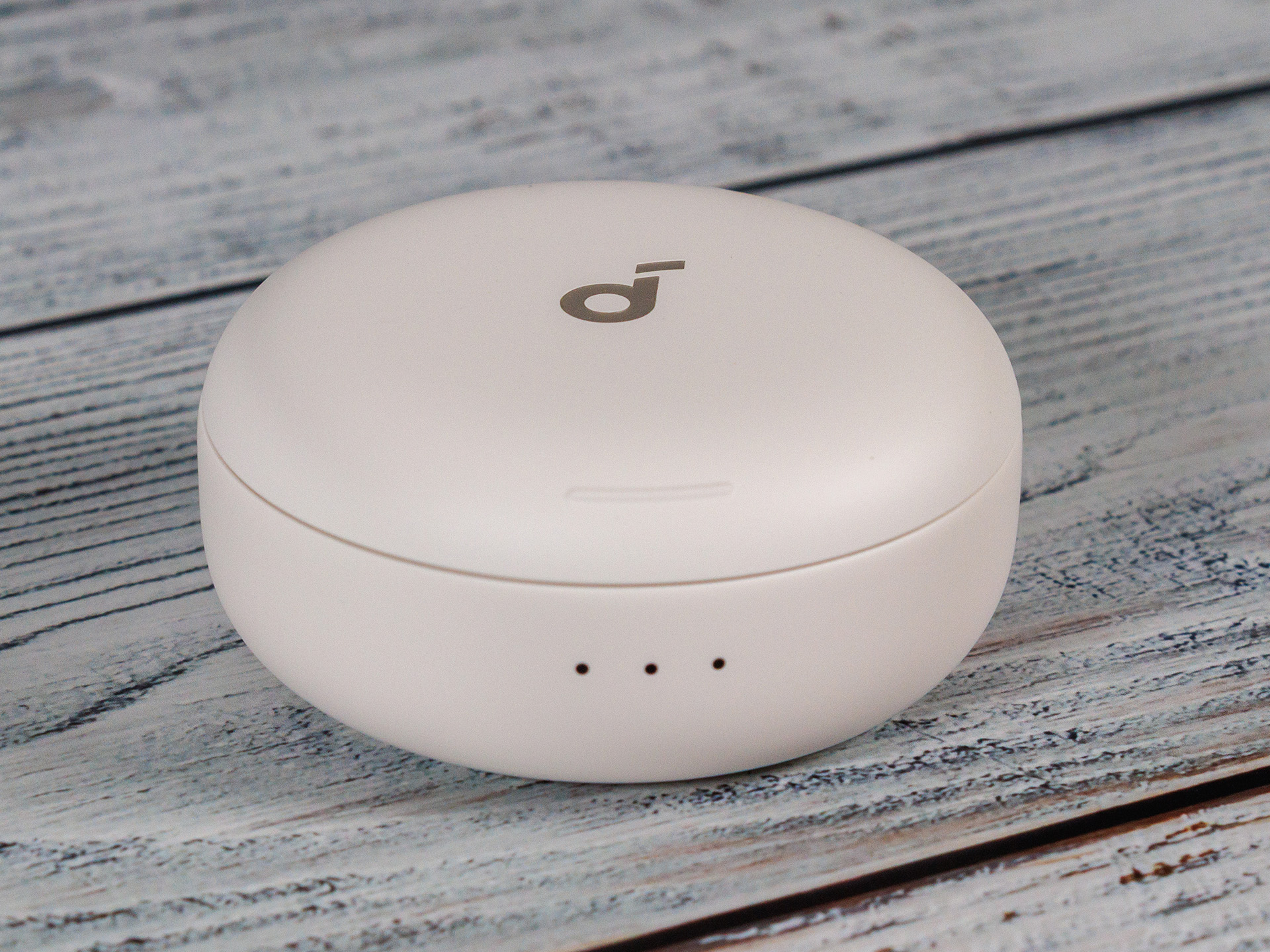
The Sleep A30 features a very compact and flat in-ear design that is deliberately designed not to pop out when lying down. The housing is made of lightweight plastic, but appears to be of high quality and cleanly assembled.
The underside of the case has a non-slip coating, which can be particularly useful when travelling. The earphones come with soft silicone tips and additional ‘stabilising wings’ to prevent them from slipping out at night. There are also optional memory foam tips available, which provide even better passive sealing of the ear.
In terms of features, the A30 offers active noise cancellation (ANC), snore masking, various sleep sound modes and a local playback mode, which allows audio files (not your own music or similar) to be stored directly in the earbuds. The charging case is small but feels solid and provides additional charging cycles. Automatic shutdown and smart sleep modes are also integrated.

Sustainability
There is no specific information available regarding sustainability or repair options for the Soundcore Sleep A30.
Setup and operation - Sleep A30 with touch control
Setup is easy using the Soundcore app. Once you open the charging case, the A30s are recognised immediately and can be paired via Bluetooth. The app offers numerous customisation options, from equaliser settings to individual sleep sound packages.
The earphones are mainly operated via the app, as the touch surfaces are deliberately small and less sensitive to prevent accidental inputs while sleeping. This is a good idea, but it takes some getting used to. In everyday use, commands such as play/pause work reliably, and switching between ANC and sleep modes is also hassle-free.


Sound - Sleep A30 are made for sleep
Compared to classic in-ear headphones, the A30 is designed more for relaxation than audiophile precision, which is also evident in the pink noise measurement. The lower mids are a little too weak, which means the A30 lacks a bit of punch. Otherwise, the sound is warm, soft and pleasant, making it well suited for sleep music, nature sounds or quiet audiobooks. The Sleep A30 is therefore less suitable for demanding music sessions, but that is not what it is designed for.
The active noise cancellation works well and effectively blocks out low-frequency noise such as fans or traffic, which also works really well on aeroplanes. It doesn't create completely silent nights, but it does create a much more pleasant noise environment, and loud snoring can also be significantly reduced.
The headphones do have some weaknesses when it comes to phone calls. In quiet environments, the quality is satisfactory, but background noise can be heard unfiltered during conversations. Incidentally, the call function is disabled in the factory settings and must first be enabled via the app.
| Loudspeakers | |
| THD | |
| Huawei FreeBuds Pro 4 (RMS: -2.9 dBFS) | |
| Soundcore Sleep A30 (RMS: -1.8 dBFS) | |
| Nothing Ear 3 (RMS: -2.0 dBFS) | |
| THD+N | |
| Huawei FreeBuds Pro 4 (RMS: -2.9 dBFS) | |
| Soundcore Sleep A30 (RMS: -1.8 dBFS) | |
| Nothing Ear 3 (RMS: -2.0 dBFS) | |
* ... smaller is better
THD (Total Harmonic Distortion): Harmonic distortion quantifies the magnitude of the components that arise from non-linear distortion (harmonic content) in relation to the original signal. THD refers only to the fundamental harmonic content. The distortion factor is often mentioned in the same breath, but refers to the overall signal.
THD+N (Total Harmonic Distortion + Noise): This value is comparable to THD, but in addition to the interference from harmonics, the interference from noise is also recorded as an effective value.
For the measurement, a low-harmonic sine wave signal (1 kHz, > 0 dB) is played through the headphones to be tested and recorded by a linear measuring microphone (measuring distance: approx. 1 cm) in an artificial head.
Both values are given as a percentage. The lower the value, the better the signal fidelity.
Soundcore Sleep A30 audio analysis
(+) | speakers can play relatively loud (90.3 dB)
Bass 100 - 315 Hz
(±) | reduced bass - on average 13.3% lower than median
(+) | bass is linear (4.6% delta to prev. frequency)
Mids 400 - 2000 Hz
(±) | reduced mids - on average 9.2% lower than median
(±) | linearity of mids is average (7.3% delta to prev. frequency)
Highs 2 - 16 kHz
(±) | higher highs - on average 12.2% higher than median
(+) | highs are linear (6.4% delta to prev. frequency)
Overall 100 - 16.000 Hz
(±) | linearity of overall sound is average (21.3% difference to median)
Compared to same class
» 60% of all tested devices in this class were better, 7% similar, 33% worse
» The best had a delta of 4%, average was 23%, worst was 136%
Compared to all devices tested
» 60% of all tested devices were better, 7% similar, 33% worse
» The best had a delta of 4%, average was 23%, worst was 136%
Huawei FreeBuds Pro 4 audio analysis
(+) | speakers can play relatively loud (93.3 dB)
Bass 100 - 315 Hz
(±) | reduced bass - on average 6.9% lower than median
(+) | bass is linear (2% delta to prev. frequency)
Mids 400 - 2000 Hz
(+) | balanced mids - only 3.2% away from median
(+) | mids are linear (4% delta to prev. frequency)
Highs 2 - 16 kHz
(±) | higher highs - on average 10.2% higher than median
(±) | linearity of highs is average (8% delta to prev. frequency)
Overall 100 - 16.000 Hz
(+) | overall sound is linear (13.3% difference to median)
Compared to same class
» 14% of all tested devices in this class were better, 3% similar, 83% worse
» The best had a delta of 4%, average was 23%, worst was 136%
Compared to all devices tested
» 14% of all tested devices were better, 3% similar, 83% worse
» The best had a delta of 4%, average was 23%, worst was 136%
Battery life – Sleep headphones for several nights
Depending on the mode, the battery life is between 5 and 8 hours per charge. In pure sleep sound mode without Bluetooth, the headphones achieve the longest runtimes, as no streaming is necessary. With ANC and Bluetooth, the playback time decreases slightly, but is still sufficient for a normal night. In our test, this meant that after one night (approx. 8 hours), they still had 20% charge remaining.
Thanks to the charging case, a total of around 24 to 28 hours is possible before a power outlet is needed. This is perfectly adequate for longer trips or several nights without recharging.
Transparency
The selection of devices to be reviewed is made by our editorial team. The test sample was given to the author by the manufacturer free of charge for the purposes of review. There was no third-party influence on this review, nor did the manufacturer receive a copy of this review before publication. There was no obligation to publish this review. As an independent media company, Notebookcheck is not subjected to the authority of manufacturers, retailers or publishers.
This is how Notebookcheck is testing
Every year, Notebookcheck independently reviews hundreds of laptops and smartphones using standardized procedures to ensure that all results are comparable. We have continuously developed our test methods for around 20 years and set industry standards in the process. In our test labs, high-quality measuring equipment is utilized by experienced technicians and editors. These tests involve a multi-stage validation process. Our complex rating system is based on hundreds of well-founded measurements and benchmarks, which maintains objectivity. Further information on our test methods can be found here.
 Add as a preferred source on Google


