




Rumoured AMD RDNA 5 specs point to impressive performance gains but one detail raises eyebrows
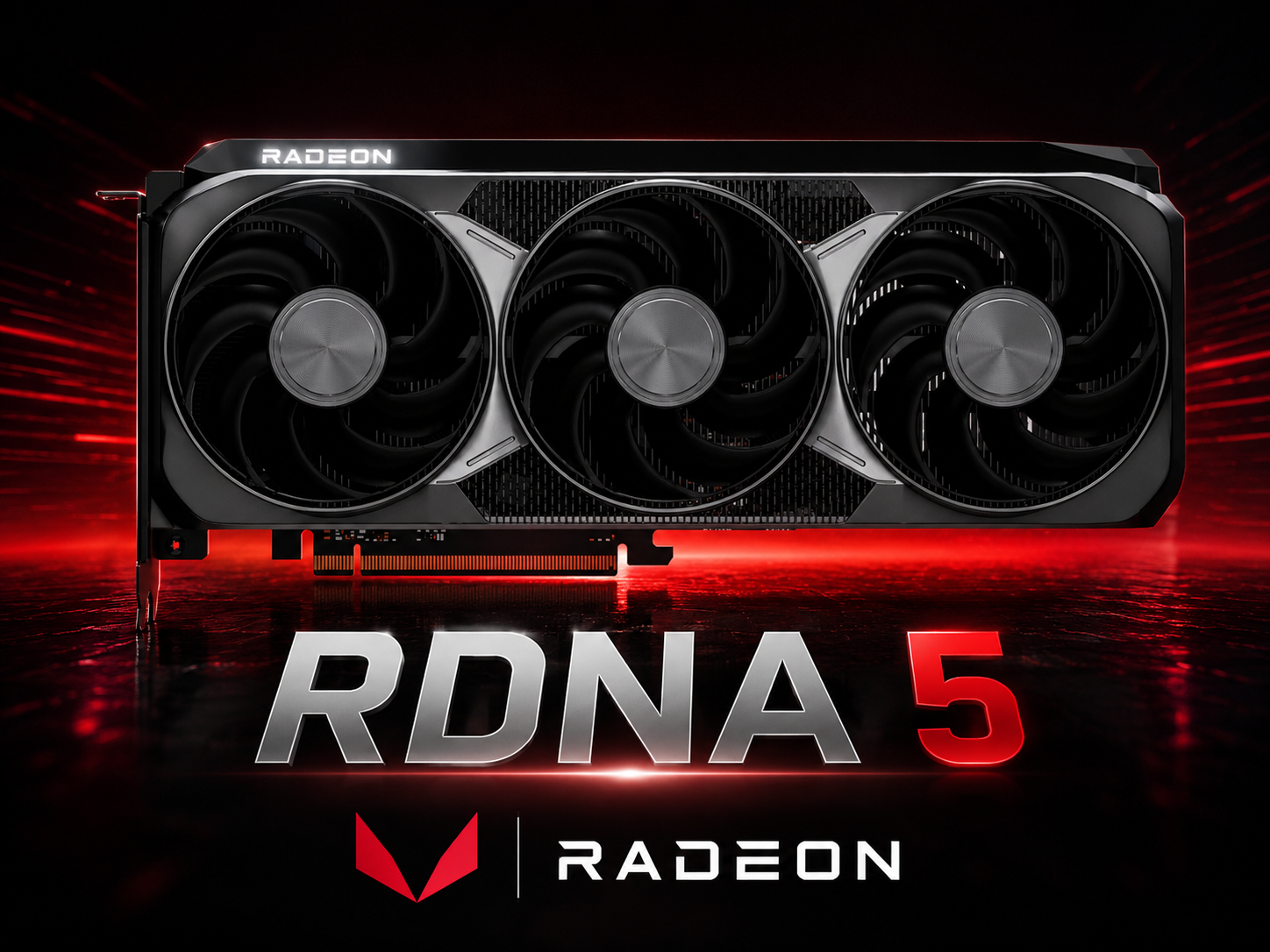
Earlier leaks from Moore’s Law is Dead and Kepler_L2 gave us a decent idea about AMD’s next-gen RDNA 5 architecture. The GPUs would be fabricated on TSMC's cutting-edge N3P node and called AT (Alpha Triton). The top-spec variant was slated to pack as many as 192 CUs, double the amount found on AMD’s last proper flagship gaming graphics card: the Radeon RX 7900 XTX. However, it is widely believed that the full die (code named AT0) will be reserved for AI products. Its cut-down variants (AT1, AT2, etc.) will be the ones that power the Radeon RX 10000 series of graphics cards. A new rumour from NeoGAF now zeroes in on what each SKU brings to the table.
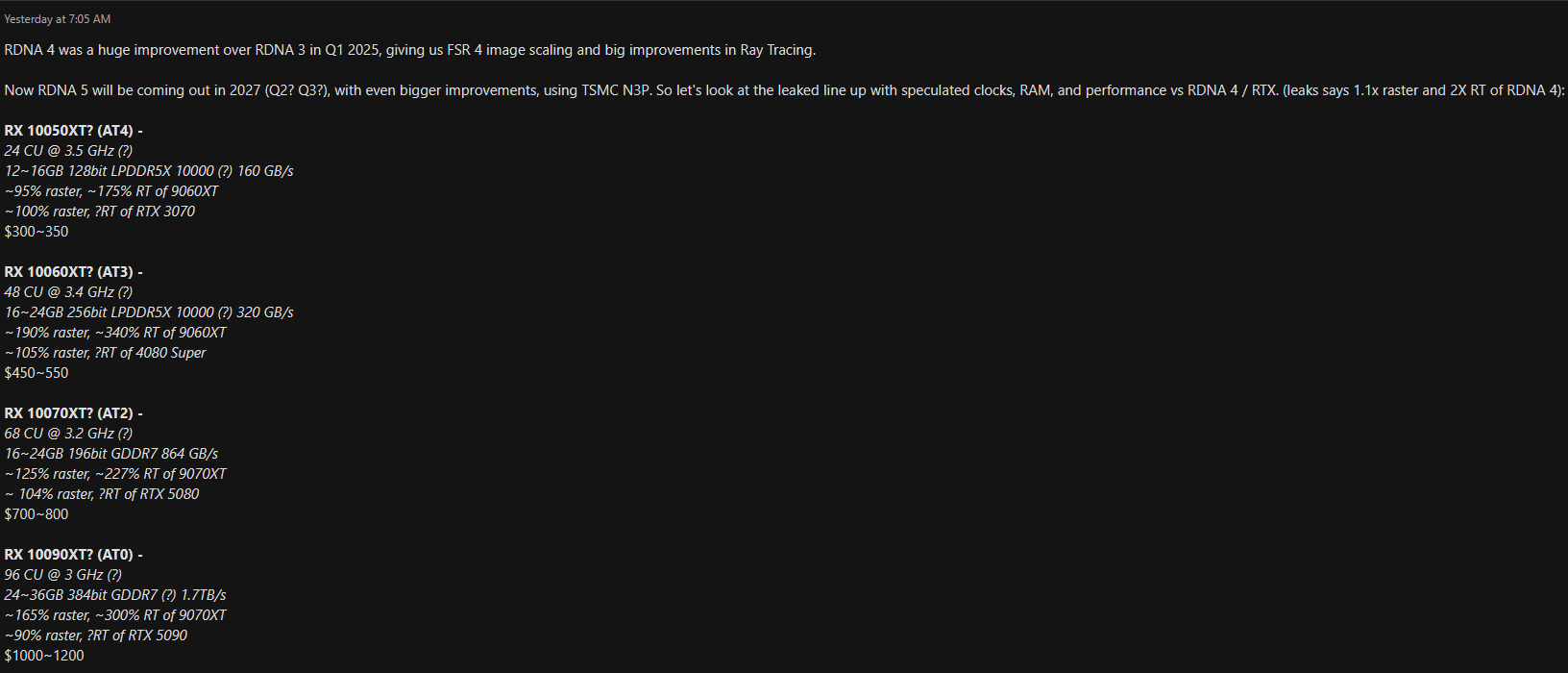
| SKU | Radeon RX 10090 XT | Radeon RX 10070 XT | Radeon RX 10060 XT | Radeon RX 10050 XT |
|---|---|---|---|---|
| GPU | AT0 | AT2 | AT3 | AT4 |
| CU Count | 96 | 68 | 48 | 24 |
| Max clock | 3 GHz | 3.2 GHz | 3.4 GHz | 3.5 GHz |
| VRAM | 24-36 GB GDDR7 | 16-24 GB GDDR7 | 16-24 GB LPDDR5X | 12-16 GB LPDDR5X |
| Tentative Memory Bandwidth | 1.71 TB/s | 864 GB/s | 320 GB/s | 160 GB/s |
| Price | $1,000-1,200 | $700-800 | $450-550 | $300-$350 |
The low-end Radeon RX 10050 XT (tentative) is said to feature 24 Compute Units and performance roughly comparable to the GeForce RTX 3070 in traditional rasterised workloads. It might come with 12-16 LPDDR5X VRAM. Above that, the alleged RX 10060 XT reportedly doubles the CU count to 48 with 16-24 GB LPDDR5X, while targeting performance in the vicinity of the RTX 4080 Super.
Right off the bat, LPDDR5X modules on a desktop GPU raise immediate red flags because they're designed for operating in low-power environments. Desktop GPUs typically have the thermal/electrical headroom to consume as much power needed for maximum performance, and historically, AMD has never used LPDDR memory in any of its mainstream desktop offerings.
However, it is not entirely implausible because modern-day compression tech could technically help offset the lack of bandwidth resulting from LPDDR modules. Existing GPUs already use techniques such as Delta Colour Compression (DCC), Depth Buffer Compression, Framebuffer Compression, and Lossless Memory Compression to reduce the amount of data that needs to travel between the GPU and VRAM.
One possible explanation for LPDDR5X VRAM is cost. LPDDR packages could allow AMD to reduce board complexity and manufacturing costs on entry-level products. AMD could also be introducing more effective memory compression with RDNA 5. If so, desktop GPUs would provide an opportunity to validate the technology before it eventually trickles down to future APUs and handheld chips, where LPDDR memory is the norm and memory bandwidth is often the primary bottleneck.
High-end RDNA 5 graphics cards could finally bring the fight to Nvidia
The top-spec RDNA 5 graphics cards are even more ambitious. The rumoured RX 10070 XT is claimed to feature 68 Compute Units, 16-24 GB of GDDR7 VRAM, and deliver raster performance on par with the GeForce RTX 5080. Interestingly, the Radeon RX 10800 XT is conspicuously absent from the list. Lastly, the flagship RX 10090 XT allegedly packs 96 Compute Units, 24-36 GB of GDDR7 VRAM, and approaches RTX 5090 level of performance.
Until now, AMD GPUs’ weakest link has been their ray tracing performance. The leak suggests RDNA 5 could deliver substantially larger ray tracing gains than raster improvements, potentially narrowing the gap with Nvidia. If accurate, such improvements would imply significant architectural changes rather than incremental refinements. RDNA 5 has long been touted as AMD's "Zen moment" for Radeon, and it will be interesting to see whether the architecture lives up to the considerable hype surrounding it.
One notable omission from the leak is power consumption. Even if the performance figures prove accurate, it remains unclear how AMD plans to achieve them. If the flagship does end up operating in the same power envelope as Nvidia's GeForce RTX 5090, AMD may have to adopt the 12VHPWR power connector. While newer revisions have addressed many of the issues associated with the original standard, connector reliability is problematic to this day.
Source(s)
 Add as a preferred source on Google


