




Phreeli's new unlimited phone plans let users pay with crypto and names are optional
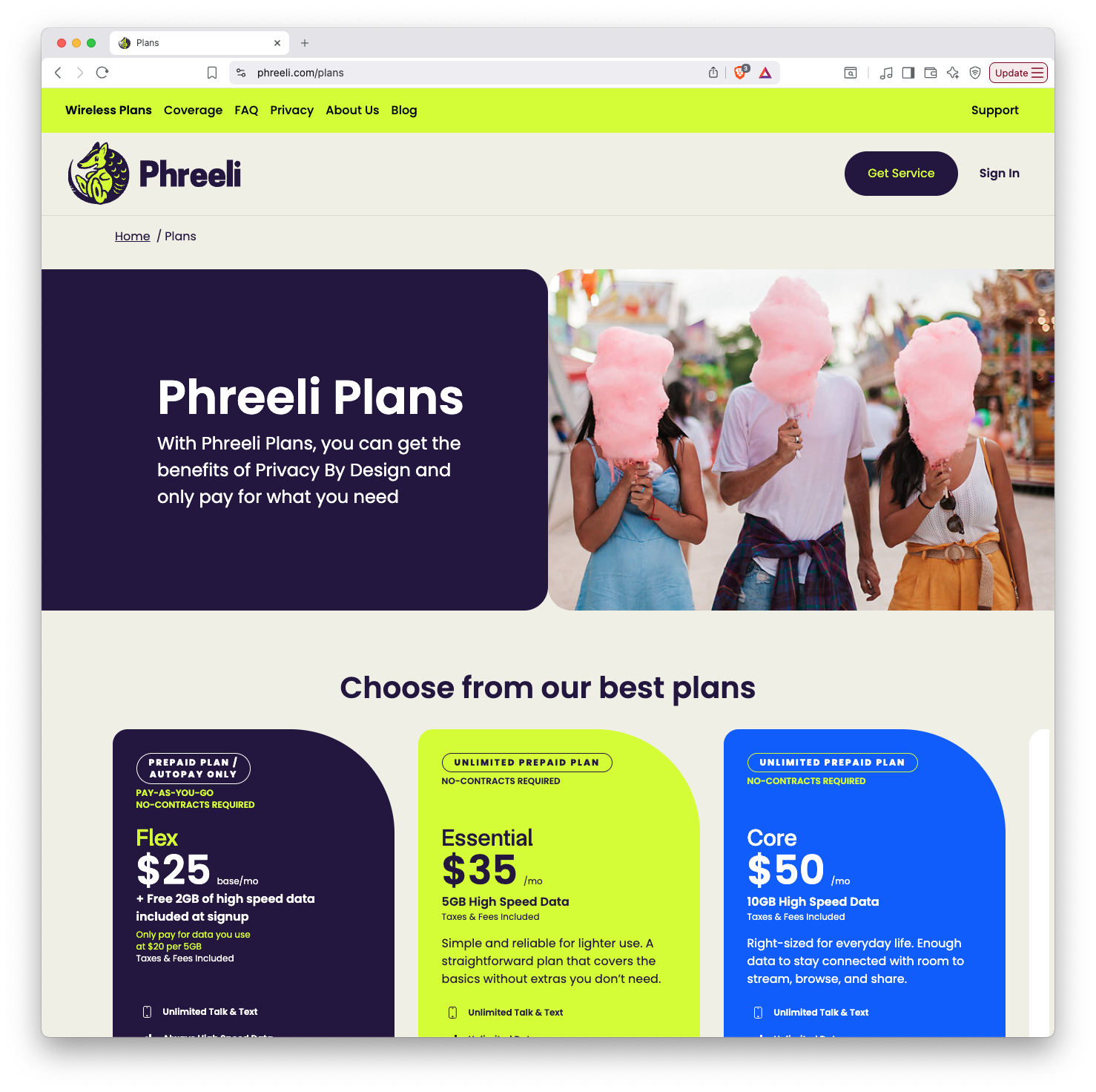
Prominent YouTuber and privacy advocate Louis Rossmann has partnered with Nicholas Merrill, a leader in the digital privacy movement, to create a cellular network, with privacy as its main priority. While the infrastructure is based on that of existing networks, this Mobile Virtual Network Operator (MVNO) lacks most of the personal identification requirements enforced by nearly all carriers. Additionally, Phrelli utilizes a special protocol to ensure that the data exposed is compartmentalized and randomized. However, it is no surprise that this practice will face massive scrutiny from regulatory agencies.
Currently, Phreeli offers five plans, all with unlimited talk, text, data, and hotspot data, differing only in the amount of "High-speed" data allotted. Their least expensive plan is a prepaid plan starting at $25 a month, with users paying $20 per 5 GB of data, and on the other end is the "Max" plan at $85 a month with 65 GB of high-speed data. All plans also feature unlimited international calling and texting to over 90 countries, as well as the same robust privacy protocol.
In addition to not requiring a name, address, email, or credit card, and even letting users pay with crypto, Phreeli has addressed the pitfalls of data security that most networks have either forgotten or have leveraged for financial gain. In his announcement video, Rossmann presented an example of this by referencing an FCC investigation that found AT&T and others selling user location data to data aggregators without their permission. To address this, the Phreeli network essentially compartmentalizes every aspect of a user's interactions into three services. The user service, which knows the most about the users, is isolated from the data service, and both are then isolated from the mixer service. In this system, each compartment aggregates its data, which the mixer service then mixes into a soup of data that can only be decoded with the appropriate randomized tokens.
Aside from its robust privacy, Phreeli offers an enticing list of features and is competitively priced to boot. However, due to its newness and potential regulatory hurdles, users may be wary of porting their number over until the service establishes firmer roots.
Source(s)
 Add as a preferred source on Google


