Nvidia unveils Rubin HPC GPU with nearly 2.5× RTX 5090's CUDA cores, coming in 2028
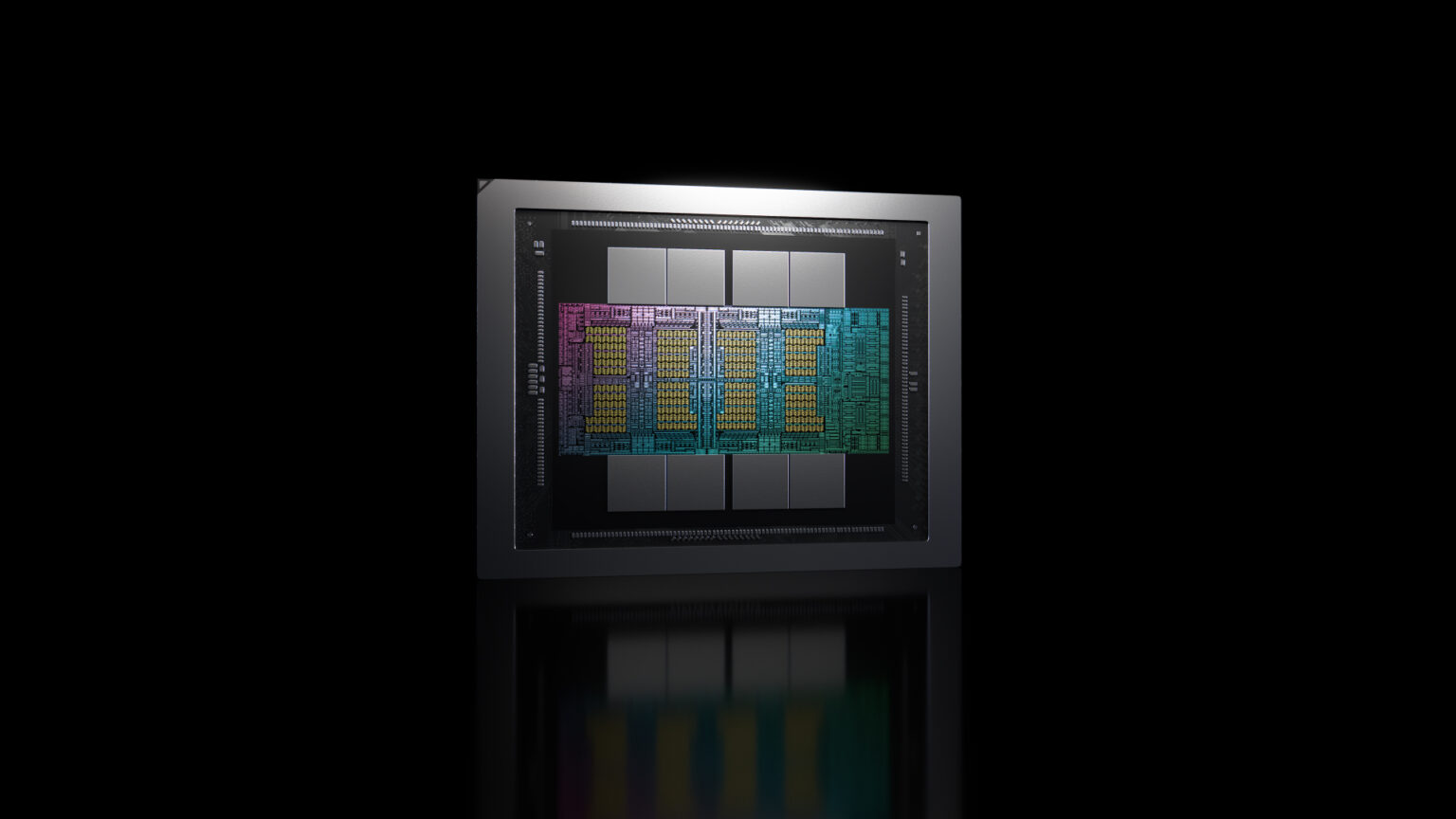
Nvidia has announced Rubin HPC, a new GPU designed for high-performance computing, scientific simulations and data analytics. It features more than 50,000 CUDA cores on a single chip and introduces seventh-generation NVLink connectivity, with availability expected in 2028.
Announced at the SC26 supercomputing conference, Rubin HPC is part of Nvidia's Vera Rubin platform but is specifically optimized for workloads that rely on general-purpose GPU computing rather than primarily AI training and inference. Nvidia says the GPU is intended to accelerate common operations in scientific computing, including sparse matrix calculations, stencil computations, sorting and reductions. These workloads are used in areas such as climate modeling, genomic analysis, engineering simulations and financial risk assessment. The GPU will also work with Nvidia's CUDA-X libraries, which offer optimized implementations of complex algorithms that AI agents can use to run simulations and analyze data.
Nvidia argues that faster simulations can shorten the cycle of testing an idea, evaluating the results and refining the next step. In fields such as materials science, molecular research and industrial design, AI agents may generate numerous candidate materials, molecules or designs that need to be evaluated through simulation.
For agents tackling science and engineering, faster simulation means faster discovery, - Ian Buck, vice president of hyperscale and high-performance computing at Nvidia.
The company says Rubin HPC is intended to help researchers and engineers explore more possibilities and direct laboratory work toward the most promising candidates.
The company says the GPU is designed to balance computing power with data movement. Rather than simply increasing compute capacity, Rubin HPC includes sparse data acceleration intended to keep its CUDA cores supplied with data instead of leaving them waiting for memory operations.
Nvidia has yet to disclose the GPU's full specifications, including its memory capacity, bandwidth, power consumption and detailed compute performance. The company has also provided no details about pricing or the systems that will use the GPU.
Rubin HPC will use seventh-generation Nvidia NVLink interconnect technology. This is intended to improve GPU-to-GPU communication in large systems, where multiple accelerators often work together on demanding simulation and analytics workloads.
For comparison, the standard Rubin GPU features 288 GB of HBM4 memory, up to 22 TB/s of memory bandwidth and sixth-generation NVLink connectivity with up to 3.6 TB/s of bidirectional bandwidth. These specifications should not be assumed to apply to Rubin HPC. With more than 50,000 CUDA cores, the new GPU will have nearly 2.5 times as many as the RTX 5090, which has 21,760 CUDA cores.
Nvidia expects Rubin HPC to become available in 2028, roughly two years after the introduction of the standard Rubin generation.
Source(s)
 Add as a preferred source on Google