




Microsoft reveals next gen DirectX ray tracing specifications launching summer 2026
The DirectX Ray Tracing (DXR) pipeline integrated with Microsoft’s DirectX 12 Ultimate API is set to receive a major upgrade. On March 17, Microsoft released detailed specifications for three important technologies including clustered geometry, partitioned top-level accelerated structures (TLAS) and indirect acceleration structure operations. These new updates are meant to accelerate ray tracing performance in games by allowing the GPU to process geometry and scenes more efficiently, as well as perform some of the tasks that were traditionally processed on the CPU side. All these latest specs are currently being developed and a preview release is scheduled for summer 2026.
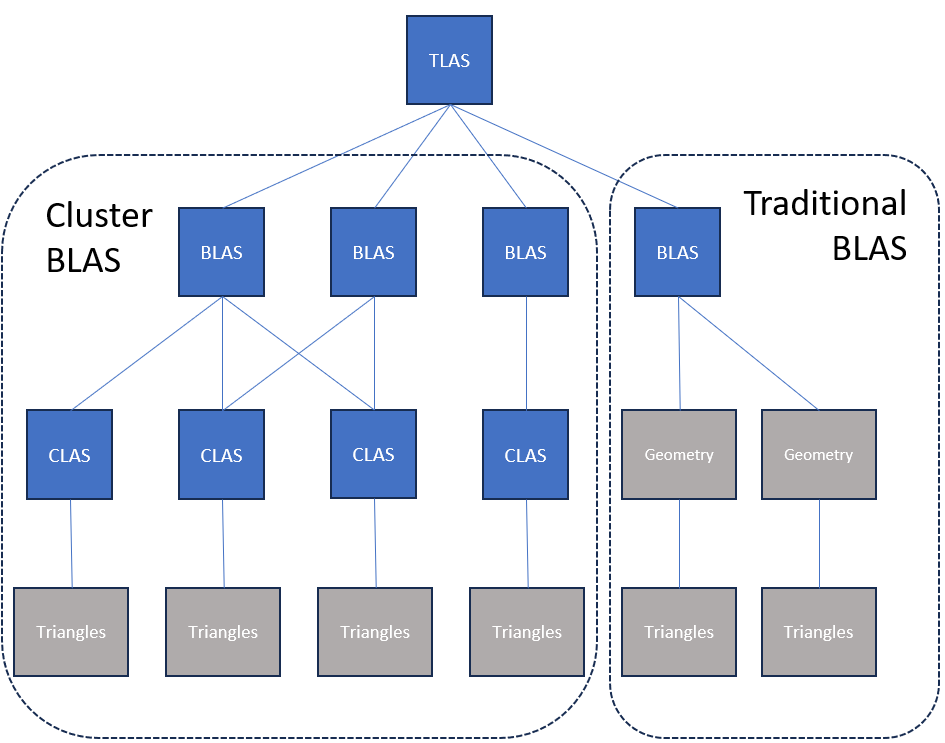
Clustered geometry simplifies how the GPU operates with triangles - the building blocks of 3D graphics. As the name suggests, the new spec clusters groups of nearby triangles into a single simplified building block. This allows the GPU to instantiate and move geometry topology in bulk, simplifying the previous workflow that required multiple calls for all triangles in a scene. This new approach essentially eliminates the need to update or duplicate existing geometry and should improve ray tracing performance where the GPU needs to render foliage, crowds or other props only once.
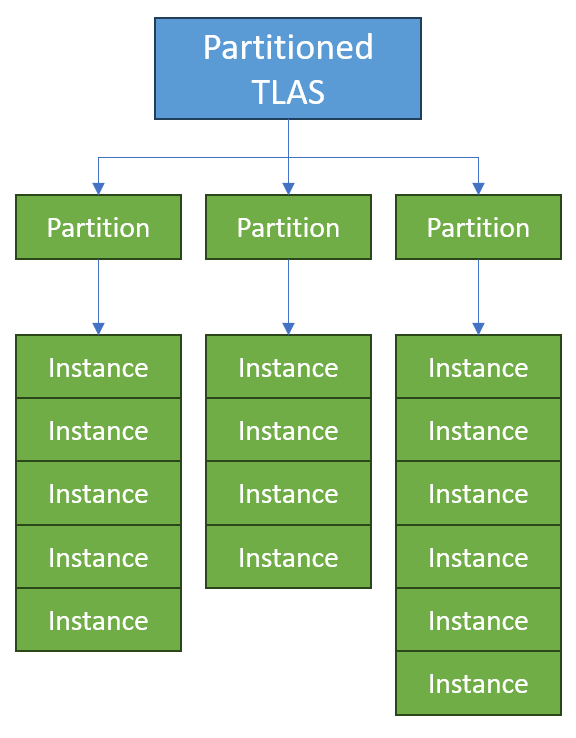
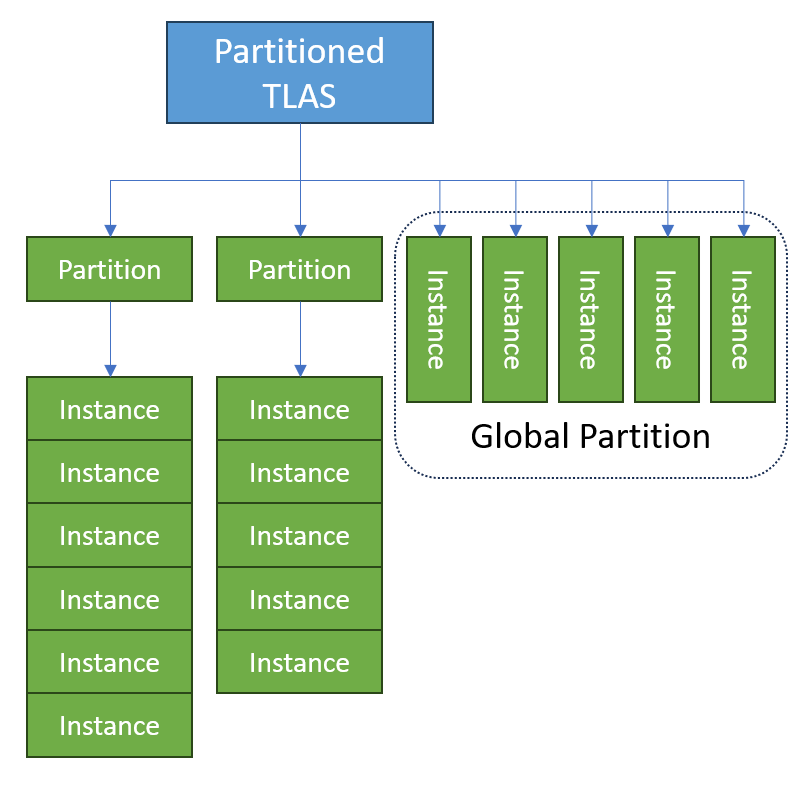
Partitioned TLAS takes the same methodology used with the clustered geometry and applies it to the game scenery. In this case, the entire game scene can be partitioned into smaller groups, which the GPU can manipulate easier with new ray tracing elements. This considerably speeds up ray tracing performance, since the GPU can ray trace only the visible or necessary elements from the entire scene.
Last but not least, the indirect acceleration structure operations feature allows the GPU to directly run some tasks that were previously processed on the CPU. Thanks to this feature, the GPU can manage API calls for building, compacting, moving and instantiating templates. Gamers will thus notice reduced system latency and improved overall ray tracing performance in more complex scenes.
Microsoft specifies that the new features can work on any GPU supporting ray tracing with a simple driver update. Newer GPUs (unclear which exact models) could benefit from additional improvements that are not mentioned in the new specs. There is the possibility that some older GPUs (again unspecified models) may not get support for these new features, but this “will likely be a resourcing tradeoff the hardware vendor needed to make.”
Source(s)
via TechPowerUp
 Add as a preferred source on Google


