




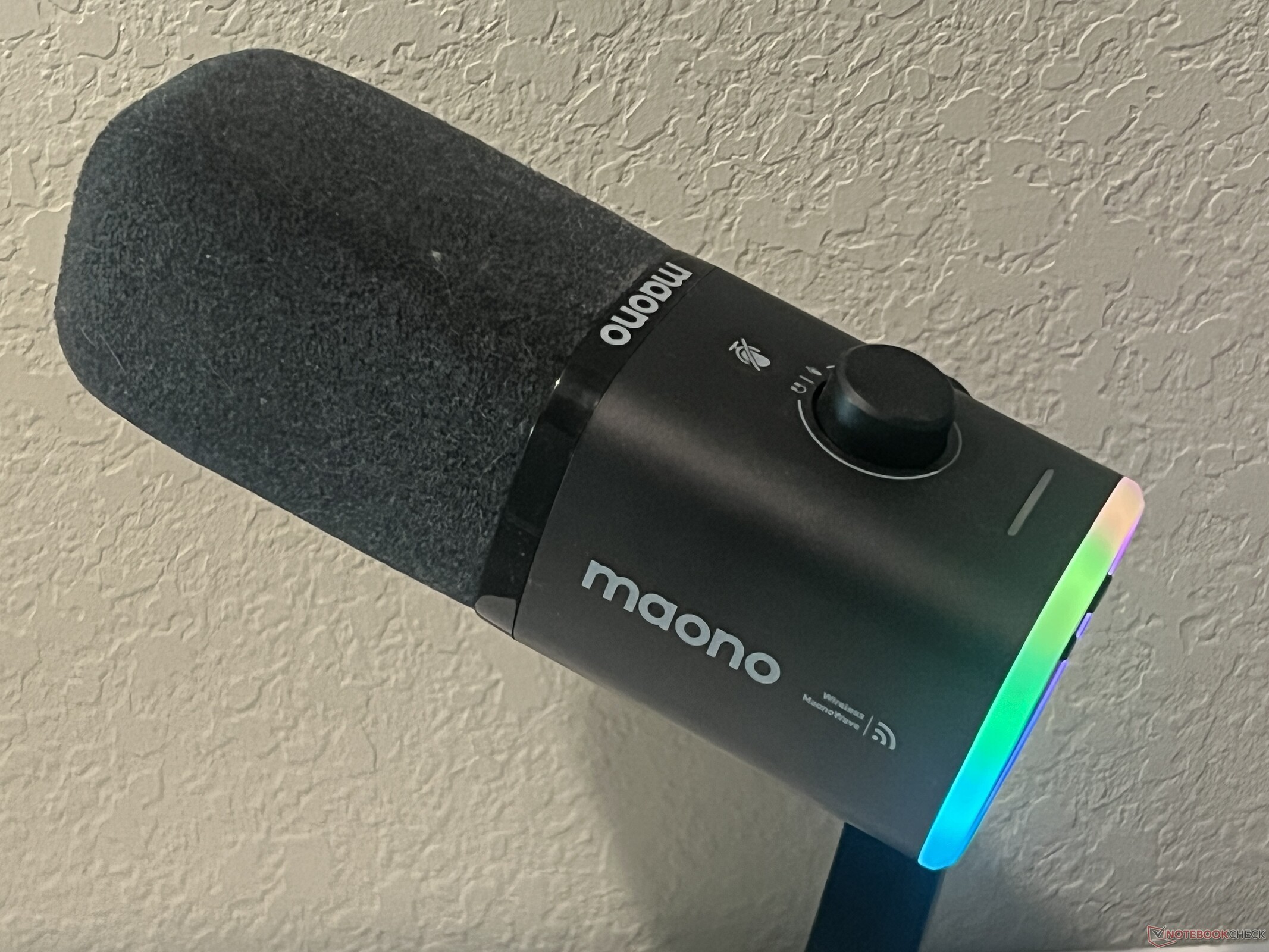
Maono PD100W USB microphone review: Basic but solid USB microphone with wireless chops
All you need.
The Maono PD100W is a fairly basic USB microphone with adequate features for most budding podcasters and conference callers. Its primary feature is the included wireless adapter, which increases its versatility.Sam Medley Published 🇳🇱 🇫🇷 ...
Verdict - Basic microphone with visual flair and wireless connectivity
The Maono PD100W is a compact desktop microphone with RGB lights and solid features. The primary draw is its included wireless dongle, which can clean cable clutter off a desk. Additionally, the PD100W has decent noise cancellation, good real-time audio monitoring, and delivers excellent recording quality for the price. However, the PD100W's lack of XLR output and polar pattern options makes it a single-use microphone aimed at a specific target.
Pros
Cons
The Maono PD100W is a budget microphone from Maono. The microphone is fairly basic and aimed squarely at solo streamers, gamers, and budding podcasters. While it skimps on common microphone options (like variable polar patterns), it includes some very nice quality-of-life features, including optional wireless connectivity and background noise suppression.
Specifications
| Micorphone type | Dynamic |
| Polar Pattern | Cardioid only |
| Sample / Bit Rate | 48 kHz/24-bit |
| SPL max | 125 dB |
| Frequency response | 50-16000 Hz |
| Connection options | USB-C, 2.4 GHz wireless |
| Battery | 1500 mAh, 5.55 Wh |
| Battery life | 40 hrs (per Maono) |
| Wireless range | 50 m (per Maono) |
Build quality and features: Budget housing with wireless connectivity
The PD100W is made of matte plastic. It doesn't feel cheap, but it lacks the panache of its bigger brother, the aluminum Maono PD200W. Still, it looks good thanks to its matte black finish. The microphone features an RGB ring around its base for some flash. Tapping the power button on the bottom cycles through multiple colors and a rainbow mode, though Maono's software is needed to fine-tune the lighting.
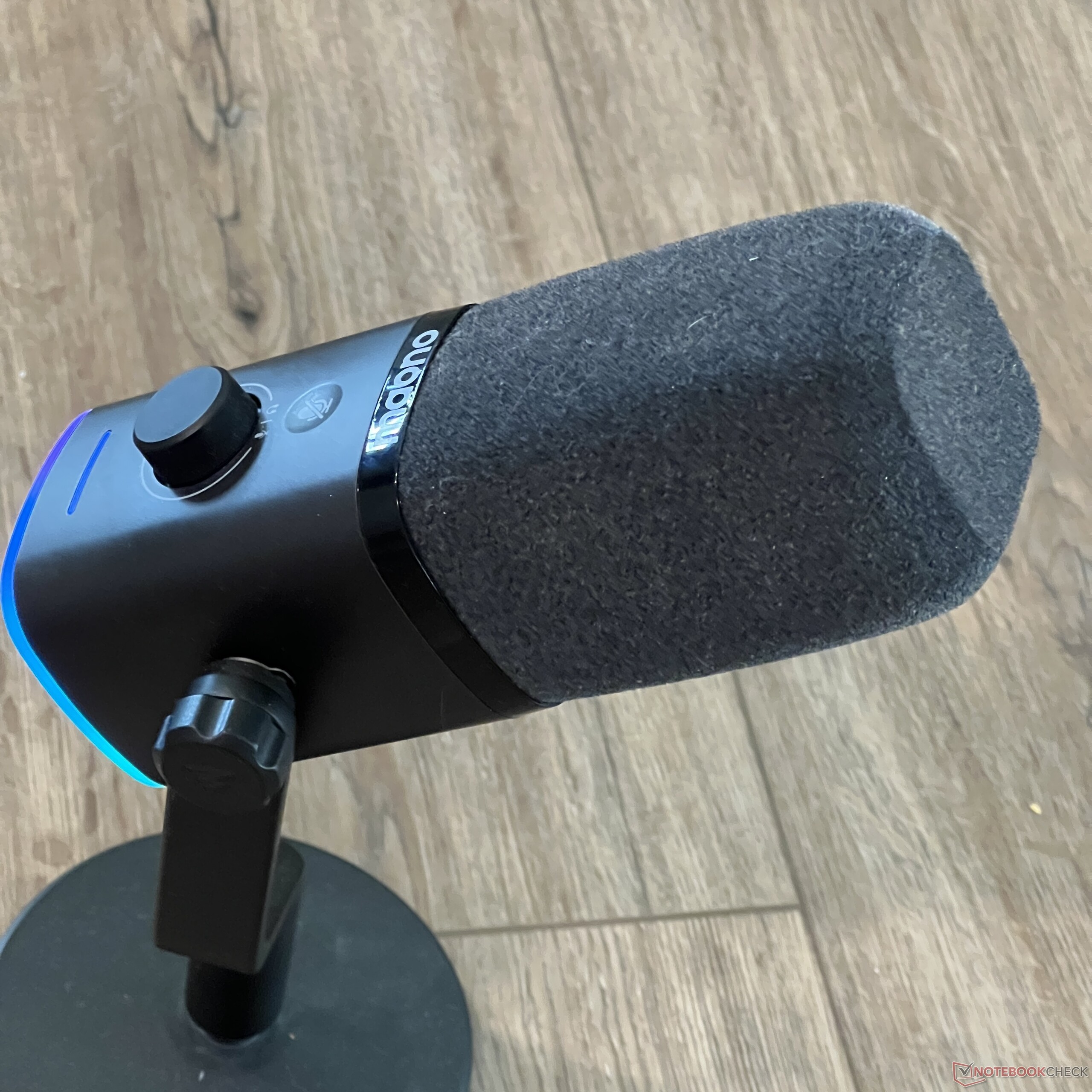
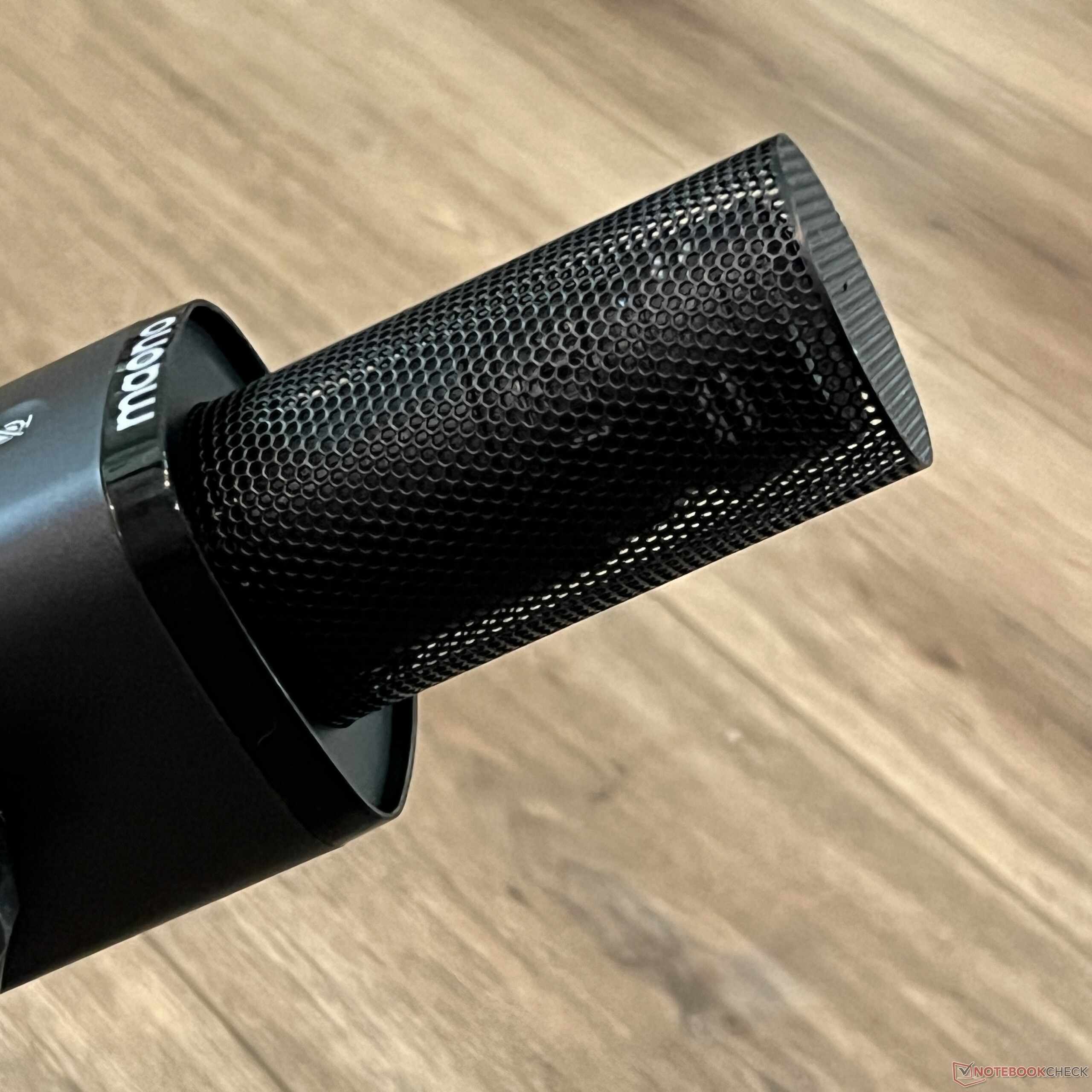
The PD100W has a pop cover over the main shotgun-style capsule. This is held snugly in place, though it can be removed with an intentional tug. The pop cover is good and cancels out plosives and wind noise.
Like the PD200W, there is a single knob on the main body of the mic for controlling gain. Also like the PD200W (unfortunately), it's difficult to determine the gain level via this knob; a light bar under the knob dims or brightens as gain is turned down or up, respectively. As such, it's tricky to figure out where the specific gain level is (e.g., 50%) via the microphone alone.
Above the knob lies a touch-sensitive mute button. It works reliably, though I would prefer tactile feedback for this feature.
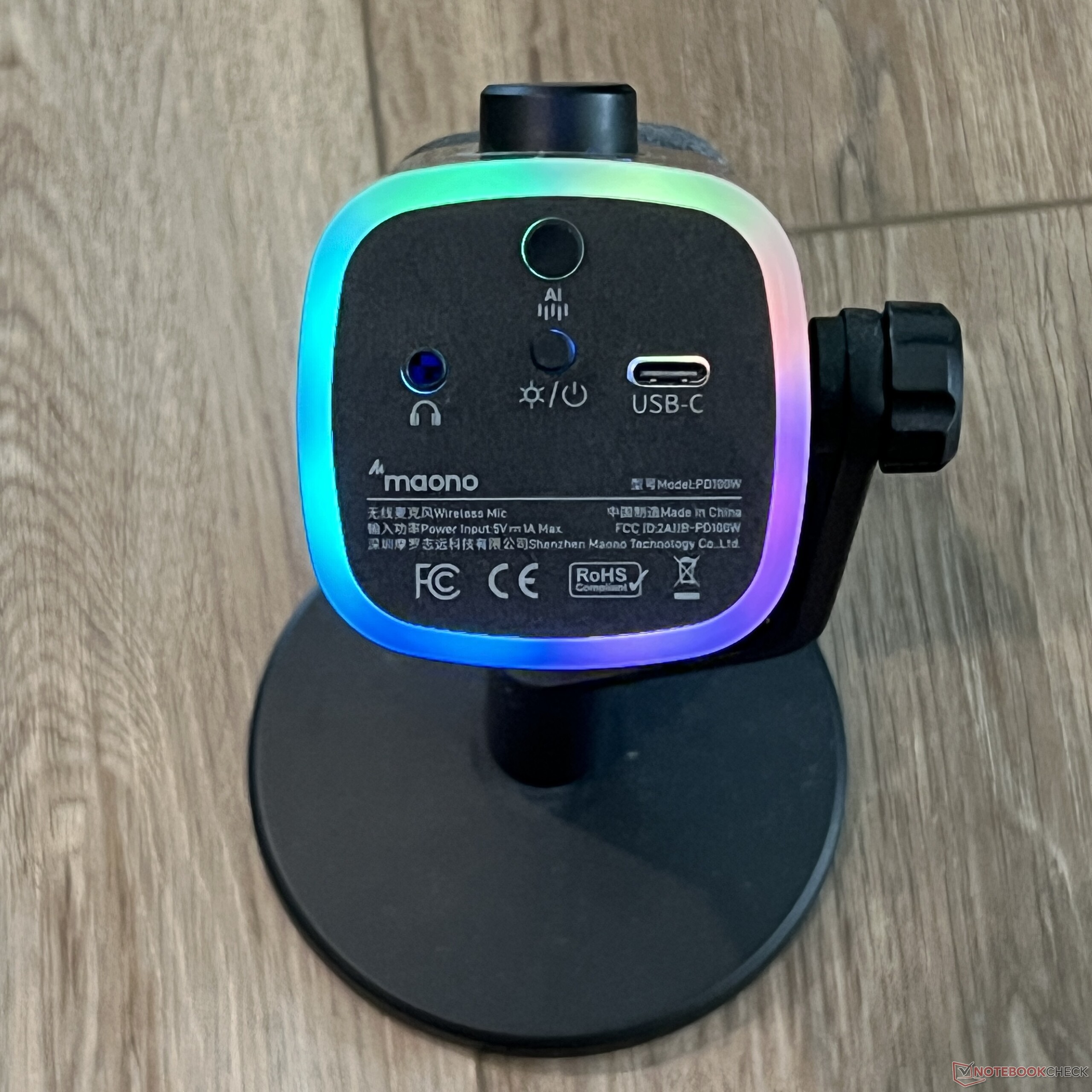
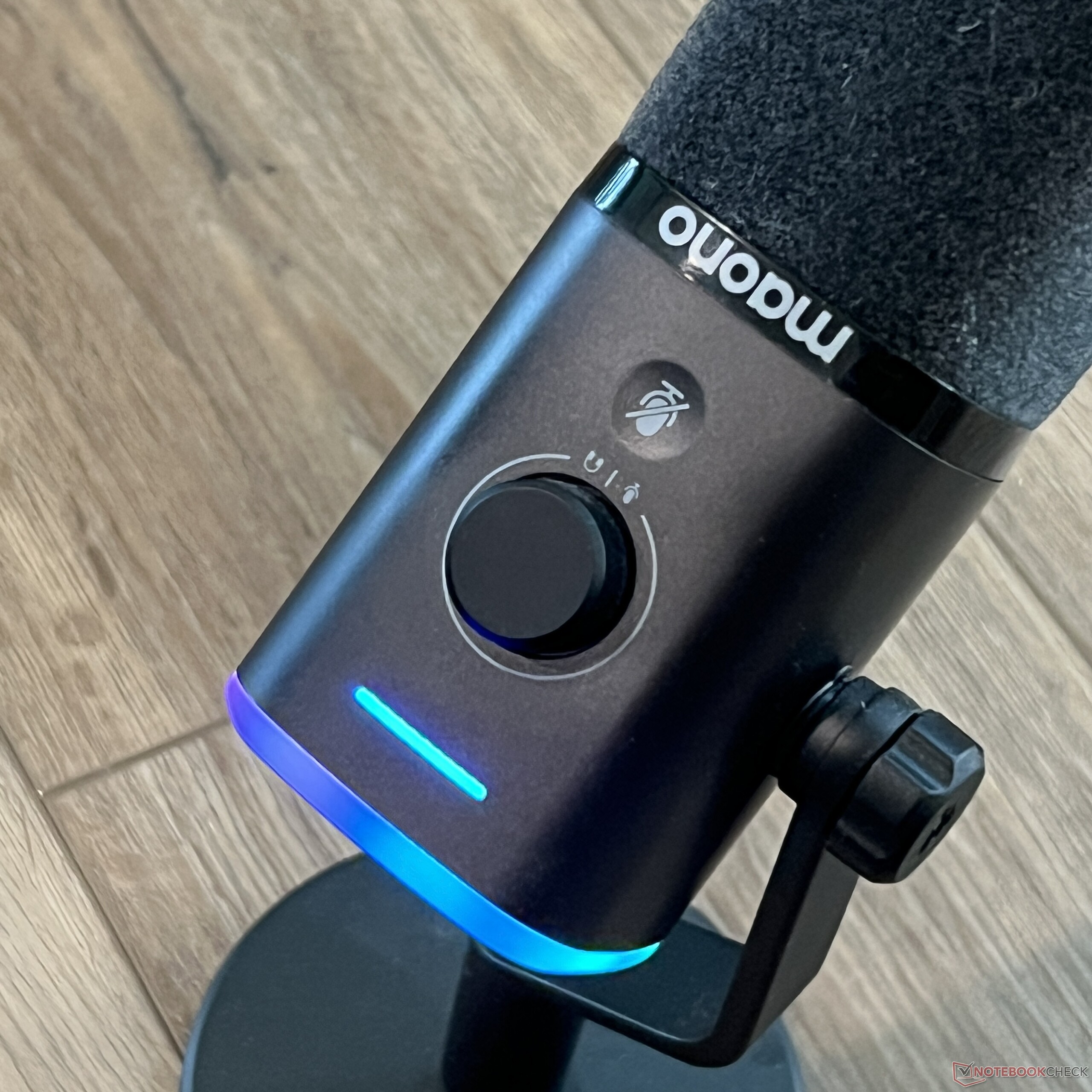
The bottom of the microphone houses the power button, a noise-suppression button, a 3.5mm audio jack for audio monitoring, and a USB-C port for charging and connecting to a device. Maono rates the battery life at 40 hours with RGB off; turning on the light show cuts battery life to 25 hours. In my testing, this estimate is just about right. I could routinely get between 30 and 40 hours of recording time with the RGB light off.
The PD100W can connect to a device either via a USB-C cable or through the included wireless dongle over a 2.4 GHz connection. Maono includes a USB-C dongle and sells a Lightning dongle for older iPhones and iPads. There is no discernable difference in audio quality via either a cable or wirelessly, which is excellent. The PD100W unfortunately lacks XLR output, limiting its use case, but this is unlikely to be a dealbreaker for most streamers and gamers.
Audio quality: simple and solid
The PD100W offers great audio quality, especially for the price. Voice actors and professionals will be wanting more, but for the average home user (such as a gamer or streamer looking for an upgrade over a headset), the PD100W delivers.
The overall sound profile is fairly well-balanced; bass comes through without cracking, and highs don't clip. Audio is clean, and the noise suppression is surprisingly good; it was able to cancel out a dog barking in an adjacent room through a closed door, as well as the sound of children playing. Louder noises (like the gleeful squeals of my kids) still cut through.
The main downside for the PD100W's recording capabilities is the lack of variable polar patterns. The PD100W is locked into a cardioid pattern, making it squarely a solo-user microphone.
You can hear some voice samples below.
Maono PD100W - 50% gain
Maono PD100W - 100% gain
Maono PD100W - wireless receiver - 100% gain
Conclusion
Given the price, the Maono PD100W is a solid beginner's microphone for those looking for something better than a laptop's built-in microphone or a standard gaming headset. The PD100W offers excellent audio quality for a budget microphone, and its ability to wirelessly connect is icing on the cake. While podcasters, voice actors, and streamers may outgrow the Maono PD100W (due to its lack of XLR output and single polar pattern options), this microphone is an excellent first step into the world of audio capture.
Transparency
The selection of devices to be reviewed is made by our editorial team. The test sample was given to the author by the manufacturer free of charge for the purposes of review. There was no third-party influence on this review, nor did the manufacturer receive a copy of this review before publication. There was no obligation to publish this review. As an independent media company, Notebookcheck is not subjected to the authority of manufacturers, retailers or publishers.
 Add as a preferred source on Google


