


Lenovo's Googlebook 15 is the weakest Googlebook yet
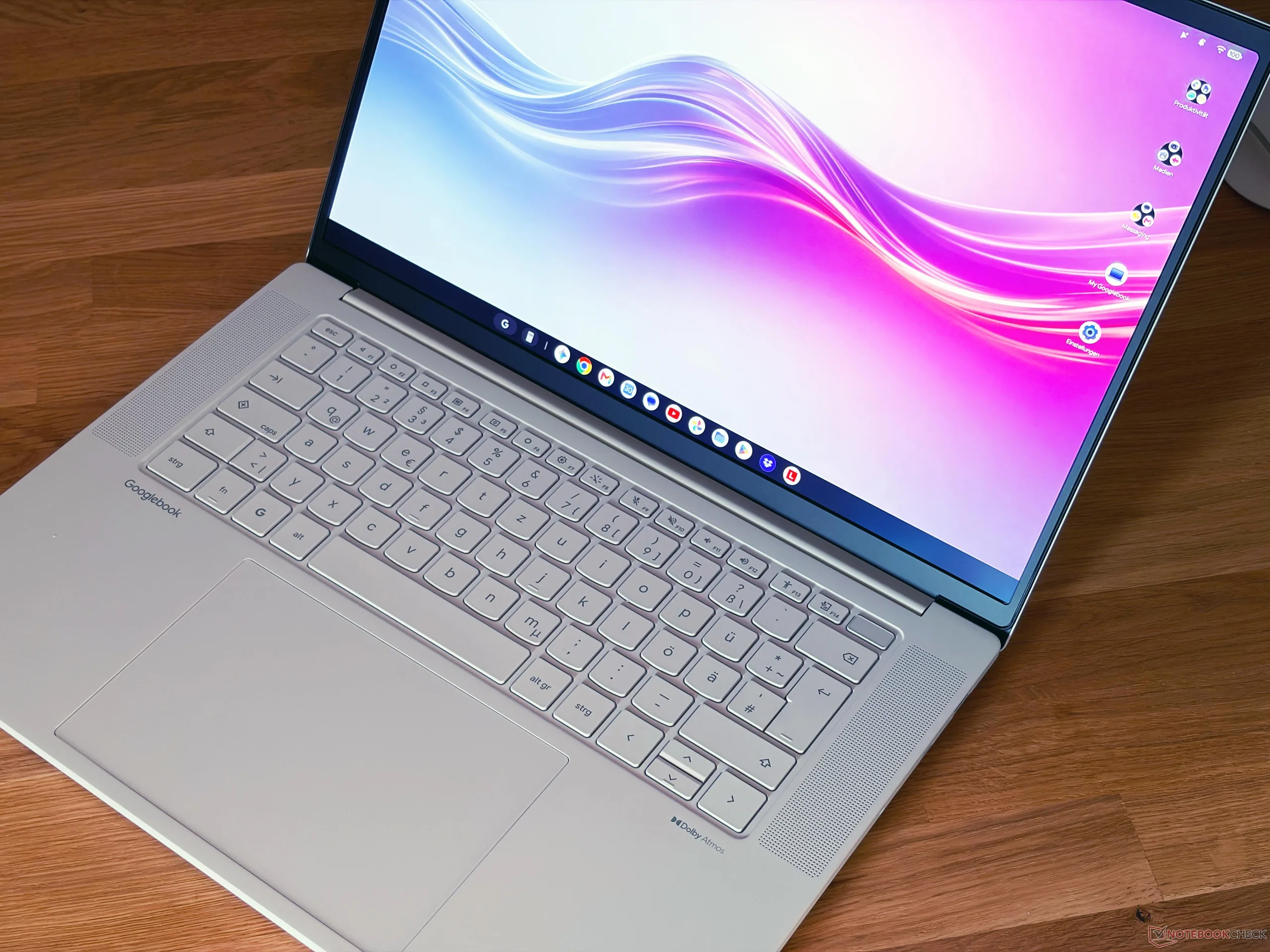
We tested the new Lenovo Googlebook 15, which features a 15-inch OLED screen. This makes it the largest Googlebook currently on the market. Unlike competitors such as Asus or HP, however, Lenovo does not offer a premium chassis here. Although the specifications indicate that some parts are made of metal, the smooth surfaces feel like those of an inexpensive plastic chassis. The keyboard's short key travel also makes for a mediocre typing experience, similar to that of budget IdeaPads. Another real weakness is the white backlighting, which provides poor contrast against the light-colored keys.
Lenovo uses an Intel Panther Lake processor paired with 16 GB of RAM, which is more than sufficient for the available Android apps. In everyday use, however, the fan tends to kick in fairly quickly. This is due to the processor's unnecessarily high short-term power limit. Overall, the cooling system is considerably more active than those in other Googlebooks we have tested so far. There are also still compatibility issues: Some apps that run without problems on Android tablets do not yet work on the Googlebook.
Lenovo equips the device with a high-resolution OLED touchscreen that stands out above all for its good brightness levels. We measured more than 600 nits in SDR mode and even more than 1,100 nits in HDR mode. While image quality is generally very good, there are color management issues, just as with other Googlebooks. Since the screen only operates in sRGB mode, the P3 color space that the OLED panel technically supports - and that Lenovo actively advertises - remains unused.
Battery life is also disappointing: The device barely manages more than 10 hours in our Wi-Fi test at 150 nits. Overall, the package does not feel coherent. At a hefty price of €1,379, the average hardware and basic chassis are disappointing. Competing Googlebooks at least offer much higher-quality chassis and better keyboards. All further details about the new Lenovo Googlebook 15 can be found in our review.
 Add as a preferred source on Google


