




Asus ROG Xbox Ally X turns into a portable 3D scanner for real-time mapping
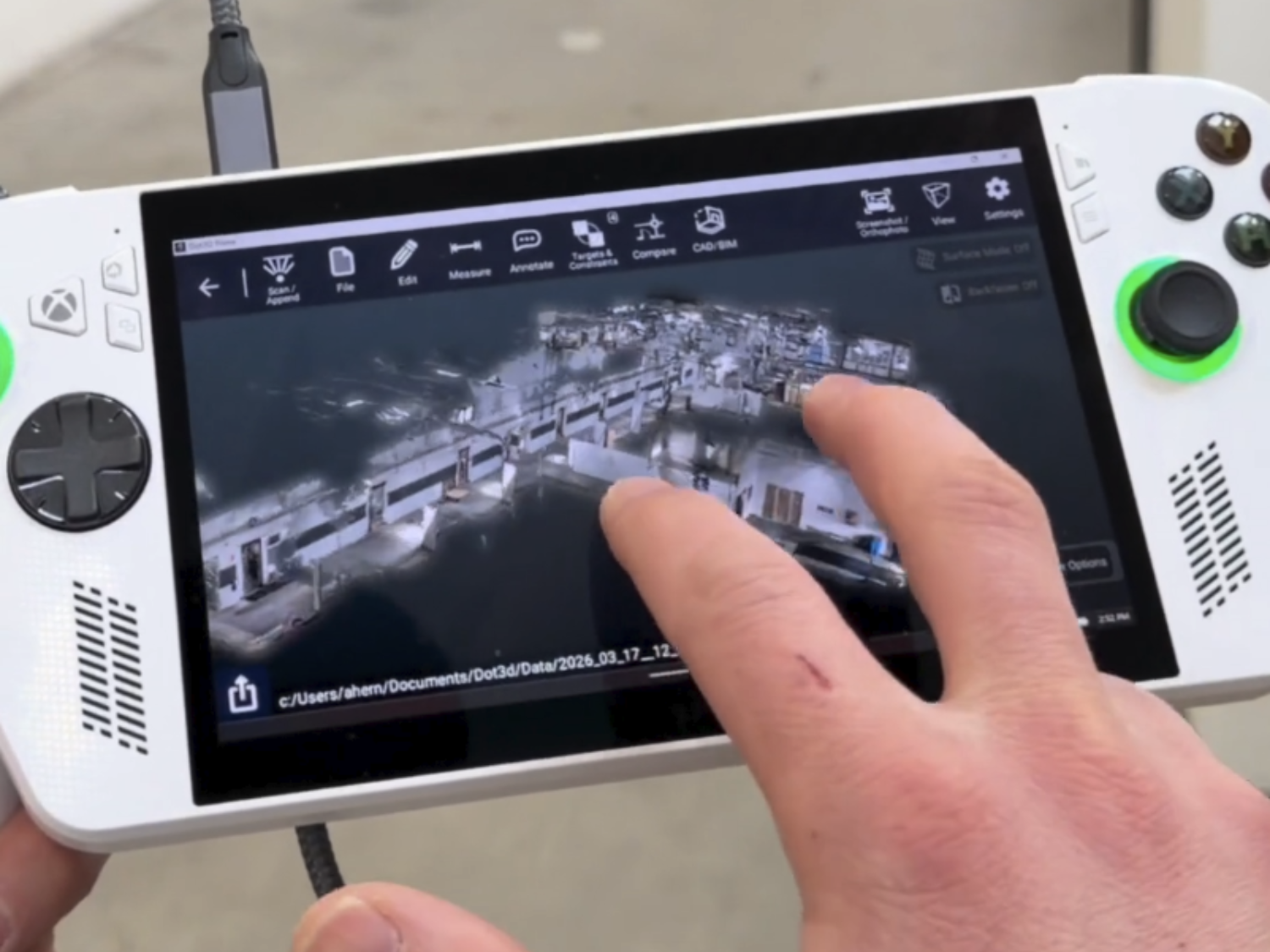
A new video recently posted to Reddit shows a handheld gaming PC being used as a fully portable 3D scanning rig. The setup uses the Asus ROG Xbox Ally X alongside an Orbbec Gemini 336L depth sensor, running Dot3D scanning software on Windows. The result is a self-contained portable system that can capture entire indoor environments while being carried around like a console.
The hardware side is simple. The Orbbec 336L sensor is mounted to the back of the ROG Ally and connected via USB. The handheld runs the full Windows version of Dot3D, which takes care of real-time mapping, capture, and post-processing. At multiple points during the demo, we see a live scanning interface with depth visualization, mesh reconstruction, and navigation tools. The user can move through a hallway while the software builds a 3D model on the fly.
Another clip stitched shows the completed scan as a full floor layout, including corridors, rooms, and structural details. The mesh is navigable directly on the handheld, complete with pinch-to-zoom and rotation controls. There are still artifacts, however. Some surfaces look to be noisy or incomplete, especially around edges and ceilings. Regardless, the overall structure is more than apt for practical use. Plus, sample datasets shared by the creator include compressed models on Sketchfab and full-resolution files via Dropbox, so you can see significantly higher detail than what’s shown in the video.
Anyone else using their handheld as a 3D scanner? This combo with Ally X + Dot3D + Orbbec 336L is pretty amazing. Even the lower spec'd model is a beast for this:
by u/dotvp in Handhelds
Portable 3D scanning is not new by any means, but we've usually seen bulkier rigs or laptops being used for the same purpose. Tools like LiDAR-enabled iPads or tripod-based scanners are more common in real estate, construction etc. What's special here is out here is the use of a gaming handheld as the compute unit. The ROG Ally’s Ryzen Z1-series chip looks to be pretty capable of handling real-time processing without any external hardware.
Technically, the idea makes sense. A handheld PC already has a built-in screen, battery, and enough GPU power to process depth data. The trade-off here is cost and complexity. The scanner (~$379) and Dot3D software (subscription-based, often around $999/year) means that this is not merely a casual setup - it’s closer to a professional tool. And then, there’s the question of accuracy. While the scans do look usable, they won't likely match the accuracy of dedicated high-end scanning systems.
However, if you're already using tools like Dot3D, replacing a laptop with something like the ROG Ally could definitely make workflows more mobile, and this video is proof of the same.
Source(s)
 Add as a preferred source on Google


