




Apple M5 Ultra enters workstation monster territory with massive Geekbench 7 debut
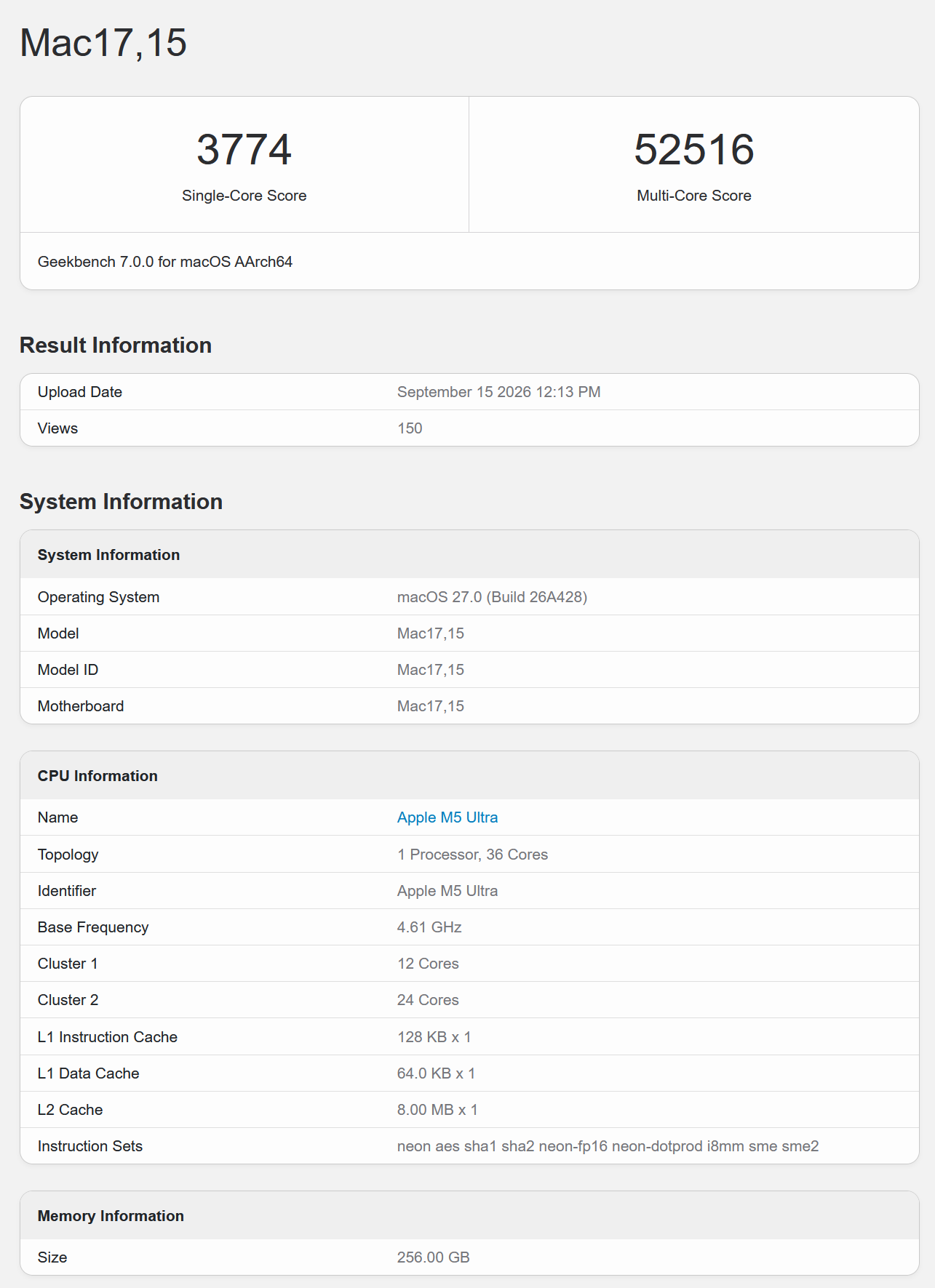
Apple's 36-core M5 Ultra has surfaced on Geekbench, and its first showing puts the company's flagship desktop silicon squarely in workstation territory. The new chip managed a Geekbench 7 multi-core score high enough to trade blows with AMD Threadripper Pro SKUs. It has debuted alongside what appears to be the new Mac Studio running macOS 27.0 with 256 GB of unified memory. It has the fully enabled M5 Ultra, with 36 CPU cores split between 12 super cores and 24 performance cores, and Geekbench reports a peak frequency of around 4.6 GHz.
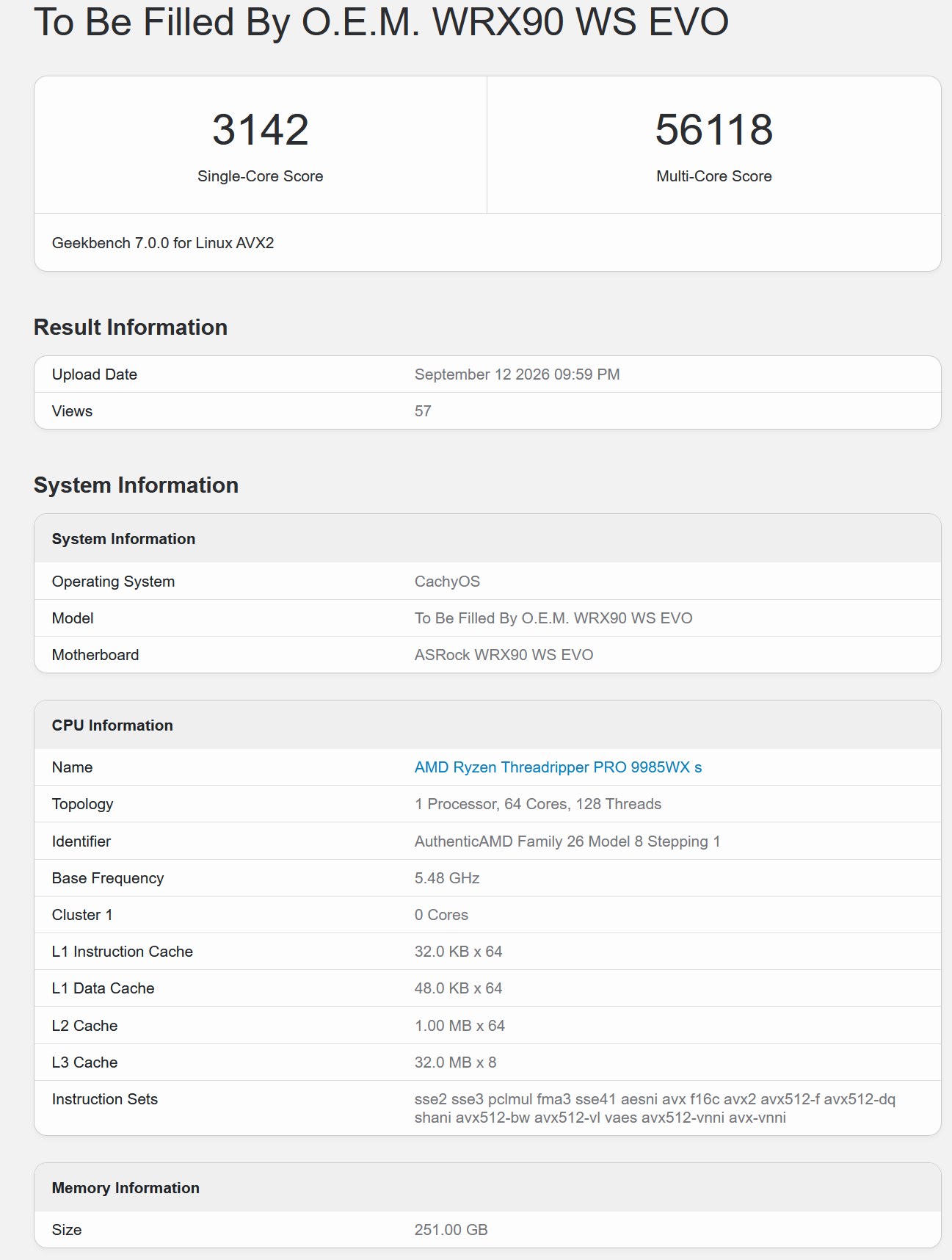
The system scored 3,774 points in Geekbench 7's single-core test and a massive 52,516 points in multi-core. The Geekbench score lines up neatly with Apple's own performance claims, which state the 36-core M5 Ultra delivers up to 1.3x the multi-threaded CPU performance of the M3 Ultra. Furthermore, that puts the M5 Ultra within spitting distance of the fastest workstation CPUs currently appearing in Geekbench 7's database. A workstation with AMD's 64-core Ryzen Threadripper Pro 9985WX reached 56,118 points, putting it only about 6.4% ahead of the M5 Ultra. Other runs of the same processor sit at 54,633 and 54,056 points.
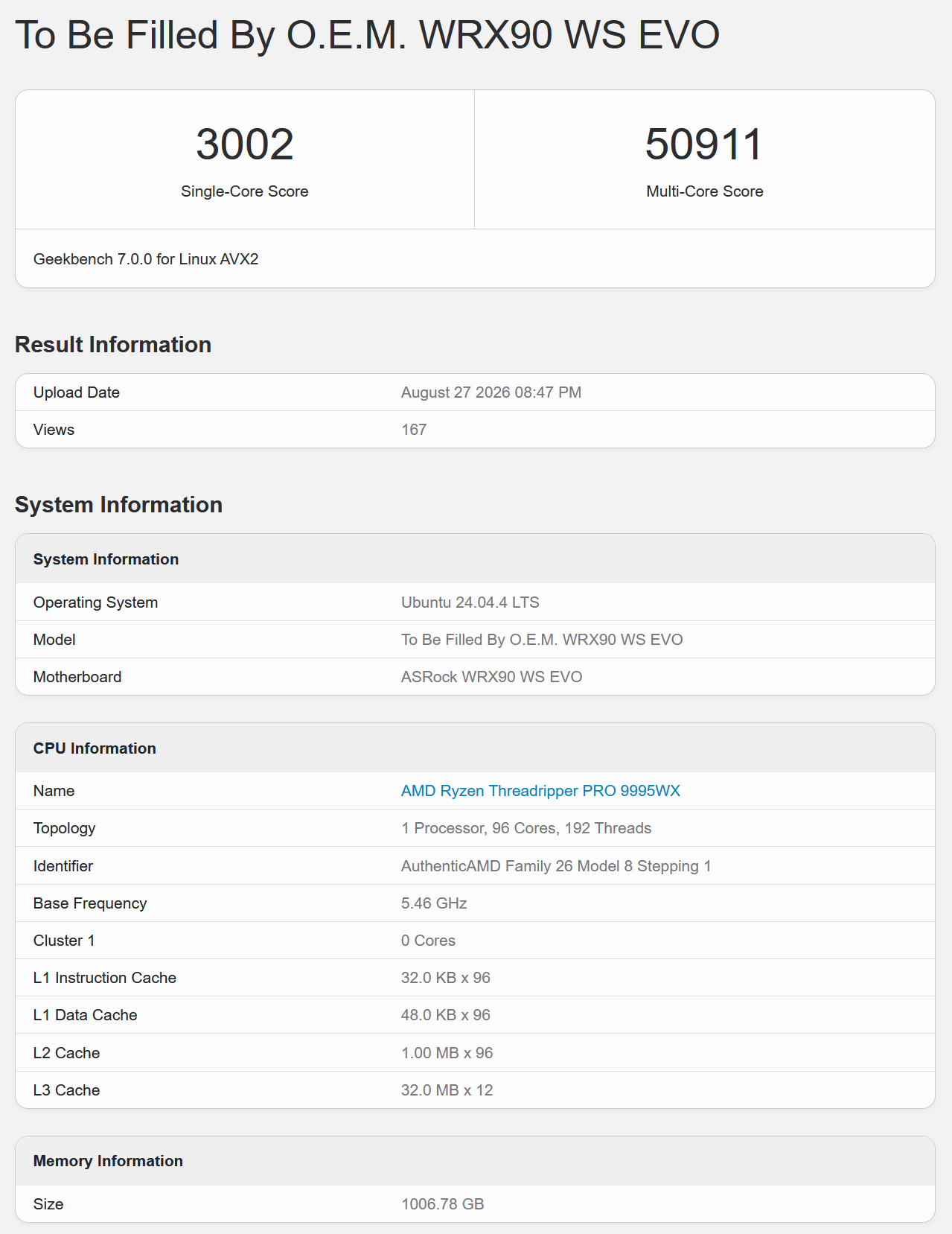
Things get even more interesting with the Ryzen Threadripper Pro 9995WX. AMD's flagship workstation processor has 96 Zen 5 cores and 192 threads, yet one high-end WRX90 system scored 50,911 points in Geekbench 7. The 36-core M5 Ultra is around 3% faster in this particular test. Other 9995WX submissions range from roughly 48,700 to 50,600 points. The comparison extends into server hardware, too, with the M3 Ultra zooming past numerous dual-socket Epyc machines.
Of course, this does not mean the M5 Ultra is outright faster than a 96-core Threadripper Pro or a dual-socket Epyc server. Geekbench is a relatively short, cross-platform benchmark and doesn't scale indefinitely with extremely high core counts. Nevertheless, seeing a 36-core Mac Studio contend with processors designed for high-end workstations and servers remains impressive. It also sets a baseline for the next-gen M7 Ultra, which is slated to support up to 1.5 TB of unified memory, squarely putting it in server-chip territory.
A recent Geekbench listing for the new 12-core M6 in a Mac Mini has already shown us what Apple’s next-gen CPU cores can do. It scores 4,610 single-core and 20,676 multi-core points in Geekbench 7.0’s single and multi-core tests. Unfortunately, those numbers cannot be compared directly with this M5 Ultra result, since the M6 listing was produced with Geekbench 6.3 while the M5 Ultra was tested using the newly released Geekbench 7.
Source(s)
 Add as a preferred source on Google


No comments for this article
