




A Geekbench benchmark shows Apple's M6 has some unexpected competition
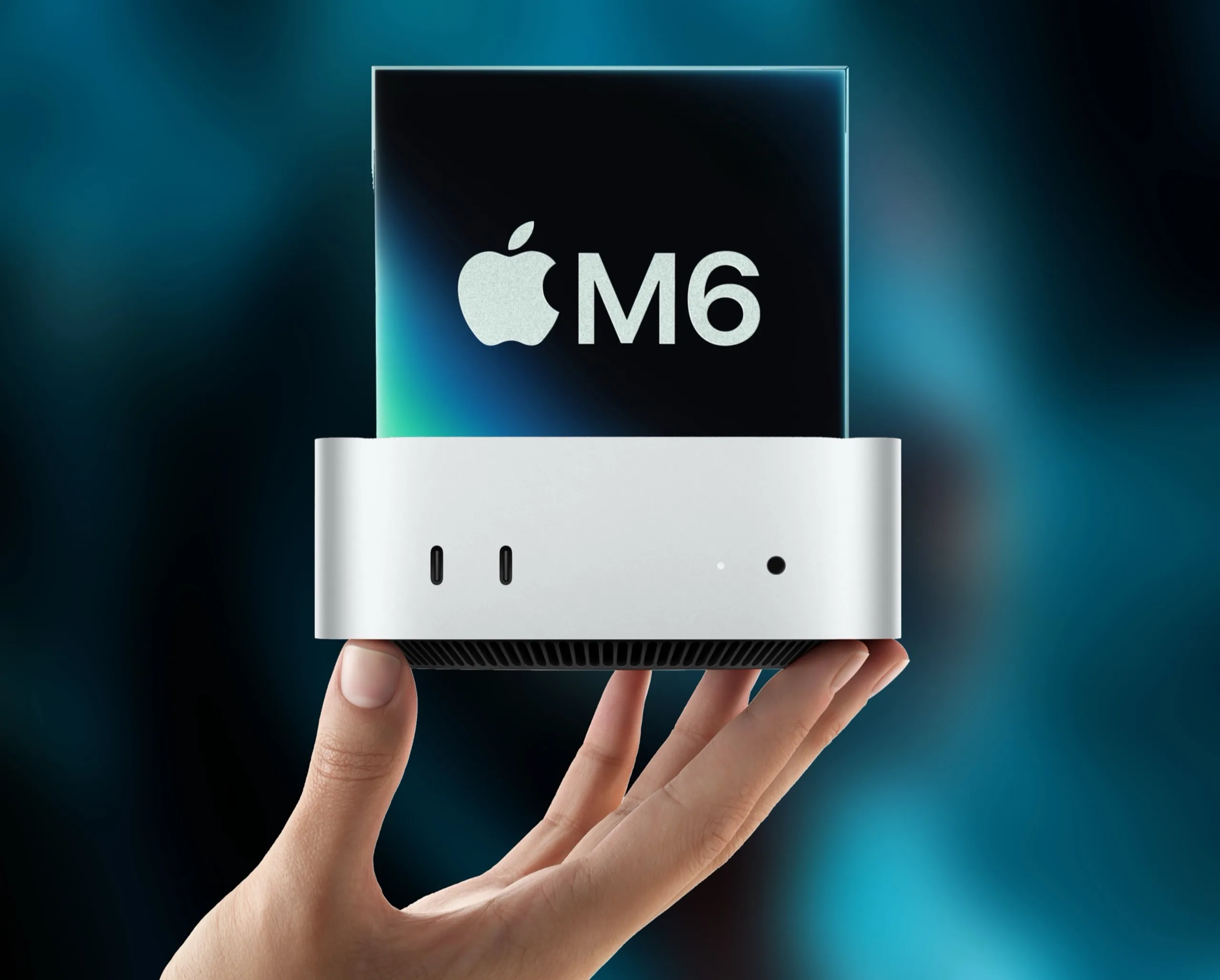
A Geekbench 6.3 listing for a Mac18,5, identified as the Mac mini M6, has surfaced with an impressive single-core score of 4,610 and a multi-core score of 20,676. The listing shows 32 GB of memory, the maximum configurable amount for the base M6, and macOS 27.0 build 26A428. The system reports a 2+4+6-core cluster split (two super cores, four performance cores, and six efficiency cores), matching the three-tier CPU structure Apple detailed at the chip's launch in August.
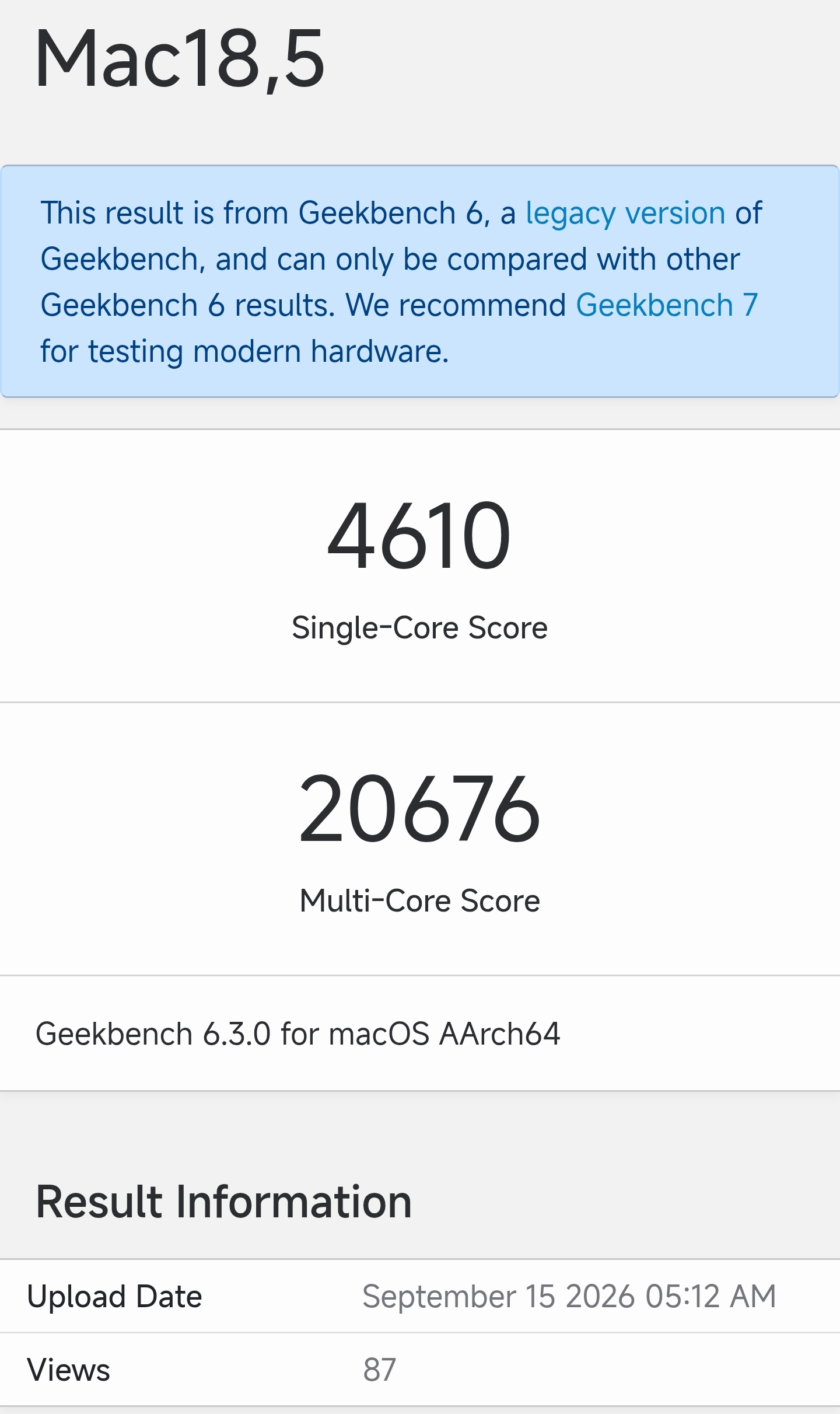
Against Apple's outgoing 10-core M5, for which we have recorded a median single-core score of 4,195 and a median multi-core score of 17,072 across five benchmark runs, the M6 listing represents roughly a 10% single-core gain and a 20% multi-core gain. This is in line with Apple's own claim of up to 1.2 times faster multi-threaded performance than the M5.
The more notable comparison is with Apple's A20 Pro, which powers the iPhone 18 Pro line. It achieved a single-core score of 4,725 at a peak clock speed of 4.93 GHz. That clock speed is around 3% higher than the M6's, translating into a single-core score 2.5% higher than the M6's score of 4,610. This means the current M6 Mac mini listing trails Apple's smartphone chip in both single-core performance and clock speed, despite the thermal headroom advantage offered by the Mac mini chassis. Why Apple clocked the M6 lower than the A20 Pro is currently unclear, though an unverified leak has offered a possible explanation. According to a post from Baidu Tieba user littletree_666, the M6's Super core retains the same 10-wide decode design as the M5, while the A20 Pro uses a redesigned, cut-down Super core with 9-wide decode, trading some decode width for higher achievable clock speeds. The same source claims tight decoder timing and thermal limits in passively cooled devices like the iPhone factored into Apple's decision to separate the A-series and M-series core designs this generation. The A20 Pro's multi-core score of 12,575, limited by its lower core count and thermal headroom, remains well behind the M6's.
As with all pre-release Geekbench listings, these figures come from what appear to be engineering samples rather than retail units, and final performance may differ once broader testing is available.
Source(s)
 Add as a preferred source on Google


No comments for this article
