 Deutsch
 Español
 Français
 Italiano
 Nederlands
 Polski
 Português
 Русский
 Türkçe
 Svenska
 Chinese
 Magyar
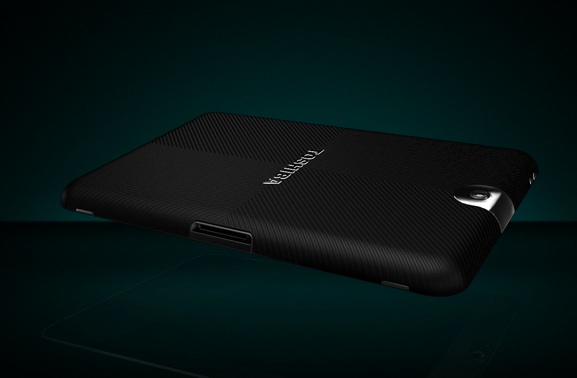
Toshiba Thrive 10"
Specifications

Pricecompare
Average of 4 scores (from 9 reviews)
Reviews for the Toshiba Thrive 10"
Source: PC World
 Archive.org version
Comparison, online available, Long, Date: 11/29/2011
Source: Liliputing
Archive.org versionThe Thrive isn’t going to be the best Android tablet choice for everyone. But for geeks, there aren’t many better options on the market right now.
Single Review, online available, Long, Date: 07/25/2011
Source: Slashgear
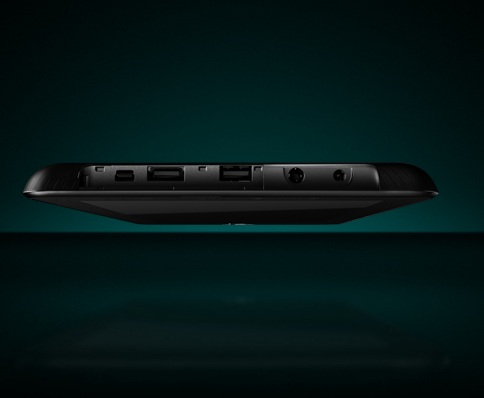
Archive.org versionEither way, the Thrive is a unique option when it comes to your tablet purchase and will have a warm place for some of you out there. It reminds us of what’s nice about the Android platform, and that’s options. You can have the sexy runway Samsung Galaxy Tab 10.1 starved of ports or the homely Toshiba Thrive ready to support more of your needs.
Single Review, online available, Short, Date: 07/23/2011
Source: Laptop Mag
Archive.org versionThe Toshiba Thrive is one of the most attractive tablets we've tested, and it offers the most flexibility with its myriad of full-size ports and removable battery--just keep in mind that this also adds to its size and weight. Regardless, the tablet's 6 and a half hours of battery life pale in comparison to the 8+ hours of endurance provided by lighter competitors such as the Samsung Galaxy Tab 10.1 and ASUS Eee Pad Transformer. Until Toshiba fixes the serious sleep/wake problem, we recommend holding off your purchase of the Thrive. However, after that issue is fixed, we recommend the Thrive for anyone looking for a stylish Android tablet with plenty of extras and a reasonable starting price.
Single Review, online available, Medium, Date: 07/20/2011
Rating: Total score: 60%
Source: Wired Magazine
Archive.org versionThe Thrive is packing a 1GHz Nvidia Tegra 2 dual-core processor and 1GB of RAM, which is on par with other tablets and provides enough juice for most games and videos. But the evidence suggests the software and hardware we’ve seen so far on Android tablets are still not fully developed enough to drive a pure home media convergence device in a way that’s as satisfying as what Apple, still the team to beat, has achieved. The Android desktop has come a long way, but scrolling in the browser and in apps, animations in games, and video playback just aren’t as elegant on Honeycomb as they are on iOS.
Single Review, online available, Very Short, Date: 07/19/2011
Rating: Total score: 70%
Source: PC Mag
Archive.org versionIt's hard to figure out where the Toshiba Thrive ranks amongst its Honeycomb peers. On the upside, you get HDMI and an SD card slot, along with a functional USB port, which makes the tablet more useful for business. The removable battery is a standout feature too. But when you consider the tablet's too-thick bulid and its beatable price, the pros and cons more or less cancel each other out. Depending on what you want most—a tablet for business, or a thin device primarily for entertainment—the Thrive is either your top pick or a tablet to be avoided.
Single Review, online available, Medium, Date: 07/15/2011
Rating: Total score: 70%
Source: PC World
Archive.org versionIf your life is solely in the cloud, and if you can't envision yourself porting over files on a USB drive, playing a video from your tablet on your TV via HDMI, viewing photos on the tablet that you just took on your digital camera, or using USB devices with your tablet, then the Thrive isn't necessarily for you. But somehow, I think even the most connected people will have occasion to use a tablet in one of those ways. And that's where the Thrive's appeal clearly lies.
Single Review, online available, Long, Date: 07/13/2011
Rating: Total score: 80%
Source: Trusted Reviews
Archive.org versionLast but not least, the battery is user removable, allowing you to replace it when it starts losing capacity as it ages or even carry a spare to extend the tablet's life away from a socket. We couldn't get Toshiba to give us even a rough indication of pricing, but this will be officially announced in Q2.
Single Review, online available, Very Short, Date: 02/16/2011
Source: It Pro
Archive.org versionAccording to Simons, the Tablet uses Resolution Plus technology derived from the company's range of TVs to upscale standard definition videos so they look better when viewed on high definition screens connected to its standard HDMI port. The Ambient Screen Control technology uses the webcam to detect how bright your surroundings are and adjusts the screen's brightness automatically, although we're surprised Toshiba isn't using an ambient light sensor as Apple does in the iPad.
Single Review, online available, Very Short, Date: 02/15/2011
Comment
NVIDIA GeForce ULP (Tegra 2): In Tegra 3 SoC integrated ultra low power GPU. Depending on the model clocked at 300 to 400 MHz.
These graphics cards are not suited for Windows 3D games. Office and Internet surfing however is possible.
» Further information can be found in our Comparison of Mobile Graphics Cards and the corresponding Benchmark List.
2 (250): SoC (System on a Chip) with a integrated Corex A9 Dual-Core, GeForce ULP and other dedicated subprocessors (Audio, Video).» Further information can be found in our Comparison of Mobile Processsors.
10.10":
This is a standard display format for tablet computers or small convertibles. You see more on the screen than on a smartphone but you can't use big resolutions well. On the other hand, mobility is not a problem.
» To find out how fine a display is, see our DPI List.Toshiba: Toshiba Corporation is a Japanese conglomerate or technology group. The company was established in 1939 and in 1978 Toshiba became the official company name. The company's products and services include power, industrial and social infrastructure systems, elevators and escalators, electronic components, semiconductors, hard drives, printers, batteries, lighting, logistics and information technology. Toshiba was one of the largest manufacturers of personal computers, consumer electronics, home appliances and medical equipment.
70%: This rating is poor. More than three quarters of the models are rated better. That is rather not a purchase recommendation. Even if verbal ratings in this area do not sound that bad ("sufficient" or "satisfactory"), they are usually euphemisms that disguise a classification as a below-average laptop.
» Further information can be found in our Notebook Purchase Guide.