




Wind power: Goldhofer unveils new rotor blade transporter with adjustable track width and optional electric drive
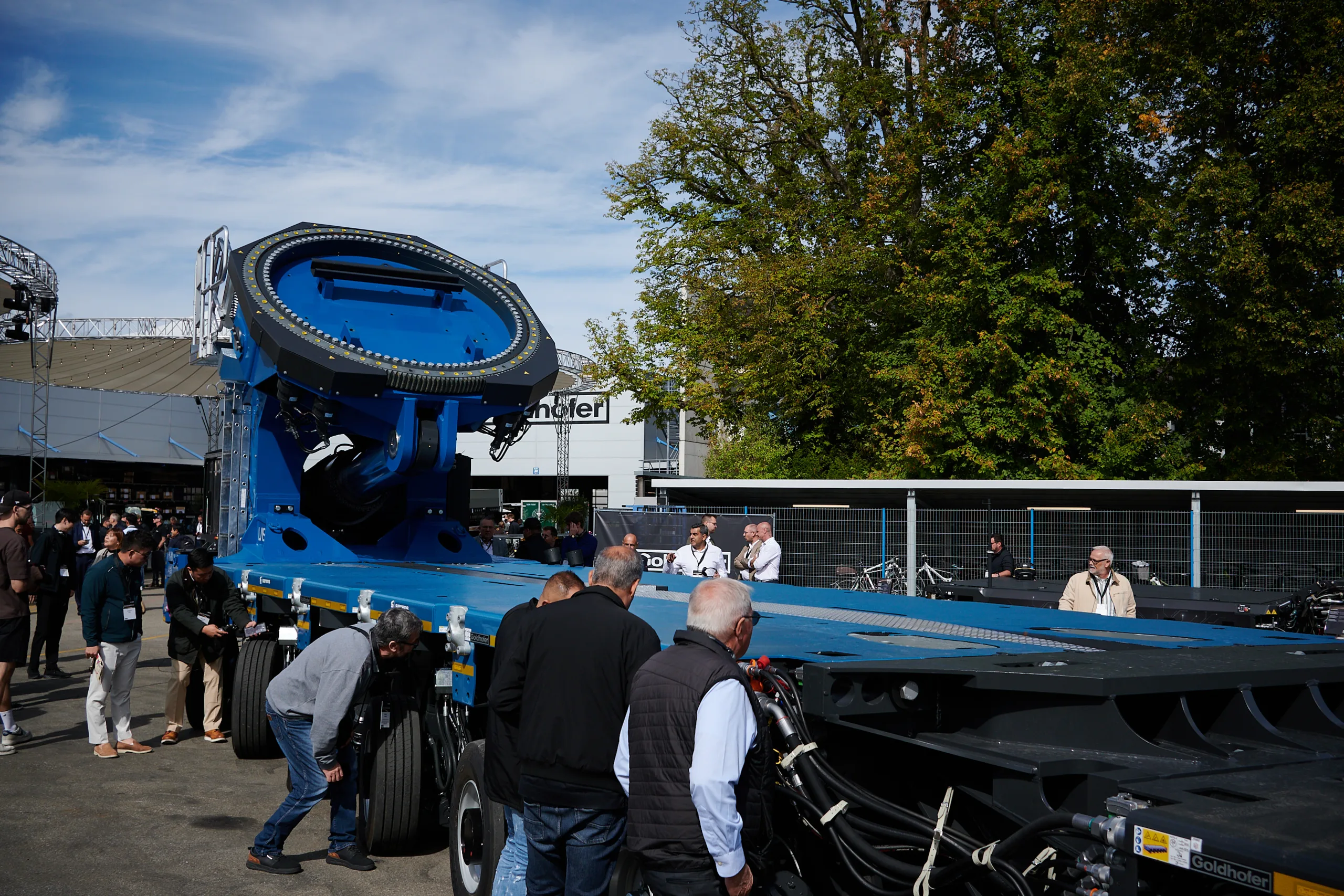
At the Goldhofer Innovation Days, the German heavy-haul specialist unveiled a new vehicle for transporting wind turbine blades and other heavy loads. The blue PST/SL-ES (285) is equipped with a rotor blade lifting system. Because rotor blades can be extremely long, they are often transported at an angle rather than lying flat.
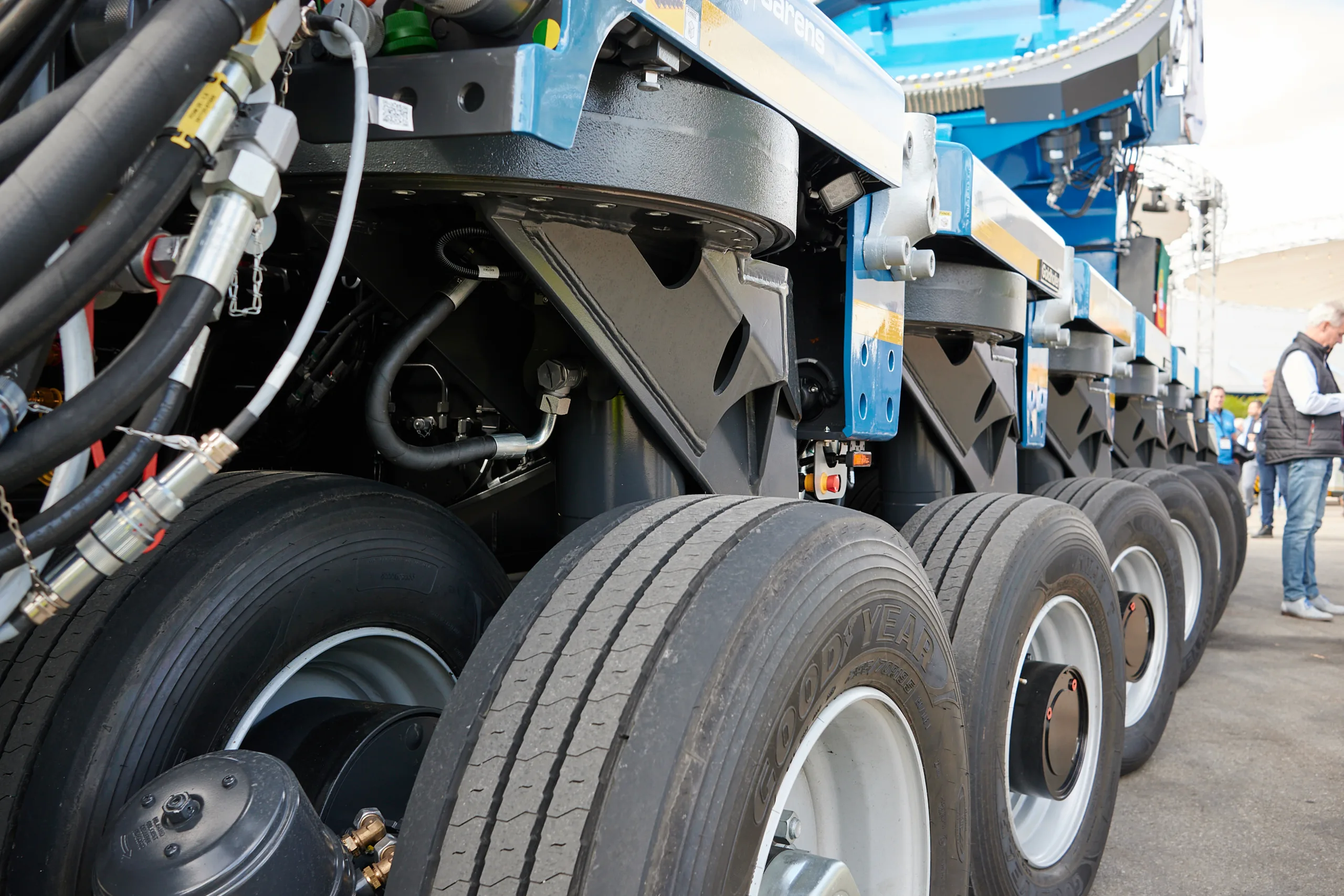
The vehicle's key feature is its ability to increase lateral stability when needed. This is particularly important for heavy loads with a high center of gravity, as it helps prevent the cargo from tipping sideways. Entire bridges have fallen during transport due to inadequate stability. The PST/SL-ES (285) gains additional lateral stability by rotating its axles outward, as shown in the images below. Goldhofer said during the presentation at its factory that this widens the track by 300 mm (11.8 inches). Whenever the route allows the wider track, operators have more transportation options.
In the best-case scenario, this makes it possible to plan a shorter route, reducing both transportation costs and travel time. Goldhofer presented several sample routes that demonstrated potential time and cost savings. Greater lateral stability is, of course, beneficial in itself.
According to Goldhofer, the axles can be rotated outward under full load. The process was also completed fairly quickly during the demonstration. The rotor blade lifting system was empty, however, as the vehicle would otherwise not have fit beneath the stage at the Memmingen factory, as shown in our short video below:
Other heavy loads are compatible
The PST/SL-ES (285) does not have to be used for rotor blades. It is also compatible with other heavy loads, including a so-called "+1 configuration" in which two vehicles travel side by side.
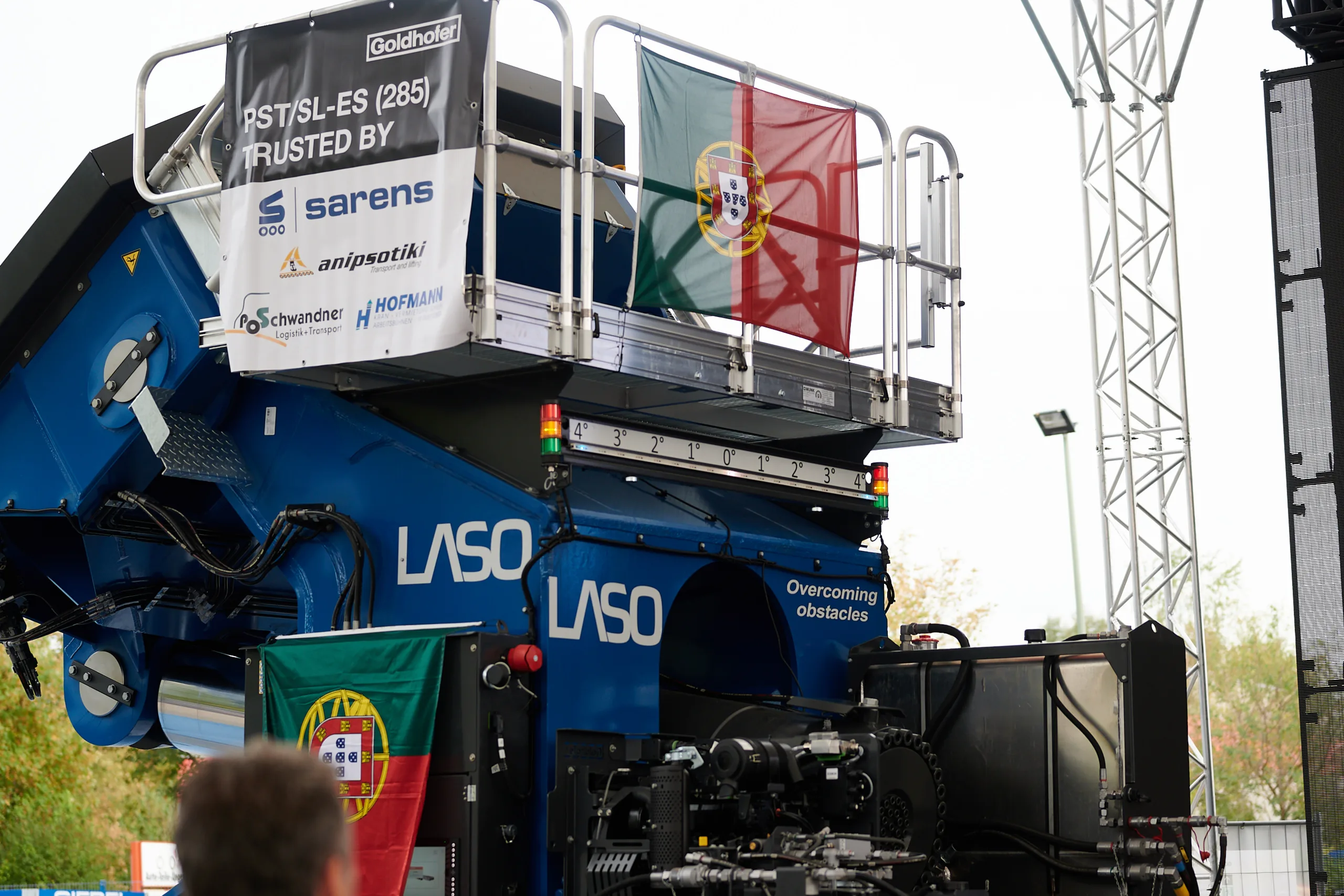
The "spirit level" shown in the first image below is not part of the product. Goldhofer is still testing it and has not yet decided whether to offer it. Following the presentation, the company is now awaiting feedback from the industry to determine whether there is interest in such a display.
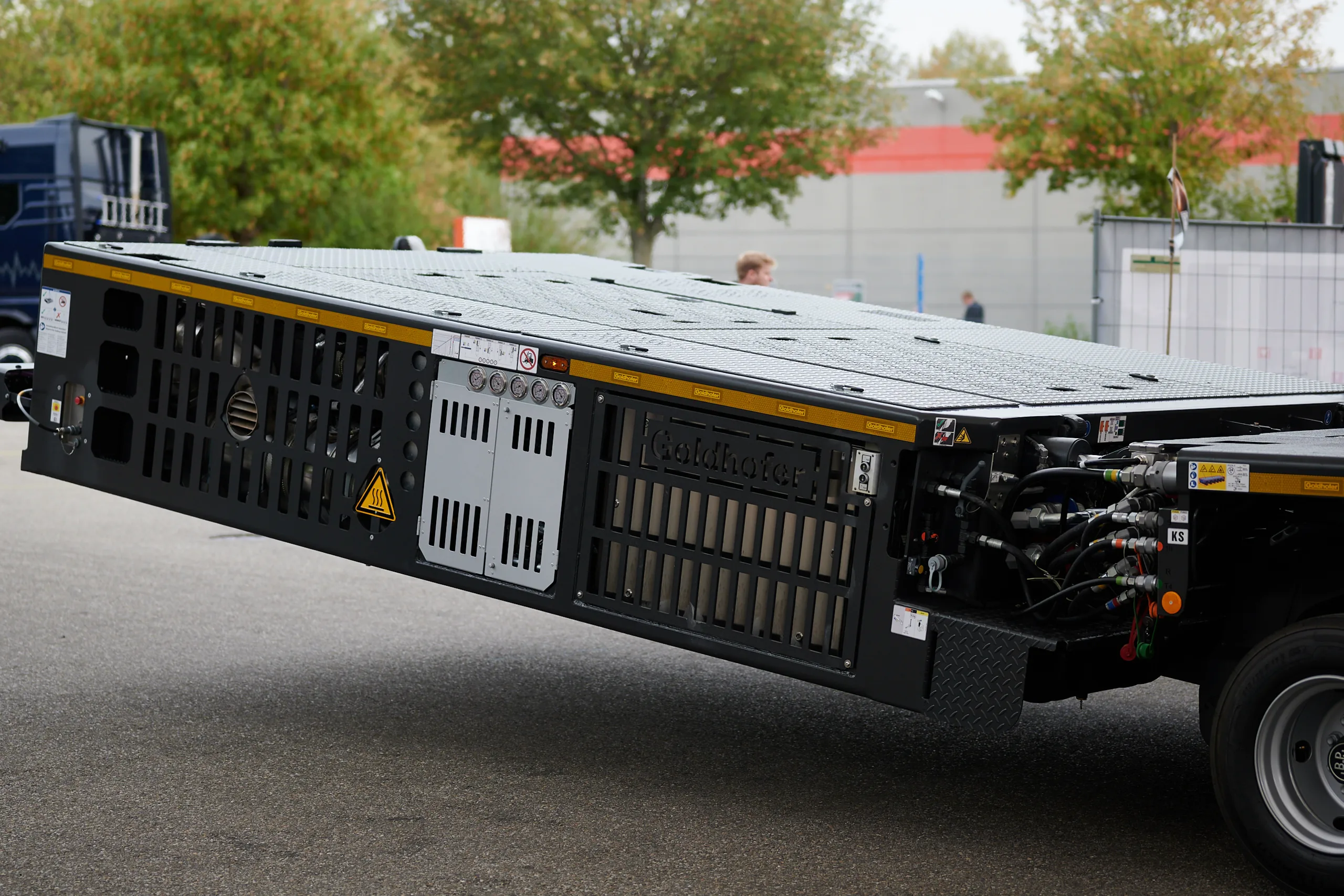
During the demonstration, Goldhofer used a diesel power pack. This is the black-wheeled unit at the rear of the vehicle that houses the diesel engine and hydraulic pumps. Goldhofer told us that its fuel tank typically lasts for one shift, or six to eight hours, although this depends heavily on how the vehicle is used. One thing was clearly audible, however: the diesel power pack is loud.
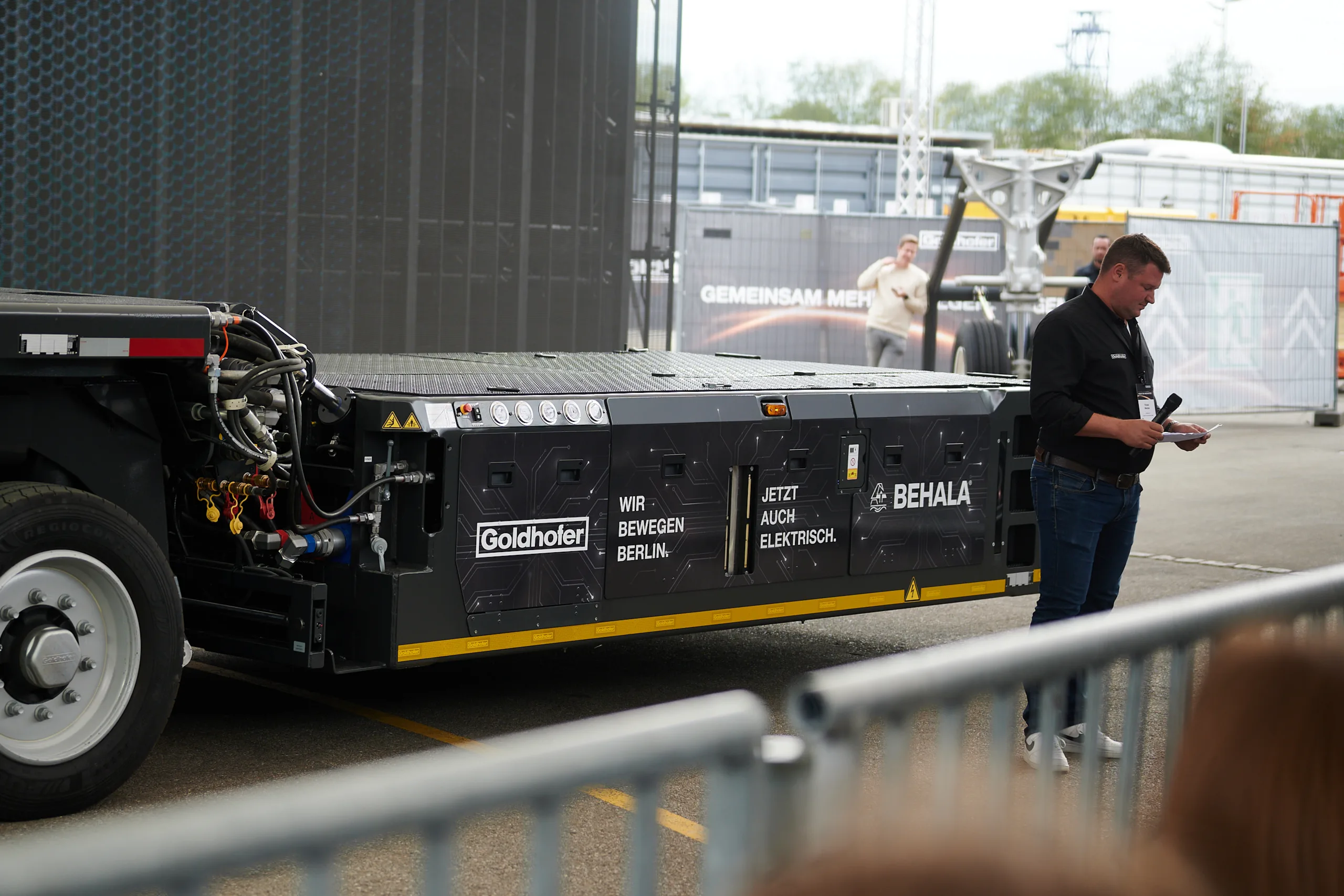
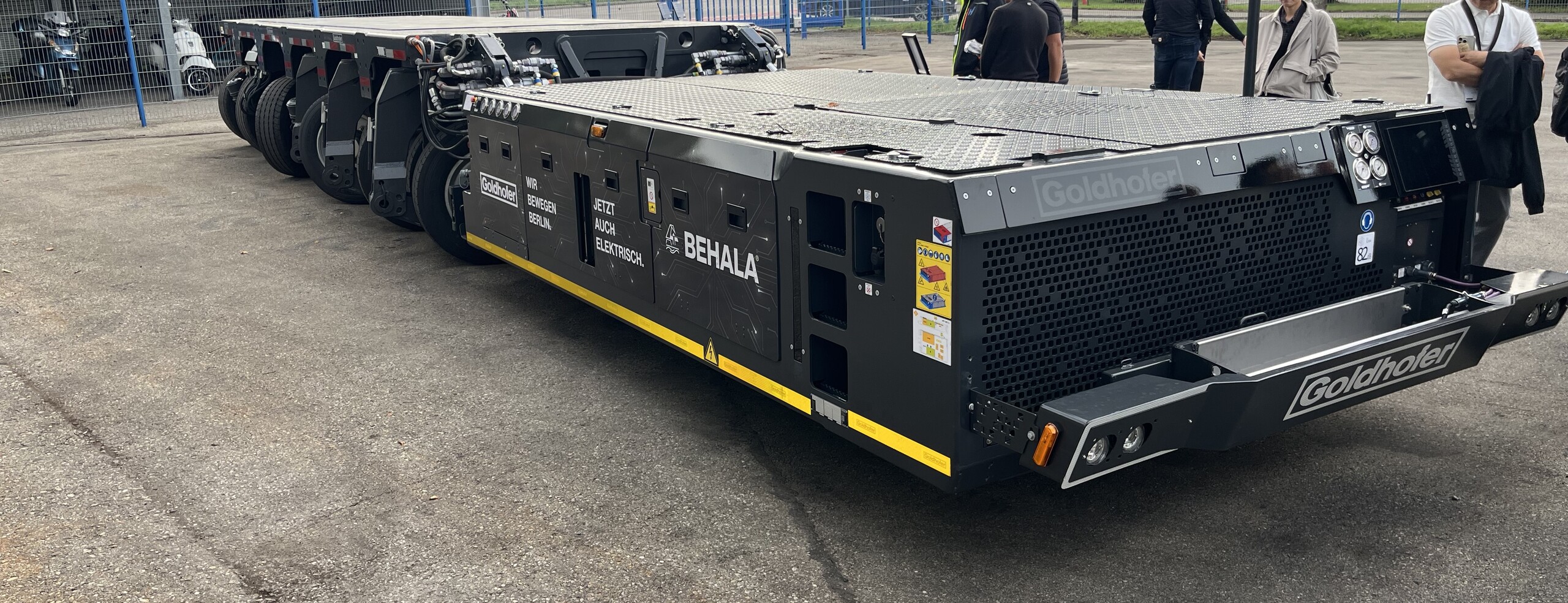
Therefore, Goldhofer also presented an electric power pack. The company declined to disclose its runtime but said it would be shorter than that of the diesel version. Its main advantages are zero emissions and low noise levels, which could make it worthwhile for applications with specific requirements.
Source(s)
Goldhofer
 Add as a preferred source on Google


