




Unannounced hexa-core Snapdragon 8s Gen 4 surfaces in Aquos R11
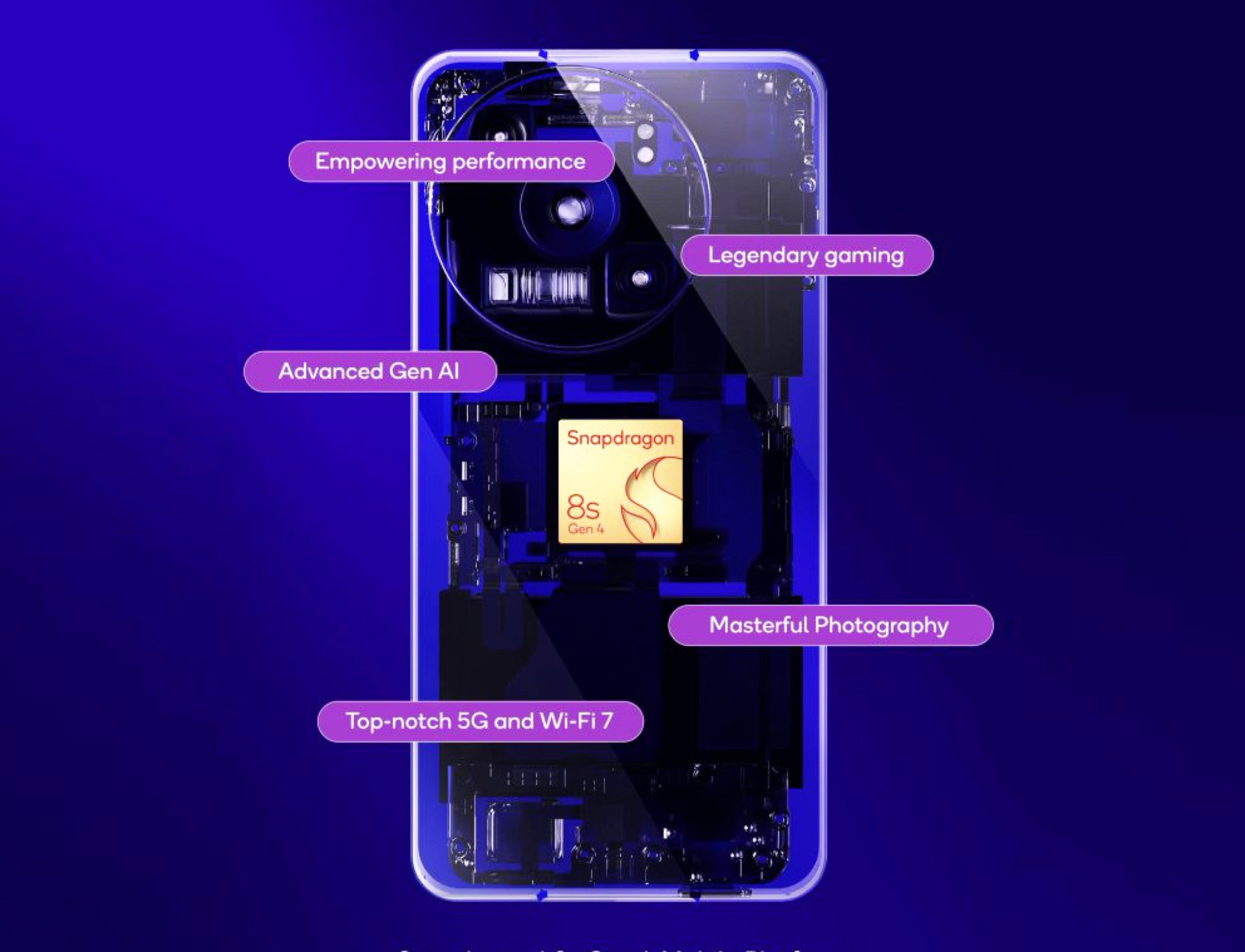
A hexa-core variant of Qualcomm's Snapdragon 8s Gen 4 (SM8735Q) has turned up in benchmark listings for Sharp's Aquos R11, despite never being formally announced by Qualcomm. Now, a video review of the Sharp Aquos R11 from IsBonny provides additional details about the chip.
CPU and GPU
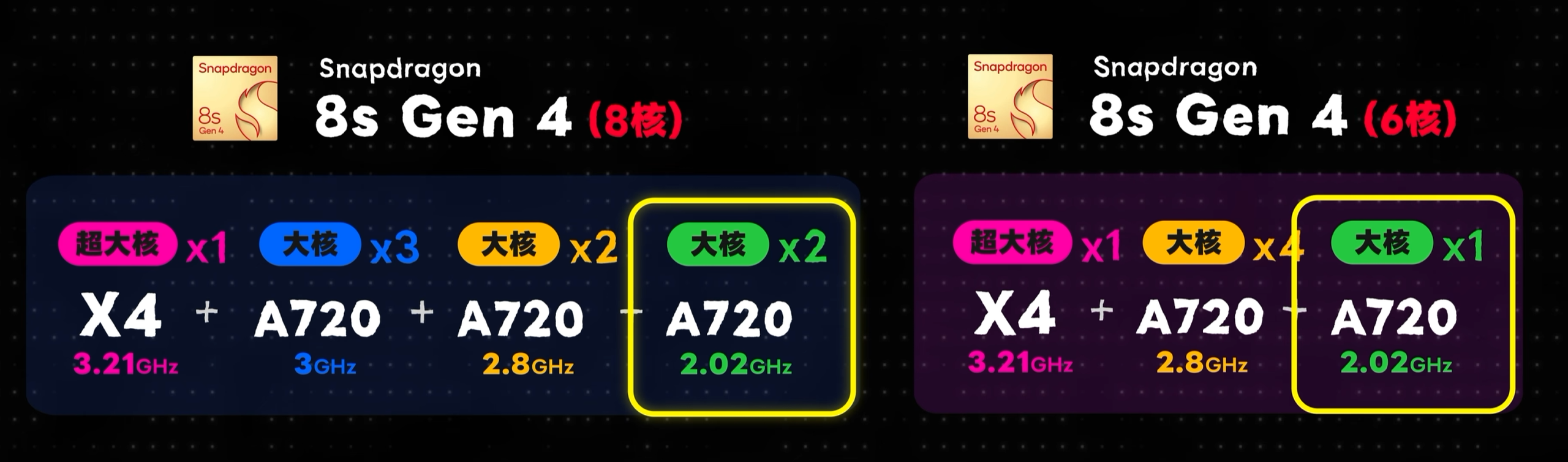
The two variants share an identical Cortex-X4 prime core clocked at 3.21 GHz, and the GPU configuration is also unchanged. Both use the same Adreno 825 hardware at the same clock speed.
The difference comes entirely from the CPU's performance cluster. The standard octa-core layout runs 1+3+2+2: one X4 core, three A720 cores at 3 GHz, two A720 cores at 2.8 GHz, and two A720 cores at 2.02 GHz. The hexa-core version cuts this to 1+4+1. The 3 GHz cluster is eliminated: one of its three A720 cores is dropped, while the other two are folded into the 2.8 GHz cluster, bringing that cluster to four cores. The 2.02 GHz cluster also loses one of its two cores.
Benchmarks
Geekbench 6.7 listings also offer a device-level comparison. Our own benchmark for the OnePlus Nord 6, running the standard octa-core Snapdragon 8s Gen 4, shows scores of 1,893 in single-core and 6,260 in multi-core performance. The Aquos R11, with the hexa-core SM8735Q, actually posts a higher single-core score of 2,070 but falls short in multi-core performance, with a score of 5,846—a gap of roughly 6.6%. Still, it is ahead of the 8s Gen 3 found in its predecessor, the Sharp Aquos R10.
| Geekbench 6.7 | |
| Single-Core | |
| Aquos R11 | |
| OnePlus Nord 5 | |
| OnePlus Nord 6 | |
| Multi-Core | |
| OnePlus Nord 6 | |
| Aquos R11 | |
| OnePlus Nord 5 | |
Since Qualcomm hasn't acknowledged that this configuration exists, there's no official explanation for why Sharp opted for the trimmed die. Cost and manufacturing yields are the likely drivers amid the current “RAMmageddon.”
Source(s)
 Add as a preferred source on Google


